Why this book?
- Understanding the political and social atmosphere of Iran in the early years of the Constitutional Revolution
- Examining the methods of dialogue and decision-making among the representatives of the first National Assembly
- Familiarity with the challenges of legislation at the beginning of Iran's parliamentary experience
- Studying the relationship between domestic political development and the pressures of international politics
About the book
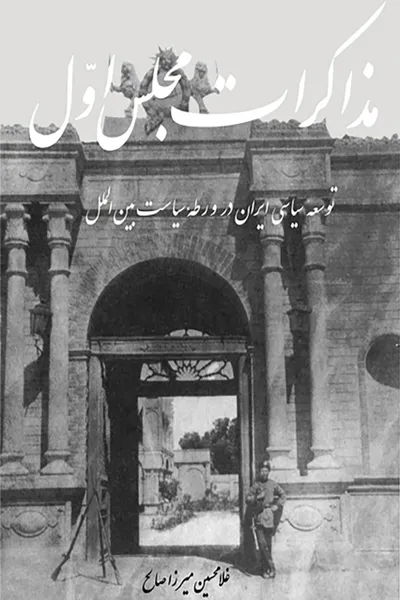
"Proceedings of the First Parliament (Iran's Political Development in the Maelstrom of International Politics)" is the edited text of the proceedings of the first National Consultative Assembly of Iran; the parliament formed after the Constitutional Revolution, considered one of Iran's most important historical experiences on the path to the rule of law and political participation.
In this work, Gholamhossein Mirza Saleh, by compiling and arranging the proceedings of the First Parliament, has made possible a more direct study of the intellectual and political atmosphere of that period. Alongside the text of the proceedings, the book also addresses the political and social contexts of the formation of the Constitution and the process of striving to establish law in Iran.
This work is a valuable resource for researchers of contemporary Iranian history, those interested in political thought, constitutional studies, and anyone who wishes to become acquainted with the roots of the institution of parliament in Iran. The book shows how the representatives of the first parliament engaged in dialogue about the country's issues, law, governance, and Iran's political future.
In the First Parliament, there were no political parties.... Of course, there were radicals and conservatives, with some radicals' views resembling socialism. The extreme right and left were few compared to other groups. Despite the absence of political parties, a number were affiliated with political associations, and a few were members of the Social Democratic Party (Ejtema'iyun Amiyun). The leftists, who until the untimely end of the parliament chanted slogans of devotion to the Shah, never dared to voice their extreme views in the assembly, although their misplaced defense of the perpetrators of the assassination attempts on Atabak and the Shah proved disastrous for the process of Iran's political development…. From beginning to end, the representatives of the National Assembly never went beyond the bounds of amicable discussion and debate, and no conflict or strife occurred among them.