Sedanet, Voice of Thought: essays, lectures and conversations on philosophy and culture

Thinkers

Arash NaraghiPhilosophy of Religion and EthicsMostafa MalekianEthics and Religious StudiesAzarakhsh MokriPsychiatryAbolghasem FanaeiPhilosophy of religion and ethicsAbdolkarim SoroushPhilosophy of ReligionMousa GhaninejadEconomicsDariush ShayeganComparative PhilosophyAlbert CamusPhilosophy and LiteratureArthur SchopenhauerPhilosophyFriedrich NietzschePhilosophyGeorg Wilhelm Friedrich HegelPhilosophyNiccolo MachiavelliPolitical ThoughtCarl Gustav JungAnalytical PsychologyLudwig WittgensteinPhilosophy of Language and Logic





Latest posts

Post image: After Recognizing Injustice: Where Does Our Duty End?Political Science

After Recognizing Injustice: Where Does Our Duty End?

If we consider a government to be unjust, is confronting it at any cost and for any length of time our moral duty? Inspired by Rahman Ghahremanpour’s discussion, this article shows that recognizing injustice is not the end of moral judgment; the costs borne by people, proportionality, the likelihood of success, and the existence of less costly alternatives must also be considered in determining the limits of our duty.

October 12, 2026
Post image: When Stories Are Not Enough, How Should One Live?Philosophy

When Stories Are Not Enough, How Should One Live?

The essay “When Stories Are Not Enough, How Should One Live?” begins with the fundamental question, “How should one live?” and examines the inadequacy of answers based on survival, pleasure, desire, and certain religious and philosophical narratives. Drawing on Mohammad Mehdi Ardebili’s book *The Principles of Struggle in the Age of Nihilism*, the text then explores the possibility of confronting meaninglessness and creating a meaningful and justified way of life.

October 9, 2026
Post image: From the “Banality of Evil” to the Banality of Concepts: Soroush Dabbagh’s Reading of Arendt and HeideggerPhilosophy

From the “Banality of Evil” to the Banality of Concepts: Soroush Dabbagh’s Reading of Arendt and Heidegger

By examining Soroush Dabbagh’s readings of Arendt, Heidegger, and Kant, this essay shows how a philosophical concept can retain its name and authority while losing the distinctions and constraints that give it its determinate meaning. The author calls this mechanism the “banality of concepts” and explores its implications for understanding and popularizing philosophy in the Persian-speaking world.

October 4, 2026
Post image: Nobody Cares: A Phrase That Can Both Devastate and LiberatePsychology

Nobody Cares: A Phrase That Can Both Devastate and Liberate

“Nobody cares” can sometimes lighten the burden of shame and sometimes intensify the feeling that we do not matter. Drawing on psychological research, this article shows that “others pay less attention to our missteps than we imagine” is not the same as “we do not matter to others.”

October 3, 2026
Post image: The Psychological Complexities of Equality and Fairness; Azarakhsh MokriPsychology

The Psychological Complexities of Equality and Fairness; Azarakhsh Mokri

Is our sensitivity to inequality a legacy of humanity’s evolutionary past, or a product of culture, markets, and social institutions? Drawing on psychological and cross-cultural research, Azarakhsh Mokri explores the boundaries between equality, fairness, and self-interest, showing that our judgments about a “fair share” are more complex than they first appear.

October 2, 2026
Post image: Good for NothingPsychology

Good for Nothing

In “Good for Nothing,” Mark Fisher begins with his own experience of depression to show that feelings of worthlessness are not always merely individual or psychological, but can be rooted in relations of power and class inequality. By critiquing “magical voluntarism” and the individualization of responsibility for poverty and unemployment, he explores the links between depression, capitalism, and our collective inability to bring about change.

October 1, 2026
Post image: How Many Times Will You Be Sisyphus?Psychology

How Many Times Will You Be Sisyphus?

Why do we sometimes find ourselves in familiar situations in romantic relationships, despite painful experiences in the past? Drawing on the metaphor of Sisyphus and the concepts of “repetition compulsion” and “attachment,” Maryam Razh explores how self-awareness and the pause between reaction and choice can help break recurring patterns.

September 30, 2026
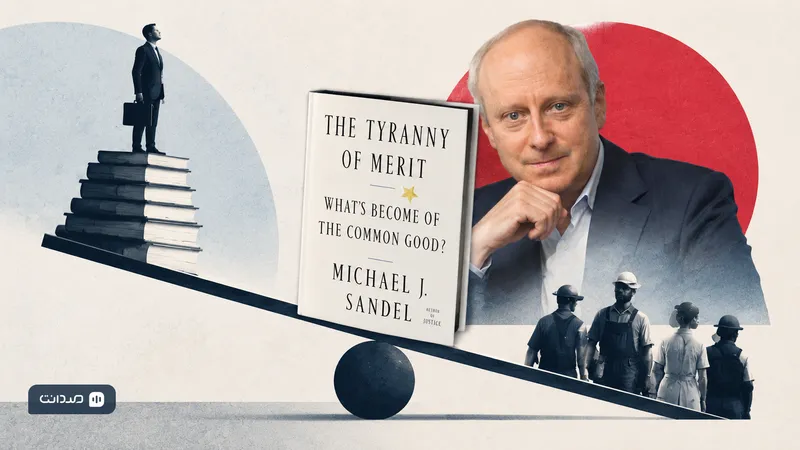
Post image: Markets, Merit, and the Dignity of WorkPhilosophy

Markets, Merit, and the Dignity of Work

In his critique of Michael Sandel’s *The Tyranny of Merit*, Robert Sugden questions the claim that meritocracy is a product of market values and that markets erode the dignity of work. Examining the relationship between markets, merit, and contributive justice, he argues that Sandel’s proposed alternative—aligning rewards with people’s “true merit”—faces serious difficulties.

September 29, 2026

Courses

All courses are taught in Persian

Videos

Sedanet lives on through your support

Sedanet is an independent, non-profit platform. If this archive matters to you, help keep it going with a donation; every donation places a “Supporter” badge on your shelf.

In partnership with cultural and research institutions