Environment
It’s Time to Recognise Masculinity’s Role in the Climate Crisis
The climate crisis is not only an environmental issue; dominant forms of masculinity can also shape how we relate to nature, consumption and the exploitation of animals. Taking an ecofeminist approach, Stephen Burrell and Cassie Pedersen ask how rethinking masculinity and strengthening an ethic of care could form part of the response to the climate crisis.
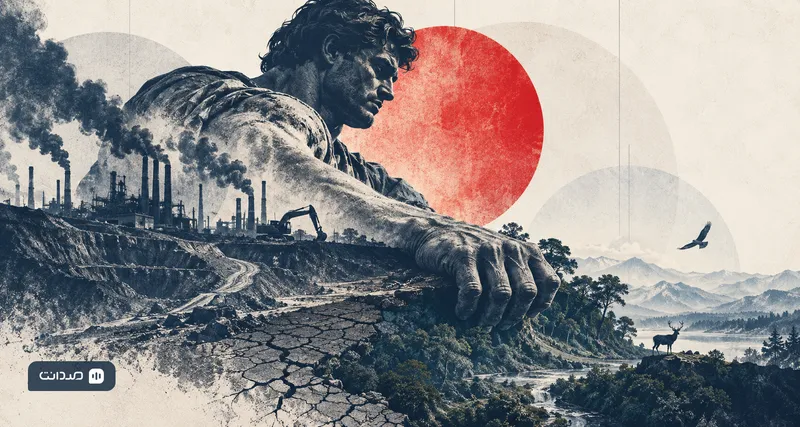



COP29 also ended on a relatively disappointing note. The role of masculinity in harming nature needs closer scrutiny.
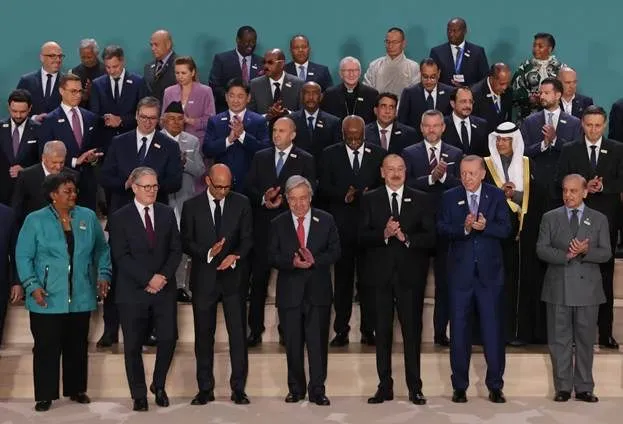
Now that the COP16 biodiversity summit and COP29 climate summit have drawn to a close, one thing has become abundantly clear—a fact plainly visible in the photographs of world leaders—these vital gatherings are still dominated by men.
This matters. Not only because we need women’s voices and experiences in decisions about global warming, but because these predominantly male leaders have so far been unable or unwilling to find solutions to the escalating climate crisis.
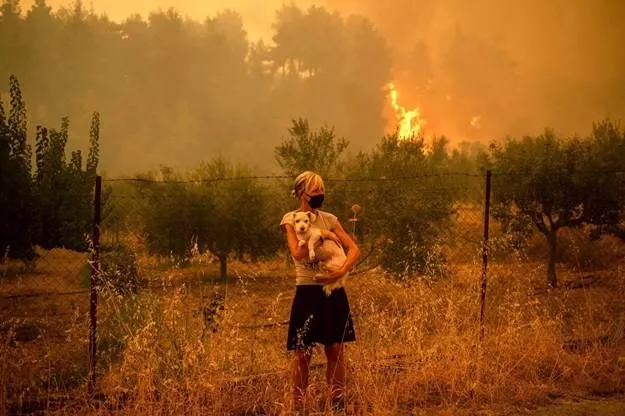
. “Natural” disasters disproportionately harm women. (Image: Getty Images)
Donald Trump’s re-election in the United States shows how some “authoritarian” politicians, drawing on the same masculine discourse, flaunt their disregard for climate change.
Perhaps the clearest expression of this is Trump’s familiar refrain: “Drill, baby, drill!”
Meanwhile, the COP summits also reveal policymakers’ failure to address how environmental destruction deepens gender and social inequalities—although these issues are beginning to receive some attention.
It is time to move beyond simply saying that “‘natural’ disasters disproportionately harm women.” We must ask what role men have played in global warming—and what role they could play.
Conquest, hunting and meat-eating
A substantial body of evidence shows that men are more likely to engage in environmentally damaging behaviours; among other things, their per-capita carbon emissions are generally higher than women’s.
The “conquest” of nature—from driving fast cars to hunting animals—is still treated as a way of proving one’s “masculinity”.
So if we want to get to the roots of the climate and biodiversity crises, we need to reckon with the significant role that prevailing ideas about what it means to “be a man” play in exacerbating them.
Caring for the environment is still seen by many as a sign of weakness, at odds with traditional masculine ideals of strength and self-reliance .
Powerful notions of masculinity continue to suppress emotion and vulnerability. Yet these are precisely what we need if we are to understand the interconnectedness of all life and the urgent need for collective action.
For many, being a “real man” means cutting oneself off from emotions—emotions conventionally associated with femininity and nature.
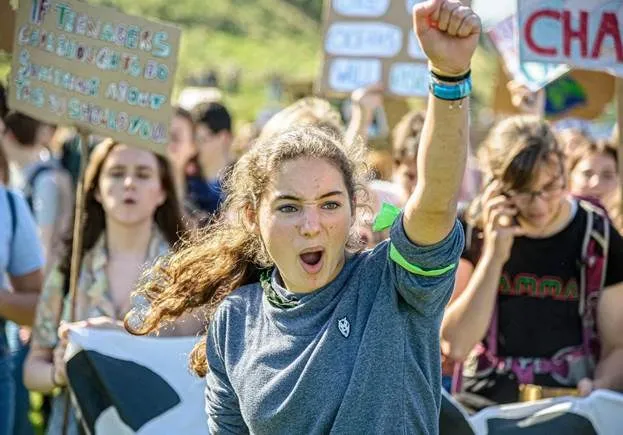
. The climate and biodiversity crises show that all of us are fragile and vulnerable. (Image: Getty Images)
This means denying our own vulnerability just as the devastation wrought by the climate crisis draws ever closer.
The inextricable links between gendered harms
Ecofeminists have clearly shown how these patriarchal ways of thinking rest on hierarchies that place culture above nature, humans above animals, reason above emotion, mind above body, and masculinity above femininity.
As a result of this way of thinking, the natural world is regarded as a storehouse of resources that we are entitled to extract and plunder without limit, because we imagine ourselves to be separate from and superior to nature.
This can be seen in practices such as meat-eating, which is often treated as a symbol of masculine strength and virility. Men are less likely to adopt vegetarian or vegan diets, and those who do are often mocked and labelled “sissies” or “soy boys”.
The meat and dairy industries are themselves among the major contributors to the climate crisis, while also inflicting immense suffering on animals bred for exploitation and, ultimately, slaughter.
As criminologists, we need to recognise these destructive behaviours towards animals and the environment as harms, while also understanding how they are intertwined with other gendered harms. For example, there is evidence of increased gender-based violence in communities near slaughterhouses. Animal abuse also often features in domestic violence. These are only a few examples of how living harmoniously on this planet is incompatible with society’s gendered pressures and expectations.
However difficult and frightening it may be to accept, the climate and biodiversity crises remind us that all human beings are fragile and vulnerable in the face of nature—and, of course, dependent on it.
A brighter way forward
These crises should compel us to rethink how we live and find new ways of doing so. Rather than seeing them simply as losses, we should also see them as opportunities to open up more constructive paths for boys and men.
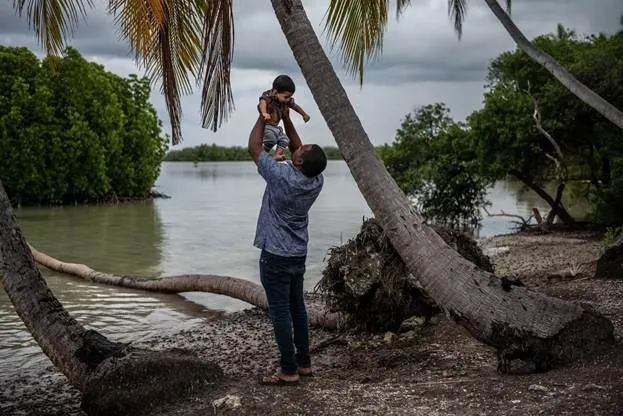
. What role have men played in global warming, and what role could they play? (Image: Getty Images)
Understanding this mutual dependence and forging closer relationships with other animals and nature can make us more rooted in the world and deepen our connection to it. Indigenous peoples have understood this for centuries. Such connections can offer a way out of the loneliness, isolation and confusion experienced by many boys and men.
A substantial body of evidence points to the positive effects of connection with nature on our health and wellbeing, which in turn encourages greater environmental concern. We need to embed connection with nature more deeply in everyday life—including in schools and in work with men and boys—and make it part of ordinary practice.
Caring for our local environment and other animals can foster a sense of belonging to our communities. At a time when many of us feel powerless in the face of multiple crises, this can give us a sense of agency.
But to do this, we need to recognise that part of the solution lies in freeing ourselves from the rigid gender expectations that have helped bring us to this point—including the belief that human beings are “superior” to other living creatures.
The disappointments of the recent COP summits show that we cannot simply wait for political leaders to act. We need to take action ourselves: beginning change in our own lives and communities while also working towards deeper social transformation.
Source:
It’s time to recognise the role masculinity is playing in the climate crisis
Further reading on emerging forms of masculinities and the relationship between gender, animals and the environment:
Taylor, Chloë, ed. The Routledge companion to gender and animals. Routledge, 2024
Burrell, Stephen, et al. Gendering green criminology. Policy Press, 2023.
Hultman, Martin, and Paul M. Pulé. Ecological masculinities: Theoretical foundations and practical guidance. Routledge, 2018.
MacGregor, Sherilyn, ed. Routledge handbook of gender and environment. Taylor & Francis, 2017.




Discussion0 comments
No comments yet; let yours be the first voice.