Lecture
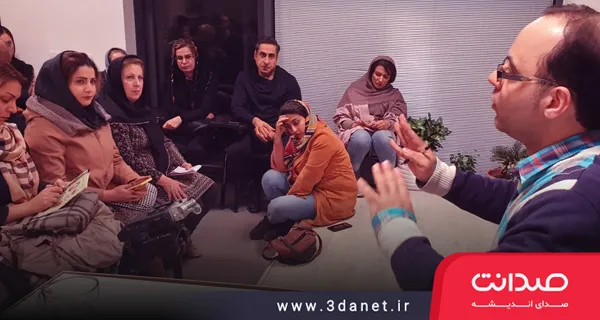
Critical Thinking Lectures; Kaveh Behbahani
This three-session series, taught by Kaveh Behbahani, addresses the fundamentals of critical thinking and common errors in human judgment. Topics such as flawed data mining, constructed memory and perception, mental shortcuts, and cognitive biases are examined in these lectures.
About this video
This video is a collection of lectures by Kaveh Behbahani on critical thinking, held in 2019 at the Arche Thought Forum. Over three sessions, it addresses some of the most significant obstacles to sound thinking and accurate judgment: flawed data mining, constructed memory and perception, and mental shortcuts and cognitive biases.
The central theme is that thinking errors do not always stem from simple ignorance or obvious irrationality; many errors arise from the normal mechanisms of the human mind. To make quick decisions, the mind uses shortcuts, reconstructs memory, builds patterns from incomplete data, and sometimes fails to distinguish between correlation and causation.
In the first session, the issue of flawed data mining and the danger of drawing conclusions from selective or misunderstood data is raised. The second session deals with constructed memory and perception, showing that what we recognize as "seeing" or "remembering" is not always an impartial recording of reality. The third session examines mental shortcuts and cognitive biases—patterns that make our judgment faster, but sometimes less accurate.
The importance of these lectures lies in their transformation of critical thinking into a practical skill for everyday life, understanding science, analyzing news, dialogue, and decision-making. This series is suitable for those interested in philosophy, science, psychology, reasoning, cognitive bias, and the teaching of thinking skills.