Religion
Religion and Environmental Ethics: From Conflict to Overlapping Consensus
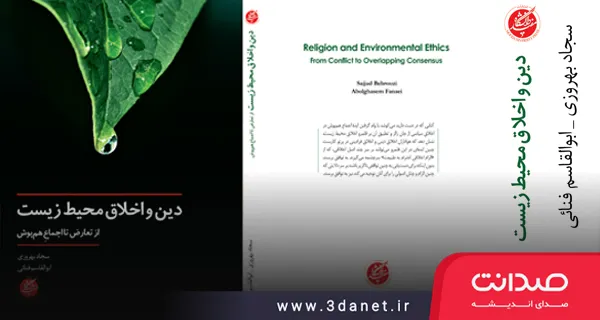
The book Religion and Environmental Ethics by Fanaei and Behrouzi uses the idea of 'overlapping consensus' to show the possibility of agreement between religious and secular ethics on human responsibility toward nature; an examination of the theory of respect for nature and the perspective of the Abrahamic religions.
Preface
In the name of God, the Lord of life and wisdom
The book you hold in your hands is an innovative attempt to apply the idea of "overlapping consensus"[1] in environmental ethics to demonstrate the possibility of agreement between religious ethics and secular ethics in this domain. The main subject under investigation in environmental ethics, which is one of the important branches of applied ethics, is "the moral responsibility of human beings towards the environment or concerning the environment." The question of human beings' moral responsibility towards/concerning the environment is, in one sense, equivalent to the question of the scope of ethics and the inclusion of its subject matter with respect to natural beings. Just as human beings possess "moral status,"[2] do other living beings that occupy the natural world alongside humans also possess such status, albeit to lesser degrees, or is moral status, in all its degrees, exclusive to human beings?
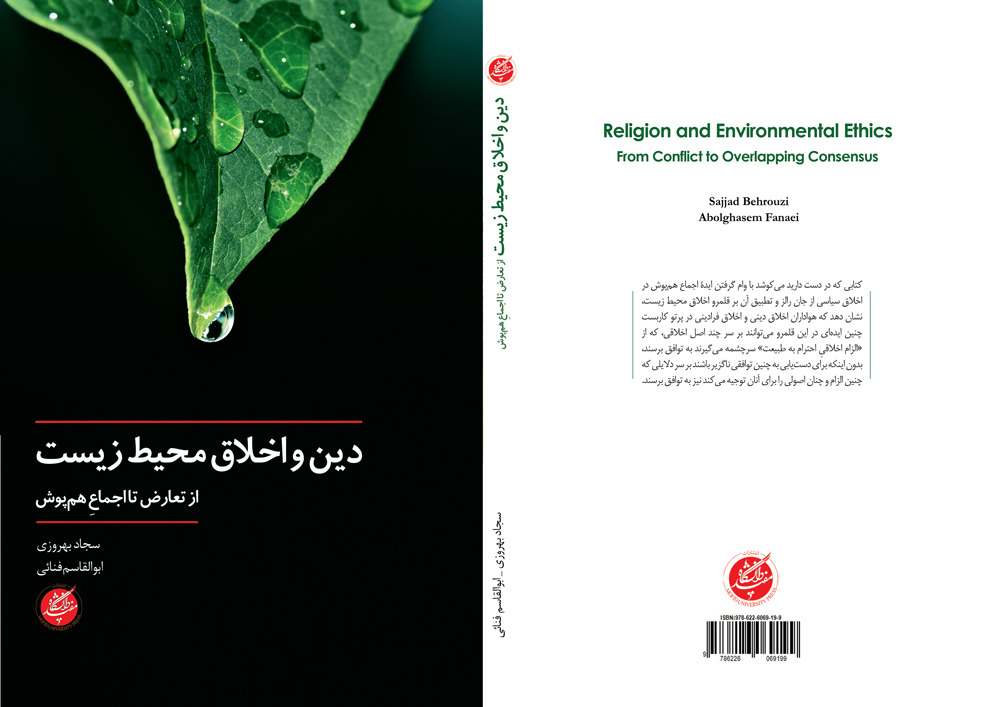
The book Religion and Environmental Ethics (From Conflict to Overlapping Consensus) written by Abolghasem Fanaei and Sajjad Behrouzi
Table of Contents
Religion and Environmental Ethics
From Conflict to Overlapping Consensus
Preface
Chapter One
Definition of Key Terms and Concepts
1/1 Definition of "Environment"
1/1/1 The Common Meaning of "Environment"
1/1/2 The Relationship of Humans with the Natural Environment
1/2 Environmental Ethics
1/2/1 Definition, Subject Matter, and Issues of Environmental Ethics
1/2/2 The Necessity of Environmental Ethics
1/2/3 History of Environmental Ethics
1/3 Religion
1/3/1 The Nature of Religion and Religion-Making Characteristics
1/3/2 Abrahamic Religions
1/4 The Idea of Overlapping Consensus
Chapter Two
Classification of Existing Theories in Environmental Ethics
2/1 Classification of Theories Based on the Locus of Value
2/1/1 Anthropocentric Approach in Environmental Ethics
2/1/2 Biocentric Approach in Environmental Ethics
2/1/3 Ecocentric Approach in Environmental Ethics
2/2 Classification of Theories Based on the Criterion of Moral Evaluation
2/2/1 Virtue-Oriented Approach in Normative Ethics and Virtue-Ethical Theories in Environmental Ethics
2/2/2 Consequentialist Approach in Normative Ethics and Consequentialist Theories in Environmental Ethics
2/2/3 Deontological Approach in Normative Ethics and Deontological Theories in Environmental Ethics
Chapter Three
The Theory of Respect for Nature
3/1 Two Essential Characteristics of Every Living Being
3/1/1 The Specific Good of a Living Being
3/1/2 The Intrinsic Value of a Living Being
3/2 The Biocentric Outlook on Nature
3/2/1 Humans as Members of Earth's Community of Life
3/2/2 The Natural World as an Interconnected System
3/2/3 Individual Living Beings as Teleological Centers of Life
3/2/4 The Denial of Human Superiority
3/3 Rules of Conduct
3/3/3 The Rule of Fidelity and Refraining from Deceiving Animals
3/3/4 The Rule of Restitutive Justice
3/4 Second-Order Principles for Resolving Conflicts of Interest
3/4/1 The Principle of Self-Defense
3/4/2 The Principle of Proportionality
3/4/3 The Principle of Minimum Wrong
3/4/4 The Principle of Distributive Justice
3/4/5 The Principle of Restitutive Justice
Chapter Four
Evaluating the Theory of Respect for Nature
4/1 The Reasonableness of the Theory of Respect for Nature
4/1/1 The Reasonableness of the Theory of "Respect for Nature" in its Theoretical Dimension
4/1/2 The Reasonableness of the Theory of Respect for Nature in its Practical Dimension
4/2 Response to Some Criticisms Raised Against the Theory of Respect for Nature
4/2/1 Critique of Individualism
4/2/2 Critique of the Teleological Presupposition
4/2/3 Critique of Taylor's Conception of a Living Being's Specific Good
4/2/4 DesJardins' Critique of the Behavioral Rule of Noninterference
4/2/5 Agar's Critique of the Principle of Self-Defense
Chapter Five
Environmental Ethics from the Perspective of Judaism and Christianity
5/1 Abrahamic Religions: A Cause of the Environmental Crisis?
5/1/1 Arnold Toynbee's View: Christian Monotheism Must Be Prohibited!
5/1/2 Lynn White: Environmental Destruction as a Product of Judeo-Christian Anthropocentrism
5/1/3 Lewis Moncrief: The Role of Tradition and Culture in Environmental Destruction
5/1/4 Peter Singer: Nature Under the Dominion of Greco-Jewish Anthropology
5/1/5 John Passmore: Christianity and the Denial of Nature's Beauties
5/2 Are the Teachings of Judaism and Christianity Compatible with Trans-Religious Environmental Ethics?
5/2/1 The Stewardship Theory: A Response to Critics of the Judeo-Christian Tradition
5/2/2 Eric Katz: Jewish Theology and Environmental Ethics
5/2/3 Robin Attfield: Christianity and the Independent Value of Natural Creatures
Chapter Six
Environmental Ethics from the Perspective of Islam
6/1 Ahmad Qabel: A Thorough Revision of Islamic Teachings on the Environment
6/1/1 Critique of the Common View on Human Superiority Over Other Creatures
6/1/2 Explanation and Justification of the View of the Intrinsic Equality of All Creatures
6/2 Llewellyn: Deriving Environmental Protection Laws from Practical Islamic Teachings
6/3 Nomanul Haq: The Quran and Authentic Sunnah as a Valid Source for Deriving Islam's View on Environmental Ethics
6/4 Ali Karimian: The Necessity of Attending to the Philosophical Foundations of Environmental Ethics from an Islamic Perspective
6/5 Mawil Izzi Dien: Environmental Protection as Worship of God
6/6 Seyyed Mostafa Mohaghegh Damad: A New Interpretation of Human Caliphate and Nobility
6/7 Seyyed Hossein Nasr: Reviving Religious Cosmology
Chapter Seven
7/1 Review and Summary of the Most Important Discussions
7/2 The Compatibility of Religious Environmental Ethics with the Theory of Respect for Nature
7/2/1 The Specific Good of a Living Being
7/2/2 The Intrinsic Value of Living Beings
7/2/3 The Rule of Non-Maleficence
7/2/4 The Rule of Noninterference
7/2/5 The Rule Against Deceiving Animals
7/2/6 The Rule of Restitutive Justice
7/3 The Connection and Relationship of Overlapping Consensus to the Discussion of the Relation Between Religion and Ethics
7/3/1 Overlapping Consensus Based on the Principle of Concomitance between the Ruling of Reason (Ethics) and the Ruling of Sharia (Religion)
7/3/1/1 The Negative Interpretation of the Principle of Concomitance and Its Role in Realizing Overlapping Consensus
7/3/1/2 The Positive Interpretation of the Principle of Concomitance and Its Role in Realizing Overlapping Consensus
7/3/2 The Method of Resolving Conflicts between Rational and Transmitted Proofs in Sharia (Religious Ethics)
.
The Book: Religion and Environmental Ethics (From Conflict to Consensus)
Publisher: Mofid University Author: Sajjad Behrouzi, Abolghasem Fanaei Edition: 1st Year of Publication: 1401 [2022] Total Pages: 252
PDF file of the book's table of contents and introduction
Purchase the book from Barkhat | Qoqnus Distribution | Ketab Web
.
[1]. Overlapping consensus
[2]. Moral status/standing




Discussion1 comments
سلام و عرض ادب. دوستان خبر دارید که دکتر فنایی خودشون گیاهخوار هستند یا نه؟