Environment
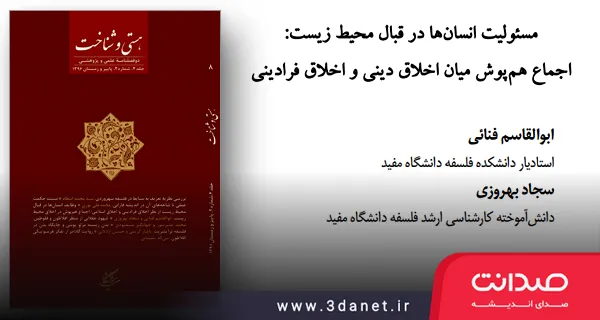
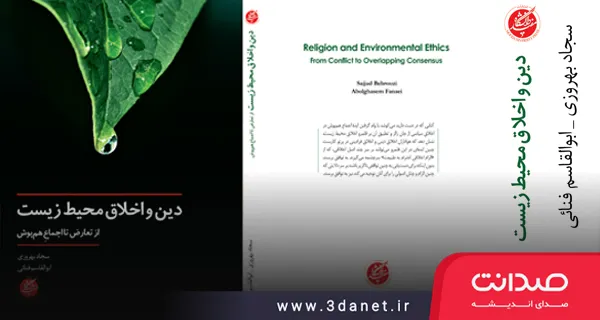
“Human Responsibility toward the Environment: An Overlapping Consensus between Religious and Post-Religious Ethics” by Abolghasem Fanaei and Sajjad Behrouzi
Overcoming the environmental crisis requires agreement on universal norms without the need for consensus on ethical foundations. An 'overlapping consensus' makes it possible for religious and post-religious ethics to converge on the moral necessity of respecting nature.
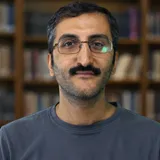
Sajjad Behroozi
Author
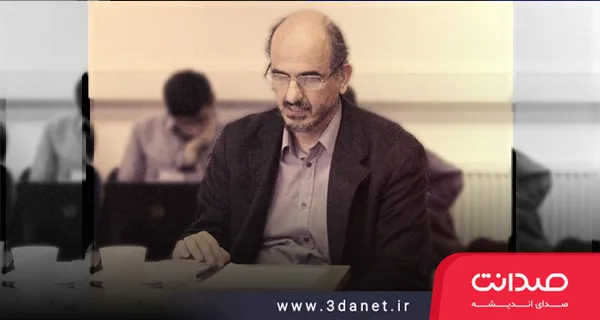
Abolghasem Fanaei
AuthorOvercoming the environmental crisis that has engulfed the entire planet requires the participation of all human beings; a participation that is impossible without agreement on universal norms in environmental ethics. However, given the disagreements among various cultures and schools of thought regarding worldviews and moral foundations, the question arises: “How can such an agreement be achieved?” The central claim of this research is that the idea of “overlapping consensus” can be used to reach such an agreement. According to this idea, in order to agree on universal norms, agreement on the justificatory foundations of environmental ethics is not necessary; rather, it is sufficient that these norms be formulated in such a way that their justification does not depend on the specific aspects of any particular religious tradition or comprehensive scientific, philosophical, and ethical school, and that the followers of various doctrinal traditions and schools can agree upon them by relying on reasons accepted within their own tradition and school. This article attempts to show that such a consensus on the “moral necessity of respect for nature,” as a fundamental norm in environmental protection, is possible. For example, Muslims can recognize this norm based on their religious teachings, and proponents of the theory of “respect for nature”—which is a post-religious theory in environmental ethics—can also justify such a norm based on their post-religious foundations.
.
Download PDF from Server 1 | Server 2
.

Discussion0 comments
No comments yet; let yours be the first voice.