Religion
“Concerns of Religion and Ethics in the Readings of 1390” by Seyyed Hassan Eslami Ardakani
Seyyed Hassan Eslami Ardakani examines three prominent books in the philosophy of religion and ethics. While critiquing the divine command theory in the work of Judith Boss, he explicates Linda Zagzebski's divine motivation theory, which regards God as the supreme exemplar of morality.
Concerns of Religion and Ethics in the Readings of 1390
Seyyed Hassan Eslami Ardakani
1. Introduction
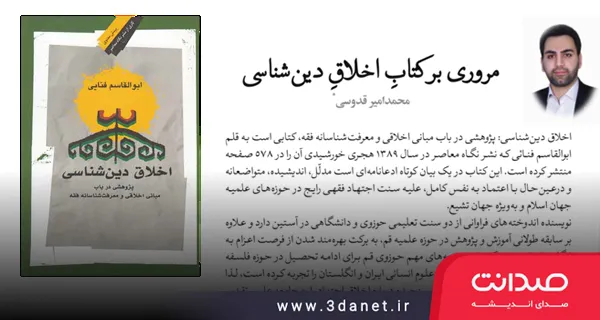
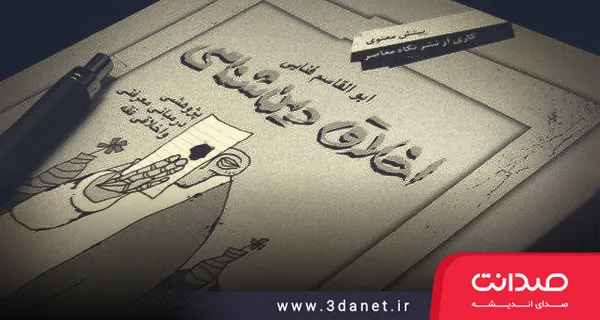
In the past few years, we have witnessed a growing attention to the field of ethics, and the academic community has opened the dossier of this discussion before itself. This turn of attention should be taken as a good omen, although along with every such favorable reception, a method of book-making in this field has also taken shape, and numerous, worthless fabricated books in the name of ethics have entered the cultural market, endangering this nascent sapling. I, too, who over the past two decades, alongside discussions of philosophy of religion, have been engaged in ethical practice and writing, try to obtain the notable works that are published and read them, or at least leaf through them. This year as well, I examined and reviewed several books in the field of philosophy of religion and ethics. But I specifically read three books and found them very instructive and useful in several respects. The first is the book Ethics for Life, written by Ms. Judith A. Boss[1], which is primarily an educational text. The second is the book A Historical Introduction to the Philosophy of Religion,[2] written by Ms. Linda Zagzebski, which has a particular theory regarding the relationship between religion and ethics, and I found it very readable. The third is the book Ethics of Religious Studies, written by Mr. Abolqasem Fanaei[3], which is a scholarly and thought-provoking work. Here, I will first make some remarks about the first and second books, and then go into detail about the third book and express my observations on it.
2. Ethics for Life
Introducing and analyzing Ms. Boss's book requires another occasion. But for those who have not seen it or do not have the opportunity to use it, I will write a few sentences. This book is, in fact, a serious introduction to ethical discussions, accompanied by excerpts from the primary texts of this field, which possesses a high educational quality. The author has organized it into eleven chapters, starting from general issues and a broad view of ethics, and after introducing various types of ethical schools and the diverse domains of this knowledge, culminates in virtue-centered ethics and concludes the book with a noteworthy final word.
In this final word, she enumerates the strengths and weaknesses of each of the three dominant ethical theories in the West. From this perspective, John Stuart Mill's utilitarian theory has extensive application in public policy-making. However, it perhaps ignores and neglects individual dignity. On the other hand, Kant's ethical theory, while providing a firm foundation for ethical behavior and the categorical imperative, is overly demanding and inherently difficult to submit to. The theory of virtue ethics, which has been revived in the West over the past four decades, can also be considered a complement to these two theories, not a rival to them.
While these theories have differences with one another, they also have significant overlaps in some cases. For example, they all demand that their principles be applied universally and impartially, that individuals be respected, and that everyone strive to improve themselves. Fundamentally, ethical theories tend toward simplification and cannot express all aspects. These theories, according to the Buddha's analogy, are like blind men trying to describe an elephant in the dark. Each is correct in proving what they have perceived, but err in neglecting the other parts. What matters is seeing the whole picture. David Ross, the famous twentieth-century philosopher, likens ethical decision-making to an artistic process. There is no single form or fixed formula for solving ethical problems. One must make decisions artistically in specific circumstances. But what is important is to know ourselves and to engage in a constant effort to overcome our defense mechanisms and mental attachments, so that we may become more virtuous and wiser human beings.
The fifth chapter of this book examines the relationship between religion and ethics and, after introducing the well-known Divine Command theory[4], criticizes it, deems it ineffective, and argues that the Divine Command theory does not provide a satisfactory explanation for ethics. Nevertheless, he speaks within the limits of his knowledge. The inability to provide an adequate explanation is one thing, and incorrectness and invalidity are another. Therefore, after demonstrating the problems with this theory, Bass emphasizes that it is a mistake to consider the theory invalidated solely on such grounds, because in doing so we would be committing the fallacy of appeal to ignorance. At most, when faced with this theory, we can say we do not know whether morality is truly based on divine command, or in other words, whether ethics is dependent on religion or not. It might actually be, but we do not have a convincing reason at hand.[5]
3_ Zagzebski and the Divine Motivation Theory
In contrast to the above view, Zagzebski, a Christian theologian, has for years cultivated and defended a particular theory concerning the relationship between religion and ethics, which is neither based on the independence of ethics from religion, nor is it considered a Divine Command theory. This is because serious criticisms have been leveled against the Divine Command theory, and today no one defends its crude and traditional form. She has named her theory the Divine Motivation Theory[6]. The book An Historical Introduction to the Philosophy of Religion is her mature and measured work, in the sixth chapter of which the relationship between religion and ethics is examined and Zagzebski's specific view on this matter is explained.[7] She has included this same theory in anthologies or textbooks of philosophy and the philosophy of religion, and has pursued and developed it. For example, in the fifth chapter of The Oxford Handbook, edited by William Wainwright, she advances this same discussion and defends her theory.[8] Also, in the article "Divine Virtues and the Foundations of Ethics," she elaborates on her theory.[9]
Zagzebski bases religion on ethics, but instead of linking it to divine commands and orders, she considers it born of divine virtues and, in fact, portrays God not as a moral lawgiver, but as the supreme exemplar of morality and a model to be emulated. In her interpretation, God in this theory, instead of being considered a lawgiver or legislator who must be obeyed, is introduced as a moral exemplar to whom, in the words of Islamic ethical scholars, one should seek "resemblance" (tashabbuh).[10] In this theory, all moral attributes are rooted in divine motivations, and individuals are considered good and just to the extent that they resemble the attributes of God.[11] The most important objection raised against the Divine Command theory and its Islamic narrative, namely the theory of religiously determined good and evil (husn wa qubh shar‘i), was that according to it, good and evil are subject to divine command and prohibition, and consequently would be a variable and relative matter. For this reason, Ms. Bass considers the theory of basing ethics on religion a form of moral relativism. With the account she provides, Zagzebski claims that in her theory, there is no room for arbitrary behavior, and since God is pure goodness, it is impossible for improper acts or improper commands to issue from Him.[12]
In the article "Divine Virtues and the Foundations of Ethics," with a specific formulation of the Divine Motivation Theory, which emphasizes virtue in a particular way, she attempts to base ethics in a specific manner on the existence of God and to show that without the existence of God, ethics is not binding, without, of course, falling into the trap of the problems of the Divine Command theory.[13] To achieve this goal, she presents a seven-step argument and concludes from it that ethics only has meaning on the assumption of God's existence.[14] The presentation and examination of this theory requires another occasion, and this much is sufficient as a reference.
اما با توجه به اهمیت روزافزون بحث دین و اخلاق و نسبت میان این دو در جامعه علمی ما، مناسب است که کتاب سوم را، که این بحث را به شکلی بومی دنبال کرده است، با تفصیل بیشتری بکاوم و بنمایههای آن را بازگویم و خرده انتقادهای خود را نیز بیان کنم.
4_ اخلاق دینشناسی
کتاب حاضر در واقع ادامه منطقی کتاب دین در ترازوی اخلاق[15] است و باید آنها را به ترتیب خواند و دریافت. کتاب نخست در دو بخش طراحی شده است. بخش نخست دو فصل دارد: (1) درآمدی تاریخی به بحث رابطه میان دین و اخلاق، و (2) تعریف دین و اخلاق. بخش دوم شامل پنج فصل است: (1) وابستگی اخلاق به دین، (2) وابستگی دین به اخلاق، (3) خدمات دین در قلمرو اخلاق، (4) ناظر آرمانی و منظر اخلاقی، و (5) خدا به عنوان ناظر آرمانی. در این کتاب، نویسنده در پی بررسی انواع ارتباطات ممکن بین دین و اخلاق است و هرچند نشان میدهد که اخلاق از نظر معناشناختی، معرفتشناختی، و وجودشناختی، مستقل از دین است، در عمل سخت به یکدیگر گره خوردهاند و به هم قوت میبخشند. یافتههای این کتاب کمک میکند تا درکی اخلاقی از حقیقت و ماهیت دین داشته باشیم.
در کتاب حاضر، نویسنده با حفظ چشمانداز پیشین خود، به تحلیل اخلاق اجتهاد و هنجارهایی که باید بر آن حاکم باشد دست میزند و میکوشد تا این درک اخلاقی را در فهم احکام شریعت نیز به کار گیرد. بدین ترتیب، هرچند کتاب حاضر مفصلتر از کتاب پیشین و بیش از دو برابر آن است، منظر محدودتری را برگزیده و خود را به اخلاق اجتهاد یا «مجموعه ارزشها» و هنجارهایی که «راهنمای اجتهاد یا پژوهش و تفکر فقهی هستند یا باید باشند» (ص15) محدود کرده است. این کتاب، افزون بر پیشگفتار مفصل خود، هفت فصل دارد. در فصل نخست، از نشستن فقه به جای اخلاق سخن میرود، فصل دوم چالشهای فراروی فقه در عصر جدید را پیش میکشد، فصل سوم تفاوتهای عقلانیت سنتی و مدرن را باز میگوید، چهارمین فصل عقلانیت فقهی را از عقلانیت عرفی باز میشناسد، در پنجمین فصل «قبض و بسط تئوریک فقه» بحث میشود، فصل ششم به «بسط تجربه فقهی نبوی» اختصاص دارد، در هفتمین فصل از «ترجمه فرهنگی متون دینی» سخن میرود.
هرچند پیوندی نهان بین مباحث این کتاب برقرار است، فصول آن چندان به هم وابسته نیستند، و بر خلاف کتاب قبلی، انسجام کافی ندارند. واقع آن است که این کتاب، به دلایلی آسانخوان و آسانیاب نیست و نمیتوان و نباید آن را سرسری خواند و بهسختی میتوان پا به پای نویسنده تا انتهای آن پیش رفت. با این حال، برای کسانی که دغدغه دین و اخلاق دارند، این کار لازم است. در واقع، نویسنده مسئلهای دارد و همه هدف وی حل آن است؛ حفظ اعتبار فقه و در عین حال کارآیی بخشیدن به آن در روزگار معاصر که نگرش مدرن، نوع نگاه انسان را به فقه و شریعت و تعبد دگرگون کرده است. وی از سویی در پی حفظ سنت دینی و التزام به خاستگاه الهی آن است و از سوی دیگر خواستار همسازی آن با مسائل زمانه. نکته اساسی که باید در هنگام خواندن این متن مد نظر داشت، همین است. در نتیجه کسانی که دغدغه دین را ندارند و یا انسان معاصر و به تعبیری همین انسان گوشت و خوندار برایشان مهم نیست و خلوص دین، نه کارآمدی آن، را بر هر چیزی رجحان میدهند، از خواندن این کتاب طرفی نمیبندند.
اندیشههای اصلی کتاب
Now, before offering some observations on this book, it would not be amiss to review its main ideas. In the author's view, the widespread conflict between tradition and modernity in developing countries is, in fact, a conflict between two rival ethics: a morality based on traditional jurisprudence, and a secular or extra-religious ethics. For modernity rests upon modern moral rules that traditional jurisprudence and its morality challenge (p. 16). The author sides here with secular ethics and believes that jurisprudential rulings must be compatible with extra-religious ethical standards. Consequently, he defends ethical secularism, meaning that the Sharia of reason takes precedence over the Sharia of transmitted tradition (p. 23). From this perspective, the first chapter of the book attempts to critique the dominance of jurisprudence over ethics and to show that it is jurisprudential rulings that must pass through the filter of ethical standards, not the other way around. In the author's view, the traditional outlook holds that human reason lacks the necessary efficacy; consequently, ethics and ethical understanding must be subordinate to jurisprudence and its rules. In this chapter, the author recounts and formulates four arguments in favor of the deficiency of reason, then critiques and sets aside all of them, defending the authority of reason and its self-correcting nature. For example, the course of one of these arguments, the result of which is jurisprudence taking the place of ethics, is as follows: (1) A significant portion of religious sources expresses practical duties and rulings; (2) If human beings could discover these rulings outside of religion, their presence in religion would be superfluous; (3) Therefore, jurisprudence must do this work so that their existence is justified and the ruling of the Lawgiver is not rendered futile (p. 81).
In the author's view, this style of reasoning is erroneous, because:
First, it suspends reason in order to validate the existence of rulings.
Second, it conflates the context of discovery and the context of justification. Religion may indeed be the bearer of these rulings and the revealer of their necessity, but that does not mean it must itself be the reference for identifying and validating them. For example, religion may say that justice is good. But reason itself is capable of judging this matter (p. 82).
This response is convincing, but one could have simply used the argument of Khwaja Nasir al-Din Tusi and his commentator Allama Hilli regarding the Brahmanical objection instead. According to the "Brahmanical objection," what the prophets have brought is either in accordance with reason or contrary to it. If it is in accordance with reason, then with reason present, there is no need for it; and if it is contrary to reason, then a fortiori we have no need for it. The response of these two is telling in this context, and instead of submitting to the false dichotomy, they introduce other alternatives, and while validating reason, they defend religion and the necessity of the Sharia.[16]
In the second chapter, the author discusses the challenges that traditional jurisprudence faces with the modern world. In this chapter, the validity and authority of the tools of jurisprudential inference, such as "certainty" (qat'), are called into question, and it is emphasized that one must first understand the modern world, which is different from the ancient world, and then issue rulings about it. From this perspective, there are two methods for solving the new problems of the modern world: the modern method and the traditional method. In the author's opinion, traditional jurists (mujtahids) are compelled to reduce new problems to old ones and engage in ijtihad based on them. In this path, they have mainly followed four ways: (1) resorting to secondary titles, (2) dividing rulings into fixed and variable and introducing the idea of a discretionary zone (mantaqat al-firagh) which opens the way for legislation by the Islamic government, (3) introducing the idea of the objectives of Sharia (maqasid al-sharia) and the necessity of attending to them, and (4) emphasizing the role of time and place in ijtihad and the precedence of the expediency of the system over primary and secondary rulings.
Despite their differences, these methods share one common point: the assumption that the method of ijtihad of the predecessors is correct and complete, and that its presuppositions are taken for granted. From this perspective, the error lies solely in application and is born of the jurist's inability to understand the situation and correctly apply the issues. Hence, emphasis is placed on the study of the subject matter and the assessment of expediency, and jurists are asked to pay attention to this point. Whereas the main problem is not in jurisprudence itself, but in the philosophy of jurisprudence and its presuppositions, and these must be reformed. These presuppositions are born of the fact that we have not understood the modern world. Therefore, one must first understand this world and its characteristics, and then prescribe for it.
Consequently, the author finds it necessary to speak in detail about the characteristics of the modern world and to enumerate its features. The most important features of the modern world are: (1) secularism, (2) the replacement of right with will, (3) modern rationality and ethics, (4) belief in the historicity of part of the Sharia, and (5) the worldly testability of religious claims (p. 128).
While the old world was a duty-oriented world, the modern world is rights-based, and one cannot maintain the same traditional paradigm in this world. In contrast to the God introduced by traditional jurisprudence, today one must speak of a moral God who has two important characteristics: (1) "He possesses moral virtues and is free from moral vices," and (2) "His moral attributes take precedence over His attributes of Lordship, Ownership, and Lawgiving" (p. 170).
The central idea of the third chapter is to re-examine the differences between traditional rationality and modern rationality, with the emphasis that modern rationality is one of the fundamental pillars of the modern world and cannot be ignored. In this chapter, the author divides matters in detail into the rational, the supra-rational, and the irrational, and provides classifications of types of rationalities, such as rationality pertaining to method or process and rationality pertaining to outcome and product, theoretical rationality and practical rationality. From this perspective, practical rationality is also divided into instrumental and non-instrumental, and from another angle, into moral and economic. The subject of theoretical rationality is thought and belief, whereas practical rationality relates to decision-making and action. Theoretical rationality means "the proportionality of reason and claim," in the sense that not just any reason is suitable for proving any claim; it must be proportionate to it (p. 206). In contrast, practical rationality pertains to decision-making and is divided into two types: instrumental and non-instrumental rationality. These divisions serve as a prelude to recounting the precise difference between jurisprudential rationality and conventional rationality. This task is assigned to the fourth chapter.
In the author's view, it is not jurisprudence itself, but jurisprudential rationality that, due to its presuppositions and foundations, is incapable of solving the problems that have arisen in the modern world. Therefore, any reforms must first be made in these foundations. Reformers and new thinkers, without paying attention to this point, seek to solve problems while preserving the same jurisprudential paradigm, and they become stuck in the process because they reach "equivalence of evidence" or the equal weight and parity of reasons, where ultimately one ruling stands against another ruling with the same strength (p. 261). He then cites certain rulings that are apparently incompatible with modern reason, such as the permissibility of literary theft (p. 263). Now, one must either suspend one's reason, issue a fatwa declaring such rulings irrational, or seek a third way.
The author's solution is that the understanding of Sharia rests on two pillars: the internal pillar, or the Quran and Hadith, and the external pillar, or the norms of rationality and theological, cosmological, and similar presuppositions. From this perspective, some reason-defying fatwas are born of incorrect methodological, theological, and similar presuppositions, which constitute the external pillar, and these must be reformed (p. 267). In reality, the existing conflict between Sharia and custom is mainly a conflict between "the custom of early Islamic society" and "the custom of the modern world." This means that many problematic rulings are among the confirmatory (imḍāʾī) rulings of Islam, not its foundational (taʾsīsī) ones. For example, at a time when social custom considered slavery permissible and natural, Islam also confirmed and endorsed it. Now that social custom has changed, one can no longer speak of the Islamic nature of this ruling and its confirmatory status (p. 274). From this perspective, one of the causes of reason-defying rulings is the confusion between foundational and confirmatory rulings and the failure to provide a criterion for distinguishing between the two. These issues have led to the irrationality of jurisprudential rationality in some cases, and the way out is to make jurisprudence efficient, which depends on being up-to-date, and this, in turn, depends on reforming the philosophical foundations of jurisprudence (p. 285). But how is the way out to be found?
According to Fanai, solutions have been proposed for emerging from the current situation, the three most important of which are: "the theoretical contraction and expansion of jurisprudence," "the expansion of the prophetic jurisprudential experience," and "the cultural translation of religious texts." In the final three chapters of the book, these three solutions are introduced and their effectiveness is assessed. In the fifth chapter, the theory of the contraction and expansion of jurisprudence, which is rooted in the theory of the theoretical contraction and expansion of Sharia, is examined and, despite sympathy with it, is set aside.
The main claim of the theory of the “Expansion of the Prophetic Jurisprudential Experience,” elaborated in the sixth chapter of the book, is that “the Sharia, in the stage of subsistence (= the realm of legislation), possesses a gradual and historical expansion, and this expansion continues forever and does not cease with the end of prophethood and the passing of the Holy Prophet (PBUH)” (p. 389). With this view, two types of ijtihad can be distinguished: law-oriented ijtihad and model-oriented ijtihad. The first type leads to formalism and legalism; the second type makes possible the expansion of the Prophetic experience in the domain of jurisprudence, because it looks upon the Holy Prophet (PBUH) as a model who, were he alive today, would have acted in such and such a way. The first type tries to reorganize the current society based on the laws of the Prophet’s time. The model-oriented type seeks to show how the Prophet (PBUH), if he were in our society today, would have made decisions, legislated, and acted. Fanaei then tries to clarify the foundations of this view and theory and recount its presuppositions.
Ultimately, Fanaei’s favored theory in this book is the “cultural translation of religious texts,” which is recounted in the final chapter. The presupposition of this theory is that “religion is a sacred and heavenly content that is poured into a conventional and earthly vessel; therefore, the sanctity, eternity, and everlastingness of the content should not be extended to its vessel” (p. 451). In his view, the eternity of religion does not mean the eternity of all its rulings (p. 454), and “ijtihad means cultural translation,” which stands in contrast to the literal translation of rulings. In fact, in the new world, three religious approaches can be presented: (1) the ossified approach, which remains bound to the old vessel, grants it primacy, and mistakenly claims the purity of its own perspective; (2) the eclectic approach, which embraces the new world and seeks to modernize everything in religion; and (3) the critical approach, which tries to clarify the relationship between the vessel and the content (p. 472).
The author, who is himself an advocate of the third approach, tries to provide criteria for distinguishing the vessel from the content, although he acknowledges that some of them overlap. These criteria are: “(1) incompatibility with modern reason and rationality; (2) incompatibility with innate human nature (fitrah); (3) incompatibility with the Godliness of God; (4) incompatibility with the humanity of humankind; (5) incompatibility with moral values and obligations; (6) incompatibility with the necessities and constituents of the new world; (7) incompatibility with the good, positive, and useful aspects of the new world; (8) incompatibility with empirical realities; (9) incompatibility with the principles of religion; (10) incompatibility with the aims and purposes of the Sharia; (11) incompatibility with humanity’s expectation of religion; (12) incompatibility with new custom” (p. 477).
With this view, it can be said that correct ijtihad has two stages: first, the cultural translation of texts, according to which religion is separated from its old vessel, and second, pouring it into a vessel appropriate for our time (pp. 537-538). For example, the payment of zakat and the wrongfulness of hoarding are among the absolute rulings of the Islamic religion, but the texts that specify its instances and determine particular examples for it merely represent the old vessel and must undergo cultural translation, as opposed to literal translation, and be adapted to our time (p. 539).
5_ Observations on the Ethics of Religious Studies
I have tried to provide a faithful picture of this lengthy work, to point out its fundamental points and ideas, and to specify them. Indeed, what was usable and instructive for me in this book was the concern for the reconciliation of religion and ethics. The author’s entire endeavor has been devoted to not sacrificing one for the other. For this reason, despite the difficulties in reading it, I read the book to the end. However, this sympathy does not preclude raising some observations about the structure of the book and the author’s viewpoint. Without going into details, I will suffice with six fundamental points in this regard.
1_ The structure and volume of the book are not appropriate. This book neither possesses the concision of Religion in the Scales of Ethics nor benefits from its coherence. While in the previous book the author had striven to present numerous and precise discussions in a condensed text—a consideration that itself sometimes led to certain ambiguities in the text—in the current book we witness an excessive expansion of the discussions. Also, the chapters of the previous book were completely interwoven and eloquently expressed a single developed idea, but the current book is not like that, and in fact each chapter enjoys relative independence. Of course, the author himself occasionally points out that a condensed version of this chapter was previously published in journals (p. 259). This situation has resulted in the proportion and volume of the chapters not receiving much attention, and we sometimes see chapters of over a hundred pages alongside a chapter of 27 pages.
But the main problem is not merely the book's volume. It seems the author has not precisely identified the audience for such a work. Logically, the readers of such a book are specialists or those interested in the discussions of religious intellectualism, and they possess sufficient or necessary familiarity with some of the issues in this field. Therefore, instead of explaining everything to them, the author should, in some cases, take certain knowledge of the audience for granted, in some cases refer them to other sources, and in some cases act with brevity. But overall, the author seems to feel that the reader is unfamiliar with many issues, and consequently, in a considerable number of instances, has felt compelled to explain and elaborate on the matter, and, to use the ancients' term, has strayed from the main discussions with his "digressions." For example, one of the ways out of the challenge between traditional jurisprudence and the modern world is introduced as the theory of the theoretical contraction and expansion of jurisprudence. The author has dedicated an entire chapter, comprising 102 pages (287-388), to explaining this theory. In reality, this theory is the application of the theory of the theoretical contraction and expansion of Sharia in the field of jurisprudence. The author has deemed it necessary to explain this theory, its foundations, and its presuppositions over these pages. Whereas the majority of readers of such a book probably know that this theory was proposed in the late 1980s and significant works were published in its explanation, defense, or critique. Looking at it from this perspective, this chapter could have been condensed into three or four pages without harming the overall discussion, and those interested could have been referred to other sources.
The problem of prolixity and deviation from the main path of discussion is not limited to the above case, and the author has done this in other instances as well, thereby preventing the reader from quickly following the course of the discussion. For example, when discussing practical rationality, four pages are dedicated to "Why should one be moral?" which was unnecessary.
2_ The lack of referencing in such a book has diminished the credibility of its claims. One would expect the author, in such a serious book and position of this kind, to always be ready to cite and provide references. Referencing, besides its multiple functions, indicates the author's precision and readiness to prove his claims. While the sources for the verses of poetry and Quranic verses are provided—and this is good—unfortunately, in some fundamental instances in this book, we witness bold claims without the author calming the curious reader's mind by providing at least one source. In the margins of the copy I have, I have written the phrase "Source?" in pencil in some places, meaning I expected sources to be introduced for such claims so I could follow up on the discussion and ascertain their accuracy. For example, it is claimed: "Some jurists even doubt the involvement of the science of logic in the inference of a religious ruling" (p. 379). This claim is presented without any evidence or source. Neither Mr. Fanaei nor I are among "some jurists," but we have both studied logic in these very fields, and I, for one, have not noticed such doubt until now. The discussion is not about practical adherence or non-adherence, but in theory, today logic is considered one of the fundamental subjects in the seminaries, and even the late Muzaffar's book al-Mantiq, which was written in the Najaf seminary and has been published for many years, is still considered an instructive work and is read as a textbook in universities. If a jurist truly holds such a view towards logic, instead of concealing his name and using the phrase "some jurists," it would have been right to at least introduce a source that confirms the veracity of this claim.
Elsewhere, when citing “reason-defying” fatwas, the author claims that according to traditional jurisprudence, “literary theft is permissible” (p. 263). One wishes some evidence had been provided for such a sweeping claim. If by literary theft he means academic theft, plagiarism, or what is called plagiarism in the West, as far as this writer has investigated, no one considers it permissible, and from the distant past in our Islamic tradition, even among traditionalists, this act has been regarded as an error and incorrect. Scrupulousness in this matter has been such that in the educational system it is said that even taking shortcuts in citing sources and quoting from unseen sources is an error, let alone stealing the opinions of others and failing to mention their names. Since I have discussed this issue elsewhere, I will not dwell on it further.[17] Of course, in practice we have witnessed a kind of tolerance toward literary theft that is not exclusive to jurists. For example, the late Seyyed Jalal al-Din Ashtiani, in defending Mulla Sadra, who had been accused of committing plagiarism, tried to present it as a kind of common tradition and habit, albeit not very defensible. The extent to which such a defense is acceptable is beyond my current discussion.[18] But the main point is that the prevalence of a habit or tradition should not be blamed solely on jurisprudence and jurists should not be dragged into it. In short, in such a sensitive discussion, one expected precise citations from the author, an expectation that has not been met.
3_ To consider traditional jurisprudence as monolithic and uniform is not realistic. The author’s unspoken assumption is that all of traditional jurisprudence stands in one camp, and the rationality of the modern world on the other. Consequently, he recommends that the inhabitants of the traditional jurisprudence camp, instead of following their traditional methods, such as resorting to secondary titles and raising the discussion of the discretionary sphere (mantaqat al-firagh) to solve new problems, should revise their presuppositions. But the reality is that such a uniform picture does not govern traditional jurisprudence, and within what is considered traditional jurisprudence from afar, we witness deep currents that manifest themselves in the mode of jurisprudential thinking and the issuance of rulings. For example, according to the author, based on the foundations of traditional jurisprudence, it is ethics that must submit to jurisprudential rulings, not the other way around. But a review of certain indications seen among scholars of traditional jurisprudence reveals that among them too there are those who, while adhering to traditional jurisprudence, claim that jurisprudential rulings must be in accordance with ethics or at least not conflict with it. It suffices to pay attention to some of the conversations included in the book The Influence of Ethics on Ijtihad[19] to clearly perceive the difference in various viewpoints.
4_ Undervaluing the jurisprudential tradition leads nowhere. The author repeatedly and rightly emphasizes that due to the epistemic deficiency of reason, it should not be discarded, and he cites this hemistich of Rumi as evidence: “For a single flea, do not burn a whole rug” (p. 63). This is quite right. Because of certain epistemic errors of reason, it should not be discredited, just as, according to the late Balaghi, because of some erroneous mathematical calculations, mathematics should not be discredited. The same expectation was to be had of the author in his encounter with traditional jurisprudence. Because of the shortcomings that have occurred in some jurisprudential inferences, one should not undermine the efficacy of this entire epistemic system and pass a sweeping judgment on it. Today, among the jurists of this very jurisprudential tradition, we witness the issuance of rulings that have also gained social acceptance and practical validity on a large scale, and they have arrived at such fatwas through the same traditional mechanism. Whether they reached this conclusion by following the path of juristic reasoning or, hypothetically, issued such fatwas out of expediency and by setting aside some of their methodological requirements, has no bearing on our conclusion. The point is that a jurist, adhering to the very presuppositions that Mr. Fanaei has enumerated for traditional jurisprudence, arrives at a fatwa that is compatible with modern rationality and the demands of modern man, and this point indicates the overlooked capacity of this very traditional jurisprudence.
5_ Let us not overlook the genealogy of the religious reform tradition. It seems that in this book, the concern for the efficacy and contemporaneity of jurisprudence is presented in a way that is exclusive to a particular spectrum: first, those who stand outside the camp of traditional jurisprudence, and second, those who have experienced the modern world favorably and are well acquainted with its outlook. Consequently, no reference is made to this same concern among a significant number of jurists, and the record of those who have theorized in this field is not reviewed. For example, one of the points Fanāʾī raises and criticizes is the issue of precaution (iḥtiyāṭ), doubt (shakk), scrupulosity (waswās), and the matter of “repetition” (iʿāda) that governs traditional jurisprudence (p. 166). This point is correct, but more than three decades ago, the late Ayatollah Sayyid Muḥammad Bāqir al-Ṣadr, in a lecture also published as an article, raised this very discussion and stated that one of the main problems of Shīʿī jurisprudence throughout history has been the dominance of an individualistic outlook and, consequently, the raising of issues of doubt, repetition, and scrupulosity. In his article Future Approaches to the Movement of Ijtihād[20], he raised this issue and called for a rethinking of it.[21]
Furthermore, the discussion of the container and the contained (ẓarf wa maẓrūf) and their separation, which is advanced by the author in this book (p. 451), seems to have been raised earlier by the late Muṭahharī, albeit from a different perspective. After reporting on the well-known issue of rational good and evil (ḥusn wa qubḥ ʿaqlī), he argues that this issue has practical consequences, and if one accepts rational good and evil, they will employ reason in deriving rulings, even if there is no ruling or it contradicts the apparent meaning of transmitted texts: “Because on that basis, we believe in a spirit, a purpose, and an objective for Islamic rulings; we are certain that Islam has an objective and never deviates from its objective. We proceed in accordance with that objective; we are no longer subject to form, shape, and appearance in matters.”[22] Consequently, we condemn usury and theft in whatever form they take. However, according to the theory of religiously determined good and evil (ḥusn wa qubḥ sharʿī), everything is subject to fixed form and shape, reason has no access to the cause of the ruling, and fundamentally, “Islamic laws and regulations do not possess a spirit or meaning that we could take as a principle. All that exists is the shape, form, and appearance; with a change in shape, form, and appearance, everything changes.”[23] We know that Muṭahharī and other Shīʿī scholars theoretically adhere to rational good and evil. Thus, Muṭahharī explicitly prioritizes content over form, or the contained over the container, and emphasizes that it is the spirit of the ruling that matters, not its form.
6_ Escorting traditional solutions out the door and bringing them back through the window. It seems that Mr. Fanāʾī, who throughout the book has tried to show that traditional solutions lead nowhere, ultimately calls upon those very solutions to establish his own theory. Throughout the book, he briefly refers to the methods of traditional jurisprudence and their inefficacy, and then discusses them no further. Yet, at the end of the book, he employs some of these methods in his theory of the cultural translation of religious texts. One of these solutions is the theory of prioritizing the objectives of the Sharīʿa (maqāṣid al-sharīʿa) over rulings. Nevertheless, he claims that these lead nowhere and that “the touchstone of experience has exposed their weaknesses and brought them to light” (p. 123). But when he advances his desired theory, namely the cultural translation of religious texts through the separation of container and contained, he identifies one of the criteria for distinguishing form from content, or container from contained, as “incompatibility with the objectives and purposes of the Sharīʿa” (p. 477). However, these objectives of the Sharīʿa are the very method that is over a thousand years old and is sometimes used to understand the objectives of the Sharīʿa from the rulings of the Sharīʿa. [24] This method is what the ancients called: “A return upon what was fled from” (karrun ʿalā mā farr).
The upshot is that, while sympathizing with the author's main concern, namely the reconciliation of religion and ethics in the modern world, one can say about the efficacy of this solution the same thing the author said in his critique of previous solutions. Regarding the inefficacy of the theory of the theoretical contraction and expansion of Sharia, the author wrote that its main problem is that the recommendation to employ modern sciences in the issuance of fatwas leads nowhere for those who fundamentally consider rational and empirical conjectures to lack validity (pp. 379-380). Now, the same can be said to the author and it can be claimed: how can one ask those who do not accept the paradigm governing the modern world to accept its criteria and rationality? The result is that part of the way out that Fanaei introduces returns to those same old theories, such as attention to the purposes of Sharia, and another part suffers from the same problem as the previous theories. Thus, "the tale remains as it was."
.
.
[1] Ethics for Life: A Text with Readings, Judith A. Boss, Fourth edition, Boston, McGraw Hill, 2008, 478 p.
[2] Philosophy of Religion: an historical introduction, Linda Trinkaus Zagzebski, Oxford, Blackwell Publishing, 2007, 254 p.
[3] The Ethics of Religious Studies: An Inquiry into the Ethical and Epistemological Foundations of Jurisprudence, Abolqasem Fanaei, Tehran, Negah-e Moaser, 1389, 604 pages.
[4] The Divine Command theory.
[5] Ethics for Life: A Text with Readings, Judith A. Boss, p. 158.
[6] The Divine Motivation theory.
[7] It is worth noting that this chapter has been translated and published with the following specifications:
Religion and Ethics, Linda Trinkaus Zagzebski, translated by Shahab al-Din Abbasi, Ketab-e Mah-e Din, No. 171, Dey 1390, pp. 101-111.
[8] Morality and religion, Linda Zagzebski, in the Oxford Handbook of philosophy of religion, edited by William J. Wainwright, Oxford, Oxford University Press, 2005, p. 344-365.
[9] The Virtues of God and the Foundations of Ethics, Linda Zagzebski, in Readings in Philosophy of Religion: Ancient to Contemporary, edited by Linda Zagzebski and Timothy D. Miller, Wiley-Blackwell, West Sussex, UK, 2009, p. 299-310.
[10]Philosophy of Religion: an historical introduction, Linda Trinkaus Zagzebski, p. 137.
[11] Ibid, p. 138.
[12] Ibid, p. 140.
[13] The Virtues of God and the Foundations of Ethics, Linda Zagzebski, in Readings in Philosophy of Religion: Ancient to Contemporary, p. 354.
[14] Ibid, p. 355.
[15] Religion in the Scales of Ethics: An Inquiry into the Relationship between Religious Ethics and Secular Ethics, Abolqasem Fanaei, Tehran, Serat, 1384, 274 pp.
[16] For a detailed discussion of this matter, see: Kashf al-Murad fi Sharh Tajrid al-I'tiqad, Yusuf ibn al-Mutahhar al-Hilli, edited by Hasan Hasanzadeh Amoli, Qom, Islamic Publications Office, 1416 AH, p. 348.
[17] For more details on this, see: Like a Thief with a Lantern: Academic Plagiarism at the University Level, Seyyed Hassan Eslami, Ayeneh-ye Pazhuhesh, No. 126, Farvardin 1390.
[18] For an examination of these claims, see: Mulla Sadra and the Problem of Plagiarism: A Reassessment of the Defenses, Seyyed Hassan Eslami, Ayeneh-ye Pazhuhesh, No. 131, Azar and Dey 1390.
[19] The Influence of Ethics on Ijtihad: A Dialogue with a Group of Seminary and University Professors, edited by Saeed Ziaei-Far, Qom, Research Institute for Islamic Culture and Thought, 1388.
[20] Al-Ittijahat al-Mustaqbaliyya li-Harakat al-Ijtihad, in Buhuth Islamiyya wa Mawadi‘ Ukhra, Beirut, Dar al-Zahra, 1403 AH.
[21] This article was translated by the author and published with the following details: Future Approaches of the Ijtihad Movement, Seyyed Mohammad Baqir al-Sadr, translated by Seyyed Hassan Eslami, in A Reflection on the Educational System of the Seminary, Qom, Center for Islamic Studies and Research, 1375.
[22] The Principle of Justice in Islam, in Collected Works, Morteza Motahhari, Tehran, Sadra, 1375, vol. 4, p. 955.
[23] Ibid.
[24] For an introduction to the thought of the Maqasid al-Sharia, its history and dimensions, see: The Objectives of Religion from the Perspective of Shatibi, Ahmad al-Raysuni, translated by Seyyed Hassan Eslami and Seyyed Mohammad Ali Abhari, Qom, Center for Islamic Studies and Research, 1376.
.
.
Seyyed Hassan Eslami: I wrote this article in response to the solicitation of the Ketab-e Mah-e Din for its Farvardin 1391 issue. In the article "Concerns of Religion and Ethics in the Readings of 1390," I briefly discussed a historical introduction to the philosophy of religion by Linda Zagzebski and Ethics for Life by Ms. Boss. Additionally, I offered some critical remarks regarding The Ethics of Religious Studies by Abolghasem Fanaei.
.
.
PDF file of the article "Concerns of Religion and Ethics in the Readings of 1390"
Download from Server 1 | Server 2
.
.
Article Title: Concerns of Religion and Ethics in the Readings of 1390
Author: Dr. Seyyed Hassan Eslami
Source: Ketab-e Mah-e Din - Farvardin 1391 - No. 174 (9 pages - from 9 to 17)
.
.


Discussion0 comments
No comments yet; let yours be the first voice.