Religion
Masoud Sadeghi's Critique of Abolqasem Fanaei's The Ethics of Religious Studies (Part Four)
Masoud Sadeghi critiques Fanaei's twelve criteria for distinguishing the container from the content of religion—criteria such as incompatibility with innate nature or the divinity of God, which suffer from ambiguity and overlap and fail to draw a clear boundary between historical rulings and absolute religion.

How is it that, in Fanaei's view, "the fruits of modernity cannot and should not be separated from its roots," yet the fruits of Islam can and should be separated and severed from its roots? How is it that the "Islamic slaughter of modernity" dries up the life-giving blood in its veins, "but the modern slaughter of Islam" does not kill its spirit and essence?
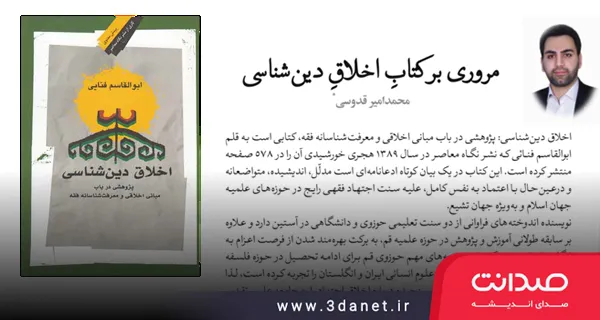
Bibliographic details of the work under review: The Ethics of Religious Studies, an inquiry into the ethical and epistemological foundations of jurisprudence, Abolqasem Fanaei. Tehran: Negah-e Moaser, 1389 [2010].
This book, spanning 604 pages, contains, in addition to a relatively lengthy preface, 7 chapters under the following titles: Chapter One, Substituting Jurisprudence for Ethics; Chapter Two, Jurisprudence and the Challenges of the Modern Age; Chapter Three, Traditional Rationality and Modern Rationality; Chapter Four, Jurisprudential Rationality and Conventional Rationality; Chapter Five, The Theoretical Contraction and Expansion of Jurisprudence; Chapter Six, The Expansion of Prophetic Jurisprudential Experience; Chapter Seven, The Cultural Translation of Religious Texts.
Critique of Chapter Seven: The Cultural Translation of Religious Texts
In the final chapter of *The Ethics of Religious Studies*, Fanaei, in a sense, seeks not only to critique conventional and standard ijtihad but also to approach the casting of a new plan. Drawing on Soroush's conception and interpretations, he calls correct and desirable ijtihad "cultural translation." In the esteemed author's view, conventional ijtihad is an instance of literal translation rather than the cultural translation of religious texts (Fanaei, 456, 1389). Fanaei's fundamental critiques of the reification of rulings in conventional jurisprudence can be formulated as follows:
The absolute knowledge and power of the Lawgiver are not sufficient for enacting eternal laws; because external and imposed factors such as linguistic and cultural limitations, the level of intellect, and the livelihood of the religion's initial audience prevent the formation of trans-temporal and trans-spatial rulings (Fanaei, 453, 1389). The eternality of a religion does not entail the eternality of all its rulings (Fanaei, 454, 1389). Fanaei practically accuses conventional jurisprudence and ijtihad of systematic heresy in religion; for he believes that traditional jurists conflate the human and non-sacred container of religion with its divine and sacred content, and heresy in religion is nothing but introducing something that is not part of religion into religion (Fanaei, 461, 1389). He believes it is a naive illusion to think that before becoming captivated by the new world, we have the power to attain a pure and unadulterated understanding of religion and then, based on that, recognize and critique the surrounding world; because the religion we know is, in fact, religion adapted to the old world, not the trans-temporal, trans-spatial, and absolute dimension of religion. Of course, Fanaei does not believe that religion is silent in the face of the new world, having nothing to say, or that it is compatible and reconcilable with any world. Fanaei considers the critique of the new world from the perspective of religion both possible and desirable, but on the condition that religion has been separated from its historical container (Fanaei, 475, 1389).
Fanaei presents 12 criteria for distinguishing the container from the content of religion:
Incompatibility with modern reason and rationality Incompatibility with innate nature (fitrah) Incompatibility with the Godhood of God Incompatibility with the humanity of humankind Incompatibility with moral values and obligations Incompatibility with the necessities and constituents of the new world Incompatibility with the good, positive, and useful aspects of the new world Incompatibility with empirical realities Incompatibility with the principles of religion Incompatibility with the aims and objectives of Sharia Incompatibility with humanity's expectations of religion Incompatibility with the new convention (urf) (Fanaei, 477, 1389). While emphasizing that the above criteria are falsificationist and pertain to the understanding of religion, not religion itself, Fanaei acknowledges that these criteria overlap and intersect with one another (Fanaei, 478, 1389). Given the limitations of the article's length, we will attempt to briefly examine each of these twelve criteria:
1_ Incompatibility with modern reason and rationality;
Considering that we have previously examined Fanaei's view on modern and traditional rationality, it seems there is no need to repeat them now.
2_ Incompatibility with innate nature (fitrah);
According to Fanaei, one of the best examples that can be cited for this criterion is natural human rights, because natural rights are innate rights; therefore, one meaning of religion being innate is that religion recognizes humanity and the natural rights derived from it (Fanaei, 2010, 494). The most important consideration that comes to mind in this regard is that, regardless of the concept of natural rights, how and by what authority are its instances determined? Undoubtedly, any list of instances of natural rights or innate matters prompts the question of on what basis and meaning it has been compiled, or faces the suggestion that some items should be removed or added. Therefore, before considering innate matters and natural rights as the criterion for distinguishing the container from the content of religion, it is necessary to clarify our own criterion for discovering and proving innate rights.
3. Incompatibility with the Lordship of God;
In the esteemed author's view, our interpretations of religious texts become "falsifiable" based on God's attributes, and oppressive understandings of religious rulings can be invalidated solely because of their incompatibility with the attribute of God's justice (Fanaei, 2010, 495). This criterion is highly ambiguous for the following reasons:
a) This criterion leads to a kind of superficiality and fragmentation in the interpretation of religion; for example, someone could reject the belief or ruling of "hatred towards the enemies of religion" based on God being Loving, Compassionate, or Merciful, or conversely, someone could accept kindness towards infidels and non-Muslims based on God being Subduer or Dominant!
b) This criterion ignores the precedence or priority of attributes. Merely emphasizing the Lordship of God does not clarify whether, for instance, God's mercy precedes His wrath or vice versa.
c) It would have been better if the esteemed author had used, for example, the term "Justice of God" instead of the title "Lordship of God," so that this criterion would at least not entail the aforementioned problems.
4. Incompatibility with Human Identity;
The author's explanations for elucidating this criterion are very general and ambiguous. Fanaei believes that a ruling or belief that cannot be reconciled with human humanity cannot be part of absolute religion (Fanaei, 2010, 497). In his view, "a human is a human"; meaning a human is not God, an angel, an animal, or an object (Fanaei, 2010, 501). A human is not God; meaning no human possesses the special rights and authorities of God, and the discernment and will of no human is the criterion for truth and falsehood, good and evil, or right and wrong, nor can they consider themselves sacred and beyond criticism (Fanaei, 2010, 501). A human is not an angel; meaning the promise of creating paradise on earth is an impossible and false promise, and reducing sin should be the goal, not eradicating it (Fanaei, 2010, 502). A human is not an animal or an object; meaning a human is a moral animal or a rational animal, and rationality and morality are the differentia separating humans from other animals, and therefore humanity is not realized without freedom and responsibility (Fanaei, 2010, 502).
In critiquing this criterion, it can be said:
a) The most important objection is that its precise difference from criterion 2 (incompatibility with human nature) is unclear.
b) The points Fanaei makes in explaining the category "a human is not God" are unclear as to what meaning and what level of truth and falsehood or right and wrong they refer to. If by right and wrong he means moral right and wrong, then it must be said that Fanaei does not even consider God to have the authority to determine the criterion in this domain, and therefore, even if a human were God (we seek refuge in God), they still would not have the right to determine the criterion for these rights and wrongs. Thus, the esteemed author's explanation is a redundant, ambiguous, and inconsistent explanation with his other beliefs. However, if Fanaei's intention by truth and falsehood is truth and falsehood in receiving and propagating religion or its interpretation, it can be said that the duty of the prophets (peace be upon them) and the Imams (peace be upon them) is precisely this, and this duty cannot be considered a violation of human identity!
c) Fanaei's explanations for the proposition "a human is not an angel," although correct, are unclear as to which view, ruling, or belief in religion they are positioned to refute, and which part of religion is actually afflicted by such a view.
د) آنچه مؤلف دربارهی «انسان، حیوان یا شیء نیست» بیان نموده، اگرچه صحیح اما بسیار مبهم است؛ اینکه آزادی و مسئولیتپذیری، تفاوت انسان با حیوانات و اشیا است و اینکه آزادی، شرط شکوفایی آدمیان است و اینکه آزادی هم حق است و هم نیاز، همگی نکاتی درست هستند، اما این نکات در مقام یک معیار برای تفکیک مظروف دین از ظرف آن واقعاً چقدر راهگشا هستند؟ این توضیحات چنان ناقص و ضمناً دوپهلو هستند که از یک سو همهی باورهای دینی موجود را میتوان به استناد آنها توجیه و از سوی دیگر میتوان رد کرد. هم الزامات و محدودیتها را تحت عنوان مسئولیتپذیری میتوان توجیه کرد و هم اینکه همهی آنها را میتوان به بهانهی آزادی به چالش کشید. این معیار بیش از آنکه یک معیار و ضابطهی تمیزبخش باشد، یک نکتهی کلی و غیرکابردی است.
5_ ناسازگاری با ارزشها و الزامات اخلاقی؛
مؤلف محترم در این بخش مثال بردهداری را دستمایهی کار قرار میدهد، او در تحلیلی خوب، سعی میکند نشان دهد که چرا جواز بردهداری را نمیتوان از زمره احکام مطلق و فراتاریخی دین به شمار آورد. نکتهی جالب تحلیل وی این است که ایشان بردهداری را ذیل عنوان «جواز مقابلهبهمثل» قرار میدهد و این مقوله را هم بهعنوان کفِ ارزشهای اخلاق اجتماعی، بخشی از دین مطلق بهحساب میآورد (فنایی،504،1389). این نحوهی مواجهه دستکم دو معنا و پیامد دارد:
الف) یک حکم میتواند تحت یک عنوان خاص، غیراخلاقی و تحت عنوانی دیگر اخلاقی قلمداد شود.
ب) حتی اگر در جهان جدید نیز بردهداری به هر دلیل رواج یابد، از باب مقابلهبهمثل میتوان دوباره آن را احیا کرد.
فنایی این نحوه از برخورد با حکم و جواز بردهداری را مصداق ترجمهی فرهنگی میداند، اما مسئله اینجا است که او ناگهان همهی تفاوتهای زن و مرد یا مسلمان و غیرمسلمان را هم مصداق احکامی غیراخلاقی برمیشمرد که یا به دلیل تحریف و یا تحمیل و یا تعمیم وارد دین شدهاند و جزئی از دین مطلق نیستند. ابهام در این است که مؤلف گرامی اولاً، چگونه میخواهد غیراخلاقی بودن این تفاوتها را ثابت کند؟ ثانیاً، چگونه میخواهد این تفاوتها را «ترجمهی فرهنگی» کند؟ البته استدلال فنایی این است که چون ارزشهای اخلاقی مطلق و تعمیمپذیر هستند و شریعت چارچوبی اخلاقی دارد، در نتیجه دینداری و بیدینی یا زن و مرد بودن یا فقیه و غیرفقیه بودن موجب تخصیص یا تقیید احکام اخلاقی نمیشود و هرگونه تبعیض مبتنی بر این امور در واقع تسری بخشیدن احکام دین تاریخی به دین فراتاریخی و مصداق بدعت است (فنایی،505،1389). اگر فنایی بخواهد به آنچه گفته و ملزومات آن پایبند بماند قاعدتاً باید تفاوتهای ناشی از امور مهمی چون تابعیت یا تخصص و ... را نیز غیراخلاقی بداند؛ بهعنوان مثال چه تفاوت تعیینکنندهای میان تمایزات حقوقی ناشی از دو مقولهی «تابعیت» و دیانت وجود دارد که سبب میشود فنایی اولی را اخلاقی اما دیگری را غیراخلاقی و بدعتآمیز بینگارد؟
6_ ناسازگاری با ضروریات و مقومات دنیای جدید؛
فنایی در مقام بیان مصداق آزادی و برابری، بیطرفی ایدئولوژیک حکومتها را از ضروریات دنیای جدید میداند (فنایی،507،1389). در این باب چند پرسش اساسی وجود دارد:
الف) مقصود از دنیای جدید چیست؟ اگر دنیای جدید در واقع همان ذهنیت و عقلانیت جدید است که در واقع این معیار چیزی غیر از معیار 1 (ناسازگاری با عقل و عقلانیت مدرن) نیست، ولی اگر منظور مؤلف محترم از دنیای جدید، بخشی از تاریخ و حوزهی جغرافیایی خاصی چون دوران پس از رنسانس و یا دنیای غرب است، باید گفت ظاهراً او خوانش فیلسوفان سیاسی لیبرال از آزادی، برابری و دمکراسی را به تمام تاریخ غرب مدرن تسری داده است. بیطرفی ایدئولوژیک از مقومات جهان جدید نیست، بلکه از مقومات نظام سیاسی برخی از کشورهای غربی و برخی از فلسفههای سیاسی در چند دههی اخیر است.
ب) فنایی میتواند و حق دارد که لیبرال باشد، اما نباید فلسفهی سیاسی لیبرال را با همهی نقاط قوت و ضعفش ملاک تمیز ظرف دین از مظروف آن یا دین مطلق از دین تطبیقشده بداند.
7_ ناسازگاری با جنبههای خوب و مثبت و مفید دنیای جدید؛
If the wisdom and reason for establishing a criterion is so that we can better distinguish different matters from one another, it must be said that this criterion in fact lacks this wisdom and itself adds to the ambiguity of the issue. What, really, is Fanaei's definition of a good and positive aspect? Which good and beneficial aspect of the modern world has been opposed by religion? Specifically, in analyzing this criterion, it must be said:
a) Fanaei considers many of the common conventions of the modern world, or what might be termed the sharia of custom, as instances of these good aspects that have been neglected (Fanaei, 1389, 510), but the customs of Westerners are by no means the pure and unadulterated product of modern ethics or rationality; besides rational experiences and findings, they are a mixture of Western history, Christianity, and the effects of certain events. Therefore, why should we consider everything in religion that is incompatible with the customs of Westerners as an instance of adapted religion and outside the realm of true religion?
b) Under the twelfth criterion (incompatibility with the custom of the time), Fanaei repeats exactly the same points, and under the seventh criterion, he mentions no example other than custom or the sharia of custom; therefore, it is unclear why there was such insistence on separating the seventh criterion from the twelfth.
8. Incompatibility with Empirical Facts;
It seems that in explaining this criterion, Fanaei has placed his secondary point and example in the main text and his primary point and example in the footnote! He believes: if it can be shown through empirical evidence that the implementation of certain punitive rulings of religion in the modern world would not fulfill the goals of religion and would contradict the philosophy of punishment, then based on that evidence, one must abandon the transmitted evidence that, hypothetically, indicates the eternity of those rulings (Fanaei, 1389, 516).
In this regard, it must be said: first, discovering the goals of religion is not a simple task, and the method for discovering them must be specified; second, proving the point that ruling A was established for the realization of goal B and nothing else requires an explanation and the determination of a method and a regulated criterion; third, the superiority of many modern punishments has not been proven based on empirical evidence, such that we would now want to set aside some religious punishments and replace them with modern ones based solely on empirical evidence; for example, corporal punishments (such as flogging) were not removed from the lexicon of the modern penal system for empirical reasons, and if anyone thinks otherwise, it would be better for them to present their reasons and documentation; for these changes were more the result of shifts in legal paradigms than purely empirical research.
9. Incompatibility with the Principles of Religion;
Under this heading, Fanaei briefly discusses some issues, the most important of which is the point that although, in the stage of establishment or in the Preserved Tablet, the branches of religion are subordinate to the principles of religion, the understanding of the faithful regarding the branches, in the stage of demonstration, is not necessarily proportionate to and subordinate to the principles of religion. As an example for his claim, he cites monotheism as one of the principles of religion and believes that any form of worship of the clergy or worship of a leader is an instance of polytheism in servitude. Interestingly, the esteemed author even considers strong suspicion sufficient for invalidating interpretations incompatible with the principles of religion and does not make this contingent upon certainty (Fanaei, 1389, 518). Regarding this criterion, several important points can be mentioned: a) An interpretation, ruling, or fatwa that is disproportionate to or contrary to the principles of religion cannot fundamentally be considered part of adapted religion, let alone be regarded as a part of absolute and transtemporal religion. b) Fanaei does not specify the meaning of the principles of religion or the criterion for distinguishing them from the branches.
10. Incompatibility with the Goals and Purposes of Sharia;
Without wishing to enter into the details of the discussion, it seems that if the esteemed author were to answer and clarify the following two questions, then this criterion could truly be considered a criterion and not an ambiguity-creating factor. a) How are the goals of the Sharia known? b) If methods can change, why must the goals necessarily be assumed to be fixed?
11. Incompatibility with Humanity's Expectation of Religion;
Fanaei believes that human expectations of religion, provided they are “reasonable” and “logical,” are suitable criteria for distinguishing the container from the contained, and no unreasonable or illogical expectation of religion can be considered part of the domain of religion. In his view, reasonable and logical expectations of religion in fact constitute the very purposes of God in revealing religion (Fanaei, 1389, 524). If Fanaei truly holds this view, then it can be said that this criterion does not differ greatly from the previous one, while the main ambiguity of the eleventh criterion is that it is not, in and of itself and independently, a distinguisher and separator of the container from the contained; rather, a) a reasonable and logical expectation in reality means being in accordance with and proportionate to the requirements of reason and the rationality of the age (being proportionate to the first criterion); b) the concept of expectation of religion and its domain, and the meaning of its being reasonable and logical, entail extensive discussions without the clarification of which the concept of expectation of religion cannot be used as a guiding criterion.
12_ Incompatibility with the Custom of the Age;
The respected author gives another name to this title: “the confirmatory nature of the religious ruling” (Fanaei, 1389, 528). He believes that the Lawgiver’s acceptance of the custom of early Islam, or His silence regarding this custom, does not mean sanctifying it and making its imposition obligatory for all later times (Fanaei, 1389, 529). In general, there are several important considerations in this regard:
a) Did the Lawgiver confirm and endorse all the customary practices of His time, or only some of them? If He endorsed some of them, that means the Sharia is not a mere follower of custom, and ultimately it can be said that the eternal laws of religion are, or should be, placed in a dialogue and dialectical process with customary practices.
b) What is the precise meaning of custom? Now, after centuries of the more or less implementation of religious laws, separating customary practices from religious precepts is not a very simple task, unless what we mean by custom is anything that has come from the modern West or anything that does not fit within the Islamic tradition.
c) What should be done given the diversity of customary laws and processes in different countries or regions within a single country?
Summary of the fundamental points and questions regarding the critique of the book
1_ Regarding the formal issues of the work, it must be said that the fact that in various instances of this critique, the author of *The Ethics of Religious Studies* has been reproached for not citing, or not precisely citing, sources does not necessarily mean or imply that these attributions are false, but rather it is due to the failure to observe research ethics in a work that claims to be about ethics and research. The book *The Ethics of Religious Studies*, despite the claim contained in its title and despite some exaggerated praise for its author, 1 firstly, in terms of the ethics and protocols of research, is not in a much better state than the level of common books in the Iranian context, and has sometimes performed below the level of prevalent research; secondly, this book fundamentally cannot be considered a serious and methodical research work or a reliable and citable source for understanding traditional or even modern rationality; because the views of none of the prominent sages, philosophers, jurists, and legal theorists are scrutinized in this work, and mostly the author’s general impression of an approach, school, or phenomenon is expressed with minimal referencing and citation.
2_ Regarding the central and substantive categories of the book, the most important issues can be raised in the form of several questions and points:
- What was stated regarding the formal issues of the book, although it certainly negates the work being research-based, in no way means denying that it is thought-provoking. By reading the book, we ponder numerous issues, learn noteworthy points, and see many seemingly obvious matters cast into the abyss of question and challenge.
- How is it that, in Fanaei’s view, “the fruits of modernity cannot and should not be separated from its roots” (Fanaei, 1389, 117), but the fruits of Islam can and should be separated and severed from its roots? How is it that “the Islamic slaughter of modernity” dries up the life-giving blood in its veins (Fanaei, 1389, 119), “but the modern slaughter of Islam” does not kill its spirit and essence?
- Believing in the intrinsic nature of human rights and its precedence over the rights of God or religion is one thing, and believing in the intrinsic nature of the claimed instances of these rights, their articles, and the diverse interpretations of them is another?
- Why does modernity have an essence, and that essence is modern ethics and rationality, and that ethics and rationality correspond solely to the reading that Fanaei articulates and perceives?
- Why should we not consider the Declaration of Human Rights as an instance of human rights adapted to the modern world, and why should we not have the right to question the manner of this adaptation and its correctness? Even if we regard the Universal Declaration of Human Rights and some of the supplementary declarations approved within the European Union as a sacred scripture, we still have the right to examine, from economic, political, sociological, psychological, and even media perspectives, the context, timing, reasons, and manner of the reception of and adherence to certain principles contained within them.
- As noted in its proper place, Fanaei's twelve criteria for distinguishing the container of religion from its content are largely ineffective and, rather than dispelling ambiguity, they create it; because, firstly, most of them are in fact a detailed and more granular expression of the first criterion (the requirements of modern reason and rationality); secondly, rather than being guides and path-openers, they themselves require solutions to clarify their meaning.
Final Point
Although, based on what has been said, I find the author of *The Ethics of Religious Studies* far more secular than other religious intellectuals and new thinkers, I never wish, citing this critique or any other seemingly scholarly reason, to provide a pretext—God forbid—to block his academic and public presence in Iran. The author of these lines seeks only dialogue and the expansion of free thought and rationality, not power struggles and laying the groundwork for restrictions. My humble opinion is that Mr. Fanaei is a thoughtful and morally upright Muslim who thinks and writes in this manner with good intentions, and the Islamic Revolution came not for regression but for intellectual elevation, and it is incumbent upon us, who walk the path of Islam and the Revolution, never to desire otherwise and never to tread any other path.
.
.
Footnotes:
As an example, refer to the statements of Mr. Mostafa Malekian in an interview titled "Living Ethically Without Government Intervention," Andisheh Pouya Magazine, Issue 15
.
.
Masoud Sadeghi's Critique of Abolqasem Fanaei's *The Ethics of Religious Studies* (Part Four)
The Ineffectiveness of the Criteria for Distinguishing the Container of Religion from its Content
Author: Masoud Sadeghi (PhD Candidate in Philosophy of Ethics)
.
.
Related Content:
Masoud Sadeghi's Critique of Abolqasem Fanaei's *The Ethics of Religious Studies* (Part One)
Masoud Sadeghi's Critique of Abolqasem Fanaei's *The Ethics of Religious Studies* (Part Two)
Masoud Sadeghi's Critique of Abolqasem Fanaei's *The Ethics of Religious Studies* (Part Three)
Masoud Sadeghi's Critique of Abolqasem Fanaei's *The Ethics of Religious Studies* (Part Four)
.
.


Discussion0 comments
No comments yet; let yours be the first voice.