Religion
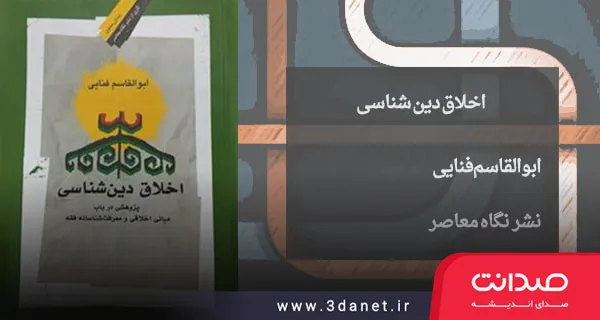
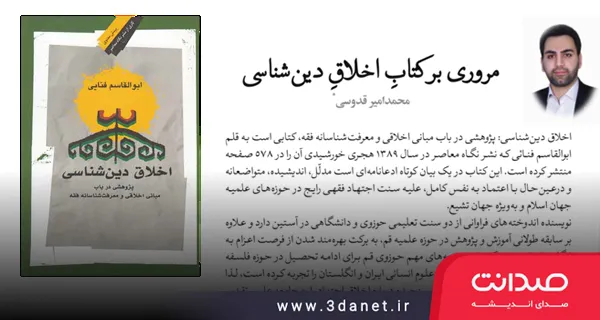
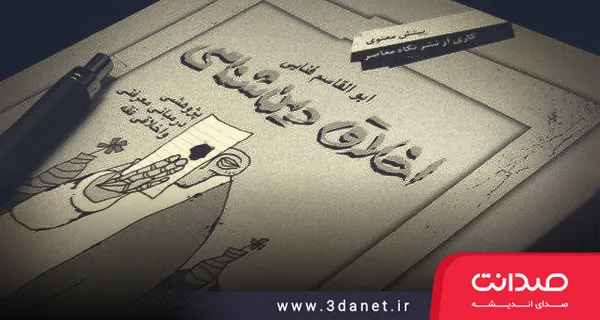
Mehdi Iranmanesh's essay 'Cultural Translation and the Ethics of Religious Studies' introducing Dr. Abolghasem Fanaei's book The Ethics of Religious Studies
In introducing Abolghasem Fanai's The Ethics of Religious Studies, Mehdi Iranmanesh argues for the necessity of a 'cultural translation' of religious texts; without it, he contends, religious knowledge and practice drift from the spirit of religion and become alienated from themselves.
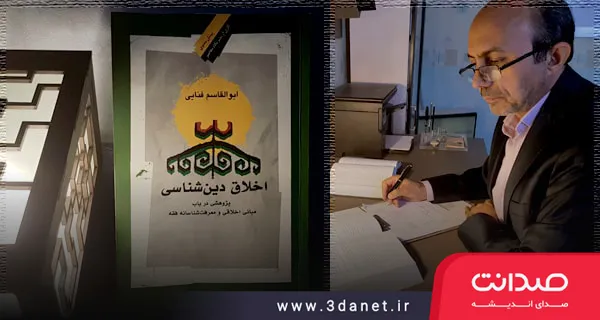
A Study in the Correct Methodology of Religious Studies and Ijtihad
Dr. Mehdi Iranmanesh
Associate Professor, Shahrood University of Technology
m.iranmanesh2012@gmail.com
I have previously had the privilege of introducing Dr. Abolghasem Fanaei’s book Religion in the Scales of Ethics. I have also had the privilege of studying his other book, The Ethics of Religious Studies, several times. Each time, I have inwardly praised and commended the esteemed author for the comprehensiveness, rationality, and ethical-centeredness reflected in this work as well. Now, in gratitude for the abundant benefits I have derived from this valuable work, I will briefly explicate and introduce one of its most important achievements, termed “cultural translation”. I hope it proves useful and guides the faithful and those interested in these subjects toward a serious and repeated study of this work.

1_Religious Texts and Cultural Translation
As the Qur’an emphasizes, God sent the prophets to clarify religion in the language of their people. And since the language of every people carries its culture, the Qur’an’s reference to sending prophets in the language of the people in fact also means sending and clarifying religion in a manner suited to the culture of that people. For mere outward linguistic commonality and merely speaking their language (in its literal sense) is not sufficient for establishing communication, dialogue, and mutual understanding between speaker and listener. On this basis, we too need cultural translation in order to properly understand the word of God and the Prophet in this age. If this cultural translation into the language and culture of the age, and in accordance with the standards of ethics, rationality, and spirituality, does not take place, both our religious studies and our religiosity will become detached from these three standards; the distancing of religious knowledge and action from any of the three standards above means the distancing of religious knowledge and action from religion itself. Something that has unfortunately occurred to a great extent in the present age. The distancing of religious knowledge and action from ethics is a significant part of this unfortunate occurrence. Human beings may err both in the position of understanding religious beliefs and rulings and in the position of adhering to these beliefs and acting upon religious rulings. Therefore, the mere fact that religion itself is ethical is by no means sufficient to ensure that religious knowledge and religious action are necessarily ethical as well. The way to prevent these errors or reduce them is for the faithful, on the one hand, to measure and attune their understanding, cognition, and formulation of the content of religious beliefs and rulings against ethics, which is a trans-religious category, and on the other hand, to constantly measure their actions against ethical standards. Our religious knowledge and action have at times also distanced themselves from the standards of rationality. This has caused our religious studies to develop a kind of estrangement from accepted rational and contemporary standards, and the behavior and practice of the faithful to exhibit a kind of disharmony and disproportion with contemporary rational standards. One reason for these unfortunate occurrences in our religious culture is that traditional religious studies and religiosity have interpreted the finality of prophethood in such a way as if the Prophet had the final word and took the final step on every subject. This interpretation has the fundamental flaw of ignoring the limitations and possibilities of the culture of the age of revelation. As if, once the agency of the agent existed, there was no longer any need for the receptivity of the recipient. Whereas the intellectual, cultural, scientific, and social capacity of each age, which are the receptivities of that age, impose their "contraction and expansion" and "form and shape" upon the realization of the agent’s purposes and agencies in that age. Consequently, the prophets, despite enjoying divine aid and support, are not omnipotent; they can only initiate a movement towards the moral and spiritual growth and perfection of human beings. Accepting this key point distances us from literalism and formalism in understanding religious texts and carries us from the body of religion to the spirit of religion. And it is connection with the spirit of religion that makes possible acquaintance and friendship with religion in this age, and teaches the followers and believers after the Prophet that they must take the subsequent steps.
We are always faced with an understanding of religious texts; until this understanding changes, no change will occur externally. If the traditional understanding of the religious text does not change, through the separation of container from contained and cultural translation, in accordance with social developments, positive external changes will be few or very costly. In other words, religious texts must undergo cultural translation for their desired good outcomes to be seen. But,
«The need of religious texts for cultural translation originates from the presupposition that religion is a sacred, heavenly "content" poured into a conventional, earthly "container," and therefore the sanctity, timelessness, and eternity of the content should not be extended to its container[1].»
In cultural translation, we are in dire need of attending to reason and rationality; in this attention to reason and rationality, deference is not set aside; what is set aside is unreasonable deference—suspending one’s own reason before the reason of others—not reasonable deference. In fact:
«Rationality requires us to make the best use of the reason of others. What is incompatible with rationality is suspending one’s own reason before the reason of others; these others include God and the Prophet as well. Human beings benefit from divine and prophetic reason to the extent that their own reason is active and flourishing[2].»
The explication, description, and re-examination of the aforementioned principles is one of the pillars of the sound ijtihad that Dr. Abolghasem Fanaei has undertaken in his book The Ethics of Religious Studies. In his view, fundamentally, "correct ijtihad" proceeds through the channel of cultural translation. For otherwise, the result of ijtihad will grow distant from the spirit of religion. It is clear that drifting away from the spirit of religion will also alienate religious language from itself. Today we are confronted with a kind of alienation of religious language. That is, a language that should have been the bearer of religious intentions and spirit does not convey such meanings and intentions. The reason for this issue is that this language has severed its connection with the past and the future. By severing the connection with the past, I mean a disregard for the historical aspects and the meanings present in the culture and era in which religion was inevitably presented in those forms. And by severing the connection with the future, I mean a disregard for the intentions or meanings that were supposed to result from our religious studies and religiosity. Now, when we look at the existing religious language, due to its rupture from the past and the future, we witness a kind of rigidity upon outward appearances. This rupture, in addition to distancing us from a genuine interpretation of religious texts, has also confronted us with adverse outcomes that we would not have expected to witness in the conduct and character of those claiming to follow religious upbringing. The depth of regret is when some—or even many—of the scholars of legal theory and jurisprudence in our seminaries practically pursue a process that severs the connection of the religious language of the verses and hadiths with their past and future. Something whose result will be the alienation of religious language. This alienation of religious language will also be reflected in our conception of "religious duty"; for instance, it will cause us to consider the outward implementation of rulings as our most important religious duty. Something which, if it exists, is certainly a confirmation of the existence of the alienation of religious language. The severance of religious language's connection with the past and the future, which is now seen in our official religious reading, has drawn criticisms toward religion and the religious; criticisms that emphasize the "unethical nature" of some "traditional jurisprudential rulings" or the "irrationality" of some of the "beliefs" of the religious. This is while, from the perspective of the model that the esteemed author delineates, both those rulings and these beliefs are "unethical" and therefore "non-religious." In this model, accepting irrational beliefs is also considered an unethical and therefore non-religious act. Such rulings, beliefs, and even actions, in order to be truly considered religious, must be "ethical." Otherwise, they are non-religious, even if they have customarily been known as religious rulings and beliefs for years. On this basis, it seems that a sympathetic understanding of this valuable project, which lies before us in the form of a weighty book, is important in many respects. Its richness, problem-solving capacity, the breadth of issues related to it, its mode of analysis, and its persuasive quality have endowed it with a profound potential for foundational reforms and placed it among the most important projects of religious intellectuals and new thinkers. Great hope must be placed in this project, which is the middle section of his three books. It is a beacon for religious intellectuals and new thinkers to, by extracting the religious teachings received from the Prophet from amidst the laws, customs, ethics, and culture of the Prophet's era, through their cultural translation in the mold of rationality and ethics suited to the new age, engage in the defense of a religious knowledge that is more ethical, more just, more spiritual, and more rational.
2_ Cultural Translation and the Correct Methodology of Religious Inference
The theory of cultural translation opens the door to a reasonable and ethical methodology for correct inference from religion. A methodology whose product is "understanding religion within the framework of ethics" and "understanding religion in harmony with modern rationality." Something that is, in truth, the reconstruction of religious understanding within the framework of the rationality of the new age and ethics. And since our religious understanding directly affects our jurisprudential understanding and inference, this reconstruction will inevitably also lead to the critique and reconstruction of jurisprudential understanding.
The esteemed author's recourse to analytical philosophy and his argumentative approach to jurisprudence have lent a methodical and rational character to his theory, to the extent that it has made possible a more precise and clearer view of the rule of "the correlation between the judgment of reason and the judgment of religious law."
It is quite clear that jurists and mujtahids, in order to ensure the possibility of attributing their religious ijtihads to the Lawgiver, need, before and beyond the faculty of ijtihad, a methodology that is as free from defects and flaws as possible, because otherwise the output of their ijtihad is in no way attributable to the Lawgiver.
The claim of the book The Ethics of Religious Studies is that the methodology of inferring religious rulings and the existing apparatus of ijtihad at the disposal of jurists is flawed and defective, and therefore in need of rethinking, correction, repair, reconstruction, and reproduction. In his view, reforming this methodology is far more valuable and necessary than calling religious scholars to learn the sciences of the age:
«The problem of religious scholars is not merely that they are unfamiliar with the sciences of the age. Even if they were familiar with these sciences, they would not utilize them in understanding the Sharia, because the epistemological values they follow in understanding the Sharia prohibit the use of these sciences in that understanding[3].»
The esteemed author, who considers the existing incorrect methodology to stem from "the substitution of jurisprudence for ethics" and "the gap that has opened between jurisprudential rationality and conventional rationality," has intervened to reform it in a fundamental and epistemological manner. It is not hidden from the knowledgeable that accepting this theory could easily subject the existing jurisprudential system to fundamental change and reforms.
In his view, "the gap that has opened between jurisprudential rationality and conventional rationality" arises from the fact that conflicts between "the custom of early Islamic society" and "the custom of the modern world" have been regarded as conflicts between Sharia and custom:
"It can be claimed that many of the existing conflicts between Sharia and custom are not, in truth, conflicts between Sharia and custom, but rather conflicts between 'the custom of early Islamic society' and 'the custom of the modern world,' and ... the mere endorsement of ancient custom by the Lawgiver in early Islam is not a justified reason for preferring that custom over new custom[4].»
Furthermore, "the gap that has opened between jurisprudential rationality and conventional rationality" sometimes arises from a failure to note that in the event of a conflict between a speculative rational ruling and a speculative transmitted ruling, precedence and preference belong to the stronger speculation—regardless of whether it is rational or transmitted—and not necessarily and always to the transmitted speculation; and since the bulk of existing jurisprudence is the product of the summation and subtraction of speculations, not certain rulings, the stronger speculation prevails. Hence, he rightly points out that since in many cases the speculation derived from human sciences, which are the product of humanity's collective reason, such as the human sciences, is much stronger than the speculation derived from isolated reports (akhbār al-āḥād), it can then be concluded that in many instances, the speculation derived from the current, evolved human sciences takes precedence over the content and speculations derived from isolated reports. This issue will completely change the face of religious rulings, and if our seminaries align with this theory and seriously consider its foundations, they will accept that the existing scientific method in the seminaries must be rearranged with a new design. It will then become clear that many existing jurisprudential rulings, which are thought to be intrinsic to religion and universal rulings, are entirely accidental to religion and purely regional rulings, and therefore their attribution to the Lawgiver must be seriously reconsidered. In fact, one of the first steps in cultural translation is to demonstrate the point that some jurisprudential rulings seemingly incompatible with rational or ethical standards are among the "accidentals" of Islamic Sharia, not its "essentials." The esteemed author points out in various statements that existing ijtihad considers rational and empirical speculations, whether in the realm of jurisprudence or in the realm of ethics, to be without value and invalid, and therefore, within the framework of such ethics and rationality, intuitive reason (= reason nourished by intuition) and empirical reason (= reason nourished by experience) are suspended in the face of transmitted reason (= reason nourished by tradition); and thus jurisprudence replaces other normative sciences such as ethics, law, moral philosophy, political philosophy, and management, because all these sciences rely on rational and empirical speculations, and this is another unfortunate event that has occurred in Islamic culture and civilization. Its misfortune lies more in the fact that it severs, or reduces to a minimum, the connection between human knowledge and jurisprudential knowledge.

3_ Some Consequences of Accepting or Rejecting the Theory of Cultural Translation
Religion is a sacred, transtemporal, and translocal matter, and therefore if its content is not separated from the specific cultural aspects of the people of the age of revelation, it will cause religious concepts to gradually become emptied of meaning; which is one of the significant factors in the growth of "irreligiosity" in modern societies. Another consequence of this issue is that the religious will equate preserving the vessel of religion with preserving religion itself and, motivated by preserving religion—but in practice preserving the vessel of religion—will hinder the "transformation and progress of human society." Because this vessel is not necessarily compatible with the vessel of the age.
"A religion that is not understood and accepted through the higher levels of rationality and ethics of an age, and is not separated from its vessel, will become something incomprehensible. The bearers of such a religion will be incapable of 'dialogue' and of providing a logical and ethical defense of the religion [5]."
On this basis, it is simplistic to think that one can first seek out pure religion and then arrange and shape everything according to it:
"Those who imagine they are first turning to religion and believe they are striving to attain a pure understanding of it, unwittingly presuppose the ancient world and its constituents;... for this reason, the product of their effort in understanding religion is a 'historical' and 'adapted' religion fitted to the ancient world, not a 'transhistorical and absolute' religion[6]."
However;
"This does not mean that religion is compatible and adaptable with every world. Some dimensions and manifestations of modern civilization are incompatible not only with the vessel of religion but with religion itself[7]."
A lack of attention to some such emphases may also lead to misunderstandings that the esteemed author addresses:
"It seems that those who insist on the intermingling of vessel and content and the necessity of separating the two, mean that modern culture and civilization, with all its evils, flaws, corruptions, and anomalies, is the criterion for separating the vessel from the content. This misunderstanding causes advocates of the traditional reading of religion to fundamentally deny the intermingling of vessel and content. In the view of this group, the cultural translation of religious texts is a form of 'eclecticism' and 'cultural invasion'[8]."
The reality is that:
"A better and deeper knowledge of the modern world helps us in distinguishing the vessel of religion from religion itself, and in distinguishing absolute religion from religion adapted to the ancient world, and a better and deeper understanding of religion will help us in identifying and separating the good and beneficial aspects of the modern world from its bad and harmful aspects[8]."
But a better and deeper knowledge of the modern world is not possible without familiarity with modern sciences and civilization, and therefore, to distinguish the vessel of religion from religion itself and to distinguish absolute religion from religion adapted to the ancient world, we must not deprive ourselves of familiarity with modern sciences.
«The new natural and human sciences, which are both constituents of the new world and a mirror of this world, are also necessary preliminaries for ijtihad and inference in religion, because the religion that contemporaries are obliged to accept and follow is a reading of religion that is appropriate and compatible with the characteristics and requirements of this world. And we can only arrive at such a reading of religion if, before referring to religious texts or simultaneously with it, we also strive for a deep understanding of the new world, and such a task is impossible without deep familiarity with the new human sciences and knowledge[8].»
This is while
«proponents of the sufficiency of conventional ijtihad believe that the new sciences play no role in understanding religion, and that using these sciences in understanding religion leads to "eclecticism" and is therefore religiously forbidden and illegitimate. This approach ultimately leads to religious fundamentalism and the decline of religion or the new civilization[9].»
Their presupposition is that without familiarity with the new sciences and without knowing the new world, one can achieve an absolute and transhistorical reading that is applicable to all times and places. But they neglect this point that:
«A belief or ruling that is incompatible with the common and natural reason of human beings living in the new world cannot be part of an absolute and transhistorical religion[10].»
Although it is obvious that "the rulings of an absolute and transhistorical religion" must be compatible with "the objectives of religion," some say that "the rulings of religion" are inherently compatible with "the objectives of religion"; therefore, in the position of understanding religion and its rulings, not only do we not need "separation of form from content" and cultural translation, but this work is even a kind of deviation. But these people confuse "religion" with "our understanding of religion" and do not pay attention to the fact that:
«The fact that we know "a priori" that "the rulings of religion" are compatible with "the objectives of religion" does not mean that our understanding and interpretation of those rulings are also "a priori" compatible with "the objectives of religion." Indeed, the reason we must test our "religious knowledge" against these criteria is that "religion" itself, in the position of establishment or the Preserved Tablet, follows these criteria, and God, the Glorified, has observed these criteria in the position of legislating religion[11].»
For example:
«We know that God's rulings are not unjust, but this knowledge does not mean that our understanding and interpretation of religious texts cannot be unjust. The incompatibility of the official and traditional reading of religion with the modern world is mainly due to the incompatibility of this reading with these criteria[12].»
A significant part of these incompatibilities is because, in the traditional reading of religion, reason has lost its true position:
«In the traditional reading of religion, reason is highly praised and glorified. But this is merely in theory, not in practice. In this reading, reason does not enjoy a worthy position in the understanding and interpretation of religion in practice. Rather, it is based on the suspension of reason in the face of transmitted texts. Because the rational justification of religious beliefs is defined as the certain and demonstrative proof of these beliefs, whereas such an approach to religious beliefs, assuming it is possible, destroys the religious nature and function of these beliefs and reduces them to mere philosophical or theological beliefs[13].»
Also, in the realm of ethics:
«Although it is claimed that the goodness and badness of actions are essential and rational, in the process of discovering moral values, reason is practically suspended in favor of transmitted sources because its judgments are deemed conjectural. The moral values of social ethics, and at their head, natural human rights, are rejected on the pretext of being conjectural or Western; and it is claimed that ethics can be Islamic or non-Islamic. Consequently, it is concluded that freedom and democracy are not Islamic values, that religious democracy is different from secular democracy, and so on [14].»
In the realm of the derivative rulings of jurisprudence, it is also claimed in theory that reason, alongside the Quran, the Sunnah, and consensus, is one of the sources of religious rulings, but in practice, reason is a potential source whose potential is never actualized. The root of this issue lies in the claim that unless the judgment of reason reaches the level of certainty, it cannot serve as a basis for rejecting or accepting a religious ruling, and based on this claim, rational certainty is considered a condition for deducing a religious ruling by means of reason. This is while:
«Outside the realm of logic and mathematics, certainty is not easily attainable. Such a condition in reality means suspending reason and denying its authority in deducing religious rulings. It is exactly like saying that the criterion for the validity of a narration is that it be of certain issuance and certain signification. Such an approach leads to the suspension of the Sunnah and the denial of its authority[15].»
But the esteemed author, for numerous reasons, recognizes rational and empirical conjectures as possessing value and validity, both in the domain of jurisprudence and in the domain of ethics. It is clear that if these reasons are accepted, reason will practically be accepted as a source and, through this channel, will cause major developments in the deduction of religious rulings; developments that will make our understanding and perception of religious and jurisprudential rulings more reason-accepting.
On the other hand, in the realm of ethics, most of the time, due to the unclear position and relationship between religion and ethics on one hand, and the supposition that the requirement of respecting religion is that everything must spring from within it on the other, and particularly because the true religion contains moral recommendations, it is supposed that ethics is a religious matter and no kind of independence or priority over religion is assumed for ethics. This perception, which many religious people have fallen into, is not a correct perception, for the numerous reasons the esteemed author presents. And it is clear that if its reasons are well understood and accepted, our understanding and perception of which ruling is truly religious and jurisprudential will become more ethical.
Although this intellectual project must also be examined regardless of its positive functions, an important result that cannot be overlooked is the jurisprudential understanding becoming more reason-accepting and more ethical. Religion will also regain its worthy respect and reverence. In fact, accepting the "extra-religious nature of ethics," which he undertook to explain in the book Religion in the Scales of Ethics, means that if some legal opinions are unethical, not only will those legal opinions be rejected, but they will fundamentally be recognized as "non-religious":
«If freedom of expression and other values enshrined in the Universal Declaration of Human Rights are moral values, if ethics is prior to religion, if moral values are extra-religious, and if the justificatory reasons for these values are stronger than the justificatory reasons for jurisprudential legal opinions, then legal opinions incompatible with human rights lose their prima facie justification and validity and are invalidated [16].»
Finally, regarding the importance of the theory of "cultural translation" or "separation of the container from the contained," it must be said:
«Without separating the container of religion from religion itself, jurisprudential ijtihad is not only incomplete and unjustified, but is fundamentally not ijtihad; it is the imitation of forefathers[17].»
4_ The Priority of Human Identity and Natural Rights over Religious Identity
Human identity takes precedence over religious identity, and the meaning of this precedence is that religion cannot ignore human identity and the value-based and normative requirements of this identity, or weaken and eliminate it and replace it with religious identity, because in that case it would have stripped the person of their humanity. This issue, regardless of its theoretical validity, will comprehensively encompass all our traditional religious and jurisprudential attitudes, understandings, and conceptions, and will provide a more rational and ethical understanding and perception for them. Consider:
« The idea that the life, property, and honor of infidels, polytheists, or opponents are not inviolable is specific to a world in which infidels, polytheists, or Sunnis do not respect the life, property, and honor of Muslims or Shiites. ... Historical evidence shows that most of these rulings were based on the (rational permissibility of) « reciprocity. ... That is, these rulings revolve around the thought, behavior, and treatment of non-Muslims towards Muslims or non-Shiites towards Shiites[18].»
On this basis, the great value and esteem that many religious people have for years placed on mere
“Oppressive and unwise interpretations of religious rulings can be invalidated solely on account of their incompatibility with the attributes of God’s justice and wisdom[23].”
Accordingly, God’s justice necessitates that the natural rights of the human being be recognized as prior to religious identity, and because justice is trans-religious, therefore:
“Natural rights are neither Islamic nor non-Islamic. Thus, a reading of religion that considers all rights to be conventional and deprives some human beings of their natural rights, or conditions their enjoyment of these rights upon the consent and will of the religious ruler and the expediency of the state, is in fact an anti-innate and murderous reading contrary to God’s generative will, even if it is compatible with the apparent meaning of religious texts that express God’s legislative will[24].”
Moreover, since the addressee of religion is the human being, religion presupposes human personhood and accepts the normative requirements of this identity as its framework. However, the emphasis on human identity has different implications and entailments: “The human being is human” means:
Firstly, the human being is not God.
Thus, no human being possesses the special rights and prerogatives of God, even as His vicegerent; therefore, one cannot act like God in the management and administration of society.
Secondly, the human being is not an angel.
Therefore, the effort to eradicate sin and corruption and the endeavor to create paradise on earth is a futile effort, contrary to the requirements of God’s wisdom and generative will.
Thirdly, the human being is not an animal or an object.
Therefore, freedom and responsibility are direct consequences of the human being’s human identity[25].”

5_ The Ethical Falsifiability of Jurisprudential Fatwas
One of the immediate results of what has been said is that:
“Jurisprudential fatwas are ‘ethically’ falsifiable; these fatwas are effective and valid only on the condition that they are compatible with moral values. And therefore, attributing anti-ethical rulings to God is among the greatest sins, and the existence of a verse or narration that apparently indicates such rulings does not absolve the individual of responsibility in this regard[26].”
Furthermore, some rulings that were considered religious rulings by jurists in the past, or even some of the practices and methods that were accepted in the history of early Islam, are in reality the result of the rulings of religion applied to the world in which that practice was prevalent, and not the rulings of the actual religion. And the fact that, for example, it has been said regarding emulation that one cannot emulate a deceased jurist has a correct basis, although it is by no means sufficient. As an example:
“The buying and selling of slaves is one of the rulings of religion applied to the world in which this practice is prevalent. Therefore, extending this ruling to a world in which slavery is considered a crime is unjustified. Islam cannot reform a world in which slavery is customary overnight. The utmost the Prophet could do was to take steps toward its abolition. ... The problem here is that jurists and interpreters of religious texts, due to an incorrect conception they have of the perfection of religion and Sharia, consider the Prophet’s initial steps toward the elimination of slavery to be the final steps, that is, the maximum that could and should be done in this regard [27].”
A mistaken conception of the perfection of religion and the Sharia has been, and continues to be, the cause of many "formal and non-substantive" inferences from the history of early Islam. In these inferences, in many cases, the "form and appearance" are accepted while the "spirit and content" are forgotten. It is not right that the traditions, customs, and habits of an era be considered the ultimate ideal of religion merely because, for example, they existed in the society of early Islam and took on a religious appearance. Therefore, fatwas are effective and valid only on the condition that they are compatible with moral values. Neglecting this issue is the source of the greatest deviations that have occurred in the Islamic world and of many atrocities committed in the name of religion:
«One of the greatest deviations and heresies that has occurred in religious thought is the distortion of the relationship between jurisprudence and ethics. If we say that the root of many of the atrocities committed in the name of religion lies here, we have not spoken extravagantly. Jurisprudence without ethics, or jurisprudence that replaces ethics, is a blade in the hand of a drunken savage[28].»
6_ The Scope of the Theory of Cultural Translation
The theory of cultural translation is a reasonable expectation of scholars of religion, because religion is for all times and this theory fulfills this expectation. This theory always takes the morality and reasonableness of religion as its principle, and in this way, it influences a wide range of religious and social issues. For example, one of the important social issues is the matter of government; and this theory, as a rule, cannot remain indifferent to it. In fact, by taking the method of good governance as a principle, it blocks the path for totalitarian, sacred, and above-criticism governments—something that is also compatible with modern rationality and trans-religious ethics.
"Modern rationality and secular or trans-religious ethics are unavoidable constituents and components of the new world, and human rights, democracy, freedom, equality, and the ideological neutrality of governments are necessities of this world. In this world, individualistic, totalitarian, maximalist, sacred, and above-criticism government does not properly and worthily fulfill the people's need for governance [29].»
Preferring the method of good governance over the good governor is, as a rule, not compatible with every reading of the branches of religion; nor is every reading compatible with the principle of monotheism, or justice, or the freedom and free will of human beings.
"A reading of the branches of religion that assumes for God a specific successor and representative on earth whose rights and authorities exceed those of other human beings, and whose command is God's command and opposition to whom is considered opposition to God, is incompatible with the principle of monotheism, even if, by an impossible assumption, hundreds of verses and narrations were at hand in favor of this reading. Clericalism and leader-worship, meaning the blind, absolute, and unquestioning acceptance of the words and commands of clerics and religious leaders, is considered a form of polytheism in worship; ...and since polytheism, according to the explicit text of the Quran, is a great injustice, God will never command it[30].»
On this basis, this theory rejects unjust readings of religion regarding the ruler and government and identifies those readings as irreligious.
"To implement justice, one must implement the rulings of religion (in the Preserved Tablet)... but the justness of the rulings of religion in the Preserved Tablet does not, in itself, guarantee the justness of jurisprudential 'interpretations' and 'inferences' from the texts. ... A reading of religion that divides citizens into first and second class, distributes political and social power and resources unequally among them, and grants rulers unaccountable authority and the ruled a responsibility without authority, is an unjust and therefore irreligious reading[31].»
بر این اساس، ناسازگاری برخی قرائتها با اصولی مانند توحید، عدالت و آزادی و اختیار آدمیان نشان میدهد که آن قرائتها اصولا غیردینیاند. اما اینجا سخن از ناسازگاری با اصول بود، و نباید صِرفِ ناسازگاری امری با ظواهر آیات و روایات، سبب شود که آن امر را ضرورتا ناسازگار با دین و یا غیردینی بدانیم؛ در چنین مواردی تنها وقتی میتوان آن امور را غیر دینی دانست که دلایل برتری از حیث اخلاقی و عقلانی موجود باشند که این ناسازگاری را تأیید کنند.
«اگر آیات و روایاتی هم داشته باشیم که ظاهرشان با دمکراسی، حقوق بشر، آزادی و برابری انسانها و سایر ضروریات و مقوّمات دنیای جدید ناسازگار باشد، نمیتوانیم ادعا کنیم که آزادی و دمکراسی با اسلام ناسازگار است و جزء ارزشهای اسلامی نیست، یا حقوق بشر اسلامی با حقوق بشر غربی فرق دارد، یا مردم سالاری دینی غیر از مردمسالاری فرادینی/ سکولار است. چنین آیات و روایاتی اگر وجود داشته باشند، احکام دین تطبیق شده بر دنیای قدیم را بیان میکنند، نه احکام دین مطلق و فراتاریخی را. به همین خاطر نمیتوان مفاد آنها را بدون ترجمۀ فرهنگی به دنیای جدید سرایت داد[28].»
بنابراین اگر دیدیم تمدن جدید و یا مظاهر آن به نام دین نفی میشود باید جستجو کنیم که آیا:
« این خود دین است که تمدن جدید و مظاهر آن را نفی میکند یا فرهنگ و تمدن قدیم است که در پوشش دین و در سایۀ قرائتی از دین که با آن فرهنگ و تمدن عجین و سازگار و موزون شده، تمدن جدید و مظاهر آن را نفی میکند؟ [32].»
بیتوجهی به این مسئله سبب طرد بسیاری از دستاوردهای معقول و مثبت بشری میشود. مثلا ممکن است هر چیز نویی را با دین یا اسلام ناسازگار بدانیم و به این دلیل آن را طرد کنیم.
عامل دیگری که سبب طرد بسیاری از دستاوردهای معقول و مثبت بشری میشود، نداشتن تئوری روشنی در قلمرو دین است. این مسئله گاه سبب میشود که چنان قلمرو دین را گسترده بدانیم که دین را جایگزین علوم عصر بپنداریم و بر اثر این استغناء، نه به محصول تجارب بشری و نه به علوم عصر خود بهای لازم را ندهیم. بنابراین:
«ما موظفیم پیش از رجوع به متون دینی، تئوری روشن و منقحی دربارۀ قلمرو دین داشته باشیم و انتظارات ما از دین به شرطی که معقول باشند میتوانند در کشف قلمرو دین به ما کمک کنند [33].»
گسترده دانستن قلمرو شریعت تا این حد که نتیجهاش عدم اعتنای کافی به محصول علوم یا تجارب بشری شود، تصور نادرستی از قلمرو شریعت و فقه است که باید دور ریخته شود. چنین تصوراتی به تنهایی برای تباه کردن دنیا و آخرت مسلمانان کافیاند. مؤلف محترم به درستی به این موارد اشاره میکنند:
«اینکه ما در اسلام مجلس قانونگذاری نداریم و دمکراسی با اسلام ناسازگار است، مبتنی بر تصور نادرستی از قلمرو شریعت و فقه است[34].»
و نیز
«اگر فقه جای علوم دیگر، مثل حقوق، اخلاق، مدیریت، سیاست و اقتصاد را بگیرد دنیا و آخرت مسلمانان را تباه خواهد کرد[35].»
البته گاه اظهار نظرها و توصیههایی در متون دینی در باب برخی موضوعات علمی شده است ولی این سبب نمیشود که آن موضوعات را جزء قلمرو دین بدانیم:
«مشابه این مسئله را میتوان در بسیاری از اظهار نظرها و توصیههایی که در متون دینی در باب طب، سیاست، اقتصاد، مدیریت، اخلاق و غیره آمده دید. آنها در حقیقت خارج از قلمرو دین و مستند به عقل و تجربهاند و قلمداد کردن این امور به عنوان دین نوعی «بدعت در دین» به شمار میرود[35].»
اما قائل شدن چنین قلمرو گستردهای برای فقه و شریعت، نه تنها سبب میشود که دین تطبیق شده بر دنیایِ قدیم جایگزین دینِ مطلق شود، که به سبب احساس استغنایی که برای جامعۀ دینداران فراهم میآورد، آنها را عملاً از دستاوردهای علمی و تجارب نیکوی بشری محروم خواهد کرد.
As noted earlier, the theory of cultural translation always takes the ethicality and rationality of religion as its principle. We now add that, just like the range of subjects related to ethics and rationality, this theory will also encompass many issues.
The esteemed author clarifies that the domain of this theory is not limited to jurisprudence and the understanding of religious rulings; rather, the understanding and interpretation of other parts and dimensions of religion also fall under this theory. He even points out that cultural translation can be used as a criterion for distinguishing the "clear" (muhkam) from the "ambiguous" (mutashabih). The clear parts are those that do not require cultural translation, and the ambiguous parts are those whose correct understanding and interpretation depend on cultural translation.
The result is that someone who, for example, in understanding and interpreting the Quran and the Sunnah, confines themselves to morphology, syntax, principles of jurisprudence, narrators, and hadith criticism, and considers themselves self-sufficient from the modern sciences, the product of their ijtihad will be a mixture of container and contained, or absolute religion and religion adapted to the ancient world.
Therefore, the first issue we must clarify our position on is determining the relationship of religion and religious knowledge with reason and modern rationality. And we have no right to extend any belief or ruling to the new world without the cultural translation of religious texts and before separating the container from the contained.
.
.
[1] The Ethics of Religious Studies – Abolghasem Fanaei – Negah-e Moaser Publishing – 2015, p. 423
[2] Ibid., p. 238
[3] Ibid., p. 297
[4] Ibid., p. 253
[5] The Etiquette of Dialogue – Mehdi Iranmanesh – Qaem Publishing – 2017 – Section on the Dialogue of Cultures, Dialogue of Religions
[6] The Ethics of Religious Studies, p. 438
[7] Ibid., p. 439
[8] Ibid., p. 440
[9] Ibid., p. 444
[10] Ibid., p. 450
[11] Ibid., p. 448
[12] Ibid., p. 449
[13] Ibid., p. 451
[14] Ibid., p. 452
[15] Ibid., p. 454
[16] Ibid., p. 457
[17] Ibid., p. 500
[18] Ibid., p. 460
[19] Ibid., p. 462
[20] Ibid., p. 474
[21] Ibid., p. 469
[22] Ibid., p. 466
[23] Ibid., p. 465
[24] Ibid. – p. 464
[25] Ibid. – p. 471
[26] Ibid. – p. 472
[27] Ibid. – p. 473
[28] Ibid. – p. 475
[29] Ibid. – p. 476
[30] Ibid. – p. 486
[31] Ibid. – p. 490
[32] Ibid. – p. 477
[33] Ibid. – p. 492
[34] Ibid. – p. 494
[35] Ibid. – p. 496
.
.
PDF file of this article
.
.

Discussion0 comments
No comments yet; let yours be the first voice.