Religion
Masoud Sadeghi's Critique of Abolghasem Fanaei's The Ethics of Religious Studies (Part Two)
Masoud Sadeghi’s critique of Fanaei’s The Ethics of Religious Studies exposes ambiguities in the definition of traditional rationality, a lack of documented references, and the author’s contradictions in confronting modernity—where Fanaei sees the West as more interconnected than identity-thinkers do.

Fanaei never clarifies precisely what he means by traditional rationality. In the course of explaining the characteristics of modern theoretical rationality, he distinguishes scientific, mystical, philosophical, and religious rationality from one another, just as, in the course of explaining modern practical rationality, he separates moral rationality from economic and instrumental rationality. Yet when he turns to traditional rationality, he suddenly abandons all these refinements and distinctions and reduces it, all at once and entirely, to naive realism.
Introduction
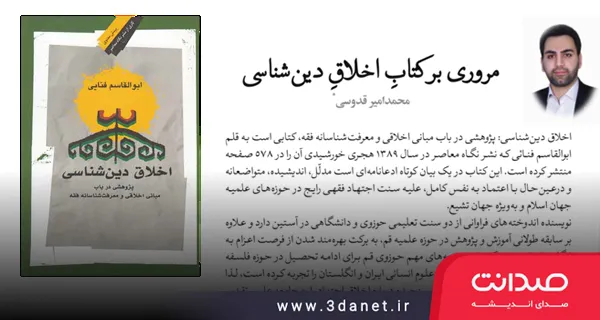
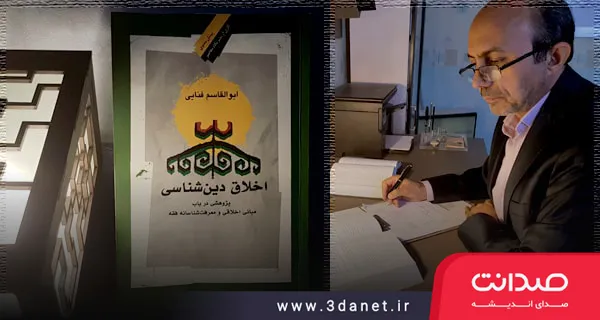
Bibliographic details of the work under review: The Ethics of Religious Studies, an inquiry into the ethical and epistemological foundations of jurisprudence, Abolghasem Fanaei, Tehran: Negah-e Moaser, 2010.
This book, spanning 604 pages, contains, in addition to a relatively lengthy preface, 7 chapters under the following titles: Chapter One, Substituting Jurisprudence for Ethics; Chapter Two, Jurisprudence and the Challenges of the Modern Age; Chapter Three, Traditional Rationality and Modern Rationality; Chapter Four, Jurisprudential Rationality and Conventional Rationality; Chapter Five, The Theoretical Contraction and Expansion of Jurisprudence; Chapter Six, The Expansion of Prophetic Jurisprudential Experience; Chapter Seven, The Cultural Translation of Religious Texts.
Critique of Chapter Two: Jurisprudence and the Challenges of the Modern Age
In this chapter, Fanaei attempts to provide a concise account of the research method in traditional jurisprudence. Referring to the principles of jurisprudence and their role, he addresses the three states of "certainty," "conjecture," and "doubt," and tries to define and distinguish them (Fanaei, 2010, 111). He then considers the admissible proofs in jurisprudence to be divisible into two categories of authoritative proofs or indications, and while defining them, he refers to the authoritativeness of conjectures, Sunni jurisprudential schools, and the Shiite view on this matter (Fanaei, 2010, 112). Interestingly, Fanaei sees no need to cite even a single reference or source for these concepts.
By enumerating 12 points (which pertain to issues such as the subject matter of jurisprudence, the goal of jurisprudence, the source of rulings, the appropriate model for understanding and regulating the relationship between humans and God, etc.), Fanaei claims to be stating some of the most important presuppositions of traditional jurisprudence. Yet, for none of these 12 presuppositions does he provide even a single source or reference from the books of any jurist or scholar of legal theory, and when, in a footnote to one of these points, he uses the expression "these jurists," aside from the literary and grammatical ambiguity implicit in the sentence, he fundamentally does not clarify which jurists he means and where (Fanaei, 2010, 113)? The important point is that, out of these 12 presuppositions, he sources 4 of them from narrative sources and does not clarify what exactly his critique is aimed at, and whether by traditional jurists he means the Infallible Imams or others!?
Fanaei believes that the connection between the fruits and the roots of modernity is an organic one, not an accidental or incidental one (Fanaei, 2010, 118). He says it is true that modernity has no essence and can be realized in various forms, but lacking an essence is not equivalent to, nor does it entail, lacking essential attributes. The point here is that he categorically, and without providing any reason or discussion, considers "the essence of modernity" to be modern ethics and rationality (Fanaei, 2010, 118), and he offers absolutely no argument for this important and foundational claim of his. Even more strangely, to justify his view, he makes a very fleeting, few-sentence reference to the category of the "normativity of meaning" in the philosophy of language, without telling the readers of the book what exactly this category means and where it has been explicated.
It is surprising that Fanaei emphasizes he is not an identitarian thinker and does not suppose that the West possesses an irreducible essence and identity. From his perspective, Easterners are not compelled to choose between the complete and unconditional rejection or acceptance of modern science, civilization, and technology (Fanaei, 2010, 119). On the one hand, Fanaei ties identitarian thinking to the following three fundamental points:
Belief in the irreducible essence and nature of the West; Belief in the impossibility of separating the motives and intentions of the creators of Western science, civilization, and technology from their creations; The obligation of Easterners to wholly and unconditionally reject or accept modern science, civilization, and technology. On the other hand, Fanaei considers his claim to be merely that he is not an identitarian thinker, but he believes:
Modern science, civilization, and technology have grown in the context and embrace of a particular conception of humanity, reason, rationality, and social ethics; one cannot separate modern science, civilization, and technology (the child or effect) from the specific Western conception of humanity, reason, rationality, and Western social ethics (the mother or cause); separating Western science, civilization, and technology from their individual ethics is possible to some extent; replacing Western social ethics with jurisprudence is not possible. The question is, on what grounds have these identity-thinkers—whom the esteemed author lumps together without any reference or basis and speaks of their beliefs—been labeled identity-thinkers, or why do they hold an erroneous belief? Is it simply because they believe the West possesses an indivisible essence and nature, or because they present the West in such a way that, firstly: in a “theoretical” encounter with the West, we are obliged to accept or reject it in its entirety; secondly: in a “practical” encounter with the West, we are practically forced to accept it, or without knowing or wanting it, we have already become Westernized.
In my view, although seemingly fundamental and theoretical differences appear between Fanaei’s view and the beliefs he attributes to the identity-thinkers, ultimately both speak of the necessity or obligation of becoming Westernized, with this difference:
1- The identity-thinkers say the West has a fixed and indivisible essence, but Fanaei believes the West has fixed and indivisible roots, fruits, and essential qualities.
2- The identity-thinkers (according to Fanaei’s claim) say that the West has achievements that are bad because of the individual intentions and ethics of their Western creators, but Easterners have no choice but to use these achievements, whereas Fanaei says the West has achievements that have nothing to do with the intentions and motives of their creators, and it is better or necessary to use them.
3- The identity-thinkers (in Fanaei’s opinion) consider us passive in the face of Western science, civilization, and technology, and Fanaei, in addition to these or in place of some of them, sees us as passive even in the face of Western “social ethics”!
Altogether, and based on the above points, it can be said that Fanaei sees the West as more interconnected than the identity-thinkers do, and considers others more compelled and passive before the West than the identity-thinkers do, although his reasons and point of departure for reaching these conclusions differ somewhat from what he attributes to the identity-thinkers.
Continuing the discussions of the third chapter, Fanaei attempts to explain the important and principal components of the new world, but under the title “Characteristics of the New World”; although he writes at length for nearly 60 pages, he does not even draw upon the view of a single Western and modern thinker or philosopher (Fanaei, pp. 125-181, 1389). Of course, he mentions Kant once, Lord Acton once, and Aristotle once, but he invokes the first merely to recall the distinction between noumenon and phenomenon (and that without a reference in the conventional, scholarly sense), draws on the second to quote a sentence about the relationship between power and justice (never mind that Acton essentially holds no place in the history of philosophy), and the third is, after all, a philosopher of antiquity, not the modern era.
It can be said that, without any clear and convincing reason, Fanaei’s effort to explain these characteristics is almost entirely summed up in quoting, summarizing, and occasionally expanding upon the views of Malekian and Soroush on this subject (Fanaei, pp. 125-128, 1389). This is despite the fact that neither Mr. Malekian nor Mr. Soroush has conducted any significant or citable “research” on this matter, nor do they claim to have done so, let alone that Fanaei would want to make their investigations and scrutinies the support and backing for the shortcoming and deficiency evident in his work, especially since these two do not even agree with each other on the principle of religion or modernity having an essence, or on the instances of the essence or essential qualities of these two categories.
An interesting point here is that amidst these very discussions, in a relatively lengthy footnote, Fanaei first explains in one sentence the belief of some “contemporary truth-mongers” regarding the dominance of the commanding self in the new world, then attacks them in somewhat poetic sentences, and finally condemns these truth-mongers for turning away from the truth and following the commanding self (Fanaei, 145, 1389).
Continuing his analysis of the characteristics of the modern world based on the views of Malekian and Soroush, Fanaei emphasizes that the new world is a world of new paradigms and discourses, and that, consequently, with the shift in the intellectual paradigm, the understanding of Sharia must inevitably change as well (Fanaei, 1389, 163). Fanaei describes the model and paradigm governing traditional jurisprudence as the “master and slave” model or the “owner and owned” model (Fanaei, 1389, 164). The important point is that, unlike figures such as Mohsen Kadivar, he does not even find this model suitable for explaining and regulating the relationship between humans and God or for ritual rulings (Fanaei, 1389, 165). Fanaei says that God is Rabb (Lord/Nurturer), not an Arbāb (master) (Fanaei, 1389, 171), and that in the modern world, slavery has become extinct and the master-slave model has lost its rationality and legitimacy (Fanaei, 1389, 173), as if, from his perspective, there is a direct connection between these two phenomena, and the rise or fall of one affects the other. In his view, Islam places great emphasis on the servitude of humans and the Lordship of God, but servitude differs from slavery, and Lordship (Rububiyyat) is different from masterhood (Arbābiyyat) (Fanaei, 1389, 178). Overall, Fanaei intends, while emphasizing the role of paradigms in understanding Sharia, to portray the master-slave paradigm as the main and prevalent model of jurisprudential and religious understanding among Muslims, and by demonstrating the inadequacy and incorrectness of this paradigm, to replace it with a rival paradigm such as God as the Ideal Observer.
There are several observations to be made in this regard:
It seems the esteemed author deliberately translates the relationship of Mawlā and ‘Abd, or God and servant in Islam, into the relationship of master and slave or owner and owned, so that through this labeling, its critique becomes easier, the reason for its invalidity becomes clearer, and its historicity and influence from the social structures of the ancient world become more apparent; for the author of The Ethics of Religious Studies never provides any reason, reference, or source indicating that any jurist or theologian explicitly believed that the human-God relationship could or should be better understood based on the relations of the “slavery system.” Our dear author says: The word “‘Abd” and its derivatives in Arabic are used both in the sense of “servant” and in the sense of “slave,” and it is used in both senses in the Quran, but in instances concerning the relationship between humans and God, it solely means servant. Slavery is incompatible with human dignity and status, but servitude to God not only has no contradiction with humanity and humaneness, but the servants of God are the freest of people; because they are servants of the “Ideal Observer,” not servants of themselves, not servants of others, and not servants of fear and greed (Fanaei, 1389, 178). It seems this statement is the best answer to Fanaei, from the expression and pen of Fanaei himself, with only this explanation: if we substitute any of the Divine Names for the term “Ideal Observer,” nothing happens to the meaning of this statement. It is clear that traditional religious believers never understood servitude to mean slavery, nor did they view their Creator as a slave-owner or creation as a house of slaves. No one, upon reading the heartfelt whispered prayer of Ali (peace be upon him) in the Kufa Mosque, whose refrain is the phrase “Mawlāya, Mawlāya” (My Master, My Master), feels that they are a slave forced to masochistically call out to their slave-owner and love his cruelty and hostility towards servants! Besides, slavery is bad because no human owns another, because it violates the inherent rights of a person, because it takes away human freedom, and because it negates human dignity; whereas, even if, hypothetically, someone were to be found who says that God’s creatures are His slaves (a hypothesis that has not been realized so far), they are in fact saying that although no human owns another and cannot do so, humans are completely and utterly owned, sustained, indebted, and in need of God, and therefore must be subordinate to Him, even though this Possessor, Sustainer, Creditor, Bestower never violates the rights of His servants and always commands justice and benevolence.
3. Fanaei considers the master-slave or owner-possession model to be influenced by the culture of slavery and sees them as similar or reflecting one another in some way, whereas proving this proposition is not so simple; for, firstly, attributing a single paradigm to the religious-studies and jurisprudential tradition of Muslims requires far more and stronger evidence than this. Secondly, even if one could claim, based on sufficient and adequate reasons, that the dominant paradigm in the Muslim tradition has been identified, the question remains: why did such a thing occur? Was a significant part of this approach not due to the capacities or even the emphases of the sacred texts and scriptures, especially the Holy Quran?
4. Fanaei categorically states that the master-slave paradigm had no rival in the ancient world (Fanaei, 1389, 179), but to refute this claim, perhaps a mere reference to the well-known and familiar model of "lover and beloved" would suffice. Someone might say that even the mystics' and Sufis' depiction of the lover-beloved model is influenced by a kind of owner-possession relationship, and the lover is always portrayed as pale-faced, delicate, frail, weary, and slain by love, while the beloved is rosy-cheeked, graceful, majestic, ruthless, reckless, indifferent, or paying little attention to the lovers. But just as the classical model of God and servant should not be confused with the slavery system, it is an even greater mistake to interpret the Muslim mystics' image and conception of the amorous relationship with God as a one-sided, top-down, slavish, or rights-denying relationship. This relationship is based on "the lover's need for the beloved" and "the beloved's longing for the lover," which causes God, in His self-sufficiency, to draw closer and closer to the servants, and the servants, in their neediness, to draw closer and closer to their God, so that in the feast of affection, a beggar sits opposite a king.
5. Fanaei categorically enumerates direct consequences for the duty-oriented discourse that emanates from the owner-possession paradigm, including that, in his belief, it causes social relations to be ostensibly regulated based on "God's right" and "man's duty" before Him, but in reality based on "force," "power," and "despotism," and in the best case, based on the "expediency of the system" (Fanaei, 1389, 177). It seems that Fanaei, in this regard, has considered the situation and fate of a specific political system in the world (for example, Iran) and, based on his political analysis, has attributed all its realities more or less to the account of the duty-oriented discourse and the owner-possession model, whereas if one is to commit such a thing, opponents of political secularism could also directly attribute all the wrongdoings of Saddam, Hitler, Ariel Sharon, etc., to secularism, or attribute all instances of human rights violations by America and Israel to the Universal Declaration of Human Rights and its shortcomings or the paradigm governing it.
In this same vein, it is worth mentioning that Fanaei, in beating the drum for the rights-oriented discourse, goes so far that he sees no need, like Kadivar, to complement the rights-oriented discourse with the duty-oriented discourse, or, like Soroush, to bring in the notion of the ashamed conscience; because he believes that the rights-oriented discourse has no defect that would require us to resort to other matters to correct it (Fanaei, 1389, 177). Of course, this statement of his in no way means denying the necessity of believing in and acting upon duties and obligations, but the esteemed author speaks of duty-centeredness as if emphasizing duty does not do justice to rights and paves the way for their deprivation. If this is truly the case, the same danger is implicit in the rights-oriented discourse as well; meaning that emphasizing rights can make us oblivious to the duties we have towards ourselves, others, and God, and gradually turn human beings into demanding and unrestrained creatures, overshadowing individual ethics and diminishing it under the banner of social freedoms.
In concluding the second chapter, Fanaei honestly reveals his belief in the necessity of Westernization and declares that some components of Western culture, especially social ethics and critical rationality, are inevitable components of modernity, and adopting the fruits and manifestations of modernity without adopting these components leads to unsolvable social crises, whether we call such an adaptation modernization or Westernization (Fanaei, 1389, 182). It seems this courage of the author is commendable; because instead of speaking in veiled terms and forcing the critic and audience to waste extra time, he fearlessly declares that even from an ethical/social ethics perspective, he believes in the necessity of Westernization, and therefore he is perhaps among the few who do not consider Westoxification a pejorative term, or should not consider it so.
Critique of Chapter Three: Traditional Rationality and Modern Rationality
In this chapter, the author promises to begin his work by addressing the characteristics of modern rationality from ontological and epistemological perspectives, and he devotes a substantial portion of this section to the presuppositions of the question of rationality, the gradational nature of rationality, rationality from an ontological perspective, rationality from an epistemological perspective, the subject of rational critique and evaluation, the definition of reason, the relationship of reason and rationality with human identity, and so on; topics about which there are several main observations:
1- These discussions apparently pertain to the totality of reason and rationality (both traditional and modern), but if this is indeed the case, why does Fanaei promise an examination of modern rationality at the beginning of the chapter, and if they pertain to modern rationality, why, over the twenty-some pages devoted to examining the aforementioned topics, is it not even once specified that the subject of discussion is the modern aspect or facet of reason and rationality, and why is the qualifier "modern" not even once applied to the terms reason or rationality?
2- The weakness of research ethics in this part of the book becomes increasingly apparent. A major portion of Fanaei's claims in this section are expressed as if there is a consensus on them due to their sheer obviousness, and no further explanation or citation of sources and references is necessary; a few examples:
- Fanaei never says exactly who, or why, or how divides practical rationality into 2 types: instrumental and non-instrumental, or into 2 types: ethical and economic (Fanaei, 1389, 205).
Fanaei does not explain where and exactly by whom, in modern epistemology, "justification" replaces "argument" (Fanaei, 1389, 207). In line with the discussion of justification, Fanaei names 9 types of justification (such as negative, positive, everyday, scientific, philosophical, elementary, final, individual, and collective justification) and also mentions their English equivalents, but does not deem it necessary to even hint at where these terms and divisions come from and who subscribes to them (Fanaei, 1389, 208). The author divides claims from a rational perspective into 3 categories: reasonable, non-reasonable, and anti-reasonable, and also reflects their English translations in a footnote, but again does not say how this division was arrived at, and whether it is a classic and well-known distinction, his own innovation, or that of a specific philosopher or philosophers (Fanaei, 1389, 208). Fanaei examines the types of theoretical rationality in 4 pages, and although he refers to the discussions known as the "theory-observation nexus" in the philosophy of science or addresses the difference between scientific experience and philosophical experience, he essentially uses no references at all (Fanaei, 1389, 209). Under the heading of duality in practical reason, Fanaei divides ethics and ethical rationality into 2 levels and refers to them as minimal ethics and maximal ethics (Fanaei, 1389, 221). This important division, which is sometimes raised within discussions such as the "boundaries of ethics," is unclear in the book whether it is a new division or based on a new foundation that Fanaei leaves unsourced, or whether it is the same one that others have also explained on occasion—in which case it must be said that this is another example of divisions and the presentation of material that are raised or recounted in the book without sufficient precision. In the continuation of the discussions of the third chapter, and after an introduction longer than the main subject itself, the author of the book finally addresses the main topic of the chapter, namely the difference between traditional and modern rationality. He believes that the most important difference in theoretical rationality is that traditional rationality is dogmatic and modern rationality is critical (Fanaei, 1389, 225). The essence of the claim of dogmatic rationality from Fanaei's perspective is as follows:
The criteria of rationality are fixed, definitive, and not subject to revision or change; Reason itself cannot be criticized or reformed; Therefore, the project of rationality is not an all-or-nothing project; meaning that the criteria of rationality are not subject to rational critique (Fanaei, 1389, 226). From the book author's perspective, the essence of the claims of modern rationality is this:
The criteria of rationality are to some extent fluid, conjectural, and subject to revision and reconsideration; reason itself is also open to critique and reform; the project of rationality is an all-or-nothing project, meaning that the criteria of rationality, or people's understanding of these criteria, are themselves subject to rational critique (ibid.). The perplexing issue in the final part of the third chapter is that Fanaei, for the above claims which are apparently the core argument in this section of the book, not only uses no references whatsoever, but also does not even state in a general and allusive manner who has coined these gems or from which intellectual tradition they have emerged. If only the matter ended there, but when the author says that there are 3 views or explanations regarding the mind-object relationship, he does not say in whose minds and where these 3 views exist (Fanaei, 1389, 228). This procedure continues even when explaining the presuppositions or consequences of naïve realism (Fanaei, 1389, 229). Based on what he categorically and without any source or reference attributes to traditional rationality, Fanaei concludes that traditional rationality is founded upon naïve realism, and subsequently proceeds to enumerate its presuppositions and consequences; points such as:
Truth is simple; Truth is naked and has no outward, inward, ambiguity, obscurity, or complexity; The human mind, in the position of acquiring knowledge, is passive and a mere spectator, acting like a flat and colorless mirror; Truth has no more than one manifestation, one image, and one interpretation; Therefore, the denial of truth or disagreement among people over truth and the interpretation of truth always originates from caprice, lust, or intellectual and carnal vices. In general, the main observations regarding Fanaei's critiques of traditional rationality can be summarized and explained as follows: Fanaei never clarifies exactly what he means by traditional rationality; in the course of explaining the characteristics of modern theoretical rationality, he distinguishes scientific, mystical, philosophical, and religious rationality from one another, just as in explaining modern practical rationality, he separates moral rationality from economic and instrumental rationality. However, when he turns to traditional rationality, he suddenly abandons all these refinements and distinctions and reduces it entirely and outright to naïve realism; whereas, firstly and fundamentally, what Fanaei calls the essence of the claims of naïve realism is not a correct and accurate reading, and secondly, it cannot be generalized to the entirety of rationality in the ancient era or the traditional world.
The author's reading of naïve realism is not accurate; because when someone, according to "Proposition 5," believes that intellectual vices are one of the sources of human disagreement in perceiving truth, that means they have accepted that, contrary to "Proposition 4," the human mind, in the position of discovering and acquiring knowledge, is not passive and a mere spectator, does not act like a flat and colorless mirror, and that reason is fallible, and just as it has virtues that enhance its function, it has vices that can plunder or stupefy reason. Fanaei might believe that this inconsistency goes back to naïve realism itself and not to his account of it, but it must be said that in any case, wherever the problem lies, it no longer means that the ancients considered the mind and reason to be a clear, serene, and infallible mirror and attributed all disagreements solely to the deliberate malice and obstinacy of individuals. Moreover, in the dispute between what is termed naïve realism and complex or critical realism, the naïve realists can accuse the modern, critical realists of having erred in diagnosing the danger and the extent of the influence of carnal vices, etc., and of having underestimated these deficiencies in the path of reasoning; that is, in this sense, the naïve and traditional realists can accuse the modern and critical realists of immaturity and label them "naïve" in this respect!
It should be added that Fanaei's reading of naïve realism is not at all easily generalizable to all forms of traditional rationality. Muslim mystics, or mystical rationality, which constitutes one of the most important pillars of traditional rationality in the Islamic world, are profoundly distant from what Fanaei considers naïve realism. Did not Khayyam say, "There is no truth and certainty within reach" (Khayyam, Quatrain No. 28), or was it not Hafez who said, "Tomorrow, when the court of Truth becomes manifest, pitiable is the wayfarer who acted upon metaphor" (Hafez, Ghazal 133). Beyond these, Rumi (whose being a mystic is beyond any doubt) in the second book of the Masnavi, likens the Divine and Truth to the Night of Qadr and says:
The Divine is the Night of Qadr, hidden among nights / So that the soul may test every night
نه همه شبها بود قدر ای جوان/ نه همه شبها بود خالی از آن
بهبیاندیگر، لُب کلام عقلانیت عرفانی و سنتی ما در این زمینه این است که حقیقت، دیریاب، نهان، صعبالوصول، منتشر و افشان است و باید آن را سرسختانه جست و پیششرط آن هم این است که دائماً نفس را از آلودگیها شست و خانهی عقل را از کاستیها و رذیلتها رُفت. عقلانیت عرفانی و سنتی ما کثرتگرایی معرفتشناسانه را قویاً به رسمیت میشناسد، چنانکه مولوی با اشاره به اصناف اهلمعرفت میگوید:
این حقیقت دان نه حقند اینهمه/ نه بهکلی گمرهانند این رمه
بگذریم از اینکه عقلانیت عرفانی ما در رئالیسم ویژهی خود تنها نیست و این رویکردش به حقیقت/ واقعیت را رهین و مؤید به بخشی از متون و نصوص و آیات و روایات متعدد دینی میداند که البته اینجا مجال بررسی آنها نیست.
در مجموع میتوان گفت: اولاً، خوانش فنایی از عقلانیت سنتی (یا رئالیسم خام از منظر او) چندان دقیق نیست؛
ثانیاً، سنت عقلانی مسلمانان قابل تقلیل به رئالیسم خام نیست؛ ثالثاً، رئالیسم انتقادی و مدرن الزاماً و کاملاً از رئالیسم سنتی برتر نیست.
فنایی از آنجا که گمان میبرد برتری و اخلاقیت عقلانیت مدرن را اثبات کرده است، بخش پایانی فصل را به انتقاد از کسانی اختصاص میدهد که به عقل مدرن یا سکولاریزم انتقاداتی دارند. به اعتقاد او برخی از کسانی که با دلایلی اخلاقی، سکولاریزم را رقیب دین و غیرقابل جمع با آن میبینند نگاه محدودی به عقل مدرن دارند و از «عقلانیت اخلاقی» که ازقضا آن هم سکولار و فرادینی است غافل هستند (فنایی،234،1389). در واقع فنایی مشکل حقیقی را در این میبیند که انسانها برای عقل اخلاقی خود حقتقدم قائل نشوند و سکولارها عقل اقتصادی را بر آن مقدم سازند و دینداران شریعت نقل را. او تصریح میکند که «مشکلی اگر هست در انکار یا تضعیف عقل و عقلانیت اخلاقی است و این مشکل ربطی به سکولاریزم ندارد؛ دینداران و بیدینان هر دو به یکسان به این درد مبتلا هستند» (فنایی،240،1389).
به نظر میرسد در این باب چند مسئله قابل توجه است:
1.فنایی چه دلیل یا دلایلی در دست دارد تا دقیقاً نشان دهد که وضعیت یک فرد یا جامعهی سکولار که سود شخصی را بر ارزشهای اخلاقی ترجیح میدهد به همان اندازه خطرناک و غیراخلاقی است که یک دیندار یا جامعهی دیندار که ارزشهای دینی را بر ارزشهای اخلاق ترجیح دهد. این نکته ازآنجهت قابل توجه است که اولاً، بسیاری از ارزشهای دینی حتی اگر ذاتاً و مفهوماً فرادینی باشند، اما عملاً، تاریخاً و مصداقاً دینی شده یا مورد تأیید دین هستند و بنابراین معمولاً و در عالم واقع و عمل (برخلاف عالم ذهن و نظر) بحث تقدم و ترجیح یکی بر دیگری چندان مطرح نیست. ثانیاً، ما به تجربه میدانیم که غالب افراد یا جوامعی که ارزشها و احکام دینی را دستمایهای برای نقض احکام اخلاقی قرار میدهند در واقع بیش از آنکه در پی ارتقا و تزکیهی دینی باشند در پی استعلا و توسعهی اقتصادی هستند و بنابراین قابلیت عقلانیت اقتصادی برای خطرآفرینی و تضعیف اخلاق بهمراتب بزرگتر از خطر تعهد یا تعصب خالصانهی دینی است.1
2.عقلانیت اقتصادی و سودمحور ذاتاً توسعهطلب و تقدمطلب است.
اقتصاد مدرن تقریباً همه چیز را به رنگ خود درآورده است و جهان را در چشم بازیگرانش به مجموعهای از ابزارها و راهکارها برای سود و سودای بیشتر مبدل میسازد. عقلانیت اقتصادی مدرن حتی زیارت را به گردشگری یا جنسیت و رابطهی جنسی را بهوسیله و جاذبهای اقتصادی تبدیل میکند و نگاه انسان به دنیای پیرامون را شدیداً تحت سیطرهی خود میگیرد. البته هیچکس نمیتواند منکر مواهب متنوع این نگرش شود، ضمناً هیچکس هم نمیتواند قدرت توسعهطلب و فزایندهی این نگرش را نیز نفی کند. کسی که عقل اقتصادی فعال و رهایی دارد به همان میزان توان صرفنظر کردن از سود اقتصادی را از دست میدهد و در واقع تنها در یک نظام سیاسی و اقتصادی بسیار سالم میتوان از انسانهای مقتصد و سود و سوداطلب انتظار داشت که به حداقل اخلاق یا انصاف پایبند باشند و در بسیاری از نقاط جهان فعلی ما چنین خواستهای دور از دسترس است.
3. The liberal ethics and human rights that Fanaei does not shy away from naming and explicitly affirming (Fanaei, 1389, 55) are intensely dependent upon or consonant with a liberal, capitalist economy, and for this reason, firstly, such a mode of living necessitates being in the shadow of a liberal economic system, and consequently, making ethics dependent on matters a large part of which lie outside the control of moral agents. Secondly, within the system of liberal ethics and economics, individual ethics becomes faint and enfeebled in light of the intense and heavy emphasis on the category of political and economic rights and freedoms.
_____________
Footnotes:
1- Perhaps one of the best examples Fanaei could cite for the danger of prioritizing ethics over religion, or reason over tradition, would be the fundamentalist and extremist Islamic groups that have stirred up an uproar of misanthropy and ethical evasion from Afghanistan to Iraq and Syria. Yet it must be said that a little sagacity and perspicacity is enough to realize that even behind the veil of these displays of piety and feigned holy struggle lie the complex economic and political equations of profiteers who, by blending and embellishing base financial and sexual motives with certain religious ideals and slogans, deceive a number of people and continually support them in order to achieve their sinister ends—ends and purposes that stem more from modern economic rationality than from religious and traditional fanaticisms.
.
.
Masoud Sadeghi's Critique of Abolghasem Fanaei's The Ethics of Religious Studies (Part Two)
The Reduction of the Muslim Rational Tradition to Naïve Realism
Author: Masoud Sadeghi (Doctoral Student in Moral Philosophy)
.
.
Related Content:
Masoud Sadeghi's Critique of Abolghasem Fanaei's The Ethics of Religious Studies (Part One)
Masoud Sadeghi's Critique of Abolghasem Fanaei's The Ethics of Religious Studies (Part Two)
Masoud Sadeghi's Critique of Abolghasem Fanaei's The Ethics of Religious Studies (Part Three)
Masoud Sadeghi's Critique of Abolghasem Fanaei's The Ethics of Religious Studies (Part Four)
.
.

Discussion0 comments
No comments yet; let yours be the first voice.