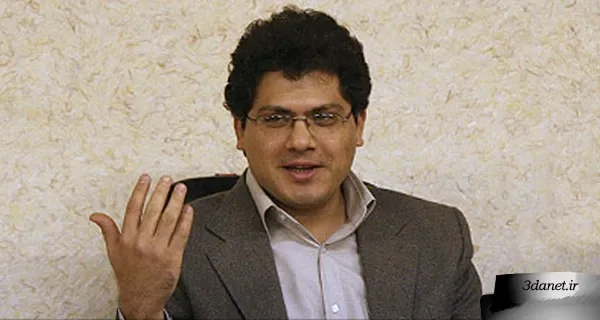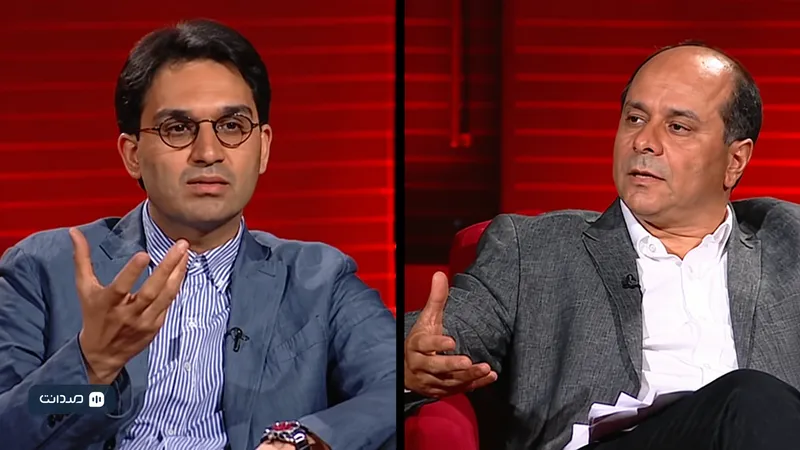
In this lecture, Hossein Sheykh Rezaee examines the relationship between disagreement and relativism in epistemology. The focus is on faultless disagreements and fundamental disagreements; cases in which judging truth, error, and rationality is not as straightforward as in ordinary epistemic disputes.
This video features a lecture by Hossein Sheykh Rezaee on the topic of "Disagreement and Relativism." The discussion begins with an issue that holds a significant place in contemporary epistemology: when two people, especially two epistemic peers, disagree about a proposition or a fact, must we accept that at least one of them is in error?
The lecture then moves beyond ordinary disagreements and addresses two specific types: faultless disagreement and fundamental disagreement. In faultless disagreement, such as judgments about taste and preference, it is difficult to claim that one of the two parties is definitely mistaken. In fundamental disagreement, the parties speak from different epistemic frameworks; frameworks that each appear rational from within, but whose impartial comparison from the outside is not simple.
One important example of this discussion is the disagreement between a scientific and secular worldview on the one hand, and a religious worldview on the other. Some philosophers have attempted to show that such disagreements support a form of relativism, whether at the semantic or the epistemic level. However, the lecture emphasizes that the relativism in question does not necessarily mean the collapse of dialogue or the impossibility of shared rationality.
The significance of this discussion lies in its moving the problem of disagreement from the level of theoretical polemics into everyday life, religious and secular dialogues, and moral, aesthetic, and worldview disputes. This video is suitable for those interested in philosophy, epistemology, religion, science, relativism, rationality, and the possibility of dialogue between differing perspectives.