This conversation, part of the dossier "Analytic Philosophy in Everyday Life," addresses the relationship between analytic philosophy and the environment. Amir Ehsan Karbasizadeh, Hossein Sheykh Rezaei, and Mohammad Reza Vaez examine in this session how the conceptual and argumentative tools of analytic philosophy can help us understand environmental crises and our moral responsibility.
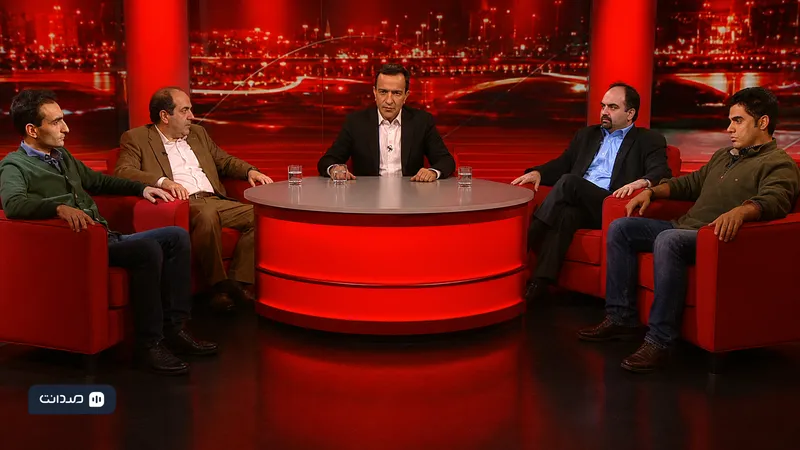
This video is part of the dossier "Analytic Philosophy in Everyday Life" and is dedicated to the topic "Analytic Philosophy and the Environment." In this conversation, Amir Ehsan Karbasizadeh, a faculty member of the Philosophy Department at the University of Isfahan, and Hossein Sheykh Rezaei, director of the Science Studies Department at the Iranian Institute of Philosophy, hosted by Mohammad Reza Vaez, a researcher in philosophy of science at the University of Bonn, Germany, discuss the relationship between analytic philosophy and environmental issues.
The central focus of the conversation is that analytic philosophy, contrary to the common perception that views it merely as abstract, academic knowledge, can play a role in confronting the concrete problems of everyday life. The environmental crisis, climate change, the moral responsibility of the present generation toward future generations, the relationship between science and policymaking, and the limits of individual and collective commitment are among the issues that require conceptual precision and clear reasoning.
In such a discussion, analytic philosophy can help clarify concepts such as responsibility, rights, harm, scientific evidence, risk, intergenerational justice, and the value of nature. The environmental issue is not merely a technical or scientific problem; rather, it is intertwined with ethics, politics, economics, lifestyle, and our understanding of humanity's place in the world.
The importance of this video lies in linking philosophy with one of the most significant challenges of our time. This conversation is suitable for audiences interested in philosophy, moral philosophy, science, the environment, public policy, animal rights, and the relationship between theoretical thought and everyday life.