Iranian thinker
Abolghasem Fanaei
Abolghasem FanaeiPhilosophy of religion and ethicsIranianb. 1959
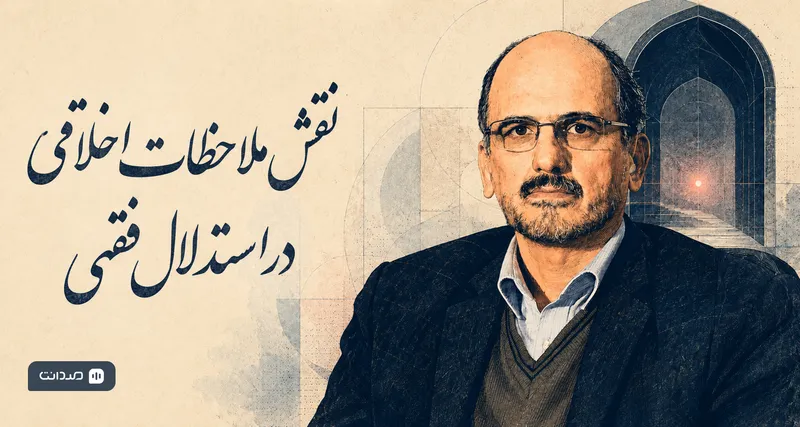
Ethics can and must serve as the criterion for the critique of religious understanding; without ethical standards, jurisprudence and theology remain exposed to serious error.
In their times
Open in the Timeline of ThoughtInfluenced3


Influenced by2


Students1

Critiqued2


Same school2


Contemporaries2


Life and Thought
Abolghasem Fanaei, born in 1959 in Tehran, is a researcher in moral philosophy and theology who focuses on the relation between religion and ethics and the priority of ethics over religion. He has both seminary and university training, and his works on the ethical critique of religious understanding have been controversial.
Abolghasem Fanaei, born in 1959 in Tehran, is a researcher in moral philosophy, moral theology and the relation between religion and ethics. He is regarded as one of the important figures in contemporary debates on the priority of ethics over religion, the ethics of religious studies, the ethics of jurisprudence and the possibility of an ethical critique of religious understanding in Iran. Fanaei has both seminary education and academic training in moral philosophy; this combination places his intellectual position at the boundary between jurisprudence, theology, philosophy of religion and philosophical ethics.
He entered the Qom seminary in 1979 and, after completing the introductory and intermediate levels, attended advanced classes (dars-e kharej) in jurisprudence and principles for several years. At university he obtained a master’s degree in theology and Islamic studies from the University of Qom and then went to England for further study. Fanaei received both his master’s and his doctorate in moral philosophy from the University of Sheffield. The website of Mofid University also presents him as an assistant professor in the Department of Philosophy and a graduate in moral philosophy from the University of Sheffield.
The central axis of Fanaei’s thought is the relation between religion and ethics. In his works he defends the idea that ethics can and should serve as a criterion for the critique of religious understanding. In his view, religious studies, jurisprudence and theology, without commitment to ethical standards, are exposed to epistemic and practical errors. For this reason, in the book The Ethics of Religious Studies he has sought to examine the epistemic and ethical foundations of jurisprudence and religious understanding.
The book Religion in the Scale of Ethics is one of his important works. It addresses the relation between religious ethics and secular ethics and attempts to show that ethics cannot be reduced merely to religious command. In bibliographic introductions this work is also presented as a study of the relation between religious ethics and secular ethics.
Fanaei’s views have been controversial in the Iranian intellectual sphere. Some religious reformers have regarded his works, especially The Ethics of Religious Studies, as among the most serious efforts to reconstruct a rational and ethical understanding of religion. In contrast, a number of seminary and university critics have criticized his theory of the priority of ethics over religion and the possibility of an ethical critique of jurisprudence.
Bibliography
Writings and transcribed lectures6 titles
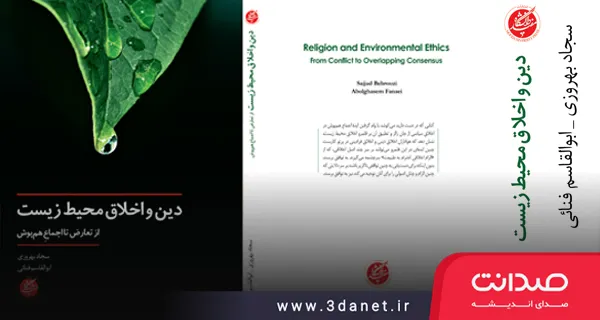
Religion and Environmental Ethics
Religion on the Scales of Ethics: The Relationship Between Religious Ethics and Secular Ethics
The Ethics of Religious Studies
The Spell of the Red Rose: An Inquiry into the Moral Explanation of the Karbala Event
Religion and Environmental Ethics: From Conflict to Overlapping Consensus
The Ethics of Religious Observance