Foreign thinker
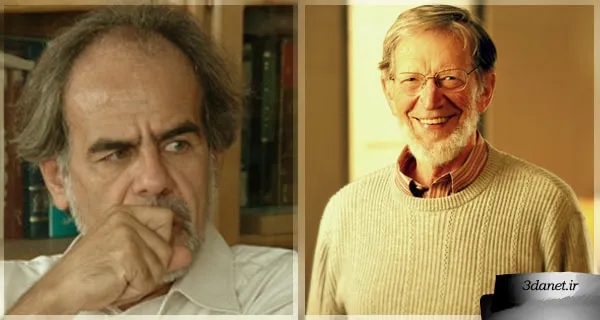
Alvin Plantinga
Alvin PlantingaPhilosophy of Religion and EpistemologyAmerican
If we don’t know that there is such a person as God, we don’t know the first thing (the most important thing) about ourselves, each other, and our world.
Life and Thought
Alvin Plantinga (born 1932) is an American analytic philosopher and one of the most influential figures in contemporary philosophy of religion. He is known for the free-will defense against the problem of evil, Reformed epistemology, and the evolutionary argument against naturalism, and has played a major role in the revival of Christian philosophy in academic settings.
Alvin Carl Plantinga was born on November 15, 1932, in Ann Arbor, Michigan. His father, Cornelius Plantinga, was a philosopher and a first-generation Dutch immigrant, and his mother came from a Dutch-American family. He grew up in the Christian Reformed Church tradition, studied at Calvin College, earned a master’s degree at the University of Michigan, and received his Ph.D. in philosophy from Yale University in 1958.
Plantinga first taught at Wayne State University, then from 1963 to 1982 at Calvin College. From 1982 until his retirement in 2010 he was professor of philosophy at the University of Notre Dame, where he held the John A. O’Brien Chair. He is a co-founder of the Society of Christian Philosophers and has exerted a profound influence on philosophy of religion, epistemology, and metaphysics.
His most important works include God, Freedom, and Evil (which formulates the free-will defense), Knowledge and Christian Belief, and Warranted Christian Belief. In Reformed epistemology Plantinga argues that belief in God can be “properly basic” and does not require classical arguments for its justification. With the evolutionary argument against naturalism he shows that the combination of naturalism and evolutionary theory undermines the reliability of our beliefs. He is regarded as one of the central figures in the revival of theistic philosophy within analytic philosophy in the twentieth and twenty-first centuries.