Philosophy
A Critique of Plantinga's View on the Self-Evidence of God's Existence and Religious Propositions by Mostafa Malekian
Critiquing Plantinga, Malekian argues that the self-evidence of propositions like “God exists” depends on overcoming three hurdles—conceptual, referential, and justificatory—and warns that extending self-evidence to religious propositions is dangerous, while defining the criterion of self-evidence as a kind of [conceptual?].
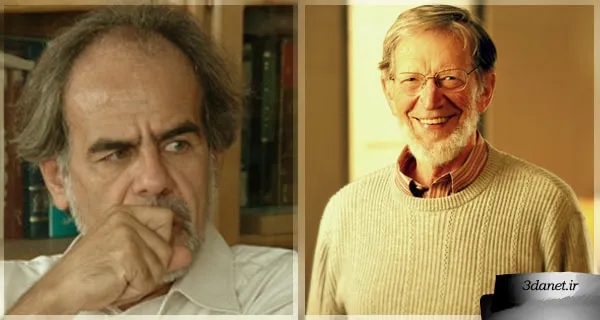
Some believe that we hold the proposition "God exists" because this proposition is self-evident and requires no argument; therefore, one who holds that the proposition "God exists" is self-evident naturally believes that proving the proposition "God exists" requires no demonstration.
But there is a point, and that is that someone who says the proposition "God exists" is self-evident must, in my view, overcome three hurdles, and if they try to overcome these three hurdles, they will regret it, and these three hurdles are of the kind that—and what will make you understand what the hurdles are!
The First Hurdle: Conceptual Clarification of the Term "Self-Evidence" Itself
First, one must specify which of the following cases "self-evident" refers to?
1. It does not require a reason, but providing a reason for it is possible.
2. It does not require a reason, but providing a reason for it is impossible.
3. It requires a reason, and providing a reason for it is possible.
4. It requires a reason, but providing a reason for it is impossible.
Consider the need for a reason in one column, and the possibility or impossibility of argument in another.
Certainly, the third case is not self-evident, namely that which requires a reason and for which a reason is also possible.
But which of the other three cases do we call self-evident?
The first, second, or fourth case?
Question: The fourth case is even worse than the third!
Answer: This is because a person must always base an argument on premises; when it cannot be based on premises, we are compelled to take it as self-evident.
Question: So is it a psychological state?
Answer: Let me give a few examples:
Example 1: Suppose that if A is B and B is C, then A is C. Can a reason be given for this syllogism? Because any reason you want to give, you must return to the first mood of the first figure, and for the validity of this mood, no further reason can be given.
That is, sometimes because we cannot provide a reason, we say this thing is self-evident, because we say, "Come on, dear fellow, doesn't every proof require us to bring a minor premise and a major premise?" We say yes, then we say, "Doesn't the outcome of all successful proofs ultimately lead back to the first mood of the first figure?" Then, that for which no argument can be made, the clever ones call self-evident!
Example 2: Who, from now until seventy years hence, can prove that an external world exists independent of my mind? Do you see? A reason cannot be given for it; since we cannot provide a reason for it, we say it is self-evident that an external world exists independent of our mind.
Example 3: If someone does not accept the principle of causality and says, "Provide me with a reason," it is impossible to give them a reason. Why is it impossible? Because if you have no reason for the principle of causality, can you provide a reason for it? Since argumentation means that the premises become the cause for the conclusion, or in more precise terms, the acceptance of the premises becomes the cause for the acceptance of the conclusion.
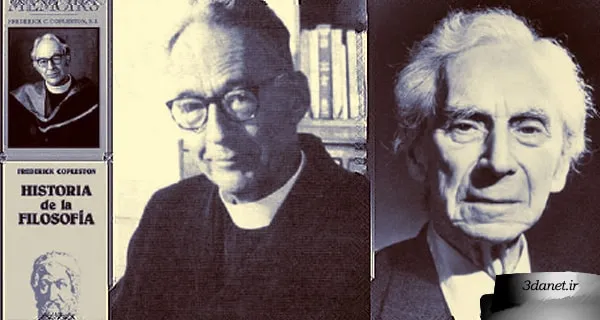
Example 4: Bertrand Russell said, "I believe the external world came into existence five minutes ago." Who can refute my claim? What proof can be offered that the universe did not come into existence five minutes ago? Since we have no reason, we say it is self-evident that...
Continue in this manner, and so on and so forth.
Example 5: Suppose someone said that the universe is made in such a way that one-tenth is added to the length, width, and depth of the natural world every day and night. How can one refute this claim? To say that we measured it today and it was one meter, and tomorrow morning we see it is still one meter, the answer to that is that the meter stick (with which we measured) has also increased by one-tenth.
But if you pay attention, as soon as we encounter such cases, we have one way to show our agreement and another way to show our disagreement to opponents.
For our agreement, we say it is self-evident.
For opponents, we say, "This is sophistry."
I added this third case to say that there truly are some matters that require proof, but we cannot provide a proof for them.
Why? Because if it were possible to provide a proof for everything, we would ultimately fall into circular reasoning or infinite regress; we have no other choice! Even if someone does not accept this and demands a proof from us.
Those for which we have no proof are self-evident, meaning those for which humankind has no proof. If humankind sees that it cannot provide a proof for a proposition, even if that proposition is in need of proof, in reality we count it among the self-evident.
But conceptual clarification is not so difficult; it is the second that is difficult, and that is the identification of instances of self-evident propositions:
The Second Hurdle: Identifying Instances of Self-Evident Propositions
What are the instances of self-evident propositions? Let us assume the self-evident is either this or that! Should one consider only what Kant called analytic propositions as self-evident, or in addition to those, should one consider what our ancients called analytic as self-evident, and beyond those, should one also consider the data of consciousness (wijdāniyyāt) as self-evident? For example, "I am thirsty" or "I am sad."
Should sense-data (maḥsūsāt) also be considered self-evident? Should those propositions that our mind is incapable of not affirming also be considered self-evident?
The number of self-evident propositions is a matter of immense dispute. From the time of Aristotle to our present day, all those who believe in a set of self-evident propositions disagree.
Now, the matter reaches a point where, in our time, a thoughtful person from the great civilized world, like Plantinga, says that the proposition "God exists" is also self-evident. That is, self-evident propositions have expanded so much in his view that he says the proposition "God exists" is self-evident, and "life after death exists" is also self-evident. And interestingly, some Christian theologians believe that, for example, "Christ is God" is also among the self-evident. I want to say that if you take too broad and loose an approach, it does not only end to the benefit of you and me; sometimes it also ends to the benefit of our enemies!
One day they say "Christ is God" has become self-evident; then bring on the donkey and load up the beans!!!
For how on earth has "God exists" become self-evident...
But truly, when Plantinga said the proposition "God exists," he said it is properly basic; that is, fundamentally basic!
The Third Hurdle: Proof for the Self-Evidence of Any Proposition
Suppose someone says, "I consider proposition P, such as 'God exists,' to be self-evident."
Now, the discussion is about the fact that the proposition "Proposition P is self-evident"—this claim must be proven; otherwise, anyone could claim they consider any proposition self-evident.
Whenever anyone claims self-evidence for proposition P, this itself is another proposition. This new proposition is theoretical, meaning proving the self-evidence of proposition P requires a proof.
The Difference Between the Second and Third Hurdles
The second issue was that the number of self-evident propositions is a matter of dispute, but in the third issue, we need a proof for each and every one of these self-evident propositions.
The Criterion for Self-Evidence and Clarity Is Species-Wide
We never said self-evidence is clarity, and when we speak of clarity, it is not clarity for the individual. "I am thirsty" requires no proof for me, but the self-evidence we are talking about now must be for humankind, or it must be of the first, second, or fourth type; that is, what anyone finds within themselves and expresses without any interference is self-evident for that person, but it is not self-evident for humankind. The criterion for self-evidence is the species; needing no proof, the criterion is humankind. If we find one person who says something is self-evident to them, but humankind says it is not self-evident to us, (in truth) it is no longer self-evident.
Has the one who says the proposition "God exists" is self-evident also proven this self-evidence?
The Origin of Plantinga's View on the Self-Evidence of God's Existence
Do you know what Plantinga says? Without him stating it explicitly anywhere, I had said this several years ago, and when he himself came to Iran, he accepted it when it was put to him.
He is influenced by Wittgenstein; Wittgenstein said that being self-evident or not is not an absolute matter and is related to the form of life.
He has a view famous as the language game. From his language game, a second thing is created called the theory of the form of life. From this theory, another theory is created called the world-picture.
This is a theory I do not want to enter into. Wittgenstein wants to say, my dear fellow, it is the world-picture that creates clarity and lack of clarity for humans, creates obscurity and lack of obscurity, creates ambiguity and lack of ambiguity. What does that mean? It means a human has a specific world-picture, a specific proposition is self-evident for them. What does that mean? It means it is clear to them. Therefore, according to Wittgenstein, being self-evident or not, and being theoretical or not, does not depend on humankind and is not absolute; it is a completely relative matter. For those who share a common world-picture, some things require no proof and other things require proof. Another group that has a different world-picture finds some things require no proof and other things require proof.
And in the same way, everyone—that is, the possessor of a world-picture, whoever we may be—finds some things so clear that they require no proof, and so on.
Because Wittgenstein spoke in this way, one can no longer say that a proposition is self-evident for all humankind or theoretical for all humankind, unless among the numerous world-pictures that have emerged throughout human history, some things are common. To the extent that world-pictures share commonalities, some things have universal clarity and some things have universal obscurity. But if these world-pictures have no common components, then we have no absolute self-evident propositions and no absolute theoretical propositions.
Wittgenstein's view is that the self-evident and the theoretical depend entirely on the world-picture of humans, and your world-picture depends on your form of life, and your form of life depends on your language game.
Therefore, every different group has different self-evident propositions and different theoretical propositions.
But if a common component or components are found among world-pictures, to the extent that our human world-pictures have become common, we might have a few common theoretical propositions or a few common self-evident propositions—though according to most of his commentators, Wittgenstein himself did not believe in such a thing, which is another long story.
Now, Plantinga has accepted this world-picture view of Wittgenstein's. Of course, I have not seen it anywhere in his works up to now, as I am speaking with you, but when I myself was reading his works, it completely seemed to me that this speech is under the influence of Wittgenstein's works.
On the trip he made to Iran, when it was put to him, he accepted it; when it was said to him, he accepted the world-picture.
He says, consider the Christian picture of the world: the proposition “God exists” needs no reason, just as in the Buddhist picture of the world, samsara and the wheel of life need no reason, and reincarnation needs no reason. If someone asks, “Reason for reincarnation?” it becomes clear that even if their identity card says they are Buddhist, it becomes clear that in reality they are not Buddhist.
Now, what he wants to say is this: we Christians, do not think we have acted against rationality. We Christians do not bring reasons for what is evident to us; every rational person is the same!
Just as for us Muslims, the existence of God is evident, and in this respect our picture of the world is shared, but for us, the Resurrection is evident and reincarnation needs a reason, while for Buddhists, reincarnation is evident and the Resurrection needs a reason.
Now, to put it very rudely, this is fine for our aunts—meaning Mr. Plantinga’s aunt and my aunt, Malekian’s; it’s not fine for our God!
Ultimately, it amounts to nothing more than this: anyone can become a member of a sect and say that what that sect has reasons for, we have no reasons for, because we are members of this sect. And in my opinion, this is a very, very flimsy statement!
Of course, our predecessors who said God exists, and some of our mystics who said it—they did not say it through the picture of the world; many of our predecessors and mystics believed that the proposition “God exists” is self-evident. And in our supplications we have: “When would I need a proof that points to You? What other than You has a manifestation that You do not have, so that it might be the one to make You manifest?”
This is also of the same kind, and they too consider it self-evident, but not through the picture of the world, form of life, and language game, which, in my view, is a flimsy statement, this statement.
Question: Is it also in the Quran?
Answer: Yes; the Quran says, “Is there doubt about God?”
Question: So, in your esteemed opinion, is this self-evidence and clarity for humankind a better criterion?
Answer: Yes, yes! In my opinion, if someone wants to say it, they must show that it is clear to humankind! Otherwise, I ultimately do not know how it could be...? In any case, such a statement has been made! The great scholars of the world also make such statements; we, of course, have no devotion to them. I am amazed that a person in the early twenty-first century, and the early twentieth century, in America, as a theologian and even a philosopher and epistemologist, comes and speaks of this: that the proposition “God exists” and “life after death,” and he has a theology—in the third volume of his book[1] he says even “Christ is God” is properly basic, a properly basic proposition. Well, this is one of those statements!
Question: Is this statement from the later Wittgenstein?
Answer: Yes, Wittgenstein of the Philosophical Investigations, not Wittgenstein of the Tractatus Logico-Philosophicus.
[1] .The professor probably means the following book:
plantinga, warrant: The currrent Debate, New york: Oxfotd University press,۲۰۰۰
.
.
Download the text file: A Critique of Plantinga's View
Download the audio file of the critique of Plantinga's view
.
.
Source: Part of session 4 of the lecture series on Arguments for the Negation and Affirmation of God , Tarbiat Modares University, 2000s
.
.


Discussion1 comments
سلام اگر ممکن است درسگفتار براهین نفی واثبات خدا ( 4جلسه)که اینجا بخشی از آنرا آورده آید به صورت کامل در سایت قرار دهید.ممنون