Philosophy
Aquinas's Debt to Muslim Thinkers in Formulating the Five Ways
In his famous Five Ways for proving the existence of God, Thomas Aquinas draws on the efforts of Muslim philosophers in at least four of his arguments. This Christian theologian's indebtedness to Islamic thinkers in presenting proofs for God's existence is entirely evident.
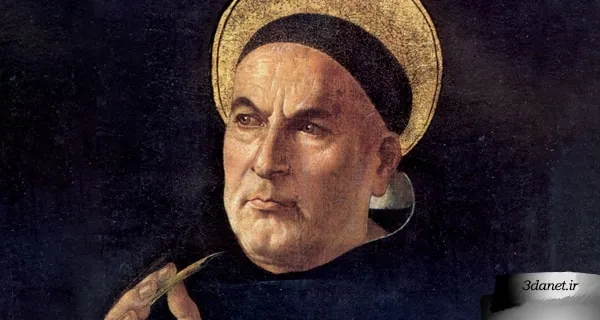
This article briefly examines Thomas Aquinas's debt to Muslim thinkers in one of his most fundamental views, namely the arguments for the existence of God, and demonstrates his indebtedness to Muslim philosophers. Firstly, Aquinas considers proving the existence of God through reasoning to be a necessary matter...
Aquinas's Debt to Muslim Thinkers in Presenting the Five Ways of Proving the Existence of God
Abstract
This article briefly examines Thomas Aquinas's debt to Muslim thinkers in one of his most fundamental views, namely the arguments for the existence of God, and demonstrates his indebtedness to Muslim philosophers. Firstly, Aquinas considers proving the existence of God through reasoning to be a necessary matter. Secondly, he has presented five ways and arguments in this regard, in at least four of which he has benefited from the efforts of Muslim philosophers. His fifth argument also lacks considerable strength.
Keywords: Thomas Aquinas, argument from motion, argument from efficient cause, argument from necessary and possible existence, argument from gradation, and argument from final cause.
Introduction
Thomas Aquinas is undoubtedly one of the greatest Christian theologians, particularly within Catholic Christianity. His works and thoughts still flow among them in the form of Thomistic thought and are regarded by Christian theologians as a powerful intellectual current. His effort in presenting argumentative views in various fields and his indebtedness to Muslim thinkers is quite evident. Now, what is examined in this article concerns one of the most important subjects that Aquinas addressed, demonstrating his debt to Muslim philosophers and theologians.
Aquinas formulated the proofs for the existence of God in the form of five arguments, which have become famous as Aquinas's Five Ways. These five ways and arguments are: the argument from motion, the argument from efficient cause, the argument from necessary and possible existence, the argument from gradation, and the argument from final cause. As a prelude to demonstrating his debt to Muslim thinkers, it is necessary to consider his life and works.
Life and Some Works1
St. Thomas Aquinas,2 was born early in 1225 CE at Roccasecca,3 near the city of Naples. He was the seventh son of Count Aquino. When he was five years old, owing to his family's excessive interest and very high expectations, he was sent to the Benedictine4 monastery at Monte Cassino5 for his education.6 After nine years of study at this monastery and abbey, he was forced to leave the abbey7 due to its occupation by the Emperor's soldiers and returned to his family. After a short while, he went to the University of Naples—which had been established by the Emperor in opposition to the papal schools—to continue his studies; there he learned the seven liberal arts: logic, semantics and rhetoric, mathematics, geometry, grammar, music, and astronomy. During this period, he became acquainted with philosophy and philosophical discussions, studied Aristotle's logical treatises under a master named Peter of Ireland, and became familiar with Aristotle's works in various fields. At the age of nineteen (1244 CE), by joining the brotherhood of Dominican friars, which at that time attracted little public attention, he provoked the anger of his family; for they wished their son to don the monastic habit of the Benedictine order.8 To help him escape his family's displeasure, the Dominican friars sent him off to Paris; but along the way, he was abducted by his brothers and imprisoned in his home for over a year. During this time, when his father had passed away, his mother and other family members made great efforts to dissuade him from his decision; but they did not succeed. He remained firm and steadfast in his choice and refused to abandon his loyalty to the Dominican order; finally, his family allowed him to return to that order and resume his studies.9 After being freed from Roccasecca, Thomas went to the German city of Cologne and from 1248 CE to 1252 CE studied under his famous master, Albert the Great.10 Albert, who possessed a special genius, was able to recognize Aquinas's talent and, with particular insistence, persuaded the heads of the Dominican order to send him to the University of Paris to receive his doctorate and professorship. Aquinas was not very popular among his classmates, so much so that, because of his large build and slow movements, they called him the dumb ox. Albert the Great, in response to this, would say that this dumb ox would one day fill the whole world with his bellowing.
Aquinas entered the University of Paris in 1252 CE to attain the rank of professorship there by delivering a series of lectures. At the age of thirty, he became a lecturer at the University of Paris. In that era, due to the numerous criticisms directed at the Dominican order, he devoted most of his time to writing refutations of those criticisms; nevertheless, he did not neglect writing in other fields. He authored two short works entitled On the Principles of Nature and On Being and Essence, which elucidated Aristotelian views and those of Aristotelian followers and commentators. These two works, especially the latter, gained widespread recognition and were used as textbooks. From 1256 CE to 1259 CE, he was engaged in interpreting the Holy Scripture, and the result of this period is the exegetical books that have survived from him. During this same period, Aquinas put forward his view on the theory of allegory, according to which the concepts in the Holy Scripture must be interpreted allegorically.11
In 1259, because an English Dominican named William of Alton succeeded Thomas in the chair of theology, he left Paris for Italy and spent the next six years there. During this period, he was taken into service by the popes of his time, namely Alexander IV and Urban IV. In Orvieto, Rome, and Viterbo, he conversed with the scholars, politicians, and theologians of the age. The most important product of this period is one of his two famous works, namely the Summa or Summa contra Gentiles12. This book was written against Muslims, Jews, and other non-Christians.13 It is worth recalling that this book has been translated and published into English under the title On the Truth of the Catholic Faith14. Pope Urban IV appointed Aquinas as the author of liturgical rites and hymns. In this vein, he also left behind some works. After the pope's death, he went to the city of Rome and taught theology there for two years. It was most likely in Rome and Italy that he wrote the first part of his masterpiece, the Summa Theologiae15.
In 1268, he was once again dispatched to Paris to assume his teaching chair. During that time, by dictating his material to his secretaries, he continued writing the book Summa Theologiae; however, he did not succeed in finishing it, because during this period he suffered a kind of mental distraction and no longer had the inclination to write or dictate, and in 1273, during a Mass, he fell into a state in which he saw all his previous work as worthless, and even in response to his secretaries urging him to continue writing, he said that everything he had said and written in the past was mere straw.
Early the following year (1274), Pope Gregory X called for a general council of the Church in the city of Lyon. The main order of business for the council was to reconcile the Greek and Latin churches. Thomas, as a specialist in Greek theology, was summoned to attend the session. Despite his physical weakness, he began the journey north; but due to an accidental blow to his head, he was forced to stop at the castle of one of his relatives near Fossanova16. After a few weeks, he was moved to the adjacent Cistercian abbey, where he died on the seventh of March, 1274.17
Throughout his life, Aquinas left behind a very extensive body of Christian and philosophical knowledge, thus giving a new shape and order to Catholic theology that has remained influential to this day and has been repeatedly challenged and affirmed. Suffice it to say that in Catholic theology, the most compelling school and current of thought belongs to Thomas Aquinas, which has become famous under the name "Thomism"18.
(Aquinas) Although he did not live more than 53 years, his works are considerable not only in quality but also in quantity. This very point, in fact, demonstrates his extraordinary perseverance and resolve and his continuous and constant activity, and made him famous, both during his lifetime and afterwards, as one of the most prolific individuals of the Dominican order in the service of the official Roman Church. The writings of Thomas alone can be considered a complete and truly exceptional collection of a philosophical and theological encyclopedia, whether rational or transmitted, within the Christian Peripatetic tradition.19
This article attempts to address the influence of Muslim thinkers on the thought of Aquinas and to show that Catholic Christian theology is indebted to Peripatetic and Islamic approaches; although throughout the history of this tradition, many efforts have been made to ignore this influence and to portray Islam and Muslim thinkers as insignificant figures.
Aquinas was indebted to earlier masters of philosophy and theology whose writings were available to him. He was especially indebted to his immediate predecessors who taught in the schools and universities of the thirteenth century; particularly to Albert, who had popularized the routine and the driving force of teaching, and had addressed the curriculum of questions and disputations, as well as the scholastic method consisting of questions and the ordering of texts drawn from arguments—Christian as well as pagan, Islamic, and Jewish—considering objections and resolving all arguments, for and against, in a final determination. He relied selectively and critically on the Arabs (Muslims). Late in life, around 1272, he determined on philosophical grounds that the Book of Causes, on which he wrote a commentary, was largely part of the work of an Arab (Muslim) philosopher, not of Aristotle.20
As noted, Aquinas’s indebtedness to figures such as Avicenna, Fakhr al-Din al-Razi, Averroes, al-Ghazali, and a number of other Muslim thinkers is so extensive that a full examination would require a work longer than this article; therefore, here we shall only examine the proofs for the existence of God in his works.
To demonstrate Aquinas’s standing among Christians, we will offer a brief overview of the Thomist movement, so that in its light the significance of the influence of Muslim thinkers upon him may become more apparent.
Thomism
In the Routledge Encyclopedia, Thomism is defined as follows:
Thomism is a system of philosophical and theological concepts originating from Thomas Aquinas in the thirteenth century AD, which seeks to precisely explain and elucidate the rational content of the Catholic Church.21
This approach has examined various dimensions and diverse branches, and strives to provide a complete and comprehensive system for Christianity. This approach has so far passed through three important periods, and has launched three waves in the Western world.
The first period of Thomism began with Aquinas himself. During his lifetime he was confronted with two intellectual currents: one was the Neoplatonic-Augustinian approach,22 which at that time was strongly championed by the Franciscan order.23 The other was that of the extreme Aristotelian naturalists,24 who have unfortunately become wrongly known as the Latin Averroists;2526 in any case, at the outset of his career, he strove greatly to counter these two currents; yet he was repeatedly attacked by various individuals and was repeatedly rescued from the pressure of these assaults by the support of his master, Albert the Great. This situation continued even after his death, which is entirely natural, for he was presenting a new analysis and sought to introduce a novel foundation for Christian philosophy and theology; for instance, in 1270, toward the end of his life, the Bishop of Paris, Étienne Tempier,27 condemned beliefs based on Aristotelian views, and in 1277, after Aquinas's death, he explicitly condemned some of his teachings without mentioning him by name. In the same year, the Archbishop of Oxford, himself a Dominican, condemned Thomas's teachings. At this time, all the efforts of the Dominican order were focused on defending Aquinas's views against the attacks coming from both inside and outside their order. In 1288, they succeeded in making the study of Aquinas's views compulsory at the University of Paris (the place where he had attained the rank of Master and professorship). Through this measure, these views gradually gained a suitable standing, and subsequently, other universities also made the study of these works compulsory; for example, in 1309 at the University of Zaragoza, in 1314 at the University of London, and in 1315 at the University of Bologna, his thought was regarded as the official doctrine. Thus, he was no longer considered a heretical thinker; rather, owing to the influence and power Thomas had gained within the Church, efforts were made to have him canonized, a goal achieved in 1323; moreover, his thought came to occupy the foremost place in Christian theology. He himself received the title of Saint Aquinas,28 and in 1325, even the condemnation that the Bishop of Paris had pronounced against him was revoked. This movement of Aquinas gradually spread throughout the entire Christian world. His works were regarded in all universities as the approved approach of the Church. In every university, a special department for the study of Aquinas was formed. During this time, Aquinas's works were translated into various languages such as Greek and German. The Dominicans ensured that Aquinas's voice was heard everywhere. This was the first wave of Thomism, which swept across the entire Christian world from the thirteenth to the fifteenth centuries.
The sixteenth century was the worst period for Christianity since the Middle Ages. The Reformation29 practically divided Christendom into two camps, Catholic30 and Protestant31; although Protestantism in England had a political aspect, elsewhere in the Western world the movement addressed the most fundamental issues of the Catholic tradition and challenged the very foundations of Catholic beliefs and doctrines. The Catholic Church therefore endeavored to rebuild itself, to resist this current, and even to halt its offensive momentum. The Council of Trent,32 held between 1545 and 1563, was convened for this purpose. The first collection of the Catechism,33 the book of Catholic Church doctrine, was published the following year (1566), and in it the thought of Aquinas played the principal role. The Tridentine Creed encouraged the study of philosophy; this led to the compilation of new philosophical texts which, in the effort to arrest Protestantism, codified Catholic philosophical principles. In the continuation of these efforts, Christianity witnessed the founding of new orders that placed even greater importance on this point. The most famous of these orders were the “Jesuits,”34 whose founder was named Ignatius.35 His principal base was in Spain. Ignatius encouraged the reading of Aristotle and Aquinas and called upon the scholars of his time to update their thought and to employ it in defense of the Catholic Church; in any case, Aquinas and his thought once again became widespread in Europe. Since the Dominican order had also been Thomist from the outset, two branches of Thomism emerged in that period: one associated with the Jesuits and the other with the Dominicans, and sixteenth-century Thomism came to an end with this prominence and distinction, effectively bringing about the renewed consolidation of the Catholic Church and succeeding in checking the Protestant movement. This renewed and even greater prevalence of Aquinas is considered the second wave of Thomism.
In the seventeenth and eighteenth centuries, empiricism on the one hand and rationalism on the other once again attacked the Church and drove it into isolation. In the face of these two movements, some became traditionalists36 and refused to offer a rational defense of Christianity, becoming, so to speak, fideists. Others gravitated toward existentialism,37 thereby attempting to defend Christianity. Meanwhile, some who remained faithful to Aquinas criticized both approaches and launched the third wave of Thomism under the name “Neo-Thomism.”38 This approach still largely prevails in the Catholic Church. It was the dominant current in the Catholic Church during the nineteenth and twentieth centuries; although some believe that Thomism is once again fading, experience has shown that Thomism is the most serious intellectual current in the Catholic Church. They have no choice but to turn to it in times of difficulty.
Of course, Christians could once again turn to Muslim thinkers and philosophers such as Mulla Sadra and seek their assistance in reconstructing their beliefs.
Here, while examining Aquinas’s view on the demonstrability of God’s existence, we will refer to his five ways concerning this important matter.
Aquinas and the Proof of God’s Existence
Before addressing Aquinas’s arguments for the proof of God’s existence, we answer the question of whether, from Aquinas’s perspective, proving God’s existence requires argumentation or not. Thomas, in opposition to those who present God’s existence as self-evident and in no need of proof, holds that appropriate arguments must be advanced to prove God’s existence. At that time, three arguments were put forward for the claim that God’s existence needs no proof:
A. John of Damascus39 said at the beginning of his book An Exact Exposition of the Orthodox Faith40: “The knowledge of God’s existence is naturally implanted in all”;41 accordingly, there is no need to prove God’s existence, and man, by virtue of his innate nature, knows God.
In criticizing this view, Aquinas points out that the mere existence of an inner inclination toward something does not make its existence self-evident, and one must provide a reason to prove it.
«درك وجود خدا به طریقی عام و مبهم به واسطه طبیعت (به طور فطری)، در درون ما نهاده شده است، تا آنجا كه خدا را سعادت آدمی معرفی كنیم: در نتیجه، از آنجا كه سعادت مطلوب انسان است و چیزی كه مطلوب اوست باید برای او شناخته شده باشد، پس وجود خدا هم باید برای او شناخته شده باشد و نیازی به استدلال نداشته باشد. درحالی كه به صرف اینكه ما نسبت به خدا علاقه و میل داریم، نمیتوانیم قاطعانه بگوییم كه خدا وجود دارد؛ زیرا به صرف اینكه كسی از راهی میآید، نمیتوان حكم كرد كه آن شخص پیتر است؛ گرچه واقعاً هم آن شخصی كه در حال آمدن است، واقعاً هم پیتر باشد. در برابر این تلقی كه خدا سعادت انسان است، بسیاری از افراد معتقدند كه خیر كامل كه همان سعادت است، عبارت است از توانگری و عدهای دیگر آن را لذت و افراد دیگری چیزی غیر از این میدانند؛ لذا صرف درك این نكته كه در درون انسان تمایل به سعادت وجود دارد، نمیتوان گفت كه سعادت خداست؛ لذا نمیتوان از این یافت به وجود خدا رسید».42
اتین ژیلسون در بیان این مطلب مینویسد:
نقدی كه آكوئیناس بر این استدلال میآورد این است كه این شناخت فطری، صرفاً معلول خداست و صورتی است كه وی از خود بر صفحه ضمیر ما نقش بسته است؛ اما به نظر آكویناس، برای اینكه از این مطلب پی به وجود خدا ببریم، لازم است كه اصل وجود خدا، بدون در نظر گرفتن این معلول مورد مداقه و استدلال واقع شود؛43 به عبارتی روشنتر، نمیتوان صرفاً به جهت وجود یك درك درونی، خدا را مصداق آن معرفی كرد و وجود خدا را بینیاز از اثبات در نظر گرفت؛ البته این مطلب میتواند به عنوان مقدمه استدلال قرار گیرد و با طی طریقی عقلانی از آن، به اثبات وجود خدا برسد، ولی آنگاه، دیگر نمیتوان حكم به فطری بودن درك وجود خدا داشت؛
ب. دومین استدلالی كه به زعم آكویناس بر بینیازی اثبات وجود خداوند از استدلال اشاره دارد، برهانِ وجودی «سنت آنسلم» است. این استدلال مبتنی بر این مطلب است كه اگر صدق یك گزاره، وابسته به صدق موضوع و محمول آن باشد؛ یعنی اگر با دقت در موضوع و محمول به صدق گزاره برسیم، در این حالت آن گزاره بدیهی بوده و نیازی به اثبات نخواهد داشت؛ بر این اساس آنسلم قدیس در این برهان مدعی است كه همه خدا را به عنوان كاملترین موجود قابل تصور تعریف میكنند. وقتی گفته میشود خدا كه كاملترین موجود قابل تصور است، وجود دارد، مطلبی بدیهی را اذعان كردهاند؛ زیرا كاملترین و بزرگترین موجود قابل تصور اگر بخواهد كاملترین و بزرگترین موجود قابل تصور باشد، باید علاوه بر ذهن در عالم خارج نیز محقق باشد؛ بنابراین صرف تصور دقیق موضوع و محمول در گزاره « خدا وجود دارد»، به صدق آن میرسیم و دیگر نیازی به اثبات آن وجود ندارد.44
این برهان دو عیب اساسی دارد: نخست اینكه فرض میكند كه با این واژه و اصطلاحِ خدا، هر انسانی لزوماً میخواهد وجودی را به تصویر بكشد كه نمیتوان بزرگتر از آن را در حیطه ادراك درآورد. بسیاری از پیشینیان بر آن بودهاند كه عالم خداست و به سهولت، میتوان وجودی برتر از عالم را تصور كرد. ... عیب دوم این برهان این است كه حتی اگر قبول كنیم كه از واژه خدا همه مردم وجودی را در نظر میآورند كه نتوان بزرگتر از آن را تصور كرد، وجود واقعی و خارجی چنین تصوری، بالضروره ابداً از این قضیه نتیجه نمیشود. از آنجاكه این تعریف را میفهمیم، تنها نتیجه میدهد كه خدا برای فاهمه ما وجود دارد، نه اینكه در عالم واقع وجود داشته باشد و برای اثبات وجود خدا باید در پی اثبات وجود خارجی او باشیم.45
به عبارت دیگر، میتوان گفت «خدا وجود دارد»؛ ولی وجود او صرفاً در ذهن است و این یعنی، عدم وجود خارجی خداوند. آكوئیناس در نقد آنسلم میگوید كه هرگز تصور و وجود ذهنی به معنای وجود خارجی نیست و نباید از یك تصور، انتظار تحقق خارجی داشت؛ هر چند كه این تصور، تصور بزرگترین و كاملترین موجود قابل تصور است؛46
ج. سومین استدلال كه آكوئیناس در پی ابطال آن است، از سوی آگوستینِ قدیس طرح شده است. آگوستین میگوید:
It is self-evident that truth exists; for anyone who denies the existence of truth, and if, on the other hand, truth also did not exist, then the proposition that truth does not exist would itself be true and veridical; therefore, it must be said: something called truth exists. But on the other hand, God is Himself truth and verity; for it is stated in John: "I am the way, the truth, and the life."47 Therefore, the proposition "God exists" is a self-evident proposition that requires no proof.48
In the view of Augustine and his followers, God is directly knowable to our intellect as light; that is, just as the light of a lamp is visible to our faculty of sight, so too does the light of God's existence shine upon our intellect, and without any difficulty, this light is perceivable and receivable; hence, proving God's existence is not necessary, nor is there any need for it.
In Aquinas's view, the existence of truth is self-evident; but from the self-evidence of truth, one cannot conclude that a primary and foundational truth49 called "God" exists within us;50 therefore, it is necessary, in order to prove the existence of this primary and foundational truth, to turn to rational arguments and prove it through rational demonstration. However, in criticizing the notion that God is directly perceived, Aquinas says that only material and sensible beings are directly receivable and perceivable; otherwise, if we wish to become aware of God's existence, we must necessarily resort to rational arguments.51 It is clear that he pays no attention to the presential and inward knowledge of the human being, how a person can become aware of and gain insight into immaterial matters from within themselves, and without referring those truths to material and sensible things in this process, attain presential knowledge of them.
The Proofs for the Existence of God from Aquinas's Perspective
As was observed, Aquinas considers the proof of God's existence to be in need of reason and demonstration. He does not regard the proposition "God exists" as self-evident. In the book Summa Contra Gentiles, he presents two arguments for this matter, and in the book Summa Theologiae, he presents five arguments, famously known as the "Five Ways."52 Here, we will discuss his Five Ways.
Aquinas initially points out that reasoning to discover an unknown can be set forth in two ways: the first way is through the cause, which is called "a priori or propter quid demonstration,"53 that is, inferring the effect through the cause. This type of reasoning brings us knowledge that is a priori; meaning, before we experience the effect, knowledge of it is obtained for us through its cause. The other way is reasoning and discovering the unknown through the effect. This reasoning is referred to as "a posteriori or quia demonstration."54 If an effect is better known to us than its cause, we arrive at knowledge of the cause from knowledge of the effect. From any effect, we can reason to the existence of its proper and adequate cause; provided, of course, that the effects of that cause are more familiar to us than the cause itself; because every effect depends on the existence of its cause; therefore, if the effect exists, its cause must have an existence prior to it. Hence, as long as the existence of God is not self-evident to us, this existence can be reasoned and proven through effects that are familiar and known to us.55
With this preamble, Aquinas proceeds to his arguments for proving the existence of God, presenting them in the form of five ways and naming them the Five Ways. John Hick summarizes these Five Ways as follows:
The next major effort in proving the existence of God belongs to Thomas Aquinas (1224–1274 CE), who proposed five ways to demonstrate God's existence;56 unlike the ontological argument, which emphasizes the concept of God and whose implicit conclusions become clear as the argument proceeds, Aquinas's arguments begin by describing certain features of the world around us and argue that the world with these specific characteristics cannot exist unless there is also an ultimate reality that we call God. The first way proceeds from the subject of motion to the First Mover,57 the second way from the relationship of cause and effect to the First Cause,58 the third way from the contingent or possible existence of beings to the Necessary Being,59 the fourth way from the hierarchy of values to the Absolute Value,60 and the fifth way from the evidence and indications of nature's purposiveness to the Divine Governor.61 and 62
The Argument from Motion
Aquinas's first argument is the "Argument from Motion." In his view, the argument from motion is the most manifest argument for the existence of God. The formulation of this argument is as follows:
a. Based on our sensory awareness, it is evident and certain that some things in the world are in motion;
b. Whatever is in motion has been put into motion by a mover; because initially, that motion was potential, and the mover actualized that potential motion;
c. This mover has either itself been put into motion by another mover, or it has its motion from itself.
d. If the mover has its motion from itself and has always been in motion, then it had no potential state by which, through the motion-imparting action of a mover, its potential state would become actual. This Unmoved Mover proves our desired conclusion, which is God. If our mover itself also needs a mover, and that mover likewise, and so on..., ultimately, due to the impossibility of an infinite regress, this chain must terminate and come to an end somewhere, where that endpoint itself does not need a mover; and that is the First Mover, which itself does not need a mover, and that endpoint is our desired conclusion, and everyone refers to it as God. And thus, the existence of God is proven.63
Aristotle, in Book Twelve, Chapter Six of his Metaphysics, in proving the existence of the First Mover, states:
Since we saw that there are three kinds of substance, two of which are natural substances and one is the unmovable substance, we must now address this third substance and say that the existence of an eternal and unmovable substance is necessary. ...
If there is something that can move things or affect them, but does not do so actually, then the existence of motion cannot be necessary; for that which has a potency, there is no necessity for it to pass from potentiality to actuality; so supposing the existence of such a substance is of no use; even the existence of eternal substances is useless. If these substances do not have a principle that causes motion and change. But even that is not enough, and the existence of another substance, besides the Ideas, is of no use; for if this substance is not in a state of actuality, there will be no motion; even if this substance is in a state of actuality, it is not sufficient if its essence is potency; for in this case too, there will be no eternal motion; because that which exists potentially may also possibly not come into existence; therefore, there must be a principle whose essence and substance is actuality; furthermore, the substances in question must be without matter; for if anything at all is to be eternal, these very substances must be eternal; therefore, these substances must be in a state of actuality.64
Aristotle's argument can be expressed in the following form:
Whatever is in motion is moved by something else. It is evident to the senses that motion exists; for example, the sun is in motion, the moon is in motion, and so on. But that which moves a thing is either itself in motion or it is not. If it is not itself in motion, then our desired point is established, and we have arrived at a mover that is itself unmoved. And if that thing is itself in motion, it has certainly received this motion from another. Now, in this case, we must either proceed to infinity and fall into an impossible infinite regress, or we must affirm the existence of an unmoved mover, which is God. Thus, there is no alternative but to believe in the existence of an unmoved mover.
A noteworthy point is that this argument is mentioned by Averroes in his commentary on Aristotle's Metaphysics, where he explicates it in order to clarify Aristotle's intention and meaning behind this argument.
His statement: "...unless there is a moving or acting substance that does nothing, it will not cause motion"; he means: that if there is an eternal motion here, and every motion has a mover, as has been shown in the natural sciences, then it is necessary that this motion have a mover that is pure act, not admixed with any potency whatsoever, i.e., it is never at any time a mover in potency... .65
Undoubtedly, the acquaintance of Westerners with this argument came through the commentators whose works were translated from Arabic into Latin, and without these commentaries and translations, it would not have been possible for figures like Aquinas to make use of these arguments.
The second point is that Aquinas did not accept this argument directly from Aristotle; rather, he made changes to it with the help of the ideas of Muslim thinkers. For God, in Aristotle's view, differs from the God of the Christian world: the first point of difference is that in the Aristotelian approach, a single God is not necessarily recognized as the unmoved mover; rather, it is possible that multiple gods possess such a characteristic; in reality, a kind of polytheism and plurality of gods governs the universe. In this regard, Aristotle, in his book Metaphysics, mentions that the celestial spheres, as unmoved movers, number 47.66
Étienne Gilson, in expressing Avicenna's influence on the interpretation of the Aristotelian approach in the argument from motion, writes:
What was there in Aristotle's philosophy that so attracted Thomas's attention? The reason is simple. For a Christian, nothing truly matters except God, and God, as Thomas understood Him, is absolute perfection—not merely the absolute perfection of truth or intelligibility, but absolute perfection, pure Being. And since Thomas's own theology necessarily had to be a system of relations—not between intelligible principles and the things that partake of them (like particulars), but between beings (God and creatures)—Thomas was naturally drawn to the Aristotelian world and chose it; yet, at the same time, he subjected it to two fundamental corrections and modifications. First, in agreement with Avicenna, he interpreted the Aristotelian moving causes as a system of relations between efficient causes and effects. This change effectively allowed him to replace Aristotle's prime mover with the God of the Holy Scripture.67
On this basis, it can be said that Aquinas, in the argument from motion, is indebted to Muslim philosophers in two respects: for, firstly, without the commentaries of these thinkers, he would not have become acquainted with Aristotelian perspectives at all. Secondly, without the interventions and modifications of figures like Avicenna in this argument, he would have found no path from this argument other than polytheism.
The Argument from Efficient Cause
Aquinas's second argument is the "argument from efficient cause." He depicts this argument as follows:
A. In the sensible world, we find an order and sequence of efficient causes;
B. In the world, we do not see, nor can we see, any being that is the cause of itself; because this would entail that a thing is prior to itself, which is impossible;
ج. از سوی دیگر، ادامه یافتن سلسله علل فاعلی تا بینهایت، ناممكن است. در این سلسله، معلول، معلول علت اولیه است و آن نیز معلول علت میانه و آن نیز معلول علت نخستین كه خود معلول علتی محسوب نمیشود. حال اگر ما علت را در هر مرحلهای كنار بگذاریم، در حقیقت معلول و تحقق معلول را كنار نهادهایم؛ بنابراین اگر علتِ نخستین وجود نداشته باشد، علت میانی نیز نیست و علت مباشر هم تحقق نمییابد و معلول نیز به سرانجام نمیرسد؛ بنابراین اگر یك سلسله نامتناهی علل در طول هم بدین صورت محقق میشدند، نه علل فاعلی میانه موجود میشدند و نه معلول آخرین؛
د. اما در عالم محسوسات مشاهده میكنیم كه چنین علّتها و معلولهایی موجودند؛
ه . پس باید به وجود علت فاعلی نخستینی معتقد شویم كه همه آدمیان آن را خدا مینامند.68
اكنون شما استدلال آگوئیناس را با استدلال ابنسینا مقایسه كنید:
اولین نكتهای كه باید مد نظر قرار گیرد و بر اثبات آن استدلال شود، این است كه تمام انواع علل ( فاعلی، غائی، مادی و صوری) متناهیاند. هر طبقهای از علل مبدأیی و آغازی دارد و مبدأ تمام مراتب و طبقات علل یكی است و آن با تمام موجودات مباین است كه نام واجبالوجود بدان اطلاق میگردد. از آن موجود، تمام موجودات وجودشان را گرفتهاند و سرآغاز وجودشان از اوست.
بر ایناساس برای اثبات علتی كه سرسلسله تمام علتهاست، باید گفت:
الف. پیشتر از این اثبات شد كه علت وجود شیء با خود آن شیء موجود است؛69
ب. اگر وجود معلولی را فرض كنیم كه برای آن معلول، علتی محقق گردیده است و برای این علت نیز علتی باشد، این سلسله علل نمیتواند تا بینهایت ادامه یابد؛ زیرا معلول و علتش و علت علتش، اگر با هم مقایسه شوند، علت علت، علت اولی است و نسبت به دوتای دیگر، یعنی معلول و علت معلول، مطلق است و نیازی به آنها ندارد، البته آن دو معلول آن به شمار میروند و نیازمند به آن، گرچه خود آن دو با هم، در این جهت كه یكی معلول مستقیم آن علتِ علت محسوب میشود و دیگری با واسطه معلول است: اما آن دو این طور نیست كه نسبت به دوتای دیگر علت باشند؛ بنابراین یك موجود وجود دارد كه علتِ تنهاست و یك موجود وجود دارد كه معلولِ تنهاست. موجود سومی نیز هست كه هم علت است و هم معلول؛
ج. با توجه به این تبیین، ما دو طرف داریم و یك وسط: یك طرف علتِ علت است كه علت محض است و یك طرف معلول محض است. در میان این دو، موجودی هست كه نسبت به علت خود، معلول تلقی شده و نسبت به معلول خود، علت نامیده میشود؛ البته هریك از این سه، خاصیتی دارند. خاصیت اولی این است كه علت است بدون اینكه معلول باشد. خاصیت دومی این است كه هم علت است و هم معلول و خاصیت سومی این است كه تنها معلول است و هیچ علیتی نسبت به دیگر موجودات ندارد؛
د. آنچه كه وسط است، ممكن است یكی باشد و ممكن است بیش از یكی. مهم این است كه وسط این خاصیت را دارد كه هم علت است و هم معلول. معلول علّت مافوق خود و علتِ معلول مادون خویش؛
ه . اگر قرار باشد ما در میان موجودات، چیزی كه طرف باشد، نداشته باشیم، باید همیشه موجوداتی داشته باشیم كه وسطاند؛ یعنی اینكه خاصیت وسط را داشته، و از یك سو معلول یك موجود و از سوی دیگر، علت موجودی دیگر باشند؛
و. اكنون شما دست بر روی هر مرتبه از این موجودات بگذارید، او برای تحقق وجودش نیازمند به علت مافوق خودش است و آن نیز به علت بالاتری و اگر این سلسله تا بینهایت ادامه یابد، آنگاه به جایی نمیرسیم كه مبدأ وجودِ معلولها و وسطها باشد. بر این اساس وجودی تحقق نمییابد و تحقق وسطْ بدون طرف مُحال است؛
ز. آن طرفی كه طرف قرار میگیرد، همان علت اولی و طرف در علیت است70 كه تعبیر به «خدا» میشود.
Now the fundamental question is this: can Aquinas's argument be examined without the aid of Avicenna and his middle- and side-term demonstration? Did Aquinas not employ the very same argument as Avicenna? This argument first appears in the first article of Aristotle's Metaphysics. Subsequently, al-Fārābī also presents it at the beginning of his treatise On the Proof of the Separate Intelligences, and Avicenna, in the Theology of the Shifāʾ, mentions this point quoting both of them, although al-Fārābī's role in expounding this proof is unparalleled. Mullā Ṣadrā, in the Asfār, calls this proof the most solid of proofs.71 Ibn Rushd, too, in his commentary on Aristotle's Metaphysics, has explained this same point and expressed it in a clearer form; therefore, this argument, like the previous one in the two respects already mentioned, is influenced by Muslim thinkers, and Aquinas has offered nothing new.
The Argument Based on Necessary Existence and Possible Existence
The third argument is the one based on "necessary existence" and "possible existence." Aquinas presents this argument in the following form:
A. In the world, we observe things that may possibly exist and may possibly not exist; for they can come into being and can also cease to exist at some time. Consequently, they may possibly exist and may possibly not exist; in other words, these things are contingent in respect of both existence and non-existence;
B. On this basis, it is impossible for such things to have always existed; because that whose non-existence is possible will, at some time, have this non-existence befall it and will become non-existent. Now, if all things in the world were contingent beings whose non-existence is deemed possible, then at one time it is possible that nothing at all would be realized in the world of existence;
C. If this time—the time when none of the contingent things are realized and all become non-existent—were true and had actually occurred, then even now no existent should be realized; because that which does not exist comes to be realized and exists only after something that exists before it comes into being; on this basis, if there were even a single moment in which no existent existed, then the beginning of existence for any existent would become impossible. This proposition—that no existent is realized in the world—is something that appears false; for we observe that many existents are realized in the world.
D. Therefore, not all beings can be contingent in respect of both existence and non-existence; for that whose non-existence is possible will, at some moment, become non-existent: consequently, it is necessary that among beings there be a being whose existence is necessary;
E. But this necessary and obligatory being either derives its necessity from another being, or else it possesses necessity of itself;
F. However, that it should derive its necessity from another, and that one from yet another being, and a third from a subsequent one, and so on—as was pointed out, this chain cannot extend to infinity. It must come to a halt at a being that does not derive its existence and its necessity from another (that is, it must be a Necessary Existent);
G. Thus, we must necessarily arrive at a being that not only does not derive its necessity from another being, but also bestows necessity upon all other things. It is considered the Essentially Necessary Existent;
H. All human beings call that being whose necessity of existence is of itself "God."72
The authors of the book Reason and Religious Belief have presented this argument in the following form:
- A contingent being exists;
- The existence of this contingent being requires a cause;
- The cause of the existence of this contingent being is something other than itself;
- The set of causes that bring about the existence of that contingent being necessarily either consists solely of contingent beings or includes at least one non-contingent (necessary) being;
- A set that consists solely of contingent beings cannot be the cause of the existence of this contingent being;
- Therefore, the set of causes that bring about the existence of this contingent being must certainly include a non-contingent (necessary) being;
- Therefore, a necessary (obligatory) being exists.73
Now, consider this argument as well:
a. There is no doubt that there exists a being in the world (such as our own existence);
b. Every being and every existence is either necessary or possible;
c. If that existence is necessary, then what we seek is established, and the existence of the Necessary Exalted is proven;
d. If that being and existence is possible, its existence must terminate in a necessary existence; because a possible contingent phenomenon cannot have an infinite series of causes at one time, all of which are essentially possible; for either all those causes exist together or they do not exist together.
If we suppose that all those infinite causes do not exist together at a single time, but rather come into being one after another, then if they do not terminate in a necessary existence, it leads to a vicious circle or infinite regress, both of which are impossible.
But if we suppose that all the causes exist together, yet this chain of causes includes no necessary existent, then this totality is not devoid of two states: either this totality—whether finite or infinite—is essentially necessary, or this totality is possible.
If this totality is essentially necessary, while all its members are possible, then it would follow that a necessary reality (i.e., the totality) is constituted by possible realities (the members of that totality), and this is a contradiction and impossible.
And if we consider that totality to be possible, then the totality as a whole requires a cause that has given it existence. This cause is either a cause outside that totality or inside that totality.
If we suppose this cause to be part of the totality, meaning that we suppose one of the members of this totality to be necessary, this necessary member cannot be part of a totality all of whose members were supposed to be possible; that is, this supposition contradicts the previous supposition and is a contradiction.
And if we suppose this member, which is inside the totality and at the same time the cause of the totality, to be possible, then in that case this member—which is also the cause of the totality—must first be the cause of each and every member and part of the totality; since it is itself one of the members of the totality, the result is that it becomes the cause of itself, and this supposition that something becomes the cause of itself, besides being impossible, would, if it were correct, in a sense be what we seek; for the reason that anything which is not dependent on another for its existence is in reality the Necessary Existent itself; whereas in the aforementioned supposition, we had not supposed this part to be necessary, and this is a contradiction.
Thus only one possibility remains, and that is that this cause is a reality outside that totality. This reality outside the totality cannot be possible; because we supposed all possible causes to be inside that totality; therefore, this cause that is outside the totality is a cause that is essentially necessary.
e. Therefore, we conclude that possible phenomena ultimately terminate in a Necessary Existent cause, and it is not the case that every possible phenomenon has an infinite series of possible causes.74
Now, is it not logical to say that the argument which has become famous in the Western world as the "Thomistic Cosmological Argument"7576 is the very same argument of Avicenna's contingency and necessity, with nothing added to or subtracted from it? Of course, Westerners themselves also acknowledge that this argument has its roots in Aristotle and Muslim philosophers;77 but fairness dictates that it be said that this matter was taken from Avicenna.
The Argument from the Degrees of Being
Aquinas's fourth reason and argument is the "argument from the degrees78 of being." The explanation of the argument from his words is as follows:
a. Among the things of the world, a kind of ranking and gradation is observed; for example, something is more good and something less; something is more true, and something less true; something possesses greater nobility and something lesser nobility;
ب. اما كمتر یا بیشتری و درجه بندی مذكور در امور گوناگون، صرفاً به این علت به اشیای مختلف نسبت داده میشود كه این امور، به درجات متفاوتی، به برترین79 مرتبه آن نوع نزدیك شده یا دور شده باشند؛ برای نمونه، «گرمتر» وصف چیزی قرار میگیرد كه به چیزی كه دارای اعلا درجه گرماست، نزدیك شده باشد؛
ج. بنابراین چیزی وجود دارد كه به اعلا درجه صادق و حقیقی است، به اعلا درجه خوب است و درنتیجه چیزی وجود دارد كه به اعلا درجه وجود دارد و موجود است؛ زیرا چیزی كه به اعلا درجه صادق، حقیقی و خوب باشد، در وجود نیز به اعلا درجه موجود است. این مطلب را ارسطو در مابعدالطبیعه خود ذكر كرده است؛
د. اكنون اعلا مرتبه هر نوعی، علّت تمام مصادیق آن نوع است؛ برای نمونه، آتش كه دارای اعلی درجه گرماست، علت به وجود آمدن تمام حرارتها و نیز مقیاس و میزان سنجش آنهاست؛
ه . بر این اساس باید چیزی وجود داشته باشد كه دارای اعلی درجه وجود، خیر و كمال باشد كه علت تمام خوبیها، خیرها كمالات و وجودهاست و در تمام موجودات یافت میگردد كه به آن «خدا» گویند.80
این استدلال ریشه در استدلال ارسطو در كتاب مابعدالطبیعه دارد. در آنجا، ارسطو به این نكته اشاره میكند كه هرچیزی كه كاملتر از دیگر همنامهای خودش كاملتر است، نوعی رابطه علیت نیز با آنها دارد؛ در واقع، علت آنها نیز میباشد. در نظر او اگر موجودی ازلی باشد، این موجودِ ازلی، علت موجوداتی به شمار میرود كه ازلی نیستند.81 بیتردید این استدلال بدون تفسیر ابنرشد از كلام ارسطو چندان روشن نیست. ابنرشد در تفسیر مابعدالطبیعه ارسطو، به این استدلال روح بخشیده و آن را با خدای الاهیات ادیان ابراهیمی متناسب گردانیده است. وی دراینباره میگوید: «چیزی كه از جهت درجه وجود و كیفیت از رتبه بالاتری برخوردار است، شایستهتر است كه نام آن كیفیت و وجود به آن اطلاق گردد؛ در این صورت، آن شیء، علت مادون خود محسوب میگردد؛ بر این اساس موجودی كه كاملترین وجود را دارد، برای گرفتن نام وجود، از اولویت برخوردار است و آن موجود سرسلسله تمام موجودات و علت تمام موجودات مادون است».82 بدین ترتیب مشاهده میشود كه آكوئیناس این استدلال را نیز از دیگران گرفته و ابتكار و نوآوری خاصی در آن انجام نداده است. در عبارتی كه پیشتر از این از اتین ژیلسون بیان شد، وی به همین نكته اشاره كرد كه تفسیر فیلسوفان مسلمان در این استدلال نیز مؤثر بوده و خدای ارسطو را با خدای ادیان الاهی سازگار كرده است.
چه چیزی در فلسفه ارسطو بوده است كه این قدر توجه توماس را به خود جلب كرده است. دلیل آن ساده است. همانطور كه توماس فهمید، كمال مطلق است، نه صرفاً كمال مطلق حقیقت یا معقولیت، بلكه كمال مطلق هستی محض است و چون عالم الاهیات خود توماس به طور ضروری باید نظامی از نسبتها ـ نه بین مبادی معقول و اموری كه از آنها بهرهورند (مثل امور جزیی)، بلكه بین موجودات (خدا و مخلوقات) ـ میبود، توماس بالطبع مجذوب جهان ارسطویی شد و آن را برگزید؛ در عینحال آن را در معرض دو اصلاح و تعدیل اساسی قرار داد. وی ابتدا در موافقت با ابنسینا، علل محركه ارسطویی را به عنوان نظامی از روابط علل فاعلی و معلولات تفسیر كرد؛ این تغییر به طور مؤثر به او اجازه داد كه خدای كتاب مقدس را جایگزین محرك نخستین ارسطو كند. ثانیاً، این تغییر، توماس را قادر ساخت كه اهمیت و نفوذی كامل به اصلی كه توسط ارسطو وضع شده است بدهد. آن اصل این است: هرجایی كه در یك جنس خاص، درجات كمالی وجود داشته باشد، كاملترین در آن جنس، سبب كمالات مادون است. آنچه كه ارسطو مد نظر داشته است، سلسله مراتب جواهر یا كیفیاتی است كه توسط صورشان متعین شده است. در ذهن توماس، درجات كمال ارسطویی باید عیناً بر حسب علیت فاعلی و صوری تصور میشدند.83
بدین ترتیب روشن است كه آكوئیناس در این استدلال نیز دستكم به دو سبب، متأثر از فیلسوفان مسلمان است. اول اینكه، بدون ترجمه آثار این فیلسوفان، غرب در آن زمان با اندیشههای ارسطو آشنا نمیشد. دیگر اینكه، بدون تفاسیر مسلمانان، كلام ارسطو با اندیشههای الاهیاتی مسیحیت سازگار نبوده و برای غربیان قابل استفاده نمیشد.
استدلال مبتنی بر علت غایی (تدبیر الاهی جهان)
Aquinas's fifth argument for the existence of God is the “argument from final cause.”84 This proof is drawn from the divine governance of the phenomena of the world. Aquinas presents this argument as follows:
a. We observe that things in the world that lack reason and intelligence, such as inanimate natural objects, act toward the attainment of an end. And this point is always, or often, evident from the similar action and behavior of those things in the pursuit of the best result;
b. It is clear that these things organize their actions toward the attainment of their end not by chance, but according to a specific design and plan;
c. A being lacking consciousness cannot perform its work to reach a destination and goal unless it is under the guidance of a living being possessing knowledge, awareness, and intelligence; just as an arrowhead and shaft are propelled toward their target by their archer;
d. Consequently, there exists in the world an intelligent being by which all natural things are directed toward their final end and goal. This being we call “God.”85
Étienne Gilson holds that we should not seek a philosophical root for this proof among Greek and Muslim thinkers and philosophers; for this argument is based on the texts of Holy Scripture and was not borrowed from philosophical discussions: although Aquinas himself claims to have taken this argument from John of Damascus.86
This argument is flawed in several respects and is subject to reflection in its proper place. The most important difficulty is that this argument arrives at the existence of God merely from the existence of a governor for the world; whereas there is a possibility that a being which is not the Necessary Existent could be assumed to be the governor of this world; in other words, governorship is not equivalent to being God. For this reason, in Islamic philosophy and theology, they arrive at the attribute of God's governorship from His attribute of creatorship, and consider governance to be a continuation of His creatorship;87 in short, from the existence of a governor for the world, one cannot arrive at God. It is quite possible that the world came into being spontaneously and subsequently, a person who has slightly more power than other beings took over the governance of this world. In any case, this argument is incapable of proving the existence of the God that Christianity seeks and does not solve their problem.
As luck would have it for Aquinas, the only argument that has a non-philosophical root and which he presents somewhat independently of Muslim thinkers is problematic and unreliable. There is no choice but to refer to the other arguments, which supposedly have a philosophical foundation and have in fact passed through the intellectual filter of Muslim philosophers, and use them to prove the existence of God.
Conclusion
As was noted, Aquinas proposed five ways to prove the existence of God in the book Summa Theologiae, in four of which he was directly or indirectly indebted to Muslim thinkers and philosophers. Hence, if we wish to identify the most important part among the teachings of a religion, its beliefs attract attention. Among beliefs, the most important part is the discussions related to theology, and the most fundamental topic of theology is proving the existence of God. Thus, by using the principles that Muslim thinkers placed at his disposal, Aquinas was indebted to Muslims regarding the most important doctrinal and religious discussions and nourished himself from their scholarly works. Of course, Aquinas is also the most important figure in Christian, especially Catholic, theology. In this way, Westerners are heavily reliant on the thoughts of Muslims, although they themselves claim that their thoughts are Aristotelian. Nevertheless, even if we consider Muslim thinkers as intermediaries between Aristotle and the West, this role is still of great importance:
The writings of Aristotle first reached the West from Spain in the form of translations from Arabic translations, and then as direct translations from Greek—during the thirteenth century, or perhaps around the end of the twelfth century.88
In any case, whether we regard Muslim thinkers as intermediaries of Aristotle, or consider these thinkers themselves as commentators on Aristotle or even as founders of a new philosophy, Aquinas and his like had nothing in hand without these thinkers upon which to base their theology, just as the Christian world, for several centuries, due to the absence of these ideas and their unfamiliarity to Westerners, languished in spirit and despondently contented itself solely with the thoughts of Augustine; it is, of course, worth recalling that Aquinas himself did not much observe the ethics of research, and after using the works of Muslim thinkers in the most significant dimensions of his theology, turned against them and, by writing the book Summa Contra Gentiles, called Muslims misguided.89
Conclusion
In this article, we have briefly examined the necessity of only one of Aquinas's most fundamental views, namely the arguments for proving the existence of God. Due to familiarity with him and his surviving works, and also in order to understand his place in the Catholic tradition, there was no choice but to add certain discussions to this article: in any case, in this article, we have tried to demonstrate his indebtedness to Muslim philosophers in just one discussion; thus, firstly, Aquinas considers proving the existence of God through reasoning to be a necessary matter. Secondly, in this regard, he has presented five ways and arguments, in at least four of which he has benefited from the efforts of Muslim philosophers. On the other hand, his fifth argument also lacks much solidity.
.
.
References
Ibn Sina, al-Ilahiyyat min Kitab al-Shifa, edited by Ayatollah Hassanzadeh Amoli, Qom, Islamic Propagation Office, 1376 [1997].
———, al-Najat, al-Sa'adah Press, 2nd ed., Cairo, n.p., 1938.
Ibn Rushd, Tafsir Ma Ba'd al-Tabi'ah, Tehran, Hekmat, 1377 [1998].
Étienne Gilson, Thomism (An Introduction to the Philosophy of Saint Thomas Aquinas), Seyyed Zia al-Din Dehshiri, Tehran, Hekmat, 1384 [2005].
———, The Spirit of Mediaeval Philosophy, A. Davoudi, Tehran, Institute for Cultural Studies and Research and Scientific and Cultural Publications Company, 1370 [1991].
———, Foundations of Christian Philosophy, Mohammad Mohammad Rezaei — Seyyed Mahmoud Mousavi, Qom, Islamic Propagation Office of the Seminary, 1375 [1996].
Aristotle, Metaphysics, Mohammad Hassan Lotfi, Tehran, Tarh-e No, 1378 [1999], Book Twelve (Lambda).
Anthony Kenny, Aquinas, translators: Hassan Movaffaqi and Dr. Fatemeh Zibakalam, Hormozgan, University of Hormozgan, 1377 [1998].
Bertrand Russell, A History of Western Philosophy, Najaf Daryabandari, Tehran, Parvaz, 1373 [1994].
John Hick, Philosophy of Religion, Behzad Saleki, Tehran, Hoda International Publications, 1376 [1997].
David Luscombe, Medieval Thought, Mohammad Saeed Hanai Kashani, Tehran, Qasideh, 1380 [2001].
Frederick Copleston, A History of Philosophy, Seyyed Jalal al-Din Mojtabavi, Tehran, Scientific and Cultural Publishing Center, 1362 [1983].
Karim Mojtahedi, Philosophy in the Middle Ages (Collected Articles), Tehran, Amir Kabir, 1375 [1996].
Alexandre Koyré, The Aristotelian School and the Platonic School in Medieval Philosophy, translators: Dariush Ashouri and Homayoun Fouladpour, in: Ma'arif, Vol. 11, No. 1 & 2, Farvardin — Aban 1373 [April — November 1994].
Michael Peterson et al., Reason and Religious Belief, Ebrahim Soltani and Ahmad Naraghi, Tehran, Tarh-e No, 1377 [1998].
Mohammad Saeedimehr, Āmūzesh-e Kalām-e Eslāmī (Teaching Islamic Theology), Qom, Taha, 2002.
Will Durant, Tārīkh-e Falsafeh (The Story of Philosophy), trans. Abbas Zaryab, Tehran, Elmi va Farhangi, 1995.
Alvin Plantinga, “God, arguments for the existence of”, in: Routledge Encyclopedia of Philosophy.
Aristotle, Metaphysics.
John Haldane, “Thomism”, in: : Routledge Encyclopedia of Philosophy.
Norman Kretzmann and Elenore Stump, “Aquinas, Thomas” in: Routledge Encyclopedia of Philosophy.
Norman Kretzmann; Elenore Stump, “Aquinas, thomas”, in: in: Routledge Encyclopedia of Philosophy, Routledge Inc. New York, 1988.
Thomas Aquinas, Summa Theologiae, (Benziger Bros. edition, 1947) Translated by Fathers of the English Dominican Province
Vernon J. Bourke, “Thomas Aquinas, St.”, in: The Encyclopedia of Philosophy, ed. by: Paul Edwards, Macmillan Publishing Co., New York, 1972.
- A. Wallace; J. A. Weisheipl, “Thomas Aquinas, St”, in: New Catholic Encyclopedia ,The Catholic University of American, Washington, 1967.
* Assistant Professor, Imam Khomeini Educational and Research Institute Akbar_Akbar48@yahoo.com
Received: 29/06/2011 – Accepted: 11/09/2011
- This part of the article is drawn from the following sources:
Anthony Kenny, Aquinas, trans. Hassan Movaffaqi and Dr. Fatemeh Zibakalam, pp. 2–43.
Dr. Karim Mojtahedi, Falsafeh dar Qorūn-e Vostā (Philosophy in the Middle Ages), pp. 231–235.
C.f: W. A. Wallace; J. A. Weisheipl, “Thomas Aquinas, St”, in: New Catholic Encyclopedia , V14; Norman Kretzmann; Elenore Stump, “Aquinas, thomas”, Routledge Encyclopedia of Philosophy; Vernon J. Bourke, “Thomas Aquinas, St.”, The Encyclopedia of Philosophy.
- St. Thomas Aquinas.
- Roccasecca.
- Benedictine.
- Monte Cassino.
- At that time, individuals from aristocratic families were usually sent to monasteries and convents to join religious orders.
- During Aquinas's era, there was a fateful conflict between the Pope and the Emperor, and as a result of this conflict, the Emperor's soldiers occupied and confiscated the property of papal schools.
- Christian orders have different approaches; for example, some are cloistered, some are preaching orders, and so on. Now Aquinas was leaving an order with cloistered inclinations and joining the Dominican order, which has stronger preaching and missionary inclinations.
- In a particular act to break his resistance, Aquinas's brothers one night sent a seductive prostitute into the cell where he was confined, but Aquinas drove her away by seizing a flaming brand.
- "Albert the Great (1193/1206–1280), who was renowned among his contemporaries for his vast and encyclopedic knowledge as Albertus Magnus, is famous above all else for demonstrating the wide range of human knowledge in all fields that were then available for study. He was a Dominican friar who, when he arrived in Paris around 1240, was engaged in writing two great encyclopedias: one was a commentary on the entire Aristotelian corpus on logic, metaphysics, psychology, ethics, and natural philosophy, and the other was a summary of theology famously titled de Creaturis. He pursued philosophy and science for their own sake, but valued the authority of Aristotle above all else and undertook to present Aristotelian thought in its fullest extent to his contemporaries, albeit in many respects with a theological interpretation, an interpretation often drawn from Islamic sources. To do this, he prepared editions of Aristotle's works and added a continuous commentary to them. ... His writings on Aristotle are later than his writings on theology, and this is not unusual; these works were published between 1250 and 1270. Albert acknowledged that he had studied newly translated material from Islamic and Jewish sources and made it comprehensible for Christians, and he vehemently opposed those, especially within the Dominican order, who thought otherwise. Albert's literary output is vast even by thirteenth-century standards, and his commentaries include works on the Bible and on the Sentences." (David Luscombe, Medieval Thought, Mohammad Saeed Hanai Kashani, pp. 119–120).
- For further reading, see: Michael Peterson et al., Reason and Religious Belief, Ebrahim Soltani and Ahmad Naraghi, p. 256.
- Summa Contra Gentiles (1259–1264).
- The book Summa Contra Gentiles is a treatise consisting of four books. The first book concerns the essence and nature of God. In this book, Aquinas's effort is to present discussions about God without recourse to revelation, so that even non-Christians might accept them. The second book deals with cosmology and the creation of the world by God; in this book, it first addresses God's attributes and then His relationship to the world. This book points out that God created the world from nothing. It also holds that human souls and angels are immortal, and, of course, a distinct soul exists for each human being, which comes into being with the creation of the body. In the third book, Aquinas addresses good and evil, and goes on to note that God is the ultimate end and goal of all motion. In the fourth book, Aquinas addresses specifically Christian topics such as the Trinity, original sin, the incarnation of God in the body of Jesus, the sacraments and rites of the Church, and matters that are beyond the scope of reason. (Anthony Kenny, Aquinas, Saeed Mofaghi and Dr. Fatemeh Ziba Kalam, pp. 12–19)
- On the Truth of the Catholic Faith.
- Summa Theologiae.
- Fossanova.
- Anthony Kenny, Aquinas, Hassan Mofaghi and Dr. Fatemeh Ziba Kalam, p. 37.
- Thomism.
- Dr. Karim Mojtahedi, Philosophy in the Middle Ages (A Collection of Essays), pp. 229–130.
- David Luscombe, Medieval Thought, Mohammad Saeed Hanai Kashani, pp. 124–125.
- John Haldane, “Thomism”, in: Routledge Encyclopedia of Philosophy.
- Augustinian Platonism.
- Franciscans.
- Extreme Aristotelian Naturalists.
- Latin Averroists.
26. This is because Ibn Rushd is fundamentally a Muslim and theistic philosopher, and attributing naturalism and the denial of the supernatural realm to him is unwarranted.
- Bishop Tempier of Paris.
- St. Thomas Aquinas.
- Reformation.
- Catholic.
- Protestant.
- The Council of Trent (1545_1563).
- Catechism (Catechismus romanus).
- Jesuits.
- Ignatius.
- Traditionalist.
- Ontologism.
- Neo-Thomism.
- Jean Damascène.
- De Fide Orthodoxa.
- Quoted from: Étienne Gilson, Thomism (An Introduction to the Philosophy of Saint Thomas Aquinas), Seyyed Ziauddin Dehshiri, p. 74. And also:
Thomas Aquinas, Summa Theologiae, (Benziger Bros. edition, 1947) Translated by Fathers of the English Dominican Province; Ia, 3, 1, obj.1.
- Summa Theologiae, Ia, 3, 1 reply, 1.
- See: Étienne Gilson, Thomism (An Introduction to the Philosophy of Saint Thomas Aquinas), Seyyed Ziauddin Dehshiri, pp. 85–86.
- See: Summa Theologiae, Ia, 3, 1, obj. 2.
45 Summa Theologiae, Ia, 3, 1 reply, 2.
- Étienne Gilson, Thomism (An Introduction to the Philosophy of Saint Thomas Aquinas), pp. 85–86.
- John, 14:6.
- Summa Theologiae, Ia, 3, 1, obj. 3.
- Primal Truth.
- Summa Theologiae, Ia, 3, 1,reply 3.
- Étienne Gilson, Thomism (An Introduction to the Philosophy of Saint Thomas Aquinas), pp. 85–86.
- Quinque Viae.
- A priori.
- A posteriori.
55 . Summa Theologiae, Ia, 3, 2, an.
- Thomas Aquinas, Summa Theologia, Part I, question 2, Art. 3.
- First Mover.
- First Cause.
- Ecessary Being.
- Absolute Value.
- Divine Designer.
62 . John Hick, Philosophy of Religion, Behzad Saleki, pp. 51–52.
- Summa Theologiae, Ia, 3, 3, an.
- Aristotle, Metaphysics, Mohammad Hassan Lotfi, Book Twelve (Lambda), 1071b.
- Ibn Rushd, Commentary on the Metaphysics, (1071b), p. 1565.
- Aristotle, Metaphysics, 1074a.
- Étienne Gilson, Foundations of Christian Philosophy, Mohammad Mohammad Rezaei – Seyyed Mahmoud Mousavi, p. 160.
- Summa Theologiae, Ia, 3, 3, an.
- This principle is adopted here as a postulate.
- Ibn Sina, Al-Ilahiyyat min Kitab al-Shifa, edited by Ayatollah Hassanzadeh Amoli, pp. 341–344.
- See: Ibn Sina, Al-Ilahiyyat min Kitab al-Shifa, edited by Ayatollah Hassanzadeh Amoli, footnote by Professor Hassanzadeh Amoli, p. 341, n. 2.
- Summa Theologiae, Ia, 3, 3, an.
- Michael Peterson et al., Reason and Religious Belief, Ebrahim Soltani and Ahmad Naraghi, pp. 145–146.
- Ibn Sina, Al-Najat, Matba'at al-Sa'adah, p. 235 (using the translation of Dr. Seyyed Yahya Yathribi).
- Thomistic Cosmological Argument.
- See: Michael Peterson et al., Reason and Religious Belief, p. 145.
- See: Alvin Plantinga, “God, arguments for the existence of”, in:Routledge Encyclopedia of Philosophy.
- Gradation.
- Maximum.
- Summa Theologiae, Ia, 3, 3, an.
- See: Aristotle, Metaphysics, 993b, 20-30.
- Ibn Rushd, Commentary on the Metaphysics, vol. 1, pp. 13–15.
- Étienne Gilson, The Foundations of Christian Philosophy, trans. Mohammad Mohammad Rezaei and Seyyed Mahmoud Mousavi, p. 160.
- It is better to call this argument the argument from the divine governance of the world rather than from final cause.
- Summa Theologiae, Ia, 3, 3, an.
- Étienne Gilson, Thomism: An Introduction to the Philosophy of Saint Thomas Aquinas, trans. Seyyed Ziauddin Dehshiri, p. 121.
- For further study, see: Mohammad Saeedimehr, Teaching Islamic Theology, vol. 1, pp. 108–120.
- Alexandre Koyré, “The Aristotelian School and the Platonic School in Medieval Philosophy,” trans. Dariush Ashouri and Homayoun Fouladpour, Ma‘ārif, vol. 11, nos. 1 & 2, p. 120.
- See: Anthony Kenny, Aquinas, pp. 12–13.
.
.
Source: Ma‘rifat-e Adyān Quarterly, Year 2, No. 1 (Serial No. 5), Winter 1389
.
.


Discussion0 comments
No comments yet; let yours be the first voice.