Psychology
How Many Times Will You Be Sisyphus?
Why do we sometimes find ourselves in familiar situations in romantic relationships, despite painful experiences in the past? Drawing on the metaphor of Sisyphus and the concepts of “repetition compulsion” and “attachment,” Maryam Razh explores how self-awareness and the pause between reaction and choice can help break recurring patterns.


مریم راژ
نویسندهIn the story of Sisyphus, versions of which survive in the works of various writers, including Homer, Sisyphus is condemned to push a great stone to the top of a mountain. But just as he nears the summit, the stone rolls back down, forcing him to repeat the same journey.
If Sisyphus were living today, perhaps he would ask himself: Why am I taking the same path again?
It is a good question, one that takes us from myth into our own lives. How many times have we decided never again to enter a relationship like the last one, only to find ourselves, some time later, in another relationship that brings familiar feelings back to life?
Feelings such as:
Fear of loss
Striving to be seen
The need to prove ourselves
Anxiety
Exhaustion
And then we tell ourselves: It happened again.
But perhaps this is the moment to ask ourselves:
What role do I play in this repetition?
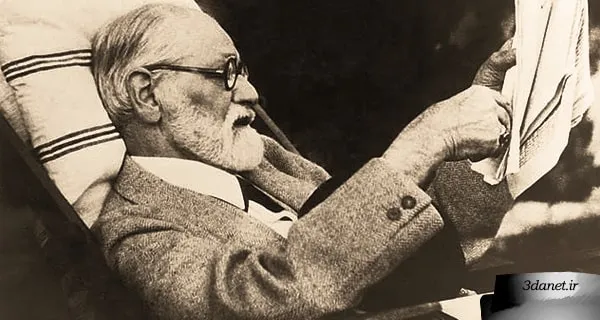
In psychoanalysis, there is a concept known as “repetition compulsion.” Freud introduced and developed this concept in his work, drawing attention to situations in which a person, contrary to what we might expect, repeats experiences and patterns even when the repetition is not necessarily pleasurable. Freud examined this concept more extensively in Beyond the Pleasure Principle.
But we should not turn this concept into a simple, one-size-fits-all explanation for every repetition in life.
Not every failed relationship is the repetition of a childhood wound.
Not every wrong choice is evidence of an unconscious pattern.
And whenever a relationship resembles a previous one, we cannot assume that its cause necessarily lies in a person’s past.
Human beings are too complex for all their choices to be explained by a single cause.
Still, sometimes something about an experience feels familiar to us, and familiar does not always mean good.
Our previous experiences in close relationships may affect our expectations and the ways we experience intimacy, trust, distance, and security. For example, someone who has experienced inconsistent and unpredictable affection or attention in previous relationships may be more sensitive in a new relationship to a partner pulling away or being unavailable. This does not, of course, mean that the person consciously chooses suffering or that the past determines their destiny.
Sometimes what is familiar to us may seem easier to recognize and understand simply because we have experienced it before.
This is where attachment theory, independently of the concept of “repetition compulsion,” can help us understand part of our experience in close relationships. The theory suggests that relational experiences, especially in our earliest relationships, can contribute to the formation of patterns concerning ourselves, others, and relationships. Attachment also remains important in close and romantic relationships in adulthood. Yet attachment patterns are neither fixed nor immutable, and new relational experiences can play a role in changing them.
So when we once again experience fear of loss, an intense need for approval, or anxiety about someone pulling away in a relationship, it may be worth pausing for a moment, turning inward, and asking:
Who do I become in this relationship?
Do I once again become someone who sets aside their own needs to preserve the relationship?
Do I once again try too hard to be seen?
Out of fear of loss, do I give more than I really want to?
When I am unhappy, do I stay silent so the relationship will not end?
When the other person pulls away, do I cling more tightly instead of talking?
And when the relationship becomes calm, do I still wait for something bad to happen?
Asking these questions helps us see the part of our experience that is within our control.
Because we cannot always change another person’s behavior.
We cannot force someone to love us more, behave more responsibly, or want something they simply do not want.
But we can look at our own behavior. We can ask why we stay, why we return, why we remain silent, why we give too much, and why we sometimes choose again what we already know is not right for us. Perhaps change begins here: at the moment when, instead of looking only at the stone, we also look at the path we are taking.
Perhaps the question is not only why the stone rolled down again. Perhaps the question is why we took the same path again.
Of course, the answer does not always lie within us. Sometimes the other person really does behave in harmful ways, and sometimes a relationship is unhealthy. Staying in a relationship does not mean waiting patiently for the other person to change, especially when we have repeatedly been hurt by that relationship.
Self-knowledge is not meant to place responsibility for someone else’s behavior on our shoulders.
It is meant to help us understand what choices we have in the face of what happens.
At times, we all become Sisyphus in our lives.
In a relationship.
In a decision.
In a habit.
And on a path that has shown us time and again where it leads.
But unlike the mythical Sisyphus, a human being can stop for a moment.
Look at the stone.
Look at the path.
And ask:
How many times will you be Sisyphus?
Perhaps part of psychological maturity lies in this brief pause between reaction and choice—a pause between what feels familiar and what is truly right for us. And perhaps it is from such pauses that the possibility of a new path emerges.
Notes:
1. For further reading on the concept of “repetition compulsion” in psychoanalysis, see Beyond the Pleasure Principle by Sigmund Freud, translated by Houshmand Vizheh. Shoma Publishing.
2. For further reading on attachment, see A Guide to Attachment Theory by Alan Chen, translated by Amineh Kashanian, Fahimeh Mousazadeh Halim, and Fatemeh Ghannadzadegan, Bad-o-Barg Publishing.





Discussion4 comments
سلام و نشکر
25 مهر استعفا دادم! نخواستم سیزیف باشم.
۲۶ شهریور، نه ۲۶ مهر! همه نشانه های اصلی فرسودگی شغلی را داشتم: احساس مسخشدگی، احساس عدم کفایت، احساس خستگی عاطفی. خواستم تغییر ایجاد کنم. هم در خودم، هم در محیط کار
سلام آقای مصطفی محمدنیاکان. پیام شما رو خوندم و خوشحالم که نوشتین (نخواستم سیزیف باشم). سبز باشید🌱