Psychology
Why Do We Still Listen to Prophets? The Psychology of Believing in Grand Narratives About the Future
Why, despite their many errors, do we still listen to major forecasters about the future of the world? Drawing on the research of Philip Tetlock and his book Expert Political Judgment, this article shows how vague narratives, confidence, and grand stories can capture our minds.

Philip E. Tetlock
اندیشمند مورد بررسی
Isaiah Berlin
اندیشمند مورد بررسیWhy are we so often fascinated when someone speaks about the future of the world, the collapse of civilizations, the rise of new powers, or the end of a historical era—even when their claims are so vague that they can never be tested?
We have heard statements like these many times:
“The world is entering a decisive era.”
“The old order is collapsing.”
“Hidden powers will soon reveal themselves.”
These statements trigger something in us that resembles the excitement of hearing a momentous prophecy. But if we pause for a moment and ask ourselves, “What exactly does this statement claim that can be tested?”, we realize that it says almost nothing. When does a “decisive era” begin? Which “old order” exactly is being referred to, and what event, within what timeframe, would count as its “collapse”? Who are these “hidden powers”?
The main problem with this type of statement is that it is almost unfalsifiable. Any event that happens afterward—a war, an economic crisis, a change of government, even a pandemic—can be interpreted as the “fulfillment” of the prophecy. And it is precisely this feature that makes such statements always appear “correct” without ever having truly been put to the test.
But this phenomenon is not merely a cultural joke or a minor weakness of the mind. This pattern has repeatedly appeared, from medieval astrology to contemporary geopolitical analyses on television networks—and there is scientific research that has illuminated this phenomenon with remarkable precision.
The Book That Took Twenty Years to Write
This article is based on the research of Philip E. Tetlock, a political psychologist at the University of Pennsylvania, and his renowned book Expert Political Judgment: How Good Is It? How Can We Know? (published in 2005).
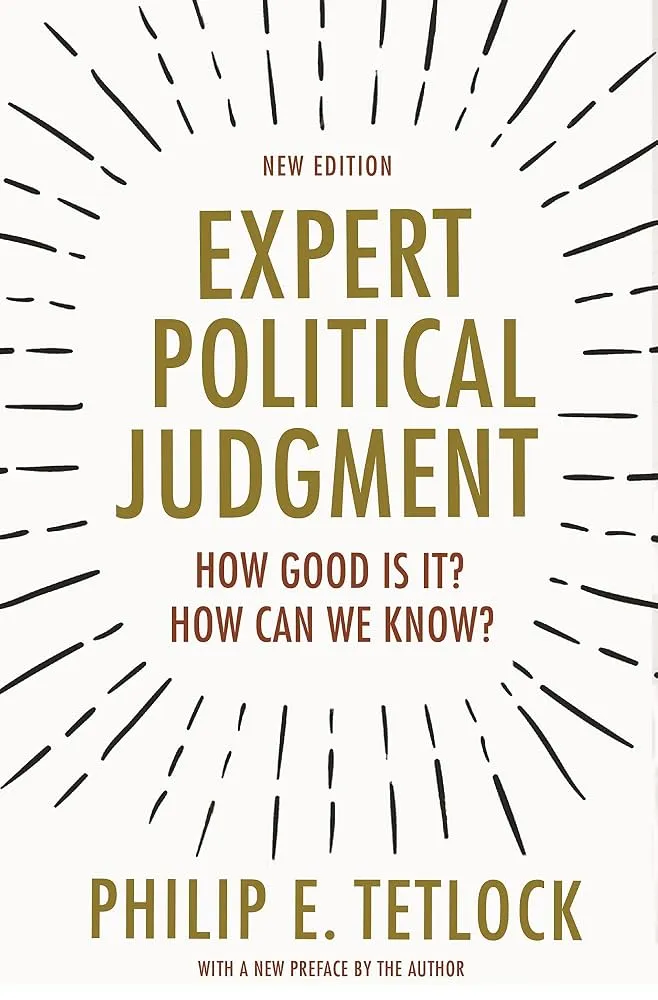
Tetlock did something that almost no one before him had dared to do: over nearly two decades, from the mid-1980s to the early 2000s, he invited hundreds of political, economic, and international experts—analysts, university professors, journalists, and government advisers—to make specific and measurable predictions about the future: Would a particular country move toward democracy or not? Would a certain economy grow or collapse? Would a particular political leader remain in power? Years later, Tetlock compared these predictions with what had actually happened.
The results provided a rigorous and scientifically grounded answer to a question that had previously been based mostly on speculation: Do reputation, expertise, confidence, and access to confidential information actually lead to more accurate predictions? Tetlock’s overall answer, which quickly became one of the most famous findings in the psychology of judgment and decision-making, was surprising and somewhat unsettling: on average, the predictions of political experts were not significantly different from random guesses. But the more important point was that not all experts performed equally poorly. Tetlock discovered that one particular style of thinking consistently performed better than another—and to describe these two styles, he turned to a classic philosophical essay.
Foxes and Hedgehogs
Tetlock borrowed this distinction from the famous essay “The Hedgehog and the Fox” by Isaiah Berlin, the British political philosopher. Berlin’s essay itself was inspired by a short line from the ancient Greek poet Archilochus: “The fox knows many things, but the hedgehog knows one big thing.”
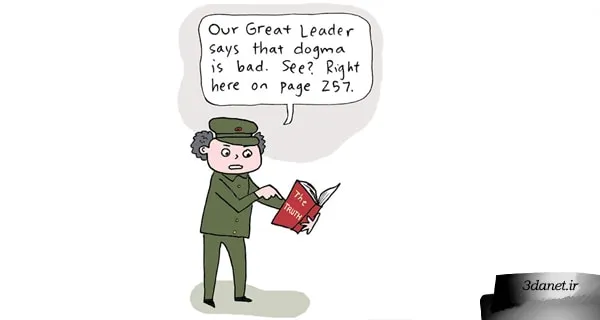
Hedgehogs are people who have one large and coherent idea about the world and interpret almost every event through that single lens. For the hedgehog, the world is not complicated; it is merely the reflection of one fundamental force—whether that force is economics, ideology, geopolitics, or any other “master key.” Hedgehogs usually speak with great certainty and confidence because, from their perspective, a single theory has the power to explain everything. A typical statement from such a mind might be: “All developments in the world are ultimately the result of a single hidden force”—whether that force is called “global capitalism,” “the clash of civilizations,” or any other grand factor.
Foxes, by contrast, stand at the opposite end. They draw on multiple and sometimes conflicting sources, use a combination of perspectives rather than a single framework, evaluate probabilities rather than certainties, and—most importantly—revise their views when new evidence does not fit their predictions. Foxes usually speak cautiously and conditionally: “probably,” “under current conditions,” “but if this happens, it may be…” This style of speech may seem less attractive and less “decisive” at first glance.

Tetlock’s central finding was that, consistently, foxes performed better than hedgehogs in political and economic forecasting. They were more accurate at identifying future changes, less vulnerable to overconfidence, and better able to acknowledge when they were wrong. But Tetlock never claimed that foxes were “always right” in their predictions. On the contrary, one of the main messages of his book is that even the best forecasters face serious limitations in the face of the inherent complexity of the political world—the future, especially on a large and long-term scale, is not something that can be predicted with certainty, regardless of how intelligent or informed the forecaster may be.
When the Forer Effect Turns Toward the Future
If you are already familiar with the concept of the “Forer effect”—the phenomenon showing how people accept general and vague personality descriptions as accurate and uniquely tailored to themselves—you can guess that this same psychological mechanism does not operate only in relation to personality; it also operates in relation to the future.
An ambiguous political prediction, such as “a period of turmoil and reconstruction lies ahead,” can appear meaningful and “accurate” for almost any society at almost any point in time—precisely for the same reason that the statement “sometimes you need solitude and sometimes you need company” feels true for almost every person. The human mind naturally seeks patterns and meaning; even when no real pattern exists, our minds create one. Three psychological mechanisms play a particularly important role in this process:
Confirmation bias causes us, after hearing a prediction, to unconsciously search for evidence that confirms it while ignoring or downplaying evidence that contradicts it. If someone says, “The old order is collapsing,” and then a political crisis occurs somewhere in the world, our mind immediately records it as “confirmation” of the prediction—without considering all the counterexamples that occurred during the same period.
Narrative bias refers to the tendency of the human brain to see scattered and unrelated events as part of a coherent and meaningful story—even when there is no real connection between them. A grand prediction provides the initial structure for this narrative, and our minds weave the rest of the story around it.
Perhaps most importantly, there is retrofitting—the remarkable ability of the human mind to look back after an event has occurred and reinterpret an old prediction as though it had precisely predicted what happened. This is repeatedly seen in interpretations of the works of Nostradamus, the sixteenth-century French astrologer: every major historical event, from the French Revolution to World War II, has been claimed by some followers to have been “predicted” in one of his vague quatrains—but only after the event occurred, when interpreters adapted the flexible language of the text to fit the specific event they had in mind.
Why Do the Media Prefer Hedgehogs?
If Tetlock’s finding is correct—that foxes are generally more accurate forecasters—the immediate question is: why is it hedgehogs, rather than foxes, who receive the most attention in the media, political analysis programs, and television debates?
Tetlock himself points to this contradiction in his book, and his answer lies in the nature of the media and the psychology of audiences. Analysts who speak with complete confidence are more memorable and easier to listen to. Audiences seek certainty, not probability; a simple story, not ten intertwined variables; a clear enemy and a clear hero, not a complex network of factors where none is decisive on its own. A hedgehog who confidently declares, “This will definitely happen, and I know why,” is far more appealing in a short video clip than a fox who says, “There is about a 40 percent chance of this scenario occurring, but there are three competing scenarios that must also be considered.”
The future imagined by a hedgehog resembles a play—with a beginning, climax, and clear ending. The future described by a fox resembles an aerial map of a congested city: countless possible routes, none of them certain. The human mind is naturally drawn to stories, not maps. And this cognitive preference is the main reason why confident and simplifying voices are always heard more loudly in public life, regardless of their actual accuracy.
This does not mean that every confident analyst is necessarily wrong, or every cautious analyst necessarily right. Tetlock never made such a claim. The issue is a style of thinking, not merely a style of speaking: a hedgehog who genuinely relies on a valid and repeatedly tested pattern can be accurate within a limited area of expertise. The problem begins when the same framework is imposed on every situation—from the fall of a government to fluctuations in the stock market—without attention to changing conditions.
Prophecy or Scientific Prediction?
Perhaps the most useful tool Tetlock’s book gives us is a way to distinguish between prophecy and scientific prediction—a distinction that is often blurred amid media noise.
Prophecy is usually metaphorical: “A storm is coming,” “The old order is collapsing.” Prophecy is vague: without a specific timeframe and without measurable criteria. Prophecy is untestable: there is no possible event that can definitively disprove it, because its language is flexible enough to fit almost any outcome. Finally, prophecy can be reinterpreted after events occur: whenever something happens, interpreters can reread it as the “fulfillment” of the prophecy.
By contrast, scientific prediction—as Tetlock asked experts to provide in his research—has a specific timeframe: “within the next five years.” It is probability-based: not “it will definitely happen,” but “there is a sixty percent chance it will happen.” It is falsifiable: it specifies in advance what evidence would indicate that the prediction was wrong. And it includes acceptance of error: a scientific forecaster honestly evaluates their performance after the time period has passed and learns from it, rather than hiding mistakes through reinterpretation of words.
This distinction is exactly what Tetlock later tested in practice through the larger project known as the Good Judgment Project—a project in which thousands of volunteers made precise and measurable probabilistic forecasts about geopolitical events, and the results showed that people with a fox-like thinking style performed significantly better than even some professional intelligence analysts.
Not Rejecting Analysis, but Separating It from Prophecy
The point that must be clarified here is that Tetlock’s message, and the message of this article, is never that “political analysis is useless” or that “no one can predict the future.” Such an interpretation would itself be a kind of hedgehog-like simplification—exactly what this article seeks to criticize.
The real message is more subtle: a genuine analyst can be distinguished from a prophet. A genuine analyst accepts the limits of their knowledge, offers probabilities rather than certainties, revises their views when new evidence appears, and—most importantly—is willing to acknowledge later when their prediction turns out to be wrong. A prophet, by contrast, always remains in a winning position: if the event occurs, they say, “I told you so”; if it does not, they say the timing changed, hidden forces intervened, or they meant something else entirely.
This distinction is a valuable tool in a world where we encounter waves of confident analyses about “the future of the world” every day. A question we can repeatedly ask ourselves is: Is this prediction specific enough that it could actually turn out to be wrong? If the answer is no, we are probably facing a metaphorical prophecy that will continue to appear “correct” no matter what happens.
The Deeper Need Behind Every Prophecy
The future is inherently ambiguous and frightening; it is filled with chance, complexity, and events that no one—even the most intelligent analyst—can fully predict. Living with such uncertainty is exhausting for the human mind. We cannot remain calm in the face of an unknown future without some kind of narrative, without some kind of meaning.
This is where the secret of the enduring appeal of the great hedgehogs of history—from ancient astrologers to today’s geopolitical analysts—becomes clear. They do not merely sell us a prediction; they sell us a story—a story in which the apparently meaningless chaos of events is transformed into a coherent and understandable narrative. This narrative, even when false, gives us a sense of control; the feeling that the future, however dark, is at least explainable and comprehensible.
The ultimate truth is that human beings are not merely seeking to know the future; they are seeking a story that makes the anxiety of the future bearable. Grand prophecies reveal our deep need for meaning more than they reveal the future itself—a need that, in the absence of genuine certainty, we fill with borrowed certainty, even fabricated certainty. The greatest lesson of Tetlock’s book is not that we should never listen to anyone who speaks confidently about the future, but that we should learn never to mistake confidence itself for accuracy.


Discussion0 comments
No comments yet; let yours be the first voice.