Psychology
Why Do We Enjoy Sad Music? Antonio Damasio and the Beauty of Sorrow
Why can music that makes us sad also be pleasurable? By examining the “paradox of tragedy” and reviewing research on music, psychology, and neuroscience, this article shows how artistic sorrow can contribute to understanding emotions, reviving memories, and restoring psychological balance.

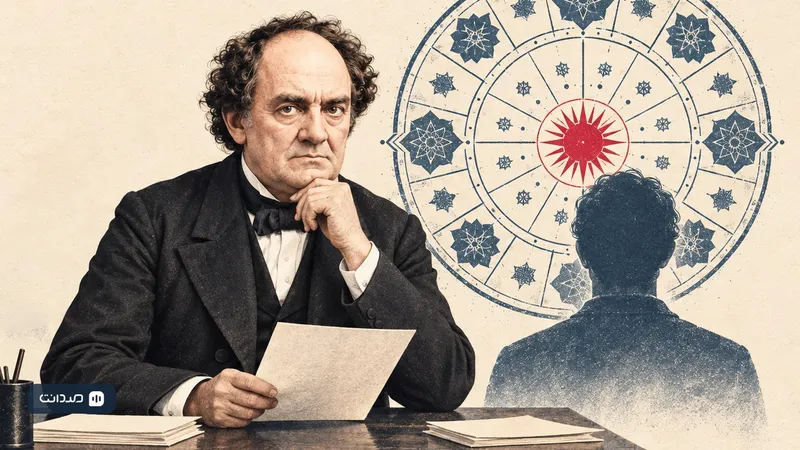
Antonio Damasio
نویسنده مقاله مورد بررسیA Paradoxical Experience
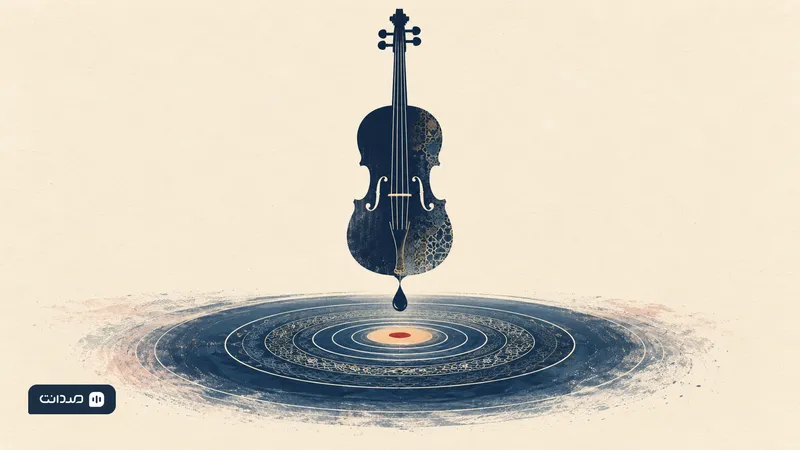
Recall a night when you are sitting alone, the lights are off, and the sound of a violin or piano fills the room—a piece you know is sad, perhaps one that even brings tears to your eyes. And yet you do not leave that moment. You do not merely refrain from running away; sometimes, you play the same piece again. It is as though some part of you wants that very sadness.
On reflection, this experience is strange. In everyday life, we flee whatever brings sorrow and suffering. Wherever sadness is real, it is an emotion no one voluntarily seeks—not the grief of losing a loved one, not the pain of failure, not the sorrow of loneliness. Evolution has shaped us to keep our distance from pain, not to seek refuge in it. So why have human beings, from ancient Greece to the present, created tragedies for themselves? Why do sad films sell so well, why do melancholy novels win prizes, and why has sad music—from Portuguese fado and Irish laments to countless modern songs in minor keys—remained one of humanity’s deepest aesthetic pleasures?
This is the question philosophers once called the “paradox of tragedy,” and it is also the central concern of a scientific article we will discuss today.
About the Article
The article on which this essay is based, “The Pleasures of Sad Music: A Systematic Review,” was published in July 2015 in the respected journal Frontiers in Human Neuroscience. It was the product of a collaboration among three researchers at the Brain and Creativity Institute at the University of Southern California (USC): Matthew E. Sachs, Antonio Damasio, and Assal Habibi.
The article does not seek a simple, definitive answer—and that intellectual honesty is one of its strengths. Rather than claiming to have settled the matter, the authors bring together scattered findings from three different fields—philosophy, psychology, and neuroscience—and propose a coherent framework for understanding the phenomenon: why and how can sad music become pleasurable?
Antonio Damasio: Bringing Emotion from the Margins to the Centre
To appreciate the depth of this article, it helps to know something about its senior author. Antonio Damasio is one of the world’s most influential living neuroscientists—perhaps more than any other researcher, he has transformed the prevailing Western understanding of the relationship between “reason” and “emotion.”
For centuries, the Western philosophical tradition—from Descartes to many twentieth-century psychologists—regarded emotions as disruptions to rational thought: something that had to be controlled so that reason could function freely. In his celebrated book, Descartes' Error, Damasio overturned this picture. Studying patients who had lost the capacity to experience emotion as a result of brain injury, he showed that they did not become more “rational.” On the contrary, they became almost paralysed when faced with the simplest decisions of daily life—choosing a restaurant, for instance, or sustaining a professional relationship. The striking conclusion of his research was this: emotions are not the enemies of reason; they are an indispensable part of the mechanism that enables us to make decisions, assign value, and even survive.
Damasio also placed the concept of “homeostasis” at the centre of his theory: the innate tendency of body and brain to preserve an optimal internal balance that makes survival and well-being possible. In his view, emotions—positive and negative alike—are signals telling us whether we are moving towards that balance or away from it. As we shall see, this idea forms the backbone of the theory used in the article under discussion to explain the pleasures of sad music.
Alongside Damasio, Matthew Sachs—then a doctoral student—and Assal Habibi, both active researchers in music, cognition, and the brain, are the article’s other authors. Habibi has worked in particular on how music shapes emotion in the human brain and how musical training may affect cognitive and emotional development. This combination—a neuroscientist who helped found a theory of emotion alongside two researchers specialising in music—is precisely what allows the article to move beyond the narrow field of “music neuroscience” and approach a profoundly human question.
Philosophical Roots: From Aristotle to the Present
Long before neuroscience entered the picture, the philosophers of ancient Greece had been wrestling with the same puzzle. Tragic theatre in ancient Athens was immensely popular: people gathered to watch the suffering and death of tragic heroes, wept, and returned again. Aristotle was among the first to attempt an explanation. He introduced the concept of catharsis—the idea that watching tragedy allows spectators to experience negative emotions safely and then to be “purged” of them.
In later centuries, the debate continued in the philosophy of art and divided into two intellectual camps. Those whom the article calls “Cognitivists” argue that music does not produce real emotion in us; it merely “shows” us the structure of emotion, like a tour guide leading us past the memory of a feeling without allowing us to become immersed in it. Their opponents, the “Emotivists,” believe that music does arouse genuine emotion—but even within this group there is disagreement. Some argue that “musical sadness” is entirely different from “real-life sadness,” because it involves no genuinely dangerous circumstances; others, such as the philosopher Jerrold Levinson, maintain that the sadness is real, but is rewarding precisely for that reason.
Levinson proposed a list of eight psychological rewards that can arise from experiencing sadness in music: emotional catharsis, a deeper understanding of our own feelings, reassurance of our capacity for profound feeling, and a sense of companionship with the composer or with other listeners. What is striking is that later empirical studies—surveys asking ordinary people why they listen to sad music—found precisely these reasons in people’s actual answers. Listeners said that sad music helped them understand their emotions more clearly, find calm, or feel less alone in their solitude.
Do We Really Become Sad, or Only Imagine It?
One of the article’s most compelling questions is simple yet profound: when we listen to sad music, do we genuinely become sad? Or do we merely understand that the music expresses sadness without feeling it ourselves?
The answer, research suggests, is more complicated than a simple yes or no. When asked directly, about one quarter of people say they genuinely feel sadness, while the rest report another feeling—most often nostalgia or a bittersweet sense of longing. Yet behavioural evidence tells a more intriguing story. In some experiments, when people listened to sad music, they displayed real physiological changes—such as reduced skin conductance, changes in finger temperature, and reduced activity in facial muscles associated with smiling—the very changes that occur in genuine sadness. More striking still, one study showed that sadness induced by music can affect people’s memory and judgement—such as their ability to recall words or judge images—in much the same way as sadness triggered by recalling an actual event from their lives.
The answer, then, appears to be this: yes, we can truly experience sadness, not merely imagine it—but this sadness has a different flavour. The crucial difference lies in one fact: we know that we are safe. The sadness of real life accompanies an actual threat or loss; musical sadness, by contrast, is contained within an aesthetic frame. We know that it is only a work of art, that no real danger is involved, and it is this background awareness that allows the feeling to become, not pure pain, but a pleasurable experience.
Music as a Gateway to Memory
Another compelling theme in the article is the relationship between music and memory. Nearly all of us have had this experience: hearing a particular song suddenly transports us to a period of life, a place, or a person from the past—sometimes with details we thought we had forgotten. Song lyrics, in particular, play an important role in this process; words that refer to regret or lost love can revive precisely those memories in the listener’s mind.
What is interesting is that this capacity to evoke memory is itself one of the principal sources of pleasure in sad music. When music brings a memory of the past to life—even a sad memory—the process of recalling and revisiting the experience can create a sense of continuity, personal identity, and meaning. In other words, sad music sometimes functions as a mirror for us: not merely something we hear, but something through which we look back at part of the story of our own lives.
Music as a Way of Understanding Our Own Feelings
Perhaps the article’s most important lesson is that art—and music in particular—is not merely a vehicle for “transmitting” emotion; it is also an instrument for understanding emotion. In everyday life, many of us respond defensively to complicated and unpleasant feelings: we repress them, ignore them, or run from them. But when we hear the same feeling in the form of a piece of music, a safe distance opens between us and the emotion. It allows us to approach it without fear, examine it, and perhaps, for the first time, truly “see” it.
This idea has direct links to the subject’s clinical applications. The authors note that depression is commonly marked by an inability to experience pleasure—known in psychiatry as “anhedonia”—as well as difficulty identifying and describing one’s own emotions. Research has shown that people living with depression often react more strongly to sad music and are more likely than healthy individuals to say that they listen to music in order to “express, experience, or understand” their feelings. This finding opens a new horizon for music therapy: rather than intensifying sadness, sad music may help people confront their emotions safely—offering an opportunity for emotional regulation that, without music, they might never have allowed themselves to pursue.
The Final Framework: A Return to Balance
We now arrive at the heart of the theory proposed by Damasio and his colleagues, where the idea of homeostasis—the concept introduced earlier—comes into play.
In the view of these researchers, emotions, including pleasure and pain, are part of a natural regulatory system in body and brain whose purpose is to maintain an optimal balance for survival and well-being. Pleasure is a reward for attaining that balance; pain is a warning that it has been disrupted. The central question becomes: can sad music somehow restore this balance?
The authors’ proposed answer is yes, but only under particular conditions. Imagine someone undergoing an emotional crisis—perhaps grief following a loss—who also has an “absorptive” personality, meaning that they can readily become wholly immersed in a sensory or artistic experience. For such a person, listening to sad music may offer a way to step back from the actual painful situation and focus instead on the pure beauty of the work of art. In this case, music does not intensify the crisis; it repairs it and returns the person to balance—and that return is experienced as pleasurable.
But the story is not always like this. Imagine someone with no particular emotional crisis, but with a personality inclined towards “openness to experience”—someone drawn to variety, complexity, and diverse emotional stimuli. Such a person may have no sadness in need of “repair,” yet sad music, because of the broad and varied range of feelings it evokes, may be exactly the kind of varied stimulus they seek. That very variety can produce an optimal state of vitality and satisfaction.
In other words, whether sad music is pleasurable, for whom, at what moment, and why, depends on a complex interaction among personality, momentary mood, learned experiences from the past, and the social context of the moment. The same person who turns, one solitary night at the height of grief, to a melancholic piano piece may on another night, when feeling happy, listen to the same piece simply for the pleasure of its pure sonic beauty.
A Brief Look at the Brain
In one section of the article, the authors also review findings from brain-imaging research—studies using functional MRI (fMRI) that show how listening to sad music activates a network of brain regions involved both in the experience of real sadness and in the processing of reward and pleasure. These regions contribute to emotional memory, aesthetic judgement, and the brain’s reward system. What is especially interesting is that pleasurable music—whether happy or sad—engages the same reward circuits involved in food, intimate relationships, and attachment, as if the brain encodes aesthetic pleasure in the same fundamental language as survival.
Yet, as the authors candidly acknowledge, this field is still young, and direct research examining specifically the “pleasure of sadness”—not simple pleasure, not simple sadness, but their paradoxical combination in the brain—remains limited. More than offering a definitive answer, the article maps out a path for future research.
A Final Reflection
Perhaps the simple truth is that sad music does not merely make us sad—it gives us a way of seeing sadness without being submerged in it. In everyday life, sadness is often something we flee from, or something that overwhelms us against our will. But within the frame of a melody, the same feeling takes on another form: something we can observe from a safe distance, share in, and perhaps use to learn something about ourselves.
Perhaps this is what Aristotle was pointing to more than two thousand years ago in the theatres of Athens; and perhaps this is what Damasio and his colleagues now call, in the language of neuroscience, a “return to balance.” Artistic sadness, unlike real sorrow, is not a door that leads us into darkness—it is a window through which, without the danger of falling, we can look into the deepest layers of human experience. And perhaps that is precisely why, even when we know we are about to become sad, we press play again.




Discussion0 comments
No comments yet; let yours be the first voice.