Foreign thinker
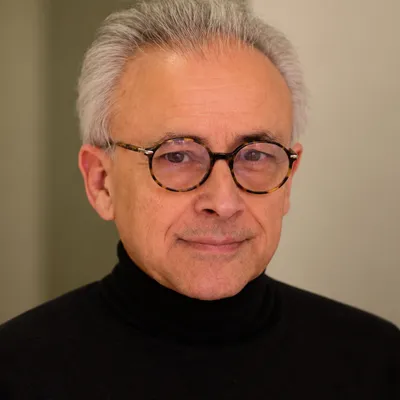
Antonio Damasio
Antonio DamasioCognitive Neuroscience and Philosophy of MindPortuguese-Americanb. 1944
We are not thinking machines that feel; we are feeling machines that think.


Life and Thought
Antonio Damasio is a Portuguese-American neuroscientist who, in works such as "Descartes' Error," showed that emotions are not an obstacle to reason but an inseparable part of rational decision-making and human consciousness. Through his critique of Cartesian mind-body dualism, he has become one of the most influential figures in contemporary cognitive neuroscience.
Antonio Damasio was born on February 25, 1944, in Lisbon, Portugal. He studied medicine at the University of Lisbon Medical School, completed his neurology residency there, and earned his doctorate at the same institution. He then moved to the United States, conducting research at the Aphasia Research Center in Boston under Norman Geschwind. From 1976 to 2005 he chaired the Department of Neurology at the University of Iowa, and he is now Professor of Neuroscience, Psychology, and Philosophy at the University of Southern California and director of its Brain and Creativity Institute.
Damasio's most significant scientific contribution is the "somatic marker hypothesis": bodily feelings play a vital, not peripheral, role in rational decision-making, such that damage to the brain regions involved in processing emotion can impair a person's ability to make rational decisions even when their cognitive abilities remain intact. These findings, drawn from the study of patients with brain damage, directly challenge Cartesian mind-body dualism.
His book "Descartes' Error: Emotion, Reason, and the Human Brain" (1994) brought him international fame and has been translated into more than thirty languages. In later works such as "The Feeling of What Happens" (1999), "Looking for Spinoza" (2003), and "Self Comes to Mind" (2010), Damasio continued exploring the biological roots of feeling, consciousness, and selfhood, drawing particularly on Spinoza's philosophy as a forerunner of a unified view of mind and body. He has also served on Portugal's Council of State and received honors including the Pessoa Prize (1992) and the Grawemeyer Award (2014).