Foreign thinker
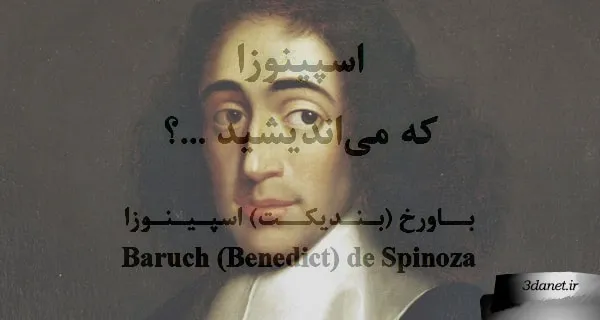
Baruch Spinoza
Baruch SpinozaPhilosophyDutch1632–1677
The ultimate aim of man is not dominion over nature, but its understanding.
In their times
Open in the Timeline of Thought





Life and Thought
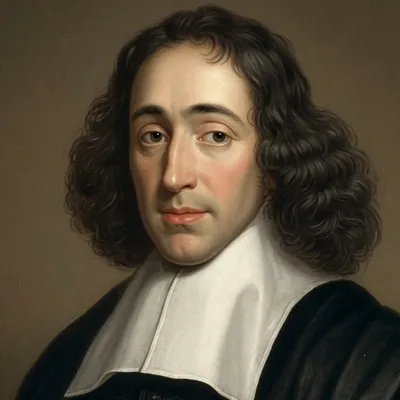
Baruch Spinoza, a Dutch philosopher of Portuguese Sephardic Jewish descent, was one of the greatest rationalists of the seventeenth century and an influential figure in the formation of modern thought and the Enlightenment. His most important work is Ethics, published after his death.
Baruch Spinoza, later also known as Benedict de Spinoza, born November 24, 1632, and died February 21, 1677, was a Dutch philosopher of Portuguese Sephardic Jewish descent. He is considered one of the greatest rationalist philosophers of the seventeenth century and an influential figure in the formation of modern thought and the Enlightenment.
Spinoza grew up in Amsterdam and, alongside his philosophical studies, worked as a lens grinder. His life was simple, independent, and far from the pursuit of fame. He declined formal offers and academic positions, spending most of his life studying, writing, and conversing with a circle of friends and intellectual disciples.
His most important work is Ethics, a book published after his death in which he discusses God, nature, mind, body, emotions, freedom, and human happiness using a geometric method. Spinoza challenged the prevailing dualism between mind and body and presented a coherent picture of the world as a unified whole.
Spinoza's cultural significance lies in his emphasis on reason, freedom of thought, understanding the emotions, and inner human tranquility. His thought influenced many philosophers, writers, and thinkers, and later figures such as Hegel, Goethe, and Deleuze accorded him a special place in the history of philosophy.
Bibliography
Writings and transcribed lectures8 titles
Defense Treatise
A Short Treatise
Treatise on the Emendation of the Intellect
Commentary on Descartes' Principles of Philosophy and Metaphysical Meditations
Theologico-Political Treatise
Political Treatise
Letters
Ethics