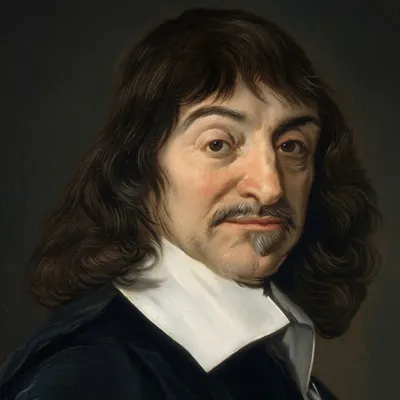
Foreign thinker
Rene Descartes
Rene DescartesPhilosophy and MathematicsFrench1596–1650
I think, therefore I am.





Life and Thought
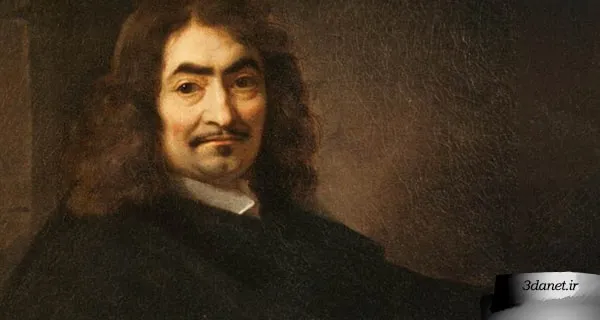
René Descartes was a French philosopher, mathematician, and scientist, and one of the founders of modern philosophy. Through his method of doubt and the proposition 'I think, therefore I am,' he profoundly influenced modern philosophy and science.
René Descartes, born March 31, 1596, and died February 11, 1650, was a French philosopher, mathematician, and scientist, considered one of the founders of modern philosophy. Through his method of doubt, his quest for certainty, and the famous proposition 'I think, therefore I am,' he opened a new path in philosophy, science, and epistemology.
Descartes was born in France and studied literature, logic, mathematics, philosophy, and the natural sciences at the Collège de La Flèche, one of the leading educational institutions of his time. He later traveled and studied extensively, spending much of his scholarly life in the Netherlands, where he enjoyed greater freedom to write his philosophical and scientific works.
Descartes' significance lies in his linking of philosophy, mathematics, and the new science. On one hand, he sought a certain foundation for knowledge in philosophy; on the other, through analytic geometry, he established a new relationship between algebra and geometry. His major works, including 'Discourse on the Method,' 'Meditations on First Philosophy,' 'Principles of Philosophy,' and 'The Passions of the Soul,' were published during his lifetime and played a crucial role in shaping modern philosophy and science.
In the philosophy of mind, Descartes also created an enduring debate about the relationship between mind and body by proposing the distinction between soul and body. His thought influenced philosophers such as Spinoza, Leibniz, Locke, Kant, and many subsequent thinkers, and is still regarded as one of the starting points of modern philosophy.
Bibliography
Writings and transcribed lectures15 titles
Treatise on Music / A Summary on Music
Rules for the Direction of the Mind
The World, or Treatise on Light
Discourse on the Method of Rightly Conducting One's Reason
Nourology
Meteorology
Geometry
Meditations on First Philosophy
Objections and Replies
The Principles of Philosophy
Passions of the Soul
Description of the Human Body
The Search for Truth by Means of the Natural Light
Philosophical, Scientific, and Mathematical Letters and Correspondence
Nasirean Ethics