Philosophy
Mostafa Malekian: Spinoza Is a Forerunner of the Existentialist Philosophers
Malekian notes that Spinoza privileged the sciences that bear on human happiness, regarding the study of galaxies as futile without an analysis of the emotions. He reads Spinoza as a forerunner of the existentialists precisely because of this ethical focus.
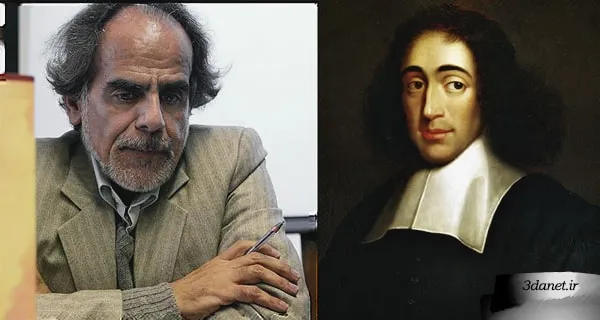
Spinoza says: pursue those sciences that have an effect on your happiness or misery, and leave the other sciences to their specialists. There are enough ignorant people in the world to pursue those sciences which, once you have learned them, make no difference compared to when you did not know them, except that you previously did not know something and now you do. Do not worry about those sciences; they will not remain unclaimed. On the other hand, as one writer, Mr. Paul Roubiczek, has said, it is astonishing that we have penetrated the most hidden recesses of the material world, yet we still do not have a good analysis of our own feelings and emotions in psychology. Is it not truly a human misfortune to know matter, to know neutrons and protons and the like, to know the history of light, to know the strange and wondrous things of the world, but still not to have provided a good classification of our human feelings and emotions? In psychology, we still know ourselves like children. We have not advanced one iota beyond the level of an unlettered education learned from one's mother; yet, in return, we know the galaxies. But does knowing the galaxies affect your life? Once, when I had said this somewhere, a gentleman wrote me a letter saying, 'Sir, by knowing the galaxies we realize the greatness of God.' If that is the case, then go ahead and know them.
Spinoza does not engage with any discussion in his book that, in his view, has no connection whatsoever to ethical issues. This is very different from what is in the minds of many Western, Eastern, Muslim, and non-Muslim philosophers who want to understand what the world is all about. Once you understand what the world is all about, what then? Since I myself have such a tendency, if I speak more on this, it will become preaching and propaganda, but my belief is that much of our philosophical discussion is a waste of life and yields no benefit. A person should have a problem solved that, before it is solved and after it is solved, makes a difference in their life. That is, to truly understand that, whereas until now we were distressed by a certain behavior, by understanding this point we are no longer distressed; or whereas until now we were sometimes prey to despair, now we are no longer prey to despair. Whereas until now our relationships with others were subject to a series of disorders, once we understood this point, the disorder was removed. We, in fact, value such things; otherwise, there are so many knowable things in the world that if you wanted to know them all, an unjustified preference would be required.
In a sense, it can be said that Spinoza is one of the forerunners of the existentialist philosophers. There are some philosophers who, in the conventional sense that has existed since the time of Kierkegaard onward, are not existentialists, but in a general sense can be called existential. One of them is Socrates, and like him, Saint Augustine, Pascal, and this very Spinoza. None of these are existentialists in the specific sense, but all of them had this same tendency to deal with practical issues, and at the head of them was Socrates. From this perspective, Kierkegaard, the father of existentialism, says: I am a student of Socrates.
.
.
Mostafa Malekian, Spinoza, History of Western Philosophy, Vol. 2, p. 162
.
.




Discussion0 comments
No comments yet; let yours be the first voice.