Psychology
Where Freud Was Right
A century after the birth of psychoanalysis, many of Sigmund Freud's claims—from the role of the unconscious to the significance of sexual desire and the hidden meaning of actions—still stand. A review of twelve Freudian claims now accepted in modern psychology.
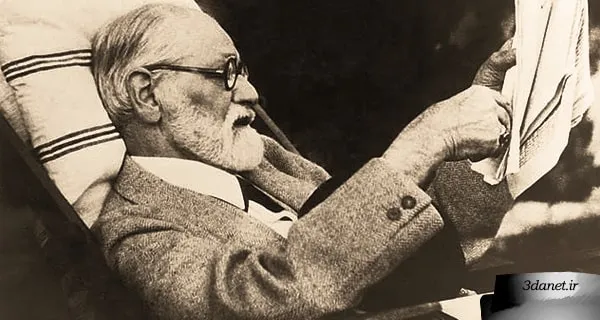
Sigmund Freud has had a remarkable influence on our knowledge of the human mind and psyche. He tells us a story that most of us are not very keen to hear: "that we do not know ourselves, we are unaware of many of our passions, and often we do not know why we do something." Freud gave us this clear message that our conscious thoughts are merely the tip of the iceberg of our psyche. A hundred years have now passed since Freud wrote his influential papers at the dawn of psychoanalysis, and some of Freud's claims have been rejected outright and others implicitly. Nevertheless, Freud was right about many issues, and his clear and decisive articulation allowed these topics to find their place in modern psychology. In the following (and in several posts), based on an article by Blake Fleetwood[1] (published in the Huffington Post), I will address 12 of the subjects that Freud emphasized and that are accepted today. The author of that article contented himself with only brief, cursory references to each case. I have tried to elaborate on these brief references proportionately. For this reason, this piece is not merely a translation of the aforementioned work[2].
1_ The Unconscious: Nothing is without reason.
Through his research and clinical experiences, Freud concluded that nothing in the human psyche is accidental. In other words, there is no such thing as chance or coincidence. Even feelings, ideas, impulses, wishes, events, and actions that seem entirely accidental carry an often unconscious meaning and point to something beyond themselves. Nothing comes into an individual's experience and psyche from "nowhere." Anyone who has experienced a slip of the tongue and been baffled in tracing their word or deed will more or less sympathize with this view that behind the things we do and the words we say, there are always unconscious meanings as well; meanings we sense are there but to which we have no clear access. For instance, you might quite accidentally leave your keys at your beloved's house. Yes, no problem, it's just an accident. But when you eagerly return to your beloved to retrieve them, the unconscious meaning behind this forgetfulness reveals itself. Each of us has countless experiences of this kind in our memory.
Even after all these years, the examination of dreams, slips of the tongue, and free association are still considered the way to explore the individual's unconscious; a method by which one can become aware of denied wishes, severe emotional traumas, and the individual's repressed drives and desires, and thereby understand the truth of their behavior and speech.
۲_ The sexual is everyone's strength and weakness.
Sexual desire is the primary driver and one of the most important common elements of our individual lives as human beings. This is a message that many of us are not very inclined to hear. Some believe that it is precisely this effort to deny sexual desire that has led to the superiority of humans over other animals and organized their civilized life. When we look at the lives of great mystics and saints, we can clearly see that a large part of their strength and energy was also spent on controlling sexual desires and confronting their manifestations. Look at the scandals of the Vatican dignitaries, prominent religious figures of various faiths, politicians, and actors. Could these scandals not have been prevented? The answer is no. Sexual desire is stronger and more influential than common sense imagines.
In the heart of Viennese Victorian society a hundred years ago, Freud examined direct and indirect evidence that could be generalized to the life of the human species. The importance of the sexual in various dimensions of human life, although it may seem strange and even unpleasant at first glance, is a truth that has become increasingly apparent to us modern humans in the hundred years since Freud.
3_ A cigar is never just a cigar.
This idea is now widely accepted in psychology: things and events do not have only one meaning, and wanting something is not merely the product of a single stimulus or a single desire. For Freud, nothing is ever that simple or clear-cut, and multiple meanings can always be found in it. For instance, what is this object in your hand? Is it a pacifier? Is it a phallus, or a cigarette? It is not clear. Apparently, you are holding a cigarette and have a craving to smoke it. But is your craving for the cigarette reducible to a mere desire for nicotine? Is there no hidden meaning or implication in this experience? Perhaps yes, and perhaps no. This can only be understood by examining the totality of your psyche.
A thing is not just one thing, and it is not brought into being by a single cause. This is one of the most important insights remaining from Freud, sometimes known as "overdetermination." Overdetermination means that various desires and meanings, both conscious and unconscious, may be involved in a single matter. For example, you like to help a particular person—how nice. But not everything is summed up in this benevolent desire. Alongside this benevolent desire, you might also harbor a hidden wish to harm them.
Yes, it might be none of these things. Do not worry. Smoke your cigarette. For now, the important thing is to smoke it, whatever meaning it may hold.
4. Thinking is a path to gratification (satisfaction).
Freud realized the truth that the mere act of thinking (wishing and daydreaming) is pleasurable in itself. Psychoanalysts and virtually all psychotherapists repeatedly encounter the experience that the fantasy of something is, both psychologically and physically, far more satisfying than its objective, real counterpart. You probably agree with the view that the intensity of any pleasure or delight in reality never reaches the intensity and vividness of the pleasure of that same subject in the mind. In Freud's view, the function of thinking is not always a prelude to gaining a pleasurable experience externally. Thinking, and through it fantasizing and dwelling on wishes, is always satisfying before (and often more than) what occurs in reality. In other words, thinking (fantasizing) is a way of enjoying and achieving gratification.
5. Every part of the human body is erotic.
Freud believed that from the very first moment of life, the human being is a sexual creature. He saw the infant suckling at the mother's breast as an image in whose mirror the sexual pleasures of human adulthood could be seen in a simple and unadorned form: "One cannot see a child who has just fed from his mother's breast, fallen into a deep sleep with flushed cheeks and a blissful smile, without thinking that this image is the archetype of sexual satisfaction throughout life and its other stages."
Freud also knew that sexual pleasure and arousal are not limited to the genital organs, and any part of the body can potentially become a sexual object or a site for experiencing pleasure. His more abstruse insight in this area was that sexual pleasure is not limited to the experience of intercourse between a man and a woman. Accepting this is still difficult for many of us.
6. Talking cures.
"When someone talks, they become lighter." Sigmund Freud.
Abundant clinical evidence shows that individual therapy, whether based on Freudian psychoanalysis or other talk-oriented therapeutic traditions, significantly improves the emotional symptoms of illness, reduces a person's anxiety, and relieves their mind from the pressure of unpleasant thoughts and feelings. Although pharmacotherapy largely eliminates the symptoms of illness, talk therapy, with its powerful tool—the "therapeutic relationship"—leaves more lasting and deeper effects on the illness and its symptoms. The reason for this more lasting effect is that in this relationship, the person's entire being enters the treatment, not just a specific symptom or complication.
7. Defense mechanisms
The concept of defense mechanisms has become so established and familiar in understanding human behavior that almost everyone takes it for granted. Yet this very well-known and widely used concept was also one of the theoretical innovations of the Freuds (Freud and his daughter Anna). According to Freud, defense mechanisms are strategies of the unconscious mind through which it attempts, by denying or distorting reality, to protect the individual from emotions such as anxiety and/or unpleasant impulses.
Freud introduced numerous defense mechanisms, the most famous of which include repression, rationalization, projection, and denial. For example, denial means the immediate rejection that something has happened or is happening. Denial can occur within individual experiences, such as denial of addiction or denial of a painful experience. Denial can also occur at scientific, social, and cultural levels, such as denial of the reality of climate change or Holocaust denial.
8_ Resistance to Change
Our mind and our behavioral patterns inherently display a kind of inertia and resistance to change. In such a way that when change is at stake, even if that change is for the betterment of our condition, we initially experience it as a risk and a threat. Here too, Freud was right. He accurately diagnosed the ubiquitous and pervasive presence of this resistance to change and sought, with the help of tools, to bring this resistance and its causative factors to the level of consciousness, to recognize them, and to find a solution to curb their considerable power against any kind of change. Resistance to change occurs both at the individual level and at the collective level. Many times, when someone resolves to change, they simultaneously begin their resistance to change. For instance, an individual, out of a kind of neurosis, comes to a psychoanalyst, brimming with enthusiasm for change and improvement. The gist of their words is that they have come to change and experience a better state. Nevertheless, precisely from the moment they step into the therapy room, they begin their resistance to preserve their existing psychological state and behaviors. A part of their psyche that suffers desires improvement, but another part of their psyche prefers to tread the familiar, previously traveled paths; even if traversing those paths brings them excruciating suffering. The psyche's compulsion to repeat previous thought and behavioral patterns (despite their current ineffectiveness) indicates the individual's psychological resistance to change.
Psychological resistance to change, as we said, is generally unconscious, and recognizing and resolving it is not easily possible. The first step to removing such resistances is confronting them and accepting them. We must accept that it is we ourselves who, while eager for change, resist letting go of the status quo.
9_ The Past Affects the Present.
Now, in 2018, this matter seems almost self-evident to all of us, but over a hundred years ago, talking about this issue was somewhat unfamiliar. In that era, this position of Freud seemed strange to some and highly thought-provoking to others. Today, many of Freud's theories about childhood, development, and the impact of the early years of life on adult behaviors and life are used to a very great extent in the treatment of those suffering from recurring behavioral patterns.
Almost all of us have experienced these repetitive behavioral patterns and remember the unpleasant feeling they produce. Over the years of our lives, these patterns merely repeat themselves in various ways by changing their subject and content; it is as if every choice we make is already under the influence of something unknown, follows a single design, and arrives at the same frustrating results. In psychoanalytic literature, this concept is known as "repetition compulsion." Freud considered a significant part of this problem to stem from the influence of childhood and the emotional experiences of one's early years, and he believed that by working on them in therapy sessions, one could arrive at a new strategy for confronting and moving beyond these repetitive patterns. In his view, those patterns were formed when the child, in facing the world, had limited communicative tools, incomplete cognition, and a weak ego. But these patterns have remained in his psyche and experience, and he still uses them now in confronting the world, and the inefficacy of these once-helpful tools becomes the source of many of his adult sufferings. Now that he has matured and his physical, psychological, and communicative tools for facing the world and other people have increased, he should be able to find a new path in confronting his passions, desires, anxieties, and fears. This is one of the goals that psychoanalytic treatment pursues.
10_ Transference
One example of the past's influence on the present is the concept of transference. This concept is widely used today in psychology and psychotherapy. Transference refers to the feelings, wishes, hopes, fantasies, and fears we had in important childhood relationships that unconsciously influence our current relationships. In fact, transference is the generalization and extension of the experience of childhood relationships into adulthood.
All of us connect with the world through our primary caregivers and objects, come to know ourselves and other people, and experience various categories related to relationships such as femininity, masculinity, love, friendship, and so on. The concept of transference implies that what we experienced in childhood with the important objects of our lives becomes a pattern for our later relationships. Such that in adulthood, we try in various ways to find or reproduce the image of those objects in our interpersonal relationships. As a result, the other of today will be a kind of transferential object, and the image of the primary objects is projected onto them. For this reason, in relation to them, we experience feelings that we experienced with those primary objects.
Transference both presents possibilities to us and limits us. Sometimes we are so caught up in these transferential emotions and feelings that we cannot see the other person before us or experience them as they are. In this state, we are not facing a real man or a real woman, but a schema of a man or a woman. Nevertheless, it is also through the channel of these very transferential images and feelings that we can feel familiarity and security in our relationships.
Generally, there are two approaches to the concept of transference. The first approach is the one we discussed in this writing. In this approach, all adult relationships have a transferential character. But in the second approach (which is somewhat more exclusive), transference is considered a feature of the relationship between the client and the therapist in psychoanalytic treatment. In this therapeutic relationship, because the therapist tries as much as possible not to bring their own reality into the therapy room and to maintain their characteristic of neutrality and mirroring, what is constructed in their connection with the client will be entirely a transferential image. In this sense, the analysis of transference is one of the most fundamental tools of psychoanalytic treatment.
11_ The Possibility of Growth
Human beings constantly change throughout their lives, and a successful life is the product of the ability to adapt to circumstances and cope with the changes that occur for each of us. Each new stage of life confronts us with new challenges and issues and exposes us to a re-evaluation of our personal goals and values. If we can resolve these external or internal experiences, we can take a step forward.
This idea is not Freud’s invention, but it is among the teachings in which Freud was right. Although strong strains of psychological determinism can be seen in Freud’s works, he accepts the possibility of growth and change and believes that human beings can free themselves from the compulsion arising from past events by changing their narrative of those events. Attention to this idea is very important. When Freud speaks of the influence of the past on the present and of the influence of the unconscious on the conscious, he provides proponents of psychological determinism with the possibility of saying that what happens in our lives as human beings is beyond our control and that there is no escape from a good or bad state. But this view of Freud’s psychoanalysis is incomplete. Although Freud provides us with many tools for seeing human life as determined, he also accepts the possibility of freedom and growth. Accepting the possibility of growth within this framework is accompanied by accepting responsibility for conscious thoughts and emotions as well as unconscious influences. In other words, according to Freud, we human beings are largely the product of matters that were and are not within our control, but at the same time, we also have the possibility of changing them and freeing ourselves from the compulsion to repeat. He sees growth as possible within the heart of changes that constantly challenge us and our image of life.
12_ Psychic Reality versus Objective Reality
The emphasis on our lack of access to objective reality was not Freud’s discovery. Before him, many philosophers had spoken of this truth about human knowledge. Kant considered our human knowledge to be “knowledge of phenomena,” and phenomena, in his view, were the product of the encounter of the mind’s categories with the given of experience. Our mind constructs the image of the noumenon (the thing out there) through its categories (time, space, causality, relation, etc.), and everything we experience is nothing but what appears to us in this way. Since Kant and up to the present day, many phenomenologists in various fields of the humanities have drawn our attention to this truth. Nevertheless, Freud’s contribution in this regard was his emphasis on a specific kind of indirect encounter we have with objective truth. He spoke of psychic reality in contrast to objective reality. Psychic reality, according to Freud, is the product of the intersection of the external objective matter with the psychic world of each of us human beings. In his system of thought, each of us wears glasses constructed from needs, presuppositions, expectations, past experiences, fears, hopes, neuroses, and so on, and it is with such glasses that we experience ourselves and the world outside ourselves. Consequently, what we experience is not objective reality but our own psychic reality; a world that is not dissimilar to the objective world but can sometimes differ from it greatly. In human relationships, it is this same psychic world that is brought into play. We hear each other’s words through our own psychic world and through the channel of the other’s psychic world. In these worlds, meanings and sensitivities correspond more to the individual’s psychic state than to the external matter and derive their substance from it. For example, a single matter might be unimportant in my psychic world and very important in yours. Something might be the source of unpleasant feelings in my psychic world, and that same thing, with the same qualities, might appear as a meaningful and meaning-giving matter in your experience. A single matter might overshadow everything in my psychic world, and that same matter might be forgotten as something entirely unimportant in your experience. Within this framework, attention to the psychic world and its difference from the objective world, especially in light of the unconscious and other psychoanalytic categories, was an insight that Freud emphasized. This is a point that is more accepted and common today than in Freud’s time.
[1] Blake Fleetwood
[2] This text was previously published as 12 separate posts on the Nakouk Telegram channel.
.
.
Where Freud Was Right
Mahmoud Moghaddasi
.
.






Discussion11 comments
با سلام و سپاس فراوان از نویسنده محترم و دست اندرکاران این سایت عالی و مفید ، گزارشی بسیار عالی ، مختصرومفید و کافی برای درک یک دیدگاه کلی از نظریات فروید بود ، من رشته ام روانشناسی نیست ، اما بنظرم با توجه به زمان زندگی فروید ، یافته های او چه رد شده باشند و چه تایید ، زلزله مفیدی را در دنیای روانشناسی و روانکاوی ایجاد کرد و دانشمندان این رشته را مواجه با چالشهای نتیجه بخش نمود و بنظر من نظریات ایشان را انسان خیلی نزدیک به واقعیات و تجارب زندگی شخصی و اجتماعی خود می بیند واگر نظریات ایشان بطور کامل هم در هر موردی صدق نکند ، لیکن موارد صدق بسیاری می توان بر نظریات ایشان یافت ، بویژه تاکید او بر اهمیت میل جنسی در رفتار انسانها ، امری غیر قابل انکار و از شدت وضوح در مواردی بی نیاز از اثبات علمی است. ۵ آبان ۴۰۲
انکار فروید در مورد اقتباس از مفاهیم دینی و توصیف نفس در ادبیات دینی نیز از مکانیسم های دفاعی این روانشناس بود. ایشان ادعا داشت که روانشناسی را علمی کرده در حالی که اساساً از مولفه های ادبیات دینی بهره برد.کلیت روانشناسی فروید خود مصداق Freudian Slipبود که محتویات ناخودآگاه او را که پر از سکشوالیته بود آشکار ساخت.
شیر خوردن فعلی برای تغذیه نیست بلکه برای ارضاء جنسی کودک تازه بدنیا آمده است!!!!!!!!!!!!!!!!!!!!!!!!!!!!!!!!!!!!!!!!!!!!!!!!!!!!!!!!!!!!!!!!!!!!!!!!!!!!!!!!!!!!!!!!!
این که میل جنسی محرک اصلی ما انسان هاست از مطالبی است که فروید در مورد آن بر حق بوده؟!
از این ۱۲ مورد ذکر شده حداقل ۸ موردش کاملا رد شده و یا ادعای فروید بقدری کلی بوده که اساسا رد یا تاییدش منطقا ممکن نیست. خوب بود نویسنده یا مترجم حداقل از ۱-۲ مرجع از منابع معتبر روانشناسی دنیا برای اثبات این ادعاها استفاده می کرد.
دوست گرامی فکر نمی کنی گزارش خودتم خیلی کلی است؟ کاش بیشتر توضیح میدادید. من در روانشناسی تخصصی ندارم و بسیار مشتاق گزارش های دقیق علمی هستم.
نظریه های روانشناسی ای که با چیستی، چرایی و چگونگی ذهن و اراده ی انسان سر و کار دارند، اکثرا نظریاتی "علمی فلسفی" هستند، در نتیجه به کار بردن جملاتی از قبیل "کاملا رد شده" در موردشان - حداقل تا زمانی که علم تجربی بتواند داده های خدشه ناپذیر و روشنی در این موارد به دست آورد - کاملا بی معناست..
مورد نخست به هیچ وجه قابل رد یا قابل اثبات نیست. حتی نمی شود با شواهد تقویتش کرد!
بسیار مفید و عالی بود.سپاس
لطفاً در این باره بیشتر بنویسید.
خیلی استفاده بردیم. بسیار تشکر. خسته نباشید