Political Science
After Recognizing Injustice: Where Does Our Duty End?
If we consider a government to be unjust, is confronting it at any cost and for any length of time our moral duty? Inspired by Rahman Ghahremanpour’s discussion, this article shows that recognizing injustice is not the end of moral judgment; the costs borne by people, proportionality, the likelihood of success, and the existence of less costly alternatives must also be considered in determining the limits of our duty.


Rahman Ghahremanpour
اندیشمند مورد بررسیAfter Recognizing Injustice: Where Does Our Duty End?
What Duty Does Another’s Being Unjust, By Itself, Place on Iran?
Writer: Sedanet Editorial Team
۱. A Question One Step Back
Public discussion about Iran’s foreign policy often begins with a binary question: Are the United States and Israel good or bad? The unspoken assumption on both sides is that if their judgment about the other side is accepted, the practical conclusion will automatically follow. This article questions that assumption.
To advance the discussion, we assume that critics of the United States and Israel are correct in their moral judgment and that these two have committed injustice in the cases under discussion. The question then becomes:
Even if we consider the United States and Israel unjust, does their being unjust mean that Iran is obligated to continue confronting them at any level of cost, for any length of time, and with any degree of confrontation?
The claim this article seeks to defend is that the answer is not necessarily yes: proving the injustice of the other side, by itself, does not prove that our duty to confront it is unlimited. We do not take this claim as self-evident; we present the argument step by step, raise the strongest objections against it, and leave the judgment to the reader. This claim neither says that those two governments are “good” nor that we should surrender. It only says that recognizing injustice is the beginning of moral judgment, not its end.
۲. Ghahremanpour and the Debate
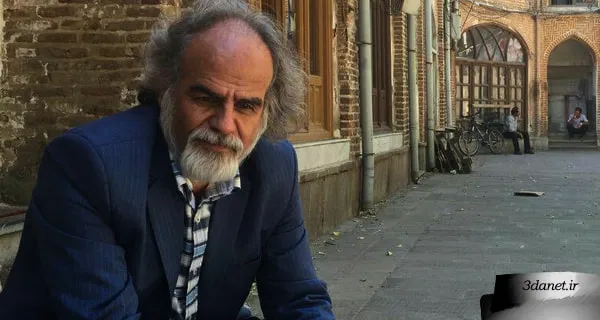
Rahman Ghahremanpour is a writer, translator, and political science expert; born in 1354 in Bonab and holding a PhD from Shahid Beheshti University. From 1381 to 1384, he served as a foreign policy expert at the Center for Strategic Studies of the Presidency and as editor-in-chief of the monthly Hamshahri Diplomatic, and his translations of Political Order and Political Decay, Identity, and Liberalism and Its Discontents by Francis Fukuyama are among his better-known works.[1]
The motivation for this article is a debate published in Mehr 1405 on the “Political Debate” program of the Politicians’ Club, with the participation of Ghahremanpour and Mostafa Najafi.[2] In that debate, Ghahremanpour presents an analogy to explain the “limits of moral duty.” The boundary of this text is clear: wherever we write “Ghahremanpour,” we are recounting his remarks in this debate; wherever we write “if we take his argument one step further” or “in the view of the editorial team,” we have gone beyond his remarks and assume responsibility for that extension.
۳. The Injured Person Analogy and Its Difference from Singer’s Child
Ghahremanpour uses the analogy of an injured person to explain the issue. Someone is involved in an accident by the roadside and you are a witness. What is your duty? At first, it seems that calling emergency services is enough. But perhaps you should accompany the ambulance, and perhaps you should stay at the hospital to make sure the person receives treatment. He shows that this chain can continue indefinitely: Should you visit them after discharge? If they have lost their job, should you try to help them return to work? Should you make sure they can support their family? Here the central question emerges: Where does our moral duty end?
Ghahremanpour’s answer is that in modern political philosophy, one basis for determining this limit is “common sense.” Common sense in the accident example says that after calling emergency services, the matter should be handed over to specialists; moral duty is not necessarily unlimited.
Compare this analogy with the most famous contemporary argument in this field. Peter Singer imagines a child drowning in a shallow pond. If you can save the child by getting your clothes muddy, you unquestionably should do so. Singer uses this simple intuition to conclude that geographical distance makes no difference to duty and that we are also responsible for people suffering from hunger in distant places.[3] Singer uses moral intuition to expand the scope of obligation; Ghahremanpour uses a similar intuition to find a stopping point.
But the disagreement between these two should not be reduced to “moral” versus “immoral.” Both accept that one should help the injured person; the disagreement concerns the limits of duty. Even Singer makes duty conditional (so long as nothing of comparable moral importance is sacrificed), and the question “Who determines what counts as comparable importance?” remains within his theory as well. There is also another structural difference, and this is the editorial team’s interpretation of the analogy: in Singer’s example the cost is negligible and the benefit enormous, whereas in Ghahremanpour’s chain the cost rises step by step and the benefit of each step decreases. This is why his analogy is closer to the issue of foreign policy, because there the costs are genuinely heavy.
۴. What Determines the Limit?
In this debate, Ghahremanpour connects common sense with the concepts of collective good, collective reason, and the preservation of society. In his view, confronting injustice is a duty, but if continuing a conflict seriously harms society itself, self-preservation and collective welfare enter the calculation; in such a case, it may be possible to reach an agreement, make concessions, and avert danger, even if the agreement is not ideal.
Here we go beyond him. In the view of the editorial team, common sense is a useful starting point, but it does not by itself determine the boundary of duty. Why? Because we must ask: whose common sense? A society that normalizes injustice has its own common sense. Can custom itself be unjust? And in ideological or propagandistic environments, “what everyone knows” can quickly shift. Sidgwick showed that the judgments of common sense become ambiguous and sometimes inconsistent at the margins.[4] In defense of common sense, however, it should be said that a theory that completely discards the considered judgments of human beings creates unlimited and inhuman obligations. The middle path, then, is to place common sense alongside more objective criteria: proportionality, necessity, likelihood of success, possibility of effectiveness, level of cost, and the existence of a less costly alternative.
Two thinkers help us see why having limits to duty is neither strange nor a sign of indifference. Kant distinguishes between perfect and imperfect duties: the duty of beneficence is imperfect, meaning that the law does not specify when, to whom, or to what extent one must act, leaving “latitude” for the agent’s judgment to fill in.[5] Bernard Williams also showed that a theory that treats duty as the maximization of good without any upper limit—that every personal choice must be sacrificed to the total calculation—destroys human moral integrity. This is the problem of excessive demandingness.[6] The conclusion: the question “How far?” is a legitimate question, and its answer should be determined through criteria, not slogans.
۵. Sacrificing Oneself, Sacrificing Others
Here we reach the most important point of the article. The injured person analogy concerns an individual, and an individual may sacrifice wealth, comfort, and even life for loyalty to a moral ideal. Many regard such an act as admirable. But a government that chooses to continue a costly conflict does not bear the costs alone. The costs are paid by millions of citizens: through lives, security, livelihoods, development, children’s futures, and lost opportunities.
The right to sacrifice oneself is not the same as the right to sacrifice others.
This distinction should not be understood as an absolute prohibition on imposing any cost whatsoever on citizens; governments inevitably make decisions that impose costs on citizens. The more precise question is: Under what conditions is a government morally permitted to impose heavy and continuing costs on its citizens in order to confront injustice or pursue a transnational goal? The greater the cost, the greater the need for public and moral justification. (Ghahremanpour refers to the preservation of society in this debate; the formulation of “sacrificing oneself/others” and its implications belong to the editorial team.)
[Translation continues in the next part.]
[10] Regarding the criteria of just war (just cause, legitimate authority, last resort, reasonable hope of success, proportionality): Thomas Aquinas, Summa Theologiae II-II, q. 40; Michael Walzer, Just and Unjust Wars (Basic Books, 1977). Note: These criteria were developed for the use of force, and their application to non-military policies (sanctions, deterrence, diplomacy) is an editorial reinterpretation.
[11] The Holy Quran, Surah Al-Baqarah, verse 286; and also Surah Al-Hajj, verse 78 (the negation of hardship in religion).




Discussion0 comments
No comments yet; let yours be the first voice.