Philosophy
The Ethics and Politics of Debate by Seyyed Hassan Eslami Ardakani
Debate cannot prove the correctness of scientific or political views and is morally suspect, for it rests on intellectual exclusivism and differs from dialogue and negotiation. A clear, ethical policy must be adopted toward it.
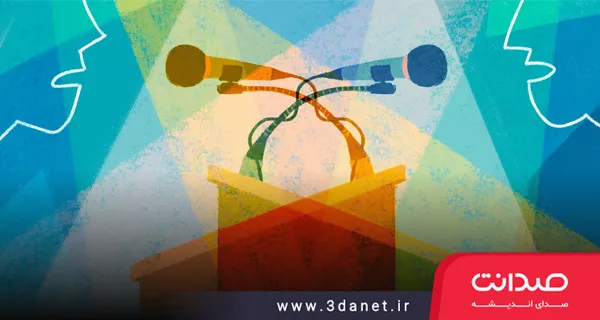
The Ethics and Politics of Debate
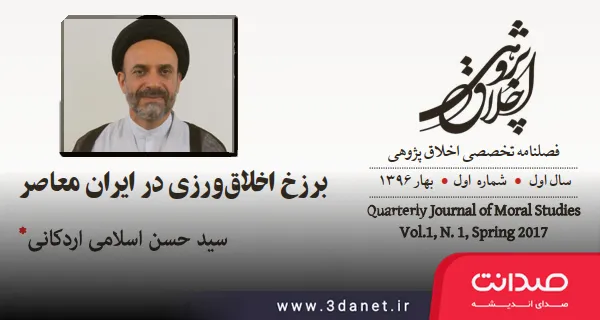
Seyyed Hassan Eslami Ardakani [1]
This article was first published in the quarterly Hayat-e Ma‘navi, no. 7.
Introduction
I begin with the assumption that ethics and politics are firmly linked. Although throughout history politics has repeatedly stabbed ethics in the back, and some even explicitly consider politics to be separate from ethics, nevertheless, in more serious discussions they speak of “good” and “just” politics and concepts of this kind, which directly lead to ethics, and one cannot distinguish these two domains or tolerate a duality.[2] With this assumption, I will try in this brief piece to look at the phenomenon of debate, which has deep roots in our scholarly tradition and has recently become a powerful tool in the political arena for proving one’s own rightness and discrediting the rival’s viewpoint.
My main idea is that debate, on the whole, is incapable of proving the correctness or incorrectness of a scholarly view or a political program, while it is ethically dubious. Consequently, it is necessary to adopt a clear policy toward debate and to try to ensure that this policy itself has an ethical dimension. In this text, I use politics in two senses: one micro and the other macro. When I speak of the “politics of debate,” I mean an executive program or policy.[3] But when I refer to politics, I mean all executive and macro activities for managing society, the city, or the polis,[4] in its Greek sense. In this sense, all those who make policies in the public sphere and for the betterment of society, or who pursue macro policies, are engaged in political work. But before continuing the discussion, it is necessary to specify exactly what is meant by debate and how it differs from related and adjacent concepts.
What Is Debate?
Within the definitions given for debate, one sees a kind of challenge-seeking, competition, an effort to prove one’s own rightness and the falsity of the rival’s opinion, and to defeat him. For example, after citing definitions he deems inadequate, Juwayni offers his own preferred definition, according to which debate is when two opponents, through writing or speech or what substitutes for them, try to establish their own claim and triumph over the other by refuting the opponent’s claim. From this perspective, they are like two wrestlers trying to overcome each other.[5]
This is the essence of debate, and it rests on a kind of intellectual exclusivism and self-righteousness. In the sense that either the truth is with me or with the opponent, and since it is not with my opponent, it is therefore with me; or either the opponent’s political program is correct or mine is, but since I prove his political program is wrong, my program is therefore correct. In fact, the foundation of debate is often not proving the correctness of my own claim, but mainly demonstrating the incorrectness of the opponent’s claim.
Sometimes in public culture a distinction is made between debate and “jadal” (disputation) and quarreling, and while debate is presented as something praiseworthy, disputation is tied to an unpleasant semantic aura. Yet the two are one and the same. For example, according to Juwayni, there is no difference between them. He writes, “There is no difference between debate, disputation, and jadal in the convention of theologians and jurists,”[6] and in all of these, the parties assume their own rightness as given and seek to prove it. It is here that the difference between debate and preaching, negotiation, and dialogue becomes clear.
In preaching, it is assumed that the truth resides with the preacher, speaker, orator, or pulpiteer, who now wishes to convey this truth to the audience. The audience, too, has more or less accepted that this person possesses the requisite truth and knowledge, and therefore has the competence to transmit it. In negotiation, the goal is to reach an agreement between the parties and to obtain the maximum benefit. Here, the negotiating parties strive, through bargaining and appropriate techniques, to gain the greatest advantage. Their aim is not truth, but greater profit and benefit. Books written on the principles of negotiation, such as the bestseller by Roger Fisher and William L. Ury,[7] teach the idea that instead of insisting on our positions and stubbornly clinging to them, we should pursue the interests and benefits of both sides. Thus, haggling and making and receiving concessions are common in negotiation.
In conversation and dialogue, we are not seeking to haggle, nor are we pursuing any specific benefit. In this respect, dialogue differs from negotiation. Here, the goal is to arrive at the truth. However, neither party claims to possess the truth, and in this respect, it distances itself from disputation. Here, both parties strive, through mutual cooperation, to reach the truth. Whereas in disputation, both parties consider themselves claimants to the truth and do not budge from their positions. For this reason, according to Ibn al-Jawzi, there have been two views regarding disputation and dialectics in the Islamic tradition. While philosophers deemed it invalid, theologians accorded it great value.[8]
This insistence on possessing the truth and considering oneself to be in the right, not necessarily but usually, causes a person to deem themselves justified in using any means to prove their righteousness. For this reason, in books concerning disputation, dialectics is often divided into two types: praiseworthy dialectics, and blameworthy or reprehensible dialectics. In Juwayni's view, blameworthy dialectics is that whose aim is to oppose the truth, defend falsehood, or seek power and status. Whereas praiseworthy disputation is that which takes place with the aim of revealing the truth.[9] Hence, while the Holy Qur'an sometimes expresses displeasure with and condemns those who engage in disputation,[10] it itself invites a certain kind of disputation, saying: "Invite to the way of your Lord with wisdom and good instruction, and argue with them in a way that is best."[11]
The expression "the best disputation" or "disputation in the best manner" in our exegetical and theological texts forms the basis for an extensive discussion, according to which it is said that there are three types of disputation: reprehensible and unpraiseworthy disputation, good disputation, and the best disputation. A significant portion of the narrations that forbid disputation pertain to the first type. While less is said about the second type, the Islamic tradition has often called for disputation in the best manner. That is, disputation must not only be good but must, in addition, be "the best." Majlisi, in an explanation of the term "mirā'" found in the narrations, equates it with "jadal" (disputation) and explains that in some reports where disputation is forbidden, the intent is that disputation whose aim is domination, self-display, fanaticism, and self-aggrandizement. However, that disputation which is for the purpose of revealing the truth and guiding the misguided is praiseworthy and among the important pillars of religion. Nevertheless, he goes on to point out this subtle point that "but distinguishing between these two is extremely difficult, and how often one is mistaken for the other," and the possibility of self-deception arises.[12]
The (Un)desirability of Disputation
This ambiguity in the difference between praiseworthy and blameworthy debate, coupled with the psychological fact that we often tend to want to win every argument, has led some to condemn debate outright and advance powerful arguments against it. In their view, debate ultimately does not prove the truth, but can easily lead to falsehood. Ghazali, who was himself a great debater, at the height of his scholarly authority and on the threshold of his spiritual transformation, decided to avoid debate altogether and strove to keep this vow. When he was leaving Baghdad for Jerusalem, on his way, Abu Bakr ibn al-Walid al-Qurashi, the Maliki jurist, challenged him to a debate. Ghazali replied, "This is a task we have left to the children of Iraq."[13] Also, according to his own writings, "At the shrine of Abraham, the Friend of God (peace be upon him), I made a covenant that I would never again go before any sultan, nor accept a sultan's wealth, nor engage in debate and fanaticism."[14] He later also wrote that he had not engaged in any debate for fifteen years.[15]Ghazali himself, in his works, enumerates in detail the harms and afflictions that arise from debate, naming ten fundamental afflictions as follows: envy, arrogance, malice, backbiting, lying, self-praise and boasting, spying into the lives and faults of others, rejoicing at the sorrow of others, hypocrisy, and haughtiness and opposition to truth. He then lists numerous examples of these afflictions in detail.[16]
Fayz Kashani follows the same view and narrates hadiths in which the Imams discouraged their Shia followers from debate and even sometimes avoided it themselves.[17] For example, someone challenged Imam Husayn (AS) to a debate, but he avoided it, saying that the path of truth was clear to him, and if the other was ignorant, he should seek it.[18]
Of course, in contrast to those who considered debate generally wrong, there is a strong tradition in favor of debate which, while accepting its afflictions, has spoken of the morality and desirability of debate overall by setting forth conditions and stipulations. In Shia narrations, too, the Imams sometimes strongly forbade debate, disputation, and wrangling. For instance, in part of a long hadith, Imam Sadiq (AS) points out that the most pious of people is one who avoids disputation even if he is in the right.[19] Again, Imam Sadiq narrates this same hadith from his forefathers from the Messenger of God (PBUH).[20]At other times, they commanded it and deemed it permissible. One day, Imam Sadiq prevented one person from debating and commanded another to debate. One of the companions asked about this duality, and the Imam replied: "This one knows the proofs better and is gentler than him."[21]Also, in the face of doubts about the correctness of debate, Imam Sadiq (AS) emphasizes that what is meant is improper debate; otherwise, God Himself has called to debate in the best manner, and then he enumerated the characteristics of proper debate.[22]
Ghazali himself, despite all the points he made about its afflictions, ultimately sets forth the etiquette and ethics of debate.
The Ethics of Debate
Despite all the reservations surrounding debate, powerful reasons sometimes emerge in its favor, making it unavoidable—reasons such as defending one's academic and social standing, dispelling ambiguity in the scholarly arena, precisely outlining one's political program, refuting accusations, and explaining the shortcomings of an opponent's viewpoint. Here, the principle of debate can be acceptable; nevertheless, numerous dangers lie along this path, and consequently, like any voluntary act, debate must be governed by ethical norms and reflect the character virtues of the debater. By analyzing the logic of debate, attending to its purpose, and rendering this activity effective, one can arrive at certain ethical principles governing the debate process that must always be kept in mind so that the debate does not stray from its goal. The most important of these ethical principles are: (1) truth-seeking; (2) allowing the opponent to change position; (3) avoiding any form of insult and personalizing the issue; (4) seeking common ground; (5) precision in stating the opponent's view and refraining from distorting it; and (6) using consistent standards and avoiding double standards.[23] I have discussed this at length elsewhere and will content myself with this brief mention.
The Politics of Debate
In today's society, the culture of debate has not strayed far from the picture Ghazali painted of the debates of his time. We still witness insults, humiliation, personalization, intrusion into privacy, and "obstinacy" and quarrelsomeness in scholarly discussions. When our thousand-year-old culture in the realm of scholarly debate is like this, one cannot expect much more in the political arena, where debate is a nascent phenomenon. Today, an invitation to debate is, in fact, considered a kind of tool for displaying power and issuing threats. Someone spends a year or two and writes a book. Another person, who opposes their view but has not written and published their own perspective, instead of writing and publishing a critique of that book—thereby contributing to the dissemination and expansion of scholarly culture and recording their statements in a reasoned and well-argued manner—invites the author to a debate. This debate is detrimental to that author in any case. If they accept and win the debate, it is not considered much of a success, because they have defeated an opponent who was not even known in scholarly circles. But if they lose this debate, they have been defeated by an unknown person, which counts as a disgrace. And if they reject the invitation to debate altogether, they are considered timid and cowardly, and it is assumed that they are someone incapable of defending their words and claims. In the political arena, the situation is perhaps even worse: someone, through the effort and collaboration of a team, writes their political program for governing society and presents it for public judgment, and their rival invites them to a debate about the contents of this written program, but disregarding its technical subtleties, by pointing to a few misleading points, raising personal issues, or even mocking the team that wrote the program, tries to defeat their opponent.
The main point about debate is that it is a kind of skill, requiring practice and training, and has nothing to do with truth or falsehood. Success in debate requires subtle psychological techniques in which theologians and debaters became skilled, and we are now witnessing the continuation and refinement of this skill. It is enough for someone to remain calm throughout the debate and try to anger their opponent; their victory is almost certain. Debate is like a game of chess, requiring specific strategies and techniques. For this reason, if someone spends a year practicing in this arena, they will most likely defeat those who are far more knowledgeable than them and hold more correct positions. People's memories are not the same, their presence of mind is not equal, and their tenacity and audacity are not at the same level. It is enough for someone to read a book like Schopenhauer's concise The Art of Always Being Right and apply its contents.
From this perspective, "eristic has nothing to do with truth," and the debater behaves like a fencer intent on victory. For this reason, one must always be on the alert to find the opponent's weaknesses and attack them. One should also strive to disrupt their composure and calm. With this view, Schopenhauer teaches various methods, including that in eristic: "resort to false premises"; "assume what needs to be proven as given"; "extort admissions by means of a barrage of questions"; "make your opponent angry"; "ask diversionary questions"; "interrupt them"; "force them to exaggerate"; "put forward a false analogy"; "find the counter-instance"; "persuade the audience, not the opponent"; "change the course of the discussion"; "appeal to authority instead of reason"; and "make it personal, resort to insult and vulgar abuse."[24]
This may be an exaggerated or satirical form that Schopenhauer employs to better show reality through hyperbole. For this reason, he goes on to state that one should not converse and debate with everyone, but rather:
Debate only with those whom you know and are aware possess enough reason, intelligence, and self-respect not to talk nonsense; those who appeal to reason, not to false authority, and who listen to reason and yield to it. And finally, those who cherish the truth, eagerly accept a reason even if it comes from the opponent, and are fair enough to admit they are wrong if the opponent is right.[25]
And of course, such people are few. It suffices to pay attention to the debates held in the public sphere or whose reports are published, and to consider their reception. The general audience mainly points to the manner of expression, quick-wittedness, giving a firm response, exposing the opponent's weaknesses, making cutting remarks, and trading insults, and they consider these as signs of the strength and correctness of someone's position. Consequently, every public figure, whether an academic or a statesman, in the scientific arena or the political one, must have a clear policy for debate. On the one hand, one should not agree to just any debate, and on the other hand, one should not ignore the opportunities that arise in the name of debate. This policy-making requires serious reflection and study. The main goal is that if we are in pursuit of living ethically and pursue science and politics for this purpose, we should be vigilant not to confuse the means with the end and not unwittingly enter the opponent's field. Part of living ethically is having mastery over one's own life and autonomy, and its prerequisite is choosing the time, place, and opponent for a debate. It is not the case that we should agree to a debate whenever someone tempts us. With this view, I believe the politics of debate, meaning our executive plan, can be based on answering the following questions.
1- Is debate part of our long-term plans?
It is not meant for everyone to be active in the arena of debate. Just as in the university someone might base their work on teaching or research, every public figure can more or less clarify for themselves whether they want to use debate as a platform or medium or not. Someone might consider debate a good tool for their personal and social success due to their linguistic and verbal skills. On the other hand, another person might overall conclude that they should not enter the arena of debate at all. But the important thing is that whatever choice we make, we remain committed to it.
2- Does the debate help advance our discussion?
Sometimes a debate can help advance our discussion, and sometimes it cannot. For example, if I have a plan to promote media literacy education among teenagers, perhaps debating and publicizing this discussion would be to my benefit. But if I have proposed a plan to my affiliated organization for a research grant, the possibility of receiving this grant might well become zero through a debate.
3- Will the debate in the public sphere end to our benefit?
Some public issues can, and even should, be raised in the public sphere. But imagine someone has written a specialized book on Islamic philosophy, and an opponent invites him to a debate in the city's Grand Mosque to expose the worthlessness of his work in the presence of the Muslim community. It seems that if a debate about such a book is to take place, it should be in a scholarly and specialized setting, not a public one.
4- Are we familiar with the techniques of debate?
Since ancient times, it has been clear to experts that a significant part of debating is technique and skill, unrelated to knowledge. For this reason, one should not agree to a debate simply because they are right and have spoken or written the truth. Debate is a kind of duel, a hand-to-hand combat. If you accept the invitation of any wrestler or boxer to compete with them, you can also accept the invitation of any debater.
5- Do we have the psychological strength to debate?
Some individuals possess high psychological and emotional stability, and no nervous pressure or insult can unsettle them, but some people become distressed by a single curse or insult.[26] As a result, they vacate the boxing ring in favor of their opponent. The calmness, and perhaps the "audacity" and "thick skin" of some debaters is truly admirable, even though truth and falsehood are the same to them and they only think of their own victory!
6- Is the opponent worthy of debate?
Even if we are ready to debate, we should not debate with just anyone. The opponent must be worthy of this battle. The criterion of worthiness, in the terminology of dialectics books, is "kafa'ah" or equality, and being "kufw." Sometimes the term "nazir" (peer) is also used. One should only debate with someone they consider their peer, and no one else. Consequently, if we do not consider someone our peer, we should never agree to a debate. If we do agree to debate such a person, we must treat them as a peer. This is a point Juwayni rightly emphasizes: either do not debate with someone who is not your peer, or if you do debate, always consider them your peer.[27] Some people ignore this simple point and debate with someone they do not consider their peer beforehand. During the debate, they repeatedly point out this difference and inequality by belittling them, highlighting it with expressions like "you young people" or "you who were my student," and in doing so, instead of humiliating the opponent, they practically demonstrate their own inability.
But what constitutes the criterion for peerage and equality? It seems that the criteria for scholarly merit and ability are having written works in the field of debate, a good track record and reputation in the debating arena, and a reputation for adhering to the ethical principles of dialogue. In the public, social, and political sphere, it includes considerable work experience, a notable track record, and having a good name in one's field of work. With this perspective, we can have some practical guiding principles: first, avoid those who have always rolled up their sleeves for debate and seem to have no other occupation. Ibn Hazm al-Andalusi rightly advises us to avoid debating with those who love to debate.[28] Second, avoid those who have no formally written and published work in a field. Writing is fundamentally more difficult than speaking. One can easily expose a person's written error, but this is not the case in speech, where the person can change their words and say, "I meant this or that." Someone who has written something has clear positions, but someone who lacks a written work in that field is unknown to us, and we do not know where to begin the discussion. Third, this debater should not be known as someone whose job and profession is debating. Some people are gradually drawn into the arena of debate, gain skill in this area, and sometimes hold ten debates on various issues over the course of a year. These individuals, like professional preachers, acquire sufficient expertise in taking the pulpit. Now, if someone wrote a book and their work was essentially writing, not debating, they will not be able to confront them.
Some experts reject the debaters' claims for various reasons, including this very inequality or lack of parity. Nevertheless, there are always those who propose debates to them and exploit the situation. For example, Mr. A challenges Mr. B to a debate, and Mr. B declines or does not even respond. Subsequently, Mr. A announces everywhere that he requested a debate with Mr. B and that Mr. B refused. In this atmosphere, it is sometimes assumed that Mr. A is in the right and that Mr. B must certainly participate in the debate to prove his legitimacy, but is Mr. A's action truly correct, and are we expected to abandon our work and lives whenever someone requests a debate and accede to their demand?
7- Is this debate a purely scholarly exercise, or will it become a matter of prestige and personal conflict?
Sometimes a debate begins with the aim of defending a scholarly claim or a political program, but in practice, it turns into a kind of battle for prestige, and viewers become as excited as if they were watching the Muhammad Ali vs. Joe Frazier boxing match, known as the Fight of the Century, later recounting to one another what happened in the fifteenth round. Any debate can be drawn in this direction. Therefore, we must be vigilant about this matter.
8- Are the media and cyberspace suitable for debate?
One of the characteristics of Iranian society is that almost any space is used for various purposes without regard for its primary function; for example, the WhatsApp messenger, regardless of its capacity and limitations, becomes a space for dispute, contention, and holding classes. Consequently, as soon as a medium or space becomes available, some consider it a suitable arena for debate. However, the audience of that medium may not be appropriate for such a debate, and when someone "writes" snake and another "draws" a snake, the latter is considered literate, not the former.
With these considerations, any public figure, whether in the realm of scholarly work or politics, can plan their debates according to their abilities and scholarly and social goals; they may avoid them altogether, engage in them completely, be selective, or even introduce representatives to debate on their behalf. But the main point is that debate is more an arena of dominance and victory than of truth-telling and discovering the truth, and this issue can serve as a precise indicator for our policymaking in the realm of debate.
Concluding Remarks
A debate is initiated by each party with the assumption that they are right and that the opponent or the opponent's claims are false. Consequently, not necessarily but often, this belief in one's own righteousness eliminates the possibility of a fair dialogue and the effort to find the truth, dragging the parties into a struggle for dominance and supremacy over the other. In such an atmosphere, expecting agreement, humility, or a joint effort to reach the truth is futile, and each person tries to use all psychological and rhetorical tricks to discredit the opponent and prove their own claims. For this reason, in these debates, whether in the name of science or in the political arena, we have often witnessed that no one is concerned with truth or mindful of ethics, and efforts are focused on victory at any cost. The audience, too, rather than being concerned with truth and justice in these discussions, generally, like fans of a team, desire the triumph of their own spokesperson. Therefore, debate is neither a revealer of truth nor a supporter of ethics. It is here that we must use this tool cautiously. If a debate is to be utilized somewhere, one can send representatives of one's viewpoint into the theoretical battlefield. Just as we can employ professional negotiators to advance major foreign policies—individuals who are not themselves policymakers but can effectively pursue and implement policies—the same can be done for electoral debates. For example, it is not necessary for every presidential candidate to be a capable debater. It is enough that they have a clear and sound political program. They can then use representatives to prove their claims, instead of personally engaging in debate. In short, debate is merely a tool, a double-edged sword, and must be used vigilantly.
.
.
Bibliography
Ibn al-Jawzi, Muhyi al-Din Yusuf ibn Abd al-Rahman, Kitab al-Idah li-Qawanin al-Istilah fi al-Jadal wa al-Munazarah, edited by Mahmud ibn Muhammad al-Sayyid al-Dughaym, Maktabat al-Madbuli, Cairo, 1995.
Eslami Ardakani, Seyyed Hassan, “The Ethics of Debate,” in Applied Ethics in Iran and Islam, edited by Ahad Faramarz Qaramaleki, Tehran, Research Institute for Cultural and Social Studies, Ministry of Science, Research and Technology, 2010.
Eslami Ardakani, Seyyed Hassan, “The Relationship between Ethics and Politics: An Examination of Four Theories,” Political Science Quarterly, no. 26, Summer 2004.
Juwayni, Imam al-Haramayn Abd al-Malik ibn Abd Allah, al-Kafiya fi al-Jadal, edited by Fawqiyya Husayn Mahmud, Maktabat al-Kulliyyat al-Azhariyya, Cairo, 1979.
Schopenhauer, Arthur, The Art of Always Being Right: 38 Ways to Win When You Are Defeated, translated by Erfan Sabeti, Tehran, Qoqnus.
Shaykh Mufid, Muhammad ibn Muhammad, Tashih I‘tiqadat al-Imamiyya, edited by Hossein Dargahi, Congress of Shaykh Mufid, Qom, 1414 AH.
Tabarsi, Ali ibn Abi Talib, al-Ihtijaj, Beirut, Mu’assasat al-A‘lami, 1410 AH.
Ghazali, Abu Hamid Muhammad, Ihya’ ‘Ulum al-Din, Beirut, Dar al-Fikr, 1406 AH.
Ghazali, Abu Hamid Muhammad, Makatib-e Farsi-ye Ghazali: Banam-e Faza’il al-Anam min Rasa’il Hujjat al-Islam, edited by Abbas Eqbal, Tehran, Amir Kabir, 1983.
Fayd Kashani, Muhammad ibn Murtada, al-Mahajjat al-Bayda’ fi Tahdhib al-Ihya’, edited by Ali Akbar Ghaffari, Qom, Daftar-e Entesharat-e Eslami.
Majlisi, Muhammad Baqir, Bihar al-Anwar, Beirut, Mu’assasat al-Wafa’, 1403 AH.
Nuri, Mirza Husayn, Mustadrak al-Wasa’il wa Mustanbat al-Masa’il, Qom, Mu’assasat Al al-Bayt li-Ihya’ al-Turath.
Yafi‘i al-Yamani, Abu Muhammad Abd Allah ibn As‘ad ibn Ali ibn Sulayman, Mir’at al-Jinan wa ‘Ibrat al-Yaqzan fi Ma‘rifat ma Yu‘tabar min Hawadith al-Zaman, Cairo, Dar al-Kitab al-Islami, 1413 AH.
.
.
[1] Professor at the University of Religions and Denominations
[2] For a detailed discussion of views on this matter, see: Seyyed Hassan Eslami Ardakani, “The Relationship between Ethics and Politics: An Examination of Four Theories,” Political Science Quarterly, no. 26, Summer 2004.
[3] Policy.
[4] Polis.
[5] Imam al-Haramayn al-Juwayni, al-Kafiya fi al-Jadal, edited by Fawqiyya Husayn Mahmud, Maktabat al-Kulliyyat al-Azhariyya, Cairo, 1979, pp. 21-22.
[6] Ibid., p. 19.
[7] Getting to Yes: Negotiating Without Giving In, Roger Fisher and William Ury, New York, Penguin Books, second edition, 1991.
[8] Muhyi al-Din Yusuf ibn Abd al-Rahman ibn al-Jawzi, Kitab al-Idah li-Qawanin al-Istilah fi al-Jadal wa al-Munazarah, edited by Mahmud ibn Muhammad al-Sayyid al-Dughaym, Maktabat al-Madbuli, Cairo, 1995.
[9] Imam al-Haramayn al-Juwayni, al-Kafiya fi al-Jadal, pp. 22-23.
[10] Such as “They present it to you only for argument. Indeed, they are a contentious people” (Surah al-Zukhruf, verse 58).
[11] “Invite to the way of your Lord with wisdom and good instruction, and argue with them in a way that is best. Indeed, your Lord is most knowing of who has strayed from His way, and He is most knowing of the [rightly] guided” (Surah al-Nahl, verse 125).
[12] Muhammad Baqir Majlisi, Bihar al-Anwar, Beirut, Mu'assasat al-Wafa', 1403 AH, vol. 2, p. 127.
[13] Abu Muhammad 'Abd Allah ibn As'ad ibn 'Ali ibn Sulayman al-Yafi'i al-Yamani, Mir'at al-Jinan wa 'Ibrat al-Yaqzan fi Ma'rifat ma Yu'tabar min Hawadith al-Zaman, Cairo, Dar al-Kitab al-Islami, 1413 AH, vol. 3, p. 226.
[14] Abu Hamid Muhammad al-Ghazali, Makatib-e Farsi-ye Ghazali: Banam-e Faza'il al-Anam min Rasa'il Hujjat al-Islam, edited by Abbas Iqbal, Tehran, Amir Kabir, 1362 Sh, p. 12.
[15] Ibid., p. 45.
[16] Abu Hamid Muhammad al-Ghazali, Ihya' 'Ulum al-Din, Beirut, Dar al-Fikr, 1406 AH, vol. 1, pp. 58-60; and Seyyed Hassan Eslami Ardakani, "The Ethics of Debate," in Applied Ethics in Iran and Islam, edited by Ahad Faramarz Qaramaleki, Tehran, Research Institute for Cultural and Social Studies, Ministry of Science, Research and Technology, 1389 Sh.
[17] Muhammad ibn Murtada Fayd Kashani, al-Mahajjat al-Bayda' fi Tahdhib al-Ihya', edited by Ali Akbar Ghaffari, Qom, Daftar-e Entesharat-e Eslami, vol. 1, p. 107.
[18] Mirza Husayn Nuri, Mustadrak al-Wasa'il wa Mustanbat al-Masa'il, Qom, Mu'assasat Al al-Bayt li-Ihya' al-Turath, vol. 9, p. 74.
[19] Ibid., p. 76.
[20] Ibid., p. 77.
[21] Muhammad ibn Muhammad Mufid, Tashih I'tiqadat al-Imamiyya, edited by Husayn Dargahi, Congress of Shaykh Mufid, Qom, 1414 AH, p. 71.
[22] Ali ibn Abi Talib Tabarsi, al-Ihtijaj, Beirut, Mu'assasat al-A'lami, 1410 AH, p. 21.
[23] Seyyed Hassan Eslami Ardakani, "The Ethics of Debate," in Applied Ethics in Iran and Islam.
[24] The Art of Always Being Right: 38 Ways to Win When You Are Defeated, Arthur Schopenhauer, translated by Erfan Sabeti, Tehran, Qoqnus, 1386 Sh, pp. 40-117.
[25] Ibid., p. 120.
[26] Like the story of that strongman who, in Sa'di's words, "can lift a thousand man of stone but cannot bear a single word." (Gulistan of Sa'di, edited by Gholamhossein Yousefi, Tehran, Kharazmi, 1374 Sh, p. 105).
[27] Imam al-Haramayn al-Juwayni, al-Kafiya fi al-Jadal, p. 531.
[28] Ali ibn Muhammad ibn Hazm al-Andalusi, al-Taqrib li-Hadd al-Mantiq, in Rasa'il Ibn Hazm al-Andalusi, edited by Ihsan Abbas, al-Mu'assasa al-'Arabiyya li-l-Dirasat wa al-Nashr, Beirut, 1983, vol. 4, p. 340.
.
.

Discussion0 comments
No comments yet; let yours be the first voice.