Philosophy
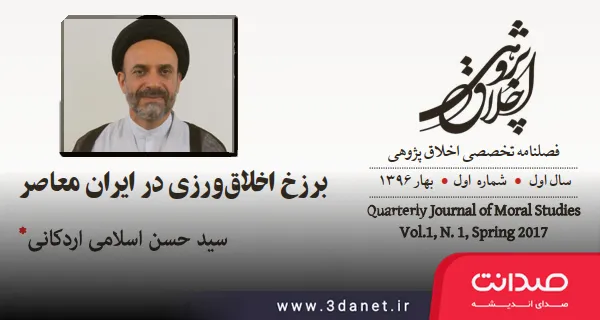
Seyyed Hassan Eslami Ardakani: Motahhari’s Philosophical Encounter with Darwinian Evolution
Darwin's theory of evolution has long posed a challenge for religious believers and served as a battleground between religion and atheism. Motahhari is among the few Muslim thinkers who distinguished between the theory itself and its theological interpretations, offering a philosophical perspective.
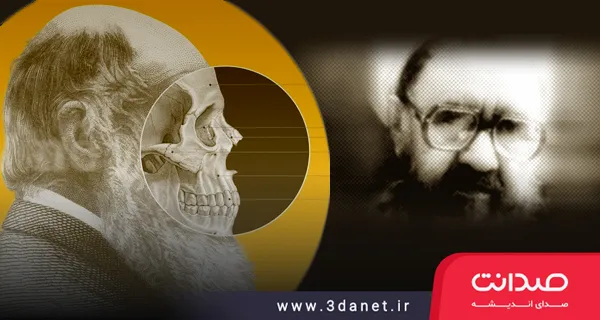
Motahhari’s Philosophical Encounter with Darwinian Evolution[1]
Abstract
Darwin’s theory of evolution has, from its inception to the present day, been considered a challenge for religious believers. For this reason, it has been used as a powerful ideological tool in the conflict between religion and atheism. Some have advanced it in an attempt to confirm atheism, while religious believers, conversely, have attacked it with the aim of defending religion and sought to discredit this theory. Thus, proving the validity of this theory or refuting it has been the main axis of the debates. Amidst this, a small number of Muslim thinkers have distinguished between this theory and its theological and metaphysical interpretations. The late Motahhari is among the few thinkers who took this distinction seriously and, while separating the principle of the theory from the interpretations made of it, and while endorsing discussions about these interpretations, presented a precise, albeit brief, discussion. In this article, the author examines and analyzes Motahhari’s philosophical perspective and places it within a broader context to enable a comparison of his approach with that of other thinkers.
1- An Enduring Challenge
Darwinian evolutionary theory, since the publication of On the Origin of Species in 1859 and The Descent of Man, and Selection in Relation to Sex[2] in 1871, has continually challenged theologians, and the mounting evidence presented in its favor has made their task more difficult. In the face of the widespread opposition mounted against this theory in the name of religion, we are witnessing the expansion and generalization of this theory to other areas of human life and various domains of ethics and religion. Thus, this theory has, in effect, become a grand theory that forms the core of many theories prominent in the biological and social sciences. For example, some astronomers, biologists, geneticists, psychologists, and sociologists staunchly defend this theory and regard it as a “fact” or an indisputable reality that unravels all the complexities of science and life’s problems, from explaining religion to the function of love. Among numerous names, one can list the following individuals: Carl Sagan, Francis Crick, Daniel Dennett, Edward O. Wilson, and Richard Dawkins.
The dominance of this theory in the behavioral sciences is such that it has been said: “There is probably no principle in the behavioral sciences as powerful in its potential explanatory power as the principle of evolution.” (Atkinson [et al.], 1385: 625) According to Sweetman, although he himself has reservations about the validity of this theory, “the theory of evolution is one of the most thought-provoking and influential theories of all ages.” (Sweetman, 2010: 82) Also, according to Nancey Murphy, a philosopher of religion, the debate over the theory of evolution was still heated at the end of the twentieth century. (Murphy, 1383: p. 129) Morvillo speaks of the influence of this theory and believes it is capable of transforming the world. (Morvillo, 2010: 156) Finally, even a philosopher like William B. Irvine draws on this theory to defend Stoicism and attempts to make it the foundation of a virtue-oriented character in a world without God (Irvine, 2009, chapter: 21)
At the outset, this theory was regarded as a serious confrontation for Christianity, challenging the religion on three main fronts, which Sweetman has categorized as follows: (1) questioning the accuracy of the biblical account of human creation; (2) casting doubt on the place of humanity in the created world; and (3) challenging the idea of design and order in the universe. (Sweetman, 2010: 104) The efforts of philosophers of religion to reconcile this theory with Christianity, on the one hand, and the use of this theory by opponents of Christianity and atheists in their attempts to explain their atheism, on the other, have placed this debate at the heart of the major and serious disputes between science and religion and the philosophy of religion. Although more than a century and a half has passed since the scientific presentation of this matter, the debate still rages on, with each group striving to argue for or against it. The creationism debate in North America, the efforts to include the teaching of creationism in public schools, the prohibition of teaching Darwinian evolutionary theory in public schools in some US states during the early decades of the twentieth century, the famous trial of John Scopes, a biology teacher, for violating this law in 1925, and dozens of other episodes clearly demonstrate the importance of this issue in America. (Eslami, 1387) Indeed, proponents and opponents of this theory have waged a full-scale war against one another over the past one or two centuries, leading to greater scrutiny of the issues. Michael Ruse, in his book The Evolution Wars: A Guide to the Debates (Ruse, 2001), clearly reveals the spread of this theory across various sciences and the history of thought, showing how, contrary to the belief of some Iranian thinkers who consider this debate dead and finished, it continues to sweep through all fields like a cosmic acid leak.
This theory was introduced in detail to the Islamic world by Shibli Shumayyil and was largely considered a weapon against Islam from the very beginning. Consequently, some, like Shumayyil and Musa Salama, used it against Islam. (Eslami, 1386: pp. 85-86) In contrast, the majority of Muslim scholars viewed it as a threat to Islam, proceeded to examine and critique it, and tried to show that this theory was fundamentally flawed. Some also brought up the role of colonial agents in the theory's promotion, and a group even claimed that this theory "had a political aspect. The goal was to crush and smash the papal establishment." (Sobhani, 1386: p. 30)
The presence of overt and covert ideological interests in this controversy and the sensitivity of the issue meant that few in the Islamic world paid attention to the technical and scientific dimensions of this theory. For this reason, an incorrect and erroneous picture of it was usually presented and then criticized, or defended. Of course, this issue is not unique to the Islamic world. According to Michael Ruse, the theory of evolution in the West has a three-hundred-year history and has passed through three stages during this time: (1) the pseudo-scientific stage; (2) the popular science stage; and (3) the professional science stage. In fact, from 1930 onwards, with the synthesis of this theory with molecular genetics, the professional and scientific dimensions of evolutionary theory overcame ideological issues, and the theory departed from the general public, returning to academic circles where it is examined and discussed in a scholarly manner among specialists. (Ruse, 2013: 242) But until that time, the theory of evolution was accompanied by numerous misunderstandings, and everyone, according to their own assumptions, cultivated a self-made image of it and proceeded to defend or criticize it. This issue is particularly evident in the Islamic world, where familiarity with and access to primary sources was less possible. As a result, some who set out to critique Darwin's theory have, in fact, criticized Lamarck's theory, which was a rival to Darwin's, and precisely with the arguments presented by defenders of Darwin's theory against Lamarckism, including the experiment of cutting off the tails of mice over successive generations, they sought to show that Darwin's evolutionary theory was wrong; that is, they fundamentally lacked a clear understanding of Darwin's evolutionary theory. Furthermore, the majority of critics of Darwin's evolutionary theory, and in some cases even its defenders, confused three key concepts, equating them and applying the judgment of one to the others: (1) evolutionism; (2) Darwinism; and (3) Darwinian evolutionary theory. (Eslami, 1392)
Evolutionism[3] is a philosophical and cultural outlook on the entire universe and all its phenomena that extends the model of biological evolution to other domains. An example is the evolutionary view of religions, according to which it is claimed that monotheism gradually emerged from polytheism. Stephan Hartmann, in the entry “Evolutionism,” has elaborated on the dimensions and manifestations of this perspective in detail. (Hartmann, 2007, Vol. 2: 687) Darwinism, however, is in fact an ideological and supremacist interpretation that was mainly presented and promoted by figures such as Herbert Spencer; for this reason, it is sometimes referred to as Spencerism. The essence of this ideological attitude is that whoever is stronger is more entitled, and “in the system of nature, the weak are trampled.” Hence, whoever is more powerful, including powerful countries or capitalists, has the right to colonize and exploit weaker countries or workers. This theory has nothing to do with Darwin; he was neither an advocate of colonialism, nor does his theory have such a logical consequence. He even campaigned against slavery, and the book Darwin’s Sacred Cause: Race, Slavery and the Quest for Human Origins is an effort to show that the aim of Darwin’s evolutionary theory was to demonstrate the equality of all humans by showing their common origins. (Desmond and Moore, 2009) The third concept is Darwin’s evolutionary theory itself, which is a scientific theory—in the sense of scientific, not necessarily true. This theory is based on observations and possesses elements that the passage of time has not only not weakened but has continually provided new, accumulating evidence in its favor. Nevertheless, we witness a conflation of these three concepts, whereas the first step in any scholarly endeavor, whether critique or defense, is a precise distinction among these three concepts. (Eslami, 1392)
Inattention to the difference between these three concepts, as well as the conflation of Darwin’s evolutionary theory with Lamarck’s theory of adaptation, has meant that only a very small number of works written in analysis and critique of Darwin’s evolutionary theory have emerged successfully from the crucible of rigorous examination. Moreover, the polemical and sometimes insulting aspect of some of these works constitutes a perfect example of a poor defense of religion. It is as if the late Motahhari reviewed all these works, which is why he distances himself from their authors in this way: “We do not wish to independently enter the discussion of the evolution of living beings and commit the same mistake that others have made, rising to reject and refute the principles and laws of evolution in the name of defending the sanctity of monotheism.” (Motahhari, 1376, Vol. 13: p. 64)
In any case, among the few who appear not to have fallen into the trap of these errors and conflations in discussing Darwinian evolutionary theory and have striven to discuss it philosophically is the late Motahhari. Although he discussed this area little overall, mainly touching upon this issue in two of his works, The Causes of the Tendency toward Materialism and Monotheism and Evolution, in this brief treatment he succeeded in pursuing and demonstrating a suitable philosophical manner and method for the discussion. The importance of this method becomes apparent when his writing is measured against similar works and one notes how, at a time when most writings had a polemical and silencing character, he endeavored to separate the domains of discussion and enter a dispute in which he had expertise and mastery. For this reason, after presenting and examining his view, I will also make references to the views of others to facilitate a better comparison.
2- The Philosophical Encounter
A review of the views of contemporary thinkers in the Islamic world, and particularly in contemporary Iran, who have analyzed and critiqued Darwinian evolutionary theory reveals that most of them, if not almost all, have committed serious methodological and epistemological errors in this field. For example, they have sometimes considered the non-inheritance of acquired characteristics as proof of the incorrectness of Darwinian evolutionary theory. At other times, disregarding the status and logic of science and the scientific method, they have refused to accept this theory as a scientific theory, thereby practically pitting religion against science. Ultimately, they have mostly made statements in this field without the necessary biological knowledge, which, instead of properly defending religion and Quranic teachings, have made them appear more vulnerable. It seems that Motahhari is one of the exceptions in this field.
As a philosopher of religion, Motahhari consciously separates the domains of discussion and examines the implications of this theory, proceeding step by step to reach his objective. Of course, this separation of discussions and steps is the result of the author's reflection on his works, not that he himself explicitly laid out such steps and stated that he proceeded in this manner along this path.
1-2) Respecting the Boundaries of Science
In the first step, Motahhari refrains from a scientific examination of this theory and considers it an error. In fact, it is not the task of the philosopher of religion to determine whether a scientific theory is scientifically correct or not. It is the duty of the scholars of each discipline to comment on the validity of theories presented in their specialized field and to engage in refutation and confirmation. Darwinian evolutionary theory is no exception to this rule. If this theory is proposed in the field of biology, it is primarily biologists who must examine the strengths and weaknesses of this theory, assess the validity of the evidence supporting it, and conversely, pay attention to evidence contradicting it, and ultimately judge its validity or invalidity, or accept it as the best explanation until further notice. However, the entry of exegetes, theologians, and philosophers into this arena, and their efforts to show whether a certain remaining skull resembles one living creature or another, lies outside their domain of competence. But in practice, this error has occurred, and a significant number of Muslim exegetes and theologians have inadvertently entered the fray of scientific debate and have tried, without possessing a scientific methodology and merely relying on the apparent meanings of some Quranic verses, to discuss and refute a scientific theory.
In his view, religious scholars should fundamentally not enter into a dispute over a scientific issue in the field of biology and should leave its proof or disproof to the experts, because "the discussion and investigation of this issue is the responsibility of biology scholars." Disregard for the proper domain of philosophical, religious, or scientific discussion, and failure to respect the boundaries of these discussions, has led some individuals, without the necessary knowledge and with unverified and sometimes erroneous presuppositions, to enter the dispute arising from Darwinian evolutionary theory and to engage in incorrect refutation and affirmation. Motahhari astutely points to this error and declares that we do not wish to fall into it: "and commit the same mistake that others have made, rising to refute and contradict the principles and laws of evolution under the guise of defending the sanctity of monotheism." (Motahhari, 1376, vol. 13: p. 64) In fact, trusting the scientists and out of respect for the opinion of experts in this field, he considers Darwinian evolutionary theory to be correct and scientifically "a settled matter," and deems efforts to prove its incorrectness an error, stating that considering a conflict between this theory and monotheism "stems from ignorance and lack of awareness," whereas monotheism and evolution support one another. (Motahhari, 1376, vol. 13: p. 65)
2-2) Separating Scientific Theory from Philosophical Implications
In the second step, although he refrains from addressing Darwin's theory of evolution from a scientific perspective and considers it erroneous, he deems it necessary to attend to the philosophical or theological implications of this theory, or the implications that have been loaded onto it. The fact is that Darwin's theory of evolution has been accompanied by philosophical and theological implications and consequences from the very beginning, and proponents and opponents of this theory have defended or attacked it in accordance with their sensitivity to these implications. Although Darwin himself did not draw any specific philosophical conclusions from his evolutionary theory and was not necessarily seeking to extract theological implications from it, the proponents and opponents of his theory did and continue to do so. For this reason, this theory was and is considered by some to be the best argument for atheism and the denial of God. For example, Richard Dawkins, the English biologist, believes that Darwin made it possible to be an intellectually fulfilled atheist. In his book The Blind Watchmaker, with the subtitle "Why the Evidence of Evolution Reveals a Universe Without Design",[4] referring to the famous argument of William Paley, the nineteenth-century theologian who inferred the existence of a designer from the order in the universe and likened Him to a capable and precise watchmaker, he concludes that if we consider the universe as a watch, due to the existence of disordered phenomena, it must actually be the product of a blind watchmaker. (Dawkins, 1986) When he attacks religion, considering himself a "warrior atheist," he tries to destroy the "virus of faith," and, according to Grayling, is considered "the paladin, or demon, of the war of science against religion" (Grayling, 2006: 243), and finally writes The God Delusion,[5] he is no longer speaking in the capacity of science, but has transformed a scientific theory into an ideological position. Or when the biologist Daniel Dennett considers himself a "committed Darwinian"[6] and speaks of and defends this theory as a kind of religion (Dennett, 2006: 102), it seems he has stepped outside the realm of science and turned it into a kind of creed.
In fact, what is today called positive atheism,[7] in Sweetman's terms, is partly based on Darwin's theory of evolution, and the defenders of this kind of atheism, citing scientific findings including this theory, try to positively prove atheism and godlessness. (Sweetman, 2010: 9)
Motahhari considers it necessary to seriously present and challenge the implications that have been extracted from Darwin's theory of evolution, which are predominantly theological and philosophical in nature. In fact, just as it is not the role of a philosopher, qua philosopher, to enter into scientific discussions and disputes, in the scientific sense, biologists also do not have the right to load philosophical and theological conclusions onto their scientific theories. But this is a mistake that some biologists like Dawkins or Dennett have made, and for this reason, Darwin's theory of evolution has become an atheistic ideology and creed in their hands. Some have challenged this philosophical interpretation of a scientific theory and pointed out its incorrectness. For example, Mary Midgley, the moral philosopher, in her article "Darwinism and Ethics," carefully critiques the philosophical interpretations of the theory of evolution by sociobiologists[8] like Edward O. Wilson in his book Sociobiology,[9] reveals the errors of this approach, and makes it clear that from this perspective, this view is no different from Marxism. (Midgley, 1994: 7-11) Also, Michael Ruse, a philosopher of science and specialist in the conflict between the theory of evolution and creationism, in his long article "Evolution: From Pseudoscience to Popular Science, from Popular Science to Professional Science," critiques the philosophical and theological interpretations of this theory and shows that this theory has also been used as an ideology by some specialists. (Ruse, 2013: 241-242)
Distinguishing a scientific theory from the philosophical and theological implications and consequences imposed upon it is among the tasks of the philosopher of religion. Nevertheless, in practice this distinction has not been made in most cases. Some, owing to their anti-religious attachments, made this theory a good foundation for defending their beliefs. In response, the religious, out of opposition to these beliefs, inadvertently made this scientific theory itself the target of their attacks, to the point of opposing the certainties of science and scientific theory. For example, Shibli Shumayyil considered this theory a good foundation for defending his atheism. He wrote the book Falsafat al-Nushuʾ wa-l-Irtiqaʾ (The Philosophy of Evolution and Progress), a free translation of a book by Ludwig Büchner, to introduce and promote this theory, and said: “My aim in addressing this discussion in this manner was to place materialist philosophy on a firm scientific basis.” (Abd al-Raziq, 1995, vol. 2: p. 550) Likewise, Musa Salama considered it a good weapon for anti-religionism and spoke of his faith in this theory. (Abd al-Raziq, 1995, vol. 2: p. 593) In contrast, Sayyid Jamal, due to the conflation of this theory with materialism and atheism in his time, in his writing entitled Risala-yi Naychiriyya dar Haqiqat-i Mazhab-i Naychiri va Bayan-i Hal-i Naychiriyan (Treatise on the Nature of the Naturalists’ Creed and an Account of the Naturalists’ Condition), instead of criticizing atheistic interpretations of this theory, attempts to refute the theory itself in a polemical manner. (Hosseini, 1379)
The importance of Motahhari’s effort becomes clear when we notice this point and see how he offers a way out of this predicament. People like Dawkins arrive at the denial of God through the Darwinian theory of evolution. But in Motahhari’s view, the path they take is erroneous and the conclusion of their argument is flawed. Some, by demonstrating a conflict between the text of the Bible indicating the instantaneous creation of man and the Darwinian theory of evolution, conclude atheism. But logically one can ask, first, what necessary connection is there between the incorrectness of the biblical text, or of sacred books in principle, and the denial of God. In Motahhari’s view, it is possible that the biblical text is wrong, or that some sacred books advocate the Darwinian theory of evolution, or even that all sacred books have gone astray. Nevertheless, from the incorrectness of the reports of sacred books, one cannot deduce the denial of God, and logically one can worship a God without being committed to any particular religion. As he writes: “What necessary connection is there between not accepting one or several or all religions and not accepting God?” (Motahhari, 1377, vol. 1: p. 515)
3-2) Critique of Presuppositions
Continuing this analysis, Motahhari reveals and analyzes one of the presuppositions of the evolution controversy. It is as if it is taken for granted that if there is a God and a creation has taken place, this creation will be in the form of instantaneous and sudden creation. Now, if empirical findings and geological and biological investigations show that the creation of living beings has traversed a long path and instantaneous creation is erroneous, then belief in God and creation will also be erroneous. Apparently, both atheists and some believers hold such a presupposition. For this reason, today, at least in North America, opponents of the theory of evolution defend the theory of creationism, that is, instantaneous creation, and proponents of the Darwinian theory of evolution try to refute this instantaneous creation. Whereas such a presupposition requires reflection and analysis, and Motahhari examines it.
From Ayatollah Motahhari’s perspective, due to the weak philosophical apparatus of the West, some considered the Darwinian theory of evolution anti-religious and used it against Christianity. Now, instead of theologians also employing this theory to their own advantage, they opposed it. Because: “They assumed that only if the world comes into being instantaneously does it need a cause and a creator.” (Motahhari, 1377, vol. 1: p. 518)
Another presupposition held by some, such as Dawkins, from which they have drawn atheistic conclusions from Darwinian evolutionary theory, is that divine creation requires a prior design. God, like a painter, first creates a design in His mind and then inscribes it upon the tablet of existence. Yet one of the central elements of evolutionary theory is that the emergence, proliferation, and transformation of living beings occurs in a random manner, and that fundamentally “evolution is blind.” Consequently, there is no prior design. Therefore, God does not exist. In this way, belief in the existence of God entails the acceptance of a prior design, whereas chance signifies the absence of God and a prior plan. Motahhari analyzes this presupposition and demonstrates its inadequacy. By the same measure, the issue of divine providence and will is challenged in the discussion of evolution, and Motahhari endeavors to show that Darwinian evolutionary theory does not necessarily imply a denial of divine providence and will. Divine will means that God brings about what He has willed, but whether the realization of the divine will occurs instantaneously or gradually is another matter. (Motahhari, 1377, vol. 1: p. 519)
4-2) Precise Interpretation of Terminology
Motahhari examines the meaning of chance in detail and tries to show that this word has been a source of misunderstanding and erroneous interpretation for some. Chance has two meanings: one is an effect without a cause, and the other is the occurrence of an event we do not expect. If what is meant by chance, which is frequently invoked in the discussion of evolution, is that an “effect” occurs without a “cause,” this is an incorrect statement, and accepting it would fundamentally undermine the edifice of science. For the system of science rests on the foundational principle that every effect has a cause, and the task of scientists is to discover those causes. In the discussion of evolution, too, it appears that no one takes chance in this sense. And if what is meant by chance is an unexpected occurrence, it does not conflict with divine creation and divine will. Imagine that after many years, right where we least expect it, we see our high school friend. We say we saw him “by chance.” The precise meaning of this statement is that we saw him at a time when we did not expect to. But chance in this sense merely expresses our ignorance. If we viewed the world from a macro perspective, we would know that we were bound to see our friend exactly where we did. In fact, this type of chance is the result of our ignorance of the causes of things, and to the extent that our knowledge increases, chance occurs less frequently in our lives. Now let us return to the discussion of evolution. Apparently, we expected God to create all beings instantaneously. But recently, through Darwinian evolutionary theory, we have realized that beings emerged gradually. Well, what conclusion should be drawn from this new finding and knowledge? Should we say that God did not create them, or that it is possible God willed to create them gradually? In Motahhari’s view, it is this second alternative that is preferable, and it is possible that divine providence has ordained the gradual creation of animals. (Motahhari, 1377, vol. 1: p. 519)
Motahhari views the issue of gradual creation from the perspective of Islamic theology and holds that according to the Holy Qur’an, “creation is not an instantaneous affair,” but occurs gradually. Moreover, belief in instantaneous, abrupt creation is “a Jewish way of thinking” that holds that God’s hand is tied after creation. Nevertheless, this notion also spread to Muslims, and “unfortunately, Islamic theologians also came under the influence of this same Jewish idea” and conceived of creation as an instantaneous matter. (Motahhari, 1376, vol. 13: p. 58)
5-2) The Origin of Human Status
The prevailing conception and belief among most religious people was, and still is, that the human being is the noblest of creatures and superior to all other beings. The reason for this superiority is that the human being was created in the image of God and is distinct from all other creatures in terms of creation. However, Darwin's theory of evolution shows that the human being is not so different from other animals in creation, and that the origin of all living things is one. This conclusion, naturally, could not be acceptable to religious people, whether Christian or Muslim. Therefore, from the very beginning, this theory was considered an assault on human dignity and status, and an insult to the human station, to the point where some insulted Darwin personally, asking whether he descended from a monkey on his father's side or his mother's. It was in response to such a perception and personalization of the issue that Darwin once replied: "For my own part, I would as soon be descended from a brave little monkey who defied a dreaded enemy to save the life of his comrade [...] as from a savage who delights in torturing his enemies." (Farhikhteh, 1347: p. 141)
But if the human being is truly a relative of monkeys and other animals, what logical conclusion can be drawn from this biological fact? It seems that two conclusions can be inferred. The first is to say that the human being is just like monkeys and chimpanzees and has no difference from them in terms of value, thereby disregarding human dignity. The second is to say that all forms of life and manifestations of existence possess a degree of dignity and respect.
Ian Barbour, in his Gifford Lectures Religion in an Age of Science, addresses this issue and, while accepting Darwin's theory of evolution and citing undeniable empirical evidence in this regard, speaks of the special position of the human being. In his view, despite all the similarities humans share with other animals, the human being is the only creature that questions the meaning of life, possesses the power of speech, is aware of its own limitations and conscious of death, and transmits its information to subsequent generations through various means such as art, writing, and technology. Despite the unconscious drives discovered by Freud, the human being can still make rational decisions, and despite social conditioning, can still be free and make moral decisions. Thus, the human being is a free creature, even if this freedom is limited. The result is that humanity is part of nature, but a unique part. From this perspective, we are the product of a long evolutionary process, yet we possess unique characteristics not seen in other species on Earth. At the end of a detailed discussion, Barbour says that if the studies and findings of recent decades have discovered many similarities between humans and other animal species, "these findings should lead us to greater respect for these forms, not to a denial of human dignity." (Barbour, 1990: 191)
This conclusion, and the severing of human worth from its biological origin while simultaneously granting worth to all beings, is more reasonable and logical than the conclusion that makes everything subject to its origin and somehow falls into the genetic fallacy. It seems that Motahhari, in confronting the issue of human nobility, arrives at the same conclusion, but with a slight difference. In his view, accepting Darwin's theory of evolution does not in any way undermine the human station or its worth. The divine station of the human being is not because it was created in a different way. In fact, all beings, not just humans, are considered creations of God and His handiwork. Human dignity or indignity also depends on their righteous or wicked deeds, not on their biological origin or the manner of their creation. For this reason, regardless of the manner of its creation, the human being has the potential to ascend to the station of divine vicegerency or descend to the lowest depths of hell. (Motahhari, 1376: p. 54) With this perspective, in his view, the prostration of the angels is also not exclusive to the person of Adam mentioned in the Holy Quran, and "it is obvious that in this verse, creation, the breathing of the spirit, and the submission of the angels have been generalized to all human beings." (Motahhari, 1376: p. 55)
Here, Motahhari takes a significant step and says that fundamentally, the story of human creation in the Holy Quran is presented in a symbolic form, not as a historical report of an event that occurred in the past, meaning that "the Quran has presented the story of Adam in a so-called symbolic form." (Motahhari, 1377: p. 514)
By invoking the symbolic language of the Quran, Motahhari does not wish to deny the historical existence of Adam; rather, he seeks to show that even this historical reference has an ethical and pedagogical function. Therefore, the entire text must be steered in this direction. For “the Quran presents the story of Adam solely from the standpoint of man’s spiritual station and a series of ethical issues.” For this reason, the Quranic verses can be reread in such a way as to become compatible with Darwinian evolutionary theory. Belief in the Quran can be reconciled with belief in the theory of evolution. (Motahhari, 1377: p. 515)
3- A Unique and Distinctive Position
As far as the author has investigated, Motahhari’s position on Darwinian evolutionary theory is a distinctive position, unique to him, which can be considered the most philosophical stance among contemporary thinkers. It is not the matter of defending or criticizing Darwinian evolutionary theory that distinguishes his position, but rather his philosophical conduct that is noteworthy. To make this matter clearer, it is better to see what positions other Iranian contemporaries and thinkers have taken regarding this theory. Contemporary Muslim thinkers, primarily focusing on Quranic verses, have adopted various positions on Darwinian evolutionary theory, ranging from absolute denial to complete defense. While in the view of figures like Tabatabai, the Quran explicitly rejects Darwinian evolutionary theory, in the view of someone like Sahabi, the Quran fully supports this theory. In a provisional classification, the positions of these thinkers can be placed into three groups: (1) neutrality towards Darwinian evolutionary theory; (2) complete agreement with Darwinian evolutionary theory; and (3) opposition to Darwinian evolutionary theory.
A small number, on the whole, have believed that Darwinian evolutionary theory can be deemed correct or incorrect without bringing Quranic verses into the matter, either negatively or positively, and, on the other hand, that verses from the Quran can be presented for or against this theory. The most famous position of this kind belongs to the late Ayatollah Meshkini.
In his concise and insightful treatise Evolution in the Quran, Meshkini, instead of accepting or rejecting evolutionary theory, and with a purely Quranic perspective, classifies the various Quranic verses and provides a better opportunity for judging this theory. He places all the existing verses in this field, namely 52 verses, into five groups and shows that some verses can be used in favor of this theory, some verses speak of the independent creation of man, a third group of verses can be used both for and against this theory, the fourth group of verses describes the process of reproduction and development of every human being, and the fifth verses merely pertain to the story of Adam. After doing this, he explicitly states that he does not seek to impose this theory on the Quran or to reject it based on the Quran’s authority, and that interpretation must be separated from the text. Consequently: “If it becomes clear in the future that our understanding and inference were incorrect, this matter, as some have imagined, does not in any way damage the authority of the Book of God. Rather, it indicates the invalidity of our conclusion and inference.” (Meshkini, [n.d.]: p. 22) The significance of this statement lies in the fact that when Meshkini presented this treatise, first as a lecture and then in written form, some people, wittingly or unwittingly, considered the language of the Quran to be the language of science and, for this reason, tried to show Darwinian evolutionary theory as being in agreement or disagreement with it. It was with this same view that some, definitively citing certain verses, claimed that the Quran opposes Darwinian evolutionary theory, while others said it agrees with it.
At the beginning of this treatise, Meshkini notes six noteworthy points, which I have analyzed in detail (Eslami, 1392/2013), and here I will list some of them. First, that proponents of Darwin's evolutionary theory have still not found the "missing link." Second, that human chosenness is compatible with Darwin's evolutionary theory, and it can be said that when the evolution of living beings reached the human: "God bestowed upon the human the power of thought, reason, and other human characteristics." (Meshkini, [n.d.]: 13-14) Third, that accepting this theory does not lead to atheism, although the majority of supporters of this theory "have denied and do deny God." (Meshkini, [n.d.]: 14) Fourth, that the principle of evolution itself is accepted by natural scientists and geologists, and this theory among them: "is considered one of the established and proven principles," and the disagreement is over the details. (Meshkini, [n.d.]: 17) In the fifth point, Meshkini emphasizes that in such matters, one must observe the etiquette of debate and the etiquette of the soul.
Meshkini discusses the issue in ways similar to Motahhari in several respects, with the difference that he analyzes the verses, whereas Motahhari discusses it with a philosophical approach. In this sense, Meshkini's stance can be considered theological and Motahhari's stance philosophical. Also, while Meshkini discusses certain details, Motahhari suffices with a cursory presentation of the discussion. Setting aside these differences, the conduct of these two figures bears significant methodological similarities in several respects. (Eslami, 1392/2013)
A position close to these two can be seen in the work of Allameh Mohammad Javad Balaghi. In his treatise Anwar al-Huda, he actually stands on the border between a neutral position and a position of opposition to Darwin's evolutionary theory, and sometimes inadvertently conflates Darwin's evolutionary theory, which is a scientific theory, with Darwinism, which is a socio-political ideology, and in criticizing this theory, he cites its social implications or the misuses made of it. (Eslami, 1386/2007: pp. 87-93)
In contrast to this stance, some have seriously sought to show that the Quran is compatible with Darwin's evolutionary theory. The most serious defender of this position among contemporary Iranians was the late Dr. Yadollah Sahabi, a professor of geology, who published the book The Creation of Man in 1346/1967, in which he attempted to provide an accurate picture of Darwin's evolutionary theory based on sound scientific findings and to defend it by citing Quranic verses. In Sahabi's view, religious people oppose Darwin's evolutionary theory mainly for two reasons. First, they consider the kinship between humans and apes to be beneath human dignity, and second, this theory has been used against theism. (Sahabi, 1387/2008: p. 73) In his view, Muslim writers and exegetes have been inadvertently influenced by Isra'iliyyat and, without sufficient reflection, "have considered the human species to be from the lineage of Adam, and Adam himself to be an independent creation, separate from all living beings." Whereas "gradual evolution and the interconnectedness of living beings is one of the matters concerning which there is no disagreement or contradiction between the Quranic statement and the definitive scientific findings of today." (Sahabi, 1387/2008: p. 160) Furthermore, he went so far as to claim that opposing the evolutionary theory of the Quran is aligning with the Torah and opposing the explicit text of the Quran, and "it is an invalidating stamp we place on the truth of our own religion, and a great weapon we hand to the enemies of God and the antagonists of religion so they may portray religion, in principle, as an obstacle to science and thought, or as the opium of society." (Sahabi, 1387/2008: p. 273) Thus, in his view, the gradual evolution of beings is a Quranic principle and one of the divine laws in creation, and exegetes who still speak of the special and distinct creation of humans are influenced by the contents of the Torah. (Sahabi, 1387/2008: p. 369)
In contrast to this minority but sympathetic stance toward Darwin's evolutionary theory, the third and most powerful position is that of those who have opposed this theory.
The majority of Iranian thinkers and scholars fall into this group, dedicating a portion of their writings to refuting this theory and vigorously entering the ongoing debates, formally opposing the theory by citing various claims. The most important thinker in this camp is the late Allameh Tabatabai. After the publication of Sahabi's book, Tabatabai, in his Al-Mizan commentary, criticized his view over six pages without mentioning him by name. He discussed the matter on two fronts. First, he attempted to show that the apparent, near-explicit meaning of the Quranic verses indicates the instantaneous creation of man. Thus, "the fact that the present human lineage traces back to the person of Adam is among the necessities of the Quran." (Tabatabai, 1371, vol. 16: p. 255) And second, that the theory of evolution lacks convincing evidence. Tabatabai adopted the same position in his commentary on the first verse of Surah An-Nisa, claiming that the human lineage traces back to the persons of Adam and Eve and that there is no doubt in this matter. (Tabatabai, 1371, vol. 4: p. 136)
In contrast to this explicit and decisive opposition to Darwin's theory of evolution, Tabatabai, in his article "The Quran and the Law of the Struggle for Existence and Survival of the Fittest," practically accepts this theory in an implicit manner. (Tabatabai, 1387, vol. 1: pp. 252-253) Motahhari, in The Eternity of Moral Principles, through an analysis of Tabatabai's words, considers it a kind of Darwinian perspective that Tabatabai accepted without speaking of it explicitly. (Motahhari, 1376, vol. 13, 727)
Following Tabatabai and in adherence to him, a number of people pursued this same path and applied this same style of analysis with more or less variation. For example, Mohajeri, citing the Quran, wrote that the first human on earth was the person of Adam and that he did not emerge from another living being, and "the Holy Quran in no way confirms the hypothesis of evolution." (Mohajeri, 1363: p. 54) Nasri, too, by examining Quranic verses, claimed that man was created in a complete, independent, and separate form and did not arise from other animals. (Nasri, 1379: p. 72)
Ayatollah Makarem Shirazi, with less certainty, claimed that it appears from the verses of the Quran that "the creation of the first ancestor of man was independent and had no connection with any animals." (Makarem Shirazi, [n.d.]: 268) Also, in Tafsir-e Nemouneh, he claimed that this theory is not incompatible with theism, although the apparent meanings of the verses indicate the independent and instantaneous creation of man. (Makarem Shirazi, 1383, vol. 11: p. 106)
Ayatollah Sobhani explicitly claimed: "The transformation of species is nothing more than a hypothesis" and has not even "stepped beyond the realm of theory." (Sobhani, 1386: 21) In his view, "the undeniable apparent meanings of the Quran" indicate the independent creation of man. (Sobhani, 1386: 23) Again, in his exegetical discussion, he wrote: "The tone of the Quran's verses is the tone of the independent creation of man." (Sobhani, 1375: p. 213) Ayatollah Mesbah Yazdi, criticizing Sahabi's book The Creation of Man and attacking the intimidation of some in the face of Western theories, wrote: "Is it possible for someone who believes in the truthfulness of the Quran and the miracles of the prophets (PBUH) to utter such nonsense and allow himself to impose these frivolous meanings upon the explicit texts and declarations of this precious Book?" (Mesbah Yazdi, [n.d.]: pp. 92-93) In his view, the Quranic verses not only do not indicate Darwin's theory of evolution, but "they definitively indicate its negation, and in the face of this, any independent reasoning or deduction is void, and any subjective preference or improbability is out of place." (Mesbah Yazdi, [n.d.]: p. 91) The effort to prove the theory of evolution based on Quranic verses is, in his view, a "delusion" to which a response has been given. (Mesbah, 1384: p. 330)
Ayatollah Sha'rani, too, from a predominantly philosophical perspective and by criticizing the evidence for Darwin's theory of evolution, deems it invalid. (Sha'rani, 1382: p. 393)
4- Two Methodological Errors
Almost all those who have opposed Darwin’s theory of evolution have committed numerous methodological and substantive errors, of which I will mention only two here. First, some have conflated Darwin’s evolutionary theory with its rival, Lamarck’s theory, and have directed criticisms leveled at Lamarck from the standpoint of Darwinian evolutionary theory against Darwin’s theory itself. Lamarck’s theory rests on two central ideas: first, that every organ becomes stronger through use and weakens, or even disappears, through disuse; and second, that acquired characteristics are transmitted to subsequent generations. Some opponents of evolutionary theory, disregarding the essential difference between these two theories, have considered the issue of the inheritance of acquired characteristics to be part of Darwin’s theory and have tried to refute it with examples such as cutting off the tails of mice. For instance, Ayatollah Makarem Shirazi considers the four pillars of “Darwinism” to be: “the law of the struggle for existence, natural selection, adaptation to the environment, heredity.” (Makarem Shirazi, [n.d.]: p. 280) He then writes: “After numerous experiments, a number of scientists proved that the issue of the heritability of acquired characteristics, which is one of the important pillars of this theory, has no sound basis” (Makarem Shirazi, [n.d.]: p. 280), and that the experiment of cutting off the tails of mice over 22 generations showed that subsequent generations were still born with tails. (Makarem Shirazi, [n.d.]: p. 281) Similarly, Ayatollah Sobhani introduces the principle of adaptation to the environment, which is a Lamarckian idea, as one of the four principles of Darwin’s evolutionary theory and claims that Darwin “analyzes and interprets the emergence of new organs in this way and concludes that whenever a sighted animal is forced to live in caves and underground tunnels, its sense of sight gradually disappears and after a few generations it joins the ranks of blind animals.” (Sobhani, 1386: p. 55) Then, in criticizing this principle, he writes: “Experiments disprove the heritability of acquired characteristics” (Sobhani, 1386: p. 69) and “Muslims and Jews have been circumcising their children for centuries, yet very few circumcised boys are born.” (Sobhani, 1386: p. 71)
The conflation of the two theories in these statements is clearly evident. In fact, the experiment of cutting off the tails of mice was conducted by Friedrich Leopold August Weismann (1834–1914), a German biologist, in defense of Darwin’s evolutionary theory. He, who is said to have been almost the most important evolutionary biologist after Darwin, carried out this experiment, mainly between 1875 and 1880, to refute Lamarckism, which claimed the inheritance of acquired characteristics, and thereby showed that acquired characteristics are not transmitted, thus, in the words of John Cartwright, “laid the ghost of Lamarck to rest.” (Cartwright, 2000: 34)[10] Of course, according to Cartwright, this experiment was both cruel to the mice and unfair to Lamarck. Regarding the mice, the matter is clear, but the error of this experiment was that Lamarck claimed that if an organism acquired a characteristic and needed it, it was transmissible, and if it left an organ unused, it would gradually lose it. But in this experiment, it was not the mice that did not want to have tails; rather, it was the experimenter who forcibly cut off their tails. Therefore, this experiment did not even have sufficient validity to refute Lamarck’s theory, just as the forced circumcision of Jewish boys does not prevent them from being born uncircumcised again. (Cartwright, 2000: 35)
Nevertheless, those who have set out to refute Darwin’s theory of evolution, without knowing the subtle difference between Darwin’s and Lamarck’s theories, have practically sought to refute Darwin’s theory by citing Darwinian experiments and claims, whereas they have actually confronted Lamarck, although they have not been successful in this battle either.
The second flaw that can be seen in the works of opponents of Darwin’s theory of evolution is a disregard for the status and meaning of terminology and an ignoring of the accepted literature of the field of science. A clear example of this disregard is the emphasis on Darwin’s theory of evolution being a “hypothesis.” A significant portion of the literature of the opponents of this theory is almost dedicated to “proving” that what Darwin said is “nothing more than a hypothesis” and has not even “stepped beyond the realm of theory.”
The unspoken assumption of this claim is that if something is a “theory,” it is necessarily correct, and as long as it is a “hypothesis,” it can be questioned.
At times, some have taken a bolder step and, in the course of defending the Quran, have sought to discredit the very foundations of science. Not only the hypothesis but even the theory is presented as equivalent to an Impressionist painting, arising from the personal interests and imaginings of the theorist, with little claim to representing reality. From this perspective, it is said that: “Scientific theories usually consist of a series of mental transitions confirmed by circumstantial evidence and limited experiments, and they generally lack a definitive or dogmatic aspect.” (Makarem Shirazi, n.d.: p. 268) and “Natural scientists can be likened to a skilled painter who wishes to depict his unseen beloved based on certain clues, and as he obtains more traces and signs each day, he erases and corrects the previous image, yet it is still possible that none of them fully correspond to her actual appearance.” (Makarem Shirazi, n.d.: p. 271)
The point is that we are obliged to observe the terminology of the field. In the scientific arena, there is a subtle difference between “hypothesis” and “theory,” and today, in all scientific and biological texts, Darwinian evolutionary theory is referred to as a “theory,” not a “hypothesis.” First, to address an ambiguous or puzzling phenomenon, a tentative answer with relatively adequate persuasive power is proposed, which is called a hypothesis. Then, efforts are made to gather evidence supporting this hypothesis, and contrary evidence is examined and its implications clarified. Finally, if this hypothesis overcomes various objections and the results of experiments and tests tend to confirm the hypothesis, it gradually comes to be called a “theory” and is accepted by the community of scientists. Today, Darwinian evolutionary theory is also called a theory, not a hypothesis, due to its high explanatory power, especially if we consider that, according to Francisco Ayala, the theory of evolution—though not necessarily its Darwinian explanation—is on par with the sphericity of the Earth and heliocentrism, and “the evolutionary origin of living organisms is accepted by almost every biologist.” (Ayala, 2007: 67)
Now, considering that even according to opponents of evolutionary theory, “there is no doubt today that the majority of scientists support the hypothesis of evolution,” what is the insistence on saying it is nothing more than a hypothesis? This is while even Pope John Paul II refers to Darwin’s view as “an important theory” and states in his message: “The theory of evolution is more than a hypothesis. In fact, it is remarkable that this theory has been progressively accepted by researchers, following a series of discoveries in various fields of knowledge.” (Pope John Paul II, 1996)
Reviewing the literature of opponents of evolutionary theory and their often imprecise method of discussion reveals the importance of Motahhari’s judgment when he says: “We do not wish to independently enter into the discussion of the evolution of living beings and commit the same mistake that others have made, rising to reject and refute the principles and laws of evolution in the name of defending the sanctity of monotheism.” (Motahhari, 1997, vol. 13: p. 64)
5- Conclusion
Among the proponents and opponents of evolutionary theory in contemporary Iran, it seems overall that Motahhari, although he does not enter into this discussion in detail, addresses this theory in a philosophical and methodical manner. While exposing the errors of the theory’s opponents, he stands against metaphysical interpretations imposed upon this theory and strives to place it in its actual perspective. With this approach, he first avoids conflating the domains of science, philosophy, and theology, and respects the domain of science. Second, he distinguishes between a scientific theory and the philosophical and theological interpretations that are consequent upon or imposed upon it. Third, he reveals the unspoken assumptions and presuppositions of both proponents and opponents, and finally, he seeks a way out of this issue. In doing so, by bringing up the symbolic language of the Quran, he sympathetically defends evolutionary theory without being compelled to enter into dispute, and in this path, he distances himself from many other thinkers and experts. This approach is far more philosophical than the views that seek to defend religious teachings at the cost of discrediting science and adopting polemical and ineffective methods.
.
.
Bibliography
Atkinson, Rita L. [et al.] (2006), Hilgard's Introduction to Psychology, new edition, translated by Mohammad Taghi Baraheni...[et al.], Tehran, Roshd.
Eslami, Seyyed Hassan, (2007), A Thought-ography of Allameh Balaghi, Qom, International Congress of Allameh Balaghi.
Eslami, Seyyed Hassan, (2008), "A Textbook on God and the Theory of Evolution", Haft Aseman, No. 39. Autumn.
Eslami, Seyyed Hassan, (2013), The Consequences of the Theory of Evolution and Iranian Responses: From Tabatabai to Meshkini, in the Proceedings of the Memorial Volume for Ayatollah Ali Meshkini, a group of authors, Qom, Dar al-Hadith Scientific-Cultural Institute, Vol. 1 (Thoughts).
Hosseini, Seyyed Jamal al-Din Asadabadi, (2000), "The Treatise of Nature-ism on the Truth of the Religion of the Naturists and an Account of the State of the Naturists", in The Collected Treatises and Articles of Seyyed Jamal al-Din Hosseini (Asadabadi), edited by Seyyed Hadi Khosroshahi, Tehran, Kolbeh-ye Shoruq and Qom, Islamic Research Center.
Sobhani, Jafar, (1996), The Eternal Charter, Qom, Imam Sadeq Institute.
Sobhani, Jafar, (2007), Darwinism or the Evolution of Species: Critique and Analysis, Qom, Imam Sadeq Institute.
Sahabi, Yadollah, (2008), The Holy Quran, Evolution and the Creation of Man, Tehran, Engineer Bazargan Cultural Foundation.
Sha'rani, Abolhassan, (2003), "First Philosophy or Metaphysics" in The Unknown Sage: A Memorial Volume for Allameh Abolhassan Sha'rani, Qom, Bustan-e Ketab.
Tabatabai, Seyyed Mohammad Hossein, (1992), Al-Mizan fi Tafsir al-Qur'an, Qom, Ismailian.
Abd al-Raziq, Ahmad Muhammad Jad, (1995), The Philosophy of the Civilizational Project: Between Islamic Revival and Western Modernization, Virginia, International Institute of Islamic Thought.
Farhikhteh, Nour al-Din, (1968), Darwinism and Religion: The Battle of Ideas in Biology, [n.p. and n.p.].
Meshkini, Ali, [n.d.], Evolution in the Quran, translated by Q. Hossein Nejad, Tehran, Office for the Publication of Islamic Culture.
Mesbah Yazdi, Mohammad Taghi, [n.d.], The Creation of Man from the Perspective of the Quran, written by Mahmoud Mohammadi Araghi, Qom, Shafaq.
Mesbah, Mohammad Taghi, (2005), The Teachings of the Quran: Theology, Cosmology, and Anthropology, Qom, Imam Khomeini Educational and Research Institute.
Motahhari, Morteza, (1997), "Monotheism and Evolution", in Collected Works, Tehran, Sadra, Vol. 13.
Motahhari, Morteza, (1997), "The Eternity of Moral Principles", in Collected Works, Tehran, Sadra, 1995, Vol. 13.
Motahhari, Morteza, (1998), "Causes of the Inclination towards Materialism" in Collected Works, Tehran, Sadra, Vol. 1.
Makarem Shirazi, Naser, (2004), Tafsir-e Nemouneh: A New Commentary and Examination of the Holy Quran Considering Contemporary Needs, Desires, Questions, Schools of Thought, and Issues, with the collaboration of a group of authors, second edition, Tehran, Dar al-Kotob al-Islamiyah.
Murphy, Nancey, (2004), "Religion and Science", in On Religion, Eleonore Stump [et al.], translated by Malek Hosseini [et al.], Tehran, Hermes.
Mohajeri, Masih, (1984), The Theory of Evolution from the Perspective of the Quran, Tehran, Office for the Publication of Islamic Culture.
Nasri, Abdollah, (2000), Foundations of Anthropology in the Quran, Tehran, Danesh va Andisheh-ye Mo'aser.
.
.
Ayala, Francisco J. (2007), "The Evolution of Life: an Overview", in God and Evolution: A Reader, edited by Mary Kathleen Cunningham, London and New York, Routledge.
Barbour, Ian G. (1990), Religion in an Age of Science: The Gifford Lectures 1989-1991, New York, HarperCollins Publishers.
Cartwright, John, (2000), Evolution and Human Behavior: Darwinian Perspectives on Human Nature, MIT Press.
Dawkins, Richard, (1986), The Blind Watchmaker: Why the Evidence of Evolution Reveals a Universe without Design, New York, Norton & Company Inc.
Dennett, Daniel (2006), "The Selfish Gene as a Philosophical Essay", in Richard Dawkins: How A Scientist Changed The Way Think, Reflections by Scientists, Writers, and Philosophers, edited by Alan Grafen and Mark Ridley, Oxford, Oxford University Press.
Desmond, Adrian, Moore, and James, (2009), Darwin's Sacred Cause: race, slavery, and the quest for human origins, Chicago, The Chicago University Press.
Grayling, A. C. (2006), "Dawkins and The Virus of Faith" in Richard Dawkins: How A Scientist Changed The Way Think, Reflections by Scientists, Writers, and Philosophers, edited by Alan Grafen and Mark Ridley, Oxford, Oxford University Press.
Hartmann, Stefan, (2007), "Evolutionism", in The Brill Dictionary of Religion, edited by Kocku von Stuckrad, Revised edition of Metzler Lexicon Religion edited by Christoph Auffarth, Jutta Bernard and Hubert Mohr, Translated from German by Robert R. Barr, Leiden and Boston, Brill.
Irvine, William B. (2009), A Guide to the Good Life: The Ancient Art of Stoic Joy, Oxford, Oxford University Press.
Midgley, Mary, (1994), "Darwinism and ethics", in Medicine and moral reasoning Edited by K. W. M. Fulford, Cambridge, Cambridge University Press.
Morvillo, Nancy, (2010), Science and Religion: Understanding the Issues, Malden, USA,Wiley-Blackwell.
Philosophy of Pseudoscience, Edited by Massimo Pigliucci and Maarten Boudry, Chicago and London, The University of Chicago Press.
Pope John Paul II, (1996), "Message to Pontifical Academy of Sciences", Vatican.
Ruse, Michael, (2001), The Evolution Wars: A Guide to the Debates, New Jersey, The Rutgers University Press.
Ruse, Michael, (2013), "Evolution: From Pseudoscience to Popular Science, from Popular Science to Professional Science", in Reconsidering the Demarcation Problem
Sweetman, Brendan, (2010), Religion and Science: An Introduction, New York Continuum.
.
.
[1] Published in Motahhari and the Philosophy of Religion, edited by Reza Akbari, Tehran, Allameh Morteza Motahhari Scientific and Cultural Foundation, 1395.
[2] The Descent of Man, and Selection in Relation to Sex.
[3] Evolutionism.
[4] This book has been translated and published with the following details. However, the subtitle has been omitted in the translation and its rendering is not included:
Richard Dawkins, The Blind Watchmaker, translated by Mahmoud Behzad and Shahla Bagheri, Tehran, Maziar, 1388.
[5] Richard Dawkins, The God Delusion, London, Black Swan, 2007.
[6] Committed Darwinian.
[7] Positive atheism.
[8] Socio-biologists.
[9] This book has been published in translation with the following details, although the translation is not very accurate:
Edward O. Wilson, Sociobiology: The New Synthesis, translated by Abdolhossein Vahabzadeh, Mashhad, Jahad Daneshgahi Publications, 1391 [2012].
[10] This book has been translated and published with the following details:
John Cartwright, Evolution and Human Behavior, translated by Behzad Sarvari, edited by Abdolhossein Vahabzadeh, Mashhad, Jahad Daneshgahi, 1387 [2008].
.
.




Discussion7 comments
وجه مشترک الهی دان ها با دانشمندان علاقه زیاد به مجهولات و نقاط ناپیدای هستیست. با این تفاوت که دانشمند به دنبال جواب سوال خود می باشد و الهی دان با ربط دادن موضوع به متافیزیک زحمت حل معادله رو از سر خود وا می کند . به طور مثال راه درمان کرونا مطالعه سیر تکاملی این ویروس در دنیای مادی بر اساس انتخاب طبیعی است همانطور که داوکینز می گوید. حال فرض کنید افکار مطهری سوار بر علوم باشد نظریات موهومی همچون تکامل هوشمند تا قرن ها هم نمی تواند کرونا را کنترل کند .
" دانشمندان " در نگاه شما ظاهرا یک دسته هستند و همه به Gospel Truthآگاهند و همه یکپارچه درست می گویند. این نگاه شما را پوزیتویسم (البته نسخه عامیانه آن نه آن که ماخ و کارنپ و نوراث از آن دفاع می کردند) می نامند. پوزیتویسم در نیمه اول قرن بیستم بطور قطعی شکست خورد و اکنون واژه پوزیتیویست یک توهین محسوب میشود. پوزیتویست ها بدنبال حذف متافیزیک و نظریه از فلسفه علم بودند و مفتضح شدند . شما حتی توجه ندارید که غرق در متافیزیک هستید. موضع شما از الهیات متافیزکی تر است. این که موضعی را به یک جمع بطور کلی نسبت بدهیم منشاء اشتباه ما و بدفهمی ما خواهد بود. " الهیاتی ها " یعنی چه کسانی؟ نامشان چیست؟ آین که بدون مرجع و بدون ذکر اثر و با جمع بستن یک ادعای فرضی را به جمعی و به تمام زمان ها نسبت بدهیم نامش دشمنی و تعصب است. personificationخطای دیگر شماست.
فرگشت همچون تله ای مهلک برای ادیان است که نزدیک شدن به آن خطائی است غیر جبران. تنها فرق مطهری با دیگران دانستن این نکته به واسطه مطالعه روی منابع غربی و تاریخچه بحث نظریات داروین و پیروزی همیشگی آتئیست ها بود .اگر غیر این بود او هم همچون بقیه به تله می افتاد. فکر کنم نویسنده فرق نبوغ فیلسوف رو با دم به تله ندادن اشتباه گرفته است .
هویت تجربی تکامل تحت تاثیر حمایت سیاسی و ساسنتیستی از ان است. تکامل تله نیست بلکه راهی است برای شناخت مواضع متافیزیکی که اتوریته خود را از باورهای برخی زیست شناسان و حمایت بعضا غیر موجه دریافت کرده اند. تکامل تفاسیر متکثری دارد.
با عرض سلام و تشکر بابت توضیح کامل و جامع ولی چون نظریه داروین مورد باور کم سوادانی مانند بنده است ای کاش به زبانی ساده تر تبیین و توضیح داده می شد ....متشکرم
سلام و درود توضیحات سادهتر ایشان: https://www.aparat.com/playlist/361751
عالی بود بهره بردم،نویسنده موفق باشند