Philosophy
Lectures on Moral Philosophy by Shirzad Peik Herfeh
Shirzad Peik Herfeh's lectures on moral philosophy examine the necessity of philosophical inquiry into ethics, moral dilemmas, and applied issues. Topics include normative ethics, economic development, and the role of religion in democracy.


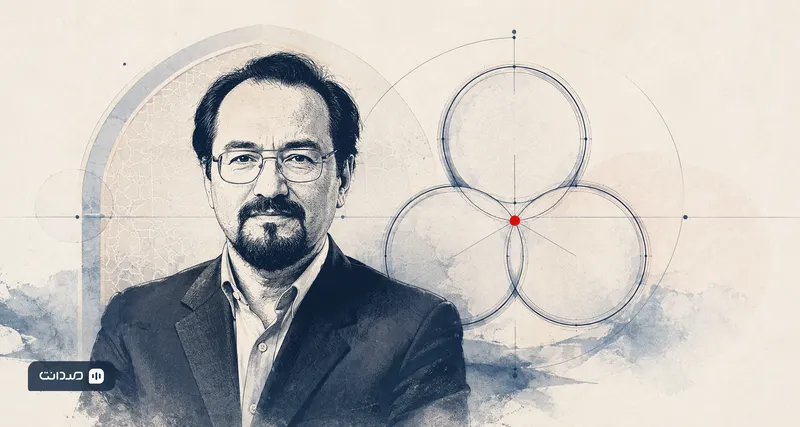
Shirzad Peik Herfeh
InstructorThe Lectures on Moral Philosophy begin with the question of what benefit the analysis of "moral philosophy" holds for the intellectuals and educated members of society, as well as for professors and students, who themselves are among the reference groups and models of "ethical living" in society. When we investigate the nature of something, we become acquainted with new truths about it of which we were previously unaware. For example, by studying biology, we learn new truths about natural organisms, and by studying economics, we become aware of the processes that explain how the market works. But morality is something most of us are familiar with, even before academic study. All societies possess a set of moral rules, and most people become acquainted with these rules before reaching adulthood. By learning from various moral authorities in society, such as our parents and teachers, we learn that we must not kill an innocent person, must not lie, must not steal, must not speak ill of people, must not gossip, and the like. So, what does "moral philosophy" teach us that is not present in the instruction of society's moral authorities, and why, indeed, should a philosophical inquiry into morality be undertaken?
Subsequently, moral puzzles and dilemmas, such as the trolley problem, separation, betrayal, divorce, etc., are introduced, and students discuss them. After that, the difference between moral philosophy and morality, and the various branches of moral philosophy are explained, and reference is made to hot-button issues in applied ethics, such as civil disobedience and the duty to obey the law, sexism and racism, abortion, euthanasia and assisted suicide, reproductive technologies, genetic engineering, surrogacy, the ethics of education and research, environmental and animal ethics, business ethics, engineering ethics, medical ethics, and reporting a superior's error. In this section, several feature films about these issues are also introduced.
Next, useful books on moral philosophy are introduced. These books are divided into two groups: a. general and introductory books (for a general familiarity with moral philosophy), b. specialized books (for the specialized study of a philosopher, theory, or important problem in moral philosophy).
Then, the question is raised whether the good life has any connection to the pleasant life, and if one lives morally, will one also have a pleasant life. Here, various theories of normative ethics and their different answers to this question, the contrast between Kantian deontology and utilitarian consequentialism and utilitarianism, the difference between traditional and modern moral philosophy, the difference between character-based and action-based moral philosophy, and the difference between the floor of ethics and the ceiling of ethics are discussed. Also, the question is raised whether moral values conflict with economic values, and how the West, by answering this question, was able to achieve progress and development, and how the average daily income, which for centuries was around three dollars, reached ninety to one hundred and twenty dollars in America and some European countries. The answer to this question is so important that some thinkers liken it to a dangerous pass or bottleneck and, based on it, divide countries into two groups: countries that have successfully traversed this pass and countries that have not yet been able to cross it. Here, the change in the West's view of morality and the pervasiveness of the "doctrine of the correct understanding of self-interest" in the West are explained through game theory, the prisoner's dilemma, and new forms of Hobbesian utilitarian contractualism in philosophers such as Gauthier, and references are also made to moral philosophy in ancient Iran.
Next, freedom, harm, self-interest, and religion are addressed, and Tocqueville's distinct theory about the unique and unparalleled role of a specific kind of religion and spirituality in democracy and freedom, and its impact on self-interest, individual success, and the progress and development of society is explained. Also, reference is made to the Iranshahri thought and Iran-centric ideas about the psychological and sociological functions of religion and the consequences of that view.
Subsequently, the theory of the "moral permissibility of unnecessary harm" is introduced. The main question here is for what reason and by what criterion an action can be considered morally "impermissible" and "society's intervention" in it "permissible." Here, J. S. Mill's "harm principle" or "liberty principle," the compatibility or incompatibility of liberalism with utilitarianism, and the "moral frameworks of criminal law" in the philosophy of Joel Feinberg are explained.
In the following, the extent of morality's demand, the scope of morality, the intensity of morality, and priority in morality are explained. Here, a new triad in moral philosophy is introduced: maximalist ethics, moderate ethics, and minimalist ethics.
Finally, consequentialism, its roots in the eighteenth-century Scottish Enlightenment, and its contemporary varieties are explained.
.
Session 1, Part 1; Why is it necessary to know moral philosophy?
Session 1, Part 2; Moral Dilemmas
Session 2, Part 1; Definition and Branches of Moral Philosophy
Session 2, Part 2; Definition and Branches of Moral Philosophy
Session 3; Introduction to Persian-Language Sources on Moral Philosophy
Session 4; The Good Life or the Pleasant Life?
Session 5; The Floor and Ceiling of Morality
Session 6; Freedom, Self-Interest, and Religion
Session 7; The Narrative Theory of Unnecessary Harm




Discussion0 comments
No comments yet; let yours be the first voice.