Philosophy
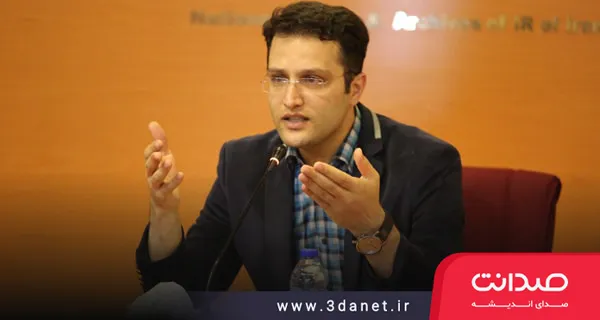
Lectures on “Moral Philosophy in Islamic Thought” by Milad Nouri
In Islamic civilisation, the 'Divine Law' is the central pillar of practical philosophy. Milad Nouri's lecture series re-examines practical philosophy and politics by analysing the relationship between 'is and ought' and distinguishing Islamic ethics from both Greek and modern thought.

Human beings, in different life-worlds, have shaped diverse moral and political structures. The difference in the moral and political life of people is itself based on the distinction of the attitudes they have held towards humanity, the world, and God. In this context, some deny the derivation of “ought” from “is” and claim that the “oughts and ought-nots” of human life are not based on any understanding of the mode of existence of beings; nevertheless, even if “deriving an ought from an is” is not possible, “deriving an ought within an is” is an inevitable and inescapable matter. The human being always exists within existence, thinks within existence, and looks upon existence; all moral and political oughts and ought-nots also gain validity within the realm of existence and are tied to the mode of existence of the human being and their insights. Muslim thinkers, too, in encountering their world, have had insights that have shaped their type of attitude towards ethics and politics. Thus, unlike the Greeks, who thought about ethics and politics based on the harmony of physis and in the light of logos, in Islamic civilization, “Divine Law” becomes the main pillar of practical wisdom, ethics, and politics. This is while the ethics and politics of the modern era are founded upon a view of natural human rights and reliance on the rational prudence of the human being themselves, which has, of course, also created impasses. It is clear that the encounter of Islamic philosophy with the achievements of the modern era will also necessitate a rethinking of practical wisdom, ethics, and politics; an encounter that, above all, makes a re-reading of the “historical self,” “civilizational roots,” and “main elements of practical wisdom” in the Islamic world necessary. During the lecture series “Moral Philosophy in Islamic Thought,” delivered in the fall and winter of 2021 to philosophy students at the University of Tehran, in each session, after presenting material on the topic of that session, in an intimate dialogue with some concerned students, we have endeavored, while tracing the genealogy of our current position, to analyze contemporary moral issues through a hermeneutic encounter with thinkers past and present, with a phenomenological view of the current life-world, and an analytical evaluation of arguments and theories.
.
.
Lectures on “Moral Philosophy in Islamic Thought” by Milad Nouri
.
Session One: The Nature of Moral Philosophy and the Necessity of Discussing Moral Philosophy in Islamic Thought 7 Mehr 1400
.
Session Two: The Roots of Greek Virtue Ethics 14 Mehr 1400
.
Session Three: Virtue Ethics – Aristotelian Virtue Ethics – A Dialogue on Virtue Ethics 21 Mehr 1400
.
Session Four: Ethics, Happiness, the Problem of Personal Mortality, Eternal Happiness, and the Divine Command 28 Mehr 1400
.
Session Five: The Problem of Death, the Purpose of Creation, the Divine Command, and Ethics 5 Aban 1400
.
Session Six: Religion and Ethics, the Mu'tazilite-Ash'arite Dispute over Good and Evil 12 Aban 1400
.
Session Seven: The Place of Prophethood in the Theorizing of Thinkers 19 Aban 1400
.
Session Eight: Ethics, Causality, and Free Will 26 Aban 1400
.
Session Nine: A Hermeneutic Analysis of Greek Virtue Ethics in the Islamic World; The Quranic Account of Virtue; The Exposition of Ibn Miskawayh and Ghazali on Virtue; A Discussion on Ethics and Modern Structures Concerning Law and Morality; The Metaphysics of Meaning. 3 Azar 1400
.
Session Ten: The Individual and the Collective, Individual and Collective Virtue. 10 Azar 1400
.
Session Eleven: Mystical Wayfaring, Ethics, and Happiness 17 Azar 1400
.
Session Twelve: The Link Between Ethics and Happiness in the Horizon of Transcendent Philosophy 24 Azar 1400
.
Session Thirteen: The Foundations of Ethics and Politics in the Modern Era 1 Dey 1400
.
Session Fourteen: Tabatabai and the Theory of Constructed Perceptions 9 Dey 1400
.
Session Fifteen: The Relation Between Is and Ought 15 Dey 1400
.
Session Sixteen and Final: Ought and Ought Not in the Realm of Being 22 Dey 1400
.
.
Milad Nouri's Telegram Channel
.
.

Discussion0 comments
No comments yet; let yours be the first voice.