Philosophy
“The Horizon of Dialogue”: Examining the Conditions for the Possibility of Dialogue Between Islamic and Western Philosophy – Session Two
The 'Horizon of Dialogue' saw the way out of the tradition-modernity binary as a dialogue between Islamic philosophy and the West; for one can neither return to the past nor ignore one's identity. Engaging with modern philosophy while mastering the indigenous tradition is the solution to our current problems.
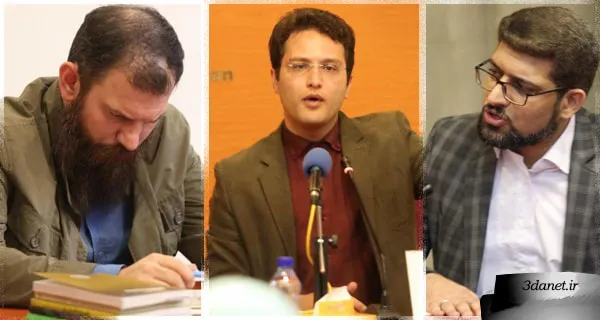
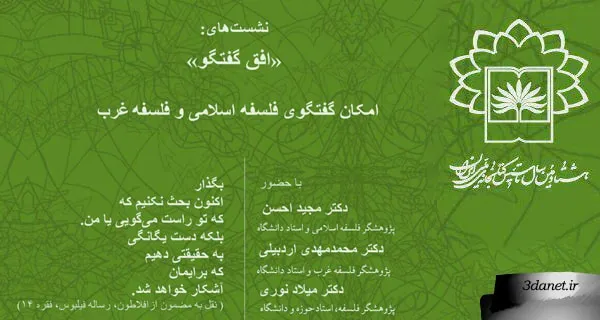
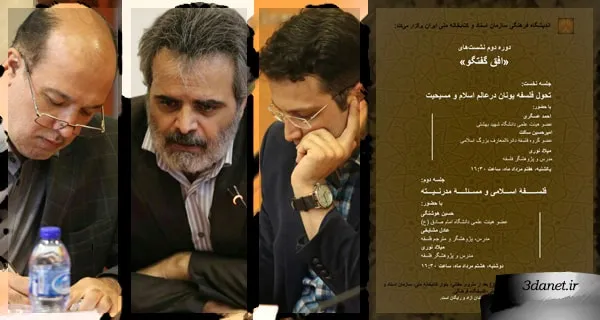
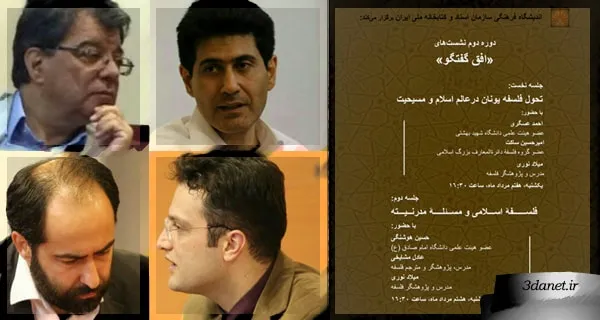
The second session of “The Horizon of Dialogue” series: Examining the Conditions for the Possibility of Dialogue Between Islamic and Western Philosophy, with the presence of Dr. Majid Ahsan, Dr. Mohammad Mehdi Ardebili, and Dr. Milad Nouri
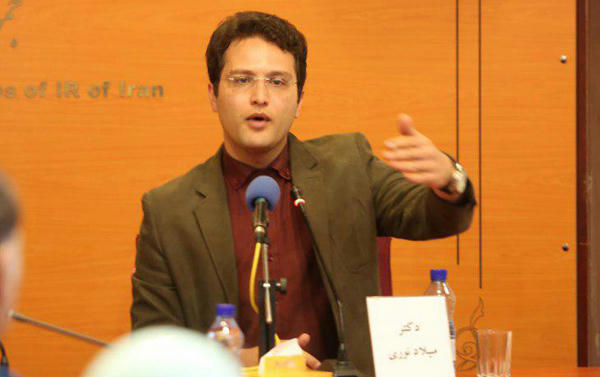
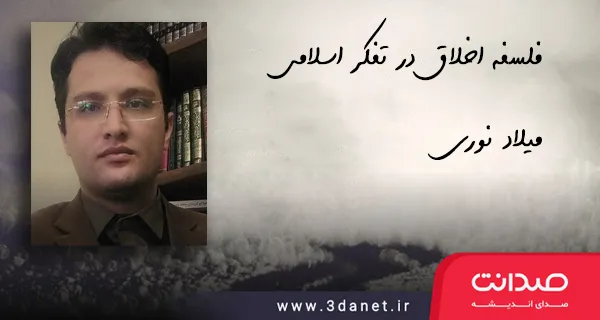
Milad Nouri:
According to the noble divine verses, those who turn away from the truth have been described with the attributes of being mute, deaf, and blind (Al-Baqarah: verse 170), and those who lack the power to speak and hear have been likened to the worst of beasts (Al-Anfal: verse 22). If that is the case, then the seeker of truth pursues seeing, speaking, and hearing, just as God has given glad tidings to the righteous servants who listen to speech and follow the best of it (Az-Zumar: verse 17). Therefore, it is a characteristic of the righteous that, in their search for truth and knowledge, they welcome the thoughts of others and do not turn away from hearing diverse words. On this basis, the Messenger of God advises Muslims to seek knowledge even if it is in the land of China.
One of the branches of human knowledge and understanding is philosophical knowledge, which throughout history has manifested in different dimensions in various lands. In our land, under the name of Islamic philosophy, it has led to the formation of various schools and intellectual currents, reaching its zenith with Transcendent Theosophy, and alongside Islamic jurisprudence and mysticism, it has shaped the civilizational spirit of our being as Islamic Iran. This is while, in the current era, Muslim societies and the land of Iran have been influenced by modern science and the achievements of the modern age, confronting us with a form of life and culture whose source is not Islamic philosophy, but modern Western philosophy.
The modern era has had exigencies for which the capacity and possibility were not foreseen in Islamic philosophy, and this very matter has led to the formation of issues that manifest themselves in the dichotomies of “tradition and modernity,” “West and East,” and “Islamic philosophy and Western philosophy.” On the one hand, one can no longer return to the pre-modern era and tread the path of tradition heedless of modern philosophy and science; and on the other hand, one cannot ignore one’s own cultural-philosophical identity. Amidst this, a group has confronted Western philosophy, describing it as darkness while living with its modern achievements; and some have thought that the current problems can be overcome by republishing the content of Western philosophy, while it is still Islamic culture and philosophy that shapes our identity.
It seems that to move beyond the current situation, there is no way other than confrontation and dialogue with Western philosophy, while maintaining complete mastery over the indigenous cultural-philosophical tradition. It is in this encounter that we will recognize ourselves in the mirror of the other and become empowered to resolve the problems arising from modern science and philosophy, based on the robust Islamic philosophical tradition, in various matters.
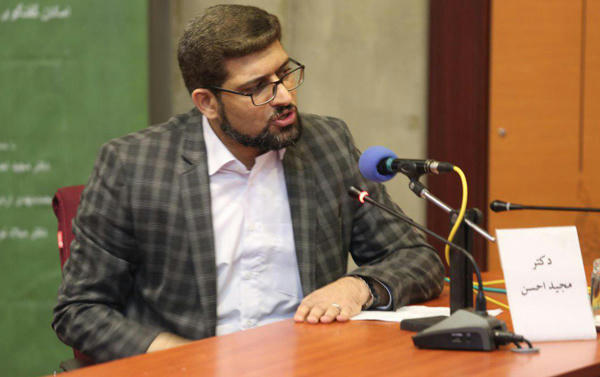
Majid Ahsan: Philosophy is the search for unity behind multiplicity, just as the earliest philosophers turned to philosophy on this very basis; the essence of reality, while being one, is the locus of multiplicity and indeed identical with it. It is this unity in multiplicity and multiplicity in unity that constitutes the problem and considers reality in both its aspects. Just as this search cannot ignore either unity or multiplicity in its affirmative aspect, neither can it in its apodictic aspect; therefore, it is dialogue and the exchange of multiple and differing opinions in the pursuit of a single truth that can unite unity and multiplicity in the realm of truth as it does in the realm of reality. But the point is that reality is not a static affair that manifests with a single appearance and endures. Renewal and constant transformation into various multiplicities is the perpetual and unfinished characteristic of an unfinished affair called reality. This itself is the reason for the difference in various reports of reality and the answer to why there is a multiplicity of views among those who find it. A multiplicity that has both historical and epistemological extension and can, at the same time, delineate various vertical or horizontal levels. For this reason, the stagnation of thought and optimism about attaining the perfection of knowledge and complete knowledge, in addition to producing destructive intellectual, cultural, social, etc., consequences, is fundamentally extravagant and baseless from the perspective of those who understand the incompleteness of reality. The divine expression may perhaps allude to the matter mentioned: و ما أوتيتم من العلم إلا قليلا. And you have not been given of knowledge except a little. (Al-Isra, verse 85) Accepting the deficiency of our epistemological capital will provide the necessity of revisiting and reviewing all epistemological possibilities in order to keep pace with the non-stationary nature of reality; otherwise, it is clear that the regulation of the relationship between knowledge and reality will be disrupted, and the philosophical system will become fragile. The points mentioned will also clarify that if reality is not confined to geography, history, and other specific determinations, then philosophy, which is responsible for reporting the a priori unity of the multiplicities of existence, also does not remain bound by such a fence and transforms along with the transformations of the age. Now, can it not be said that the philosophers' turn to statements differing from their predecessors was not for the purpose of casting doubts but rather stemmed from an understanding of such a necessity? Now it is us and the thousands of problems that humanity faces. It is us and bewilderment in the midst of the past and the age. It is us and the thousands of assets that our predecessors have bequeathed to us with great hardship, and the transformations of a reality that cannot and should not be ignored. Neither is the possibility of returning to the past available, nor is self-consciousness in understanding our relationship with the age, so that we can step forward with confidence and save ourselves from turmoil. Yes, we are in the midst of tradition and the age. Those attached to tradition are oblivious to the tremendous changes, and those infatuated with the West are oblivious to the potential capacities of tradition, as He said: كل حزب بما لديهم فرحون, each faction rejoicing in what it has. (Al-Mu'minun, verse 53) Bewilderment in this midst underscores the necessity of contemporary thought, so that with such an approach, we may forge a philosophy that rises to dialogue in the midst of tradition and the age, and seeks out every possible capacity within them for a way out of our current undesirable situation. On this path, the worthy and weighty book "A Dialogue Between Hegel and Islamic Philosophers" by Dr. Hamid Talebzadeh will be a guide for those who contemplate this problem and its importance.
.
.
Audio of this Session
.
.
“The Horizon of Dialogue” Sessions: Examining the Conditions for the Possibility of Dialogue Between Islamic Philosophy and Western Philosophy
Dr. Majid Ahsan Dr. Mohammad Mahdi Ardebili Dr. Milad Nouri
April 30, 2018 Cultural Think Tank, National Library
.
.


Discussion4 comments
با سلام و نهایت تشکر از دستاندرکاران سایت وزین صدانت ... بخش اول این گفتگو در دسترس نیست ؟؟
سلام و درود جلسه اول: http://localhost:8080/islamic-western-philosophy-1/
طراحی سایت خیلی خوبی دارید موفق و پیروز باشید
پسلام عرض ارادت من از وجود این سایت بینهایت متشکرم