Philosophy
Second Series of Ofogh-e Goftogu Sessions: Islamic Philosophy and the Problem of Modernity
The second session of the second series of the Ofogh-e Goftogu (Horizon of Dialogue) meetings, featuring Mashayekhi, Nouri, and Houshangi, addressed the relationship between Islamic philosophy and modernity. This dialogue is neither a surrender to modernity nor a struggle for tradition's survival; rather, it is a way to open a path for the present and future with a historical identity.
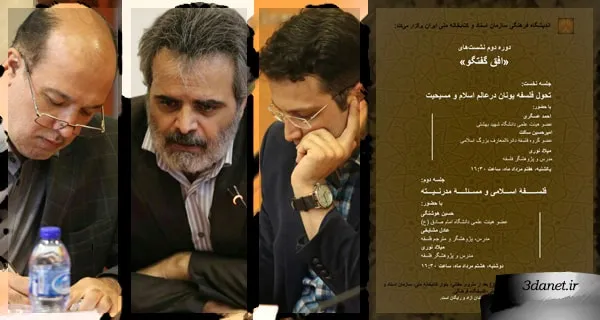
Second session of the second series of Ofogh-e Goftogu sessions: Islamic Philosophy and the Problem of Modernity
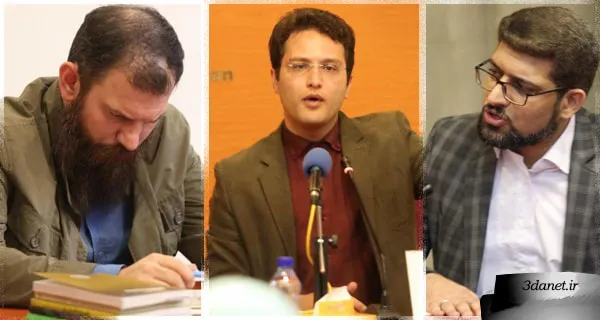
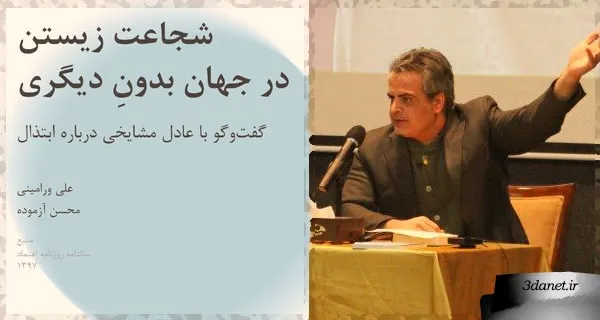
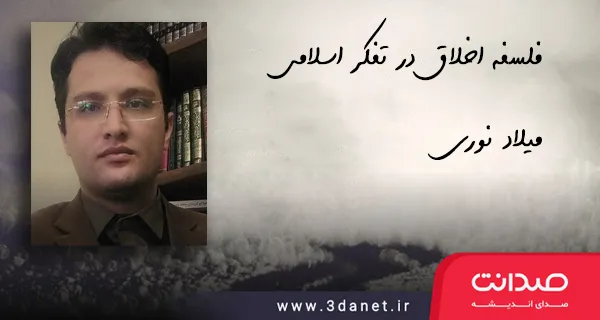
Speakers: Professor Adel Mashayekhi, Dr. Milad Nouri, and Dr. Hossein Houshangi
Milad Nouri: We know that at a certain juncture in history, the Western philosophical tradition underwent a profound and fundamental transformation that separated it from the preceding tradition and revealed it as something new. Modernity as a philosophical event not only transformed the Western world but also swept across the globe, constructing a new world that impacted all five continents. We now live with the achievements of this transformation. It is this very issue that confronts intellectual traditions with the question of what they have to say regarding the foundations, problems, and consequences of modernity, and Islamic philosophy is no exception; one must seek to explore the relationship between Islamic philosophy and the problem of modernity. This necessity arises from the inescapable presence of modernity. Of course, one can view this subject from the perspective of different approaches. When we look at the subject from an internal perspective, negative efforts seek to deem the tradition self-sufficient, unaffected by the modern event, and steadfast in its own position. A stance that takes the past as its foundation, understands the present through it, and ignores the contemporary. Meanwhile, from another perspective, modernity is a rationality in which traditions, formed on the basis of structures, are subjected to critique. From this viewpoint, endeavors such as "Ofogh-e Goftogu" are considered a futile struggle of tradition for survival in the new era. However, in Ofogh-e Goftogu, no other path is conceivable. There is no way but to enter into dialogue with Western philosophy and engage with the modern problem. This dialogue is neither submission to the structure of modernity and negation of tradition, nor is it a struggle of structures for survival. Perhaps we can consider this dialogue itself a critique of structures. Moving forward and contemporary thinking requires a standpoint that determines the identity of our new thought. This identity must necessarily be a historical one. In that case, it is only by resorting to historical assets that a path toward the present and the future can be opened. In the session "Islamic Philosophy and the Problem of Modernity" from the second series of Ofogh-e Goftogu sessions, we endeavored, with the presence of Dr. Hossein Houshangi and Professor Adel Mashayekhi, to examine the relationship between Islamic philosophy and the problem of modernity. Although there was a very serious difference of perspective and a seemingly unbridgeable gap in their views, we ultimately tried to reach a compatible convergence. Nevertheless, even if such a convergence is not achieved, such a dialogue is still a blessed one.


.
.
Second Series of Ofogh-e Goftogu Sessions: Islamic Philosophy and the Problem of Modernity
Full audio of this session
.
.
Related Content:
First Session of the Second Series of Ofogh-e Goftogu Sessions
.
.
Discussion0 comments
No comments yet; let yours be the first voice.