Philosophy
The Last Messiah; by Peter Wessel Zapffe
The Last Messiah is the famous short essay by the Norwegian pessimistic philosopher Peter Wessel Zapffe, in which he views human consciousness as a tragic evolutionary error and seeks the ultimate solution in antinatalism.
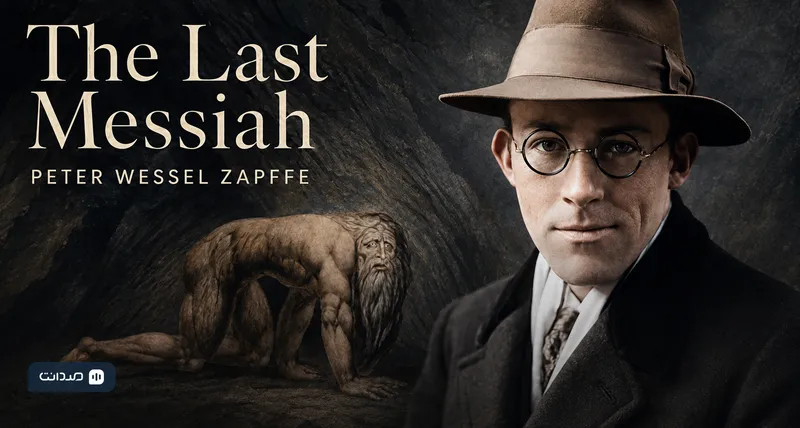
Peter Wessel Zapffe
Author
Fardin Nafei Oskouei
TranslatorAbout the Author: Peter Wessel Zapffe (born 1899 – died 1990) was a Norwegian philosopher, writer, artist, jurist, and mountaineer, renowned for his pessimistic and fatalistic views on human existence. His philosophical outlook was deeply influenced by the German philosopher Arthur Schopenhauer, leading him to explore themes of existential despair and the human condition. Zapffe's most significant work, On the Tragic, published in 1941, examines the nature of tragedy in life and art. In this treatise, he explores the human tendency to seek meaning and justification in a world that offers neither, attributing this to an overdeveloped consciousness that leads to existential anxiety. In his 1933 essay, "The Last Messiah," Zapffe presents a stark view of human existence, suggesting that humanity's increasing consciousness is a tragic flaw. He proposes that the "Last Messiah" should advocate for antinatalism, encouraging humanity to cease reproduction to prevent further suffering. Beyond his philosophical pursuits, Zapffe was an avid mountaineer and an advocate for environmental conservation. His love of nature is evident in his writings, where he often reflects on the relationship between humanity and nature. Zapffe's work has influenced contemporary thinkers, including the American horror writer Thomas Ligotti, who has drawn parallels between Zapffe's philosophy and his own views on existential horror. In summary, Peter Wessel Zapffe's contributions to philosophy offer a profound exploration of the human condition, emphasizing the burdens of consciousness and the search for meaning in an indifferent universe.
1
One night in times long past, man awoke and saw himself. He saw that he was naked under the vast sky, and homeless within his own body. Everything fell apart under the curious gaze of his thought; wonder after wonder, and horror after horror, emerged in his mind.
Then the woman also awoke and said: It is time to go hunting. The man took his bow and arrow, the fruit of the union of spirit and hand, and went out under the starlight. But when the animals came to the watering hole, as they always did, he no longer felt the tiger's leap in his blood; instead, a great hymn about the brotherhood of suffering among all living beings resounded within him. That day he returned without any prey, and when they found him at the next new moon, he was sitting dead by the watering hole.
2
What had happened? A breach in the fundamental unity of life; a biological contradiction, an absurd and futile anomaly, a catastrophic excess. Life had overshot its goal, and had shattered itself. A species had been over-armed; by a spirit that gave it power in the outer world, but equally threatened its inner health. Its weapon was like a sword without a hilt or guard: a double-edged blade that cleaved everything, but he who wished to wield it was forced to grasp the blade and turn one of its edges back toward himself.
Man, despite his new insight, remained rooted in matter; his spirit was woven into the fabric of matter and subject to its blind laws. Yet he could regard matter as something alien, compare himself with all phenomena, see his own vital processes from the outside, and determine their place. He steps into nature like an uninvited guest, stretching out his hands in vain to seek reconciliation from his creator; but nature no longer answers. Nature wrought a miracle in man, and then no longer recognized him. Man had lost his right of residence in the world; he had eaten from the tree of knowledge and been cast out of paradise. He had power over the world around him, but he cursed this power, for he had obtained it at the cost of his soul's harmony, his innocence, and his inner peace in the embrace of life. Now, as the world had betrayed his dreams, he stood bewildered and terrified.
The animal, too, knew fear; in the heart of violent storms and beneath the lion’s claw. But man feared life itself, and indeed his own existence. For the animal, life was a play of forces: warmth, play, struggle and hunger, and finally surrender to the law of nature. In the animal, suffering was confined to suffering itself; but in man it opens breaches toward dread of the world and despair of life. The child has not yet begun its journey on the river of life when the roar of the waterfall of death reaches it from above the valley; a roar that draws nearer moment by moment and tears its joy to shreds.
Man looks upon the earth and sees it as a vast lung that breathes. With every exhalation, exuberant life bursts from all its pores and stretches toward the sun; but with every inhalation, a groan of rupture and collapse passes through the multitude of creatures, and hailstones fall to the ground like lifeless bodies. He could see not only his own time, but graveyards also opened before his eyes. The laments of buried millennia, through ghastly decayed faces and the ashen dreams of mothers, wailed over him. The veil of the future was drawn aside, revealing a nightmare of endless repetition and the meaningless waste of the material world. The suffering of billions of humans entered his being through the gate of compassion, and behind everything that occurred, a laughter arose to mock the demand for justice — the deepest ordering principle of his existence.
He sees himself in the mother’s womb, being born; he raises his hand in the air and sees it has five branches. Where does this demonic number five come from, and what relation does it have to my soul? He is no longer even evident and obvious to himself. In horror, he touches his entire body: this is you; you extend this far and no further. He carries within himself food that yesterday was an animal and could run to and fro; now I absorb it and make it part of myself. So where do I begin and where do I end? Everything is linked in the chain of causes and effects, and whatever he tries to understand falls apart under the testing gaze of his thought.
Soon he sees artificiality even in things that until then had been whole and dear; even in the smile of his beloved. Other smiles also exist, a torn boot with toes sticking out of it. Ultimately, the properties of things are nothing but his own properties. Nothing exists without his presence; every line eventually leads back to himself, and the world is merely the ghostly echo of his voice. With a cry he leaps up and wants to spit himself out onto the ground along with his impure food. He sees madness near and wants to find death before he even loses the ability to do so.
But when he stands before imminent death, he also grasps its nature and the significance of the step before him. His creative imagination constructs new and terrible vistas behind the veil of death, and he sees that even there no refuge is to be found. Now he can discern the outlines of his biological-cosmic situation: he is the helpless captive of the universe; held in order to tumble into nameless possibilities. From this moment on, he dwells in unceasing dread. Such a "cosmic panic feeling" lies at the foundation of every human mind.
Indeed, it seems that this race is doomed to destruction; for when all the individual’s attention and energy are spent enduring or transmitting the catastrophic inner tension, the effective preservation and continuation of life is no longer possible. The tragedy of a species that becomes unsuited for life because of the excessive evolution of one of its capacities is not confined to humankind alone. For instance, it is thought that the giant deer of prehistoric times became extinct when they developed antlers that were too heavy. Mutations must be considered blind: they occur and are hurled forward, without necessarily having a beneficial adaptation to the environment. In a depressive state, the mind can be seen in the guise of such an antler; in all its wondrous splendor, pinning its bearer to the ground.
3
Why, then, has mankind not long ago gone extinct in great epidemics of madness? Why do only a relatively small number of individuals perish because they cannot endure the strain of living? Has cognition been given to them beyond their capacity to bear? Cultural history, as well as observation of ourselves and others, provides an answer: most people learn to save themselves by artificially limiting the content of consciousness.
If the Irish elk had broken off the outer tines of its antlers at suitable intervals, it might have survived a little longer; but in constant fever and pain, and in truth by betraying its fundamental idea and the essence of the special feature which its creation had called it to bear: the crown of wild animal antlers. What it gained in continued existence, it lost in the meaning and grandeur of life. In other words, it was a hopeless continuation; a movement not toward a goal, but toward ruins perpetually rebuilt; a self-destructive race against the sacred will of the blood. The oneness of purpose and perishability, for both the Irish elk and man, is the tragic paradox of life. The last Irish elk, in its self-sacrificing effort to survive, bore the badge of honor of its lineage to the end. But man saves himself and carries on.
In other words, man represses his destructive surplus of consciousness in a relatively conscious manner. This process continues during nearly all our waking and active hours and is a necessary condition for social adaptation and all those things commonly called a healthy and normal life. Psychiatry is even founded on the assumption that "health" and efficiency are aligned with the highest level of the person's being. Depression, fear of life, refusal to eat, and such phenomena are always considered signs of a pathological condition and are treated accordingly. Nevertheless, such phenomena are often messages from a deeper and more immediate layer; the bitter fruits of a genius of thought or feeling that grow from the root of anti-life tendencies. It is not the spirit that has fallen ill; rather, its protective mechanisms have failed, or have been rejected because the individual rightly perceives them as a betrayal of the "I's" highest capacity.
All the life we see before us today is woven, from within and without, into a network of individual and social repressional mechanisms. The traces of these mechanisms can be followed down to the most trivial phrases and habits of daily life. Although they take highly diverse forms, at least four main types can be distinguished, which naturally appear in any possible combination: isolation, anchoring, distraction, and sublimation.
By "isolation" I mean the complete and arbitrary dismissal of all disturbing and destructive thoughts and feelings from consciousness. Engström says: "One must not think; thinking only makes one confused." A perfect and almost brutal example of this mechanism can be seen in certain physicians who, for self-protection, see only the technical aspect of their profession. This mechanism can also be reduced to pure rowdyism; as seen among petty thugs and medical students, where any sensitivity to the tragic side of life is eradicated through violent behavior; for instance, by playing football with the heads of corpses and the like.
In everyday relations, isolation manifests itself in the unwritten law of mutual silence; especially before children, so that they are not suddenly terrified by the life they have just begun and can preserve their illusions until they find the strength to lose them. Conversely, children must not disturb adults with untimely reminders of sex, the toilet, or death. Among adults, too, the rules of "tact" prevail. This mechanism reveals itself openly when a man crying in the street is taken away with the help of the police.
The mechanism of "anchoring" also comes into play from the earliest years of childhood. Father and mother, home and street become self-evident matters for the child and give him a sense of security. This realm of experience is the first and perhaps the most agreeable bulwark we know in life against the cosmos; a fact that undoubtedly also explains the "childhood attachment" that has been so much discussed. Whether this attachment has a sexual coloring or not is of no importance here. When the child later discovers that these fixed points are, like everything else, "arbitrary" and "transient," he undergoes a crisis of confusion and anxiety and immediately sets out in search of another anchor: "In the autumn I'll start middle school."
If this substitution fails for any reason, the crisis may take a fatal course; or a situation may arise that I call "anchoring spasm." The individual clings to dead values and hides as much as possible from himself and others that these values no longer function and that he is psychologically bankrupt. The consequence is lasting insecurity, a feeling of inferiority, overcompensation, and restlessness. Since this condition fits into certain classifications, it is treated with psychoanalysis; a treatment whose aim is to complete the process of transition to new anchors.
Anchoring can be defined as the fixation of points within, or the construction of walls around, the flux and fragmentation of consciousness. Although this is usually unconscious, it can also be fully conscious; as when an individual "chooses a goal for himself." Anchors that are beneficial to the public meet with sympathy, and one who devotes himself entirely to his anchor—a collective or an ideal—is praised. He has built a solid rampart against the collapse of life, and others, through suggestion, also benefit from his strength.
The harsh and deliberate form of anchoring can be found among "decadent" revelers: "One must marry in time; then the limitations will come of their own accord." By doing this, the individual creates a necessity in his life and consciously exposes himself to something that, from his own perspective, is evil; yet this very act calms his nerves and builds a vessel with high walls for his sense of life—a sense that has become increasingly cruder and coarser. Henrik Ibsen, in the characters of Hjalmar Ekdal and Molvik, provides two clear examples of these "life-lies." There is no difference between their anchoring and that of the pillars of society, except that their anchors are not practically and economically productive.
Every culture is a vast, integrated system of anchors, built upon firm foundations, namely the fundamental ideas of that culture. The average person makes do with collective foundations; but individuality builds a structure for itself, and the person of character completes this structure more or less upon the original, inherited, and collective foundations—God, the Church, the State, morality, fate, the law of life, the people, and the future. The closer a sustaining element is to these core foundations, the more dangerous it is to tamper with it. Hence it is usually protected directly by penal laws and the threat of prosecution; such as the Inquisition, censorship, and the conservative approach to life.
The durability of any part depends either on its illusory nature, which has not yet been seen and understood, or on the fact that it is, in any case, considered a recognized necessity. This is why religious education exists in schools and is even supported by atheists; for they know no other way to introduce children to the accepted modes of social responsiveness. Whenever people realize that certain components are artificial or superfluous, they try to replace them with new ones; "truths with a limited period of validity." All intellectual and cultural conflicts originate from this; conflicts that, alongside economic competition, constitute the dynamic content of world history.
The desire for material possessions, that is, power, does not arise so much from the direct pleasure of wealth; for no one can sit on more than one chair at a time or eat more than his fill. The value of wealth for life lies in the abundant opportunities it provides its owner for anchoring and distraction.
چه دربارهٔ لنگرهای جمعی و چه دربارهٔ لنگرهای فردی، این قاعده برقرار است: هرگاه بخشی فروبپاشد، بحرانی رخ میدهد و هرچه آن بخش به پایههای اصلی نزدیکتر باشد، بحران شدیدتر خواهد بود. در حلقههای درونی که استحکامات بیرونی از آنها حفاظت میکنند، چنین بحرانهایی رویدادهایی روزمره و نسبتاً کمدردند؛ مانند سرخوردگیها. در اینجا حتی با ارزشهای لنگرانداز بازی میشود؛ در شوخی، اصطلاحات خاص و الکل. اما ممکن است در میانهٔ چنین بازیای، کسی ناخواسته سوراخی تا ژرفترین لایهها باز کند و صحنه ناگهان از سرخوشی به وحشت بدل شود. هراس هستی به ما خیره میشود و در شهودی مرگبار درمییابیم که ذهنها چگونه با رشتههای بافتهٔ خودشان آویزان ماندهاند و جهنم در زیر پایشان کمین کرده است.
بنیادیترین پایهها بهندرت بیتشنجهای عظیم اجتماعی و خطر فروپاشی کامل جایگزین میشوند؛ چنانکه در اصلاحات و انقلابها رخ میدهد. در چنین دورههایی، افراد بیشازپیش ناچارند برای خود لنگر بیابند و شمار شکستها بالا میرود: افسردگی، افراطکاری و خودکشی پدیدار میشوند؛ مانند افسران آلمانی پس از جنگ و دانشجویان چینی پس از انقلاب.
نقص دیگر این نظام آن است که جبهههای گوناگون خطر، اغلب پایههایی بسیار متفاوت میطلبند. چون بر هر پایه روبنایی منطقی بنا میشود، شیوههای سنجشناپذیر احساس و اندیشه با یکدیگر برخورد میکنند و نومیدی میتواند از شکافها به درون راه یابد. در چنین وضعی ممکن است فرد گرفتار میل وسواسگونه به لذتی ویرانگر شود؛ تمام دستگاه ساختگی زندگیاش را از جا برکند و با وحشتی سرشار از وجد، پاکسازی کامل آن را آغاز کند. وحشت از دست دادن همهٔ ارزشهای پناهبخش، و وجد حاصل از همذاتپنداری و هماهنگی بیرحمانه با ژرفترین راز طبیعت ما: ناسازگاری زیستی و آمادگی پایدار برای نابودی.
ما لنگرهایمان را دوست داریم، چون نجاتمان میدهند؛ و از آنها متنفریم، چون احساس آزادیمان را محدود میکنند. ازاینرو هرگاه خود را به اندازهٔ کافی نیرومند احساس کنیم، از اینکه دستهجمعی راه بیفتیم و ارزشی منقضیشده را با تشریفات به خاک بسپاریم لذت میبریم. اشیای مادی در اینجا اهمیتی نمادین مییابند؛ این همان رویکرد رادیکال به زندگی است. هنگامی که انسان همهٔ لنگرهایی را که برایش آشکارند کنار بگذارد و تنها لنگرهای ناخودآگاه باقی بمانند، خود را شخصیتی رهاشده مینامد.
یکی دیگر از شیوههای بسیار رایج حفاظت، «حواسپرتی» است. فرد با مشغول نگه داشتن پیوستهٔ توجه خود به انبوهی از تأثیرات، آن را در محدودههای امن نگه میدارد. این سازوکار حتی در کودکی نیز رایج است؛ کودک بدون حواسپرتی حتی برای خودش هم تحملناپذیر میشود: «مامان، من چهکار کنم؟» دخترک انگلیسیای که به دیدار عمههای نروژیاش رفته بود، از اتاق بیرون آمد و پرسید: «حالا چه میشود؟» پرستاران در این کار مهارت فراوانی پیدا میکنند: «نگاه کن، یک سگ!» «ببین، دارند قصر را رنگ میکنند!» این پدیده چنان آشناست که نیازی به توضیح بیشتر ندارد.
برای نمونه، حواسپرتی شیوهٔ زندگی «جامعهٔ اشرافی» است. میتوان آن را به ماشینی پرنده تشبیه کرد که از موادی سنگین ساخته شده، اما تا زمانی که کار میکند در هوا میماند. این ماشین باید همواره در حرکت باشد، زیرا هوا تنها در حال حرکت آن را حمل میکند. خلبان شاید از سر عادت چرت بزند، اما بهمحض آنکه موتور از کار بیفتد، بحران حاد آغاز میشود.
این شیوه اغلب کاملاً آگاهانه است. ممکن است نومیدی درست زیر سطح پنهان بماند و ناگهان در قالب گریه فوران کند. وقتی همهٔ امکانهای حواسپرتی پایان مییابند، ملال آغاز میشود؛ حالتی که از بیتفاوتی خفیف تا افسردگی مرگبار دامنه دارد. زنان عموماً کمتر مستعد شناختاند و ازاینرو در زندگی خود از مردان ایمنترند؛ آنان بیشتر به حواسپرتی روی میآورند. یکی از مصائب مهم زندان، محرومیت از بیشتر امکانهای حواسپرتی است. و چون شرایط برای رهایی از راههای دیگر نیز مناسب نیست، زندانی ناچار در فاصلهای نزدیک از نومیدی باقی میماند.
The actions a prisoner takes to stave off the final stage find their justification in the principle of life. At such a moment, he experiences his soul within the world and has no motive other than the absolute unbearableness of his situation. Pure instances of the horror of life are probably rare, because the protective mechanisms are highly refined, automatic, and to some extent ceaseless. Nevertheless, even the adjacent regions bear the mark of death; life there is only bearable with difficulty and immense effort.
Death always appears as a way of escape. The individual ignores the possibilities of an afterlife, and since the manner of experiencing death is to some degree dependent on feeling and perspective, death can seem a perfectly acceptable solution. If, at the moment of dying, one can strike a theatrical pose—a poem, a gesture, or "dying standing up"—that is, achieve a final anchoring; or if one is granted a final distraction such as the death of Ases in Shakespeare's play "Henry IV," such a fate is by no means the worst.
The press, which serves the mechanism of concealment, never once fails to find harmless and soothing reasons. When a person commits suicide due to depression, his death is a natural death originating from psychological causes. The violence of modern civilization in rescuing those who attempt suicide is based on a horrific and erroneous conception of the nature of existence.
Only a limited portion of humanity can make do with mere change, whether in work and social life or in entertainment. The cultivated person demands connection, continuity, and a progression in these changes. Nothing finite is ultimately satisfying; man always moves forward, acquires knowledge, and builds the course of his life. This phenomenon is called "longing" or the "transcendental tendency." Whenever a goal is realized, longing moves toward another goal. Thus, the goal itself is not the main issue; what matters is reaching it: the slope of the curve representing the individual's life, not its absolute height. Promotion from private to sergeant may be a more valuable experience than promotion from colonel to brigadier general. This important psychological law eliminates any basis for "progressive optimism."
Human longing is not defined solely by "striving toward" something; "fleeing from" something characterizes it just as much. If we use this word in the religious sense, only the second description, fleeing from, is appropriate. For here, no one yet knows clearly what they long for, but they always know in their heart what they are fleeing from: the vale of earthly tears and their own unbearable condition. If awareness of this predicament is, as previously stated, the deepest layer of the soul, one can understand why religious longing is felt and experienced as something fundamental. In contrast, the hope that assigns a divine goal to this longing and carries the promise of its fulfillment appears truly sorrowful in light of these considerations.
The fourth remedy for panic, "sublimation," relates more to transformation than to repression. The pain of life is sometimes transformed into valuable experiences with the help of stylistic or artistic talents. Positive motives enlist evil and use it for their own purposes; they cling to the pictorial, dramatic, heroic, poetic, or even comic aspects of evil. Nevertheless, if the sting of the most intense suffering has not been dulled in another way, or if it has not been prevented from dominating the mind, such exploitation, in any form, will be unlikely. The mountaineer does not enjoy the view of the precipice while struggling with vertigo; he can only enjoy it when this feeling has more or less subsided and he himself is securely fastened to a firm spot.
To write a tragedy, a person must to some extent free himself from the tragic feeling—betray it—and view it from the outside, for example, from an aesthetic perspective. At the higher levels of irony, an opportunity arises for man to spin madly into a deeply shameful cycle. He can pursue his own self in various habitats and enjoy this ability of different layers of consciousness that repel one another.
The present article is an example of an attempt at sublimation. The author is not suffering; he is amusing himself by filling pages, and his writing is to be published in a journal. The “testimony” of solitary women is also a form of sublimation; through it they acquire a sense of importance. Nevertheless, sublimation appears to be the rarest of the protective mechanisms enumerated here.
4
Is it possible for “primitive natures” to abandon these fixations and frantic leaps and live in the quiet happiness of work and love, in harmony with themselves? Insofar as they can be considered essentially human, I believe the answer must be negative. The most that can be said of so-called “natural” people is that they are somewhat closer than we unnatural humans to the wondrous biological ideal.
Even if we have so far managed to save the majority from every storm, we have done so with the help of those aspects of our nature that are only moderately or slightly developed. This positive foundation—for protection alone cannot create life, but can only prevent its faltering—must be sought in the natural consumption of energy in the body and the biologically useful parts of the psyche; a consumption that depends on the difficulties arising from the limitations of the senses, physical weakness, and the necessity of working for life and love.
In this limited realm, within whose boundaries happiness takes shape, advancing civilization, technology, and standardization have a devastating effect. For the greater the portion of mental energy withdrawn from the struggle with the environment, the greater the spiritual unemployment. The value of every technical advance in the totality of life must be measured by its contribution to providing opportunities for spiritual occupation for humans. Although the boundaries are vague, the first cutting tools might perhaps be considered an example of a positive invention.
Other technical inventions only enrich the life of their inventor. They are an open and ruthless theft from the common store of human experiences, and if they are published contrary to the opinion of the censor, they should incur the severest punishment. One such crime, among many others, is the use of flying machines to discover unknown lands. With one destructive act, man obliterates countless possibilities of experience; experiences that could have served many, had each person earned their fair share through their own effort.
The current stage of chronic life-fever has suffered particularly from this situation. The absence of spiritual activity rooted in nature and life is manifested, for example, in the universal resort to distractions: entertainment, sports, radio, and the “rhythm of the times.” The conditions for anchoring are also not very favorable. Criticism has created breaches in all inherited and collective anchoring systems, and anxiety, disgust, confusion, and despair seep in through these gaps.
Communism and psychoanalysis, though otherwise incomparable, both attempt to reconstruct the age-old escape in new ways; communism also has a spiritual reflection. The two, by violence and cunning respectively, try to trap the surplus of critical capacity in human cognition and make man biologically adapted. The idea is, in both cases, remarkably logical, yet it still cannot provide a final solution. Although a deliberate fall to a lower and more durable level might save the species in the short term, man by his very nature cannot rest in such a surrender; in truth, he will find no rest.
5
If these considerations are followed carefully to their conclusion, the result will be quite clear and definitive. As long as humankind recklessly presses forward under the dangerous and fateful delusion that it is biologically destined for triumph, nothing fundamental will change. With the increase in the number of humans and the growing heaviness of the spiritual atmosphere, the protective methods will inevitably become ever more savage. Humans will also continue to dream of new salvations, goals, and saviors.
But when many messiahs have been nailed to trees and stoned in the city squares, the last Messiah will appear. A man will emerge who, for the first time, has dared to strip his soul naked and, while still alive, surrender it to the highest thought of the human lineage, the very concept of doom. A man who has fathomed the depths of life and its cosmic foundation, and whose pain is the collective pain of the earth.
When his voice envelops the entire globe like a shroud and this strange message resounds for the first and last time, with what furious cries will the masses of all nations demand his death a thousand times over:
"The life of the worlds is a roaring river, but the life of the earth is a stagnant pond and a backwater. The mark of doom is written on your foreheads; how long will you endure the pinches and kicks? There is but one victory, one crown, one redemption, and one solution: know yourselves; be infertile and let the earth fall silent after you!"
And when he has spoken these words, the people will rush upon him; led by the makers of pacifiers and the midwives, they will destroy him under their fingernails.
He is the last Messiah. Just as a son arises from a father, he too arises from the archer by the watering hole.
Peter Wessel Zapffe 1933



Discussion1 comments
خیلی تلخ و واقعیه 🥲