Philosophy
A Letter After Death (A Reflection on 'Death' and 'Life')
Death breaks the silence to speak of life; in a posthumous letter, Masoud Zanjani writes of love for humanity and asks us to choose 'growing' over 'decaying.' He sees death as a rebirth and deems the death of life paltry before the death of love.
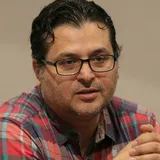
Masoud Zanjani
AuthorA Letter After Death
* For Engineer Mohammad Razavi, who was for me the meaning of humanity and its suffering
Sometimes it is only death that shatters silence and makes possible speech about life; just as it is separation that bestows this gift upon love. In my lifetime, I found no seeker for the essence of my soul, nor any listener for my inner melody, and perforce I adopted solitude and silence. But now the dreadful and mysterious fate of death has enabled me to sing for you the sorrowful and simultaneously joyful nature of life.¹ So I break my silence and stoke the fire of my soul, that perhaps enamored souls might hear it and reflect.
First, I must tell you of my love for all of you. I loved you with all my being. I was acquainted with your pain, and as far as I had the strength, I suffered with your sufferings and rejoiced with your joys. Every wound that settled upon your body tormented my body, and every healing it found was my solace. At times, I purchased wounds for my own soul before they could settle upon yours, and at other times, I silently and secretly bore your sufferings upon my shoulders so that you might remain joyful and kind to one another.²
I was a lover of humanity, and in the depths of my soul, I bowed in reverence before all its sufferings.³ I suffered humanity, and truly, this indescribable passion of mine for enduring suffering was the source of my happiness.⁴ Thus it was that when I purchased all sufferings with my soul, it was as if I suffered no suffering at all.⁵ As if I were invulnerable, or had lived many times over, that I could live so lightheartedly amidst sufferings and still say
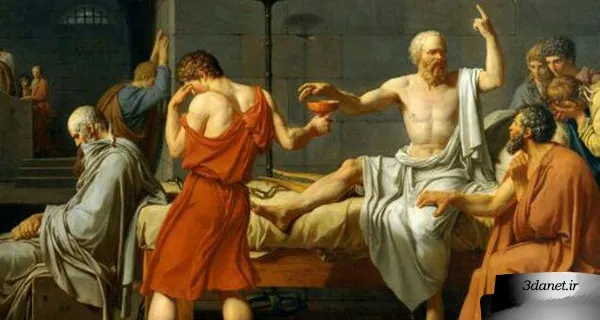
No one understood my bitter and sorrowful death! I had died from the hemlock of oblivion. A person, when their existence is not understood, becomes nothing and dies; just as through perception, they gain life and are revived. Indeed, "to be is to become perceived."¹¹ This law always stands firm in human life: "Everyone exists only to the extent that they are perceived; that they are thought of." So it is better to say: "I am thought of, therefore I am." Today, the "other" is lost through thoughtlessness, and no insurance or guarantee covers this loss. The threat to human life in contemporary societies is not weapons of mass destruction, but this very alienation and fragmentation among them. It is this silent massacre that, in our time, continually creates catastrophe. Reject this ominous death and avoid this pitiable abandonment and loss of self in your life!
No one understood my sweet and delightful death either! I had died from the nectar of love; this magical death in which my true being was concealed.¹² Love is the child of death, and life is the child of love. The phoenix of love is born from its own ashes. Love only revives dead souls and only brings peace to liberated spirits. So die, so that you may not die, and know that this death is the only way of liberation from a deadly life.¹³ Seek this auspicious death and attain this heart's devotion and joyful loss of self in your life!
Do not fear death! Death is not the worst thing that can happen in a person's life;¹⁴ one can lose things far more important than life itself in life.¹⁵ Should we not offer the funeral prayer for one who has not yet died, whose heart is not alive with love and in whose soul and spirit the flame of philanthropy does not burn?¹⁶ Yes! How insignificant is the death of life compared to the death of love!¹⁷
I did not die with death, but was born again.¹⁸ Death for me was not an unexpected catastrophe but a rebirth. For I was a lover of both death and life, and death for me was not the negation of life but its pinnacle.¹⁹ Lovers die not as they must, but as they wish, and they embrace death not helplessly, but manfully, and from it they seize an eternal life.²⁰ The death of love is the death of life, but the love of death, like death from love, is the birth of life. Nothing, not even death, is against life.²¹ Everything, whether suffering or pleasure, sorrow or joy, youth or old age, sickness or health, all of it, are soldiers and agents of life.²²
Live vividly²³ so that the sun of love may shine upon you more than ever, and the envoy of destiny may sound the loud song of a happiness and hold the great celebration of a victory. If you live vividly, I will not die, I will not freeze, and I will not wither, for I will grow again beside you, I will flourish, and I will bloom.²⁴
You will find me in life. You will always find the pulse of my presence and the flow of my being, everywhere, and in everything; in the earth, the mountain, the forest, the breeze, the star, the sun, the rain, the road, the gaze, the smile, the silence, the conversation, the doubt, philosophy, poetry, music, the homeland, politics, courage, faith, loyalty, sacrifice, and in everything that is not alien to humanity;²⁵ even death. You will find me in death as well. In death too, you will feel another form of my being and my renewed presence.
Be mindful of death! But think of death also in its relation to life. After all, what do you know of life that you would wish to know of what lies beyond it?²⁶ Do not dwell on the thought of the soul's immortality! Several mortal lives are better for you than one immortal soul.²⁷ Let the path that has so far had no "returnee" remain mysterious and shrouded in enigma.²⁸ One can cling to mystery with faith; but one must flee from knowledge of it;²⁹ knowledge of what lies beyond death could even be harmful to you.³⁰ Contemplation of death should summon you to this very life, here and now, not take back this very present reality.³¹
Be in love and create the seed of love within yourselves so that you may revive me. Be joyful and scatter the seed of joy among yourselves so that you may expand me. Be thoughtful and cultivate the sprout of thought at every moment so that you may grant me depth. Be free and nurture the sapling of freedom in every place so that you may make me flourish. Blend love, joy, thought, and freedom in "joyful and free shared-thinking" so that you may test your own happiness and that of humankind. Refine the impurities and adorn the purities within yourselves, so that you may once again restore the meaning of the earth to the earth³² and recreate life upon it. Like flowers, side by side, grow tall, and like rain, pour down upon one another. Like the proud, towering cypress trees, stand tall and smile at life and its sufferings. For life is nothing but a joyful dance upon the sufferings of life.
Make peace with the sufferings of life so that you may transform them into happiness for yourselves and others. Become a child so that, bird-like and light of burden, you may overcome the hardships and heaviness of life. Live without anything robbing you of love, joy, thought, and freedom. Perhaps one day it will become clear even to the disbelievers that without these there is no path to salvation, and therefore, they too will join you and, to compensate for what they have neglected, will love humanity more; will spread joy more; will, more than anyone, taste the suffering of love and comprehend the sorrow of another; will suffer humanity and transform its suffering into joy.
.
References and Appendices:
1- Heraclitus, a pre-Socratic philosopher in ancient Greece: "The greater the death, the greater the reward."
2- Anton Chekhov: "Some are happy in their lives only because others silently bear their sufferings."
3- Dostoevsky in Crime and Punishment, from the words of Raskolnikov, the main character, to Sonya, a prostitute who holds an aura of the sanctity of suffering for him: "I bow not to you, but to all the suffering of humanity."
4- Nietzsche describes his suffering somewhere as follows: "I am neither spirit nor body, but a third thing. I suffer everywhere and because of everything." But he considers the achievement of suffering to be the "chiseling and refinement" of the human being and essentially reads suffering not as an obstacle to happiness but as a constituent component of it: "The greatest suffering is the ultimate salvation of the spirit. Only suffering compels us to go deep into the depths of our being." Gottfried Keller also reveals such an understanding and experience of suffering in his life when he declares, "My desire to suffer became my bliss."
5- Shakespeare in Hamlet, from Hamlet's words to Horatio: "Thou hast been as one, in suffering all, that suffers nothing."
6- Nietzsche's famous motto, "a tragic yes-saying to life," is despite its suffering-laden and meaningless nature. In his belief, only in this way can nothingness and absurdity be pushed back from life. Akhavan-Sales also cultivated such an idea in his poetic language: "Whether in vain, or whatever the how and why, this is it and nothing else. Death says: Hmm! How futile! Life says: But still, one must live, one must live! One must live!"
7- Lou Salomé: "If you have no joy to give me, then gift me your sorrow!"
8- Hafez: "Since your sorrow cannot be found except in a joyful heart / We seek a joyful disposition in the hope of your sorrow."
9- Christian Bobin in Beyond Being: "In loss, one can either rot or reach the peak of life."
10 - This saying of Shakespeare in Hamlet has been adapted within a different interpretive horizon.
11- This saying of Berkeley has been freed from its empiricist context and thought within an existentialist context.
12- Rumi: "I was dead, I became alive; I was weeping, I became laughing / The fortune of love came, and I became an enduring fortune."
13 - Rumi: "Die, die, from this love, die / When you have died in this love, you will all receive spirit."
14- Plato: "Death is not the worst thing that can happen to a human being."
15- Novalis, the German poet-philosopher:
31- Romain Rolland, in The Game of Love and Death: "Whenever we sacrifice truth, love, human virtues, and the respect we have for ourselves for the sake of the future, we have sacrificed the future itself."
32- Nietzsche, in Thus Spoke Zarathustra, says: "The Overman is the meaning of the earth," and he considers Zarathustra's mission, in a sense, to be the restoration of the meaning of the earth to the earth.

Discussion0 comments
No comments yet; let yours be the first voice.