Philosophy
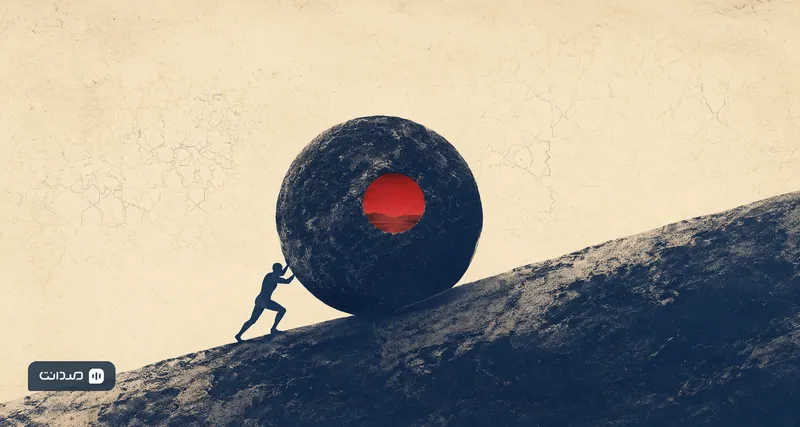
The Myth of Sisyphus and the Meaning of Life
The myth of Sisyphus, a symbol of futile labor and revolt, is analyzed by Camus through the concepts of absurdity and freedom; in contrast, Islamic thinkers find meaning in life through elements such as the remembrance of God and love. An examination of Eastern and Western perspectives on the meaning of life.

Farshad Aliyari
AuthorOne of the important topics in the philosophy of religion is the question of the meaning of life. Many thinkers have used the myth of Sisyphus as a pretext to express their philosophical perceptions of human life, the surrounding world, and existence. In this context, fundamental questions are raised: Is Sisyphus's life meaningful or meaningless? If it is meaningful, what is the criterion and why; and if it is meaningless, for what reason? What elements could have made Sisyphus's life meaningful? Can he overcome this meaninglessness, and if so, by what means: by transforming the external world, the internal world, or both?
Since the discussion of meaning has various facets, the author attempts to examine the views of a number of Eastern and Western thinkers, including Albert Camus, on the meaningfulness and meaninglessness of life. In The Myth of Sisyphus, Camus tries to show that an absurd world cannot and should not compel a person to foolish acts; rather, awareness of the absurd can be the beginning of a serious movement in the search for meaning. Iranian-Islamic thinkers and poets, such as Saadi, Hafez, and Sohrab Sepehri, have also considered components such as the remembrance of God, gratitude, unconditional love, contentment, and trust in God to be effective in making life meaningful.
Introduction
Sisyphus, the son of Aeolus and Enarete, is introduced in Greek myths as the founder and king of Ephyra (Corinth). He is considered a very cunning man, for he revealed the secret of the gods and informed Asopus, the river god, that Zeus had abducted his daughter. To punish him, Zeus sent Thanatos, the god of death; but Sisyphus bound Thanatos in chains and suspended death for a time. Ares, the god of war, eventually freed Thanatos and took Sisyphus to the underworld.
Sisyphus had previously asked his wife not to perform the customary sacrificial rites after his death. Then, by deceiving Hades, he obtained permission to return to the world of the living to reproach his wife, but he did not return. Finally, Thanatos brought him back to the underworld. His punishment was to roll a large boulder to the top of a mountain; each time, before reaching the summit, the boulder would roll back down, and this task was repeated for eternity. In this article, the views of Albert Camus and a number of Iranian-Islamic thinkers on this myth are examined, and concepts such as absurdity, suicide, revolt, and freedom are analyzed.
A Different Look at the Story of Sisyphus
The myth of Sisyphus is a symbol of seemingly futile and repetitive labor, as well as a symbol of revolt. Thinkers and intellectuals have viewed it from various perspectives to analyze the human relationship with the world and existence. The central question is: Is life meaningful or meaningless?
Is life worth living?
The difference in viewpoints and theories lies in their angle of looking at the human being and issues related to the human being. The difference in these angles is like the difference of looking from several different windows at a single subject called the human being. The author believes that religion without society and society without religion has no meaning or concept. Every human being has a transcendental view upon which they base their life, and they carry out all social, cultural, religious, economic, political, etc., matters within that framework.
Albert Camus
Camus uses this myth as a pretext to express his philosophical perception of human life, the surrounding world, and existence. Camus states that he has seen many people die because life was not worth living for them, and from this, he concludes that the question about life is the most urgent question of all times. (Irvin D. Yalom, Existential Psychotherapy, p. 583) To do this, he sets out to discuss and examine the most key words in his thought: 1) Absurdity 2) Suicide 3) Revolt 4) Freedom
Absurdity
کامو ، خودکشی را تنها مسئله فلسفی جدی خود می داند. و این زمانی است که فرد تمام تلاش های روزمره خود را بی معنا می داند و معتقد است که زندگی ارزش زیستن ندارد. چنین فردی هیچ راه روشنی در زندگی خود نمی بیند. و مبنای زندگی خود را بردیوار های پوچ می داند و کامو در این ارتباط خودکشی نیست جز نفی روشن بینی خود، زیرا با نفی آن می تو انیم پوچی ترا نیز چن نمی بینیم ، نفی کنیم این راه حل که برای اندیشه کافی است، برای زندگی واقعی کافی نیست ، زیرا در این زندگی ، منطق ((پوچی)) حکم می کند که من خودم را بکشم اگر خود را بکشم ، شعوری را که متکای بینش پوچی است نابود می کنم. شوپنهاوردراین ارتباط بیان می کندکه: «هیچ چیز ارزش تلاش،کوشش وتکاپوی ما را ندارد... همه ی چیزهای خوب پوچ و عبثند،دنیا سراپا ورشکسته است و به کسب وکاری می ماند که جوابگوی هزینه هایش نیست.» کامو بیان می کند که پوچی یک شورشی است بر دنیا و در پایان کتاب تکلیفش را با جهان مشخص می کند: ((من سیزیف را پای کوه رها می کنم! بار سنگین او همواره در دسترس است. (اروین د. یالوم،روان درمانی اگزیستانسیال،ص665)کامو معتقد است که پوچی نه در انسان وجود دارد، نه در دنیا و تنها با حضور مشترک آنهاست که قابل درک می گردد ودر حال حاضر تنها حلقه ی پیوند آن هاست. (آلبر کامو،افسانه سیزیف،ص46) کامو با دستاویز به اسطوره سیزیف به نقد مدرنیته و تجدد می پردازد. سیزیف مصداق انسان مدرن است که گرفتار تکرار وزندگی کسل آور ماشینی شده وهرگز نمی تواند به نتیجه مطلوب خود دست پیدا کندوی در گرداب ناآرامی واضطراب عصر مدرنیته گرفتار آمده وهر چه تقلا می زند نمی تواند خود را از این مهلکه نجات دهد. آلبر کامو در این کتاب تحت تاثیر فیلسوفانی همچون هایدگر ، یاسپرس ،کییرکگور، داستایفسکی و شوپنهاور قرار گرفته وبه نوعی آرا واندیشه های آنان را بیان می کندواین موضوع ، نشان از علاقه یا به تعبیر خودش ((خویشاوندی)) کامو با آنان است و در این میان هیچ ابائی ندارد تا به طور خاص تاثیر پذیری خود را از نیچه نشان دهد. همچنان که نیچه را فیلسوف زندگانی نامیده اند ، کامو نیز زندگی را سرشار از زیبایی و لذت می بیند و با تلاش و سماجت ، بهشت و جهنم خود را در عصیان و تعهد انسانی می داند و زندگی را ستایش می کند. آلبر کامو در زمان جنگ جهانی از فعالان نهضت مقاومت است و مبارزی تمام عیار محسوب می شود. دلایل بروز نیهیلیسم در تاریخ جدید بشریت را باید در سوبژکتیویسم دانست نگاه ابژکتیو به موجودات را شاید بتوان از این باب تفسیر کرد که نگاه تحدید و تصرف است وبخاطر نتایج ملموس و رویکرد تحصلی غالب در عصر جدید سازگاری تام دارد. علم جدید مدار حقیقت می شود و عینیت ابژه بر حقیقت آفاقی غلبه می کند. زیرا اساسا با نگاه پراگماتیسمی و ظهور فلسفه های اصالت عمل به عیان ترین شکل ممکن است این امر ظاهر می شود،فلسفه وعلم آن است که به کار آید ونتیجه ی عملی داشته باشد. کامو در کتاب خود سوالی را مطرح می کند که اگر زندگی بی معنا باشد آیا لزوما فرد به سمت خودکشی سوق پیدا می کند؟ اگر زندگی معنی نداشته باشد، آیا به این معناست که زندگی ارزش زیستن را ندارد؟ کامو در پاسخ می گوید: اگر این طور باشد ما یا باید ایمانی ناگهانی بیابیم، یا خودکشی کنیم. کامو به پی گیری امکان سومی علاقه مند است که: می توانیم دنیایی عاری از معنی یا هدف را بپذیریم و در آن زندگی کنیم. کامو مدعی است که فیلسوفان اگزیستانسیالیسم مانند کییرکگور و غیره با تناقض پوچی مواجه شدند ولی بعد سعی کردند از آن بگریزند. اگزیستانسیالیستها که در هستی هیچ مفهوم و نظمی نیافتند تلاش کردند که در این بی معنایی نوعی برتری یا معنی پیدا کنند از دیدگاه انسان هایی که به مرحله پوچی رسیده اند زندگی سیزیف دارای ویژگیهای زیر است: 1- زندگی سیزیف کاملا یکنواخت است 2-هیچ هدف و مقصودی ندارد و کاملا بی معناست 3- کار او مانند روز پیش است هیچ خلاقیت و تغییری در زندگی او دیده نمی شود 4- سیزیف هرگز پیشرفتی در زندگی اش مشاهده نمی کند 5- یاس و ناامیدی
کامو اظهار می کند با پوچی زندگی کردن، روبرو شدن با این تناقض اساسی و حفظ آگاهی همیشگی نسبت به آن است. مواجه با پوچی مستلزم خودکشی نیست بلکه برعکس ، به ما امکان می دهد که به کاملترین مشکل زندگی کنیم. کامو سه ویژگی برای زندگی پوچ بیان می کنند.
1- عصیان (در مبارزه خود نباید هیچ پاسخ یا سازشی را بپذیریم)
2- آزادی (ما مطلقا آزادیم آن طور که انتخاب می کنیم ، فکر کنیم و رفتار کنیم)
3- اشتیاق (ماباید به دنبال زندگی سرشار از تجربیات گوناگون باشیم)
کامو برای زندگی پوچ 4 مثال بیان می کند:
1- The Seducer (one who pursues the passion and excitement of the moment)
2- The Actor (one who compresses the passion and excitement of a hundred lives into a single stage performance)
3- The Conqueror or Rebel (one whose political struggle is directed toward his energy)
4- The Artist (who creates entire worlds)
The art of the absurd does not attempt to explain experience, only to describe it; it introduces a specific worldview that, rather than considering universal themes, deals with particular subjects.
Camus suffered from futility, and performing repetitive tasks was tedious for him. To show this suffering, he chooses the stone, but the stone that Camus places on Sisyphus's shoulder is not the same as the punitive burden Sisyphus received from the gods. In Camus's myth of Sisyphus, the gods and mythology become tools for Camus to transform the stone into a self-made sign (self-acquired wisdom). This signifies a transition from the familiarity of indices (the stone as a symbol of torment chosen by the gods) to the stone as a sign, because in this work, Camus deals only with the pure state of a suffering subjectivity. In this inquiry, he does not engage with any ritual, belief, or metaphysics, and limits himself to examining the extent of human capabilities.
"Man is eternally condemned to the struggle between two opposing poles: distraction and anxiety on one hand, and sorrow and boredom on the other" (Michael Frankel, Man's Search for Meaning, p. 160)
Realizing the absurdity of life is not the end of the road; it is a beginning for living. In the early years of his twenties, Camus sought within life itself an answer to the catastrophic problem. If we accept life, experience it fully, and enjoy it in the present moment, we may not need any other justification. To ward off the temptations of nihilism and suicide, is it not enough to live as much as possible? In The Myth of Sisyphus, Camus explains that neither the human being nor the world is absurd. Absurdity lies in the coexistence of the human and the world. We mostly look to the future with fear, worry, and anxiety, so much so that many times we have no hope for the future and feel alone, and fear and worry prevent us from enjoying the present moment. We are all in pursuit of the fountain of fortune, and because we think this fountain lies in the future and fear we might not reach it, fear and anxiety seize our existence and deprive us of the joy of life. We fear the passage of time, old age, death, poverty, and so on, and all these are misplaced fears, for no one but God knows what will happen in the future. And as Sohrab Sepehri says, giving humanity hope for the future and telling us not to fear death: death is not the end of the dove, death is responsible for the beauty of a butterfly's wing, and sometimes sits in the shadows watching us, and we all know the lungs of pleasure are filled with the oxygen of death (Hasht Ketab, Sohrab Sepehri, p. 296)
Suicide
Camus believes that the principal and only serious problem in philosophy is suicide. From his perspective, the world is absurd. And after arriving at the absurdity of the world and accepting it, man reaches rebellion and revolt. For the absurd, like hatred, binds beings together, and the understanding of this absurdity, the nature of life, and its irrationality calls him to protest, not to submission and helplessness. Thus, his absurdism does not end in passivity and the will to death. Tolstoy, at the age of fifty, was greatly inclined toward suicide, so much so that he states: "The question that brought me to the thought of suicide at the age of fifty was the simplest question lying in the soul of every human being, from the immature child to the wisest of the wise. What is the outcome of what I do now and what I may do tomorrow? What is the outcome of my entire life? In other words, why should I live? Why should I desire anything? Why should I do anything? To put it yet another way, is there any meaning in my life that would not be destroyed by the inevitable death that awaits me?" (Irvin D. Yalom, Existential Psychotherapy, p. 583) (Schopenhauer (1788-1860) believed that life is meaningless because the truth of the world is will, but this will is both without cause and without purpose. In his view, life is entirely suffering, and the way to liberation from this suffering is the diminution of the intensity of the will. He says: the will always struggles, for striving is its sole nature, and no achieved goal can put an end to it. Therefore, such striving cannot attain final satisfaction but continues in itself forever. Pain is in itself inescapable and intrinsic to life; the unceasing efforts to banish suffering do nothing more than change its form. The stronger the will, the greater the suffering. Therefore, the way to liberation from this suffering is the diminution of the intensity of the will, not suicide... Suicide is not only not a denial of the will, but it is also a strong affirmation of it, for the essential nature of denial lies in the fact that one shuns the pleasures of life, not its sorrows. (Journal of Comparative Theology, Year 1, Issue 1, Spring 2010, p. 99)
People who attempt suicide find life meaningless. These individuals undergo a crisis of meaning; they are bewildered, they do not know what to do. They constantly ask themselves: Why? What for? And they often confess: "I have been condemned to live in depression until death, a death in isolation and loneliness, a hard and terrible death. What I want to confess is very difficult for me, and that is the announcement of my death. I died years ago, and now I confess it, and I must endure this death until physical death arrives." Such individuals lack purpose in life; they possess no passion or enthusiasm. They fabricate themselves, their world, and their situation, and they conclude that there is no solution but suicide. In fact, they have based their thoughts on foundations of absurdity, and these negative and irrational thoughts have so intimidated them that they see no clear path. They are shaken by the slightest grievance in life, and life no longer holds any importance for them. "He who thought life no longer had any meaning for him, no goal, no motive, no purpose, nothing tied him to life, and once he reached this point, his fate was sealed" (Viktor Frankl, Man's Search for Meaning, p. 226)
Hafez says: Be not grieved by the autumn wind in the meadow of the world / Think reasonably, where is the thornless rose?
**Revolt:
The solution Camus proposes is revolt, a revolt that constantly compels human reason to struggle against the absurd; revolt grants man his true dimension, for beneath the yoke of our lives it binds us to a struggle that is perpetually renewed. The absurd does not disappear, but it continually retreats, and with each of its retreats our life grows larger. And it is in this way that awareness and insight enter our daily actions. For Camus, the absurd is not a concept that brings man to his knees, but rather a concept to which a particular meaning can be given. He believes that although Sisyphus engages in a futile task, something may happen in the process of that round body going up and down that gives life meaning. Camus’s Sisyphus stands apart from fate and destiny, knowing the stone better than any god, even aware of the endlessness of the path. He believes in thought and does not bow his head in submission to the spear’s point, even though he knows this entails an unending effort. Camus believes that Sisyphus engages with his environment, and this is like a protest and a revolt. Camus’s man is not one who, upon perceiving the absurd, commits suicide, but rather one who rises in rebellion and revolt in order to give meaning to the world around him. In The Myth of Sisyphus, Camus seeks to prove that the absurd world cannot and should not drive man to foolish acts; in fact, this thought can give birth to a serious movement within him, a movement in search of meaning. From Camus’s perspective, the absurd is the starting point, not the end; through absurdist thought, a new expanse of social and individual outcomes emerges that is always in pursuit of a struggle against its own concept, unlike Kafka, who sees the absurd as the end point of everything. (Shargh newspaper, article "Meaningfulness in Meaninglessness," issue 714, p. 20)
Abu al-Qasim al-Shabbi is one of the poets of Tunisia who contracted cancer in his youth and expresses his rebellious thoughts in the following verses
I shall live, despite the disease and the enemies, like the eagle atop the lofty peak.
Despite the pain and suffering and the presence of enemies, I shall live like an eagle atop the high mountain peak.
I gaze at the shining sun, mocking the clouds, the rains, and the storms.
I stare at the shining sun while mocking the clouds, the rains, and the changes of weather. (I make a plaything of them)
And I say to the fate that does not relent from warring against my hopes with every affliction:
And to the destiny that does not cease (does not surrender) from warring against my hopes with all hardship and trouble, I say
The wave of anguish and the tempests of calamities shall not extinguish the blazing flame in my blood.
The wave of suffering and the gales of misfortunes shall not extinguish the kindled flame of fire in my blood.
So destroy my heart as much as you can, for it will be like the solid rock.
Break and destroy my heart as much as you can, for it will be like the hard stone.
And I shall live like the mighty one, gazing always toward the dawn, toward the beautiful, distant dawn.
I shall live like a powerful person and constantly gaze toward the light of dawn, the beautiful and distant light.
The light is in my heart and within my very being, so why should I fear walking in the darkness?!
The light is in my heart and throughout my entire being, so why should I fear moving in the darkness.
I am the reed whose melodies never end, as long as it is among the living! (Comparative Literature, Alireza Sheikhi, 116)
I am that reed whose melodies never end, as long as it is among the living.
Freedom:
We are absolutely free to think and behave as we choose. In this connection, Jean-Paul Sartre believes that man is in fact condemned to be free. In ethics, there is one fundamental law, and that is: choose yourself. This law is always obeyed. The existent (man) fundamentally desires one thing for himself, and that is being. Although he is "nothing-like" in his essence, he wants to be. Man wants to become God. In reality, man's affliction and suffering are, in one sense, the reverse of Christ's passion. Man must die so that God may live and exist. But the being of God is impossible. In the for-itself, the "existent" is contradictory, and his search for being ultimately ends in failure. Man is a useless passion. (Contemporary European Philosophy, written by Bochenski, translated by Dr. Sharaf al-Din Khorasani, p. 145) Heidegger, with a specific interpretation, calls man "Dasein," i.e., man-in-the-world. Human existence is a fallen and degraded being in the world. Man is thrown into the world without having accepted it, and is trapped in such circumstances. This feeling of thrownness and projection is a kind of feeling of homelessness and darkness for man, a descent into the world. The situation of thrownness is accompanied by a feeling of abandonment to one's own fate amidst beings that press upon us. So, being thrown into the world is not a finished fact without effect or reflection on our current state, but a fact that endures and is a permanent characteristic of man's specific existence, in such a way that the possibility of my instability and being the site of events manifests before my eyes in the world. Heidegger believes in the discovery of the meaning of life, in such a way that man, in this abandonment among his possibilities, must create various meanings through new understandings, i.e., the discovery of possibilities. In fact, "meaning" is everything that is articulated and expressed within understanding. The world is devoid of meaning except through the presence of man in this world, which brings meaning into existence. (Heidegger's Philosophy, Maurice Corvez, translated by Dr. Mahmoud Navali, pp. 15-16)
Will
The Roman philosopher Epictetus believed that the will cannot be imprisoned; even Zeus does not have the power to do so. In this connection, he says: "I must die. I must be imprisoned. I must suffer the pain of exile. But must I die groaning? Must I lament? Can anyone prevent me from going into exile with a smile? The ruler threatens to chain me: What are you saying? You will chain me? Yes, you will fetter my leg, but not my will... No, not even Zeus will be capable of such a thing." (Irvin D. Yalom, Existential Psychotherapy, p. 384)
Saadi:
Sheikh Ajal Saadi Shirazi, in the third anecdote of the chapter on Dervishes in the book Golestan, says: "One of the great men was seized by a contrary wind in his stomach and could not bear to restrain it, and it escaped him involuntarily. He said, 'O friends, I had no choice in what I did, and no sin was recorded against me, and a comfort came to my being. You too, out of generosity, excuse me.'" According to the above anecdote, Saadi believes that negative thoughts, satanic temptations, vain imaginings and fantasies, and generally the destructive behavioral-mental patterns that are in our mind and thought must be expelled as soon as possible, because if we carry them with us, they may negatively affect our actions and behavior. The healthy or ideal human being, from Saadi's perspective, is one who does not store complexes and negative mentalities within himself but expels them, and the reason is that they suddenly erupt and influence human behavior, causing distress to oneself and others, to the extent that one is deprived of control over one's actions and behavior. Saadi continues the anecdote by saying:
The stomach is the prison of wind, O wise one; no intelligent person keeps wind imprisoned.
When wind twists in the stomach, release it, for wind in the stomach is a burden on the heart.
The reason Saadi likens negative mentalities and pathological patterns to a fart is that these pathological mental patterns are incompatible with human nature and innate disposition, are in some way contrary to the prevailing principles of the universe, and always cause human suffering and disturbance of peace. Saadi believes that without fear of others' judgment, one must change and expel these erroneous thoughts and mental patterns and replace them with healthy mental patterns, and it is in this case that a person attains inner peace. In a way, Saadi believes in the fabrication of meaning, meaning he considers the meaning of life to be subjective. A human being who has reached absurdity and sees suicide as the only solution is a sick person, and in the view of Saadi and many other thinkers, the way out of this situation is to change the type of attitude and the mental patterns of pathological behavior. Of course, it should be noted that the meaning of life cannot be considered a human fabrication; rather, it is possible that the meaning of life may well up from within each individual or be embedded in their existence, and they can discover it within themselves in specific ways.) Religion and the Meaning of Life in Analytic Philosophy, Mohammad Reza Bayat, p. 90)
The components of a meaningful life from Saadi's perspective in the forty-fifth anecdote of the third chapter of Golestan are: 1- Remembrance of God 2- Gratitude 3- Unconditional and gratuitous love 4- Self-sacrifice and generosity 5- Contentment 6- Trust in God 7- Submission 8- Endurance and acceptance
From the perspective of Saadi and many thinkers, the aforementioned components make life purposeful, valuable, and significant, and in this case, life will not be devoid of meaning. If a human being uses the God-like endowments latent in their innate nature in the best possible way, the human being is a small god and a small universe. In the words of a thinker, do not say I am inside the world; let us say the world is inside me. The treasure and capital lie within us humans, and we are heedless of this treasure. In the story of The Alchemist by Paulo Coelho, the protagonist discovers at the end that the treasure was with him, and for years he had looked to others for help in seeking the treasure, traveling through other cities and countries. In the words of Lesan al-Ghayb Hafez Shirazi:
For years the heart sought the Cup of Jamshid from us And what it itself possessed, it begged from strangers
Sohrab Sepehri:
All human beings have a particular framework of beliefs and convictions, according to which they interpret and analyze the universe, society, the mutual relations between humans and society, and all human phenomena, and based on which they undertake action and deed; that is, the foundation of every human being's behavior and speech is their beliefs. Sohrab Sepehri is no exception to this rule. The most important principle we observe in Sohrab's poetry is a return to nature and the principles of the universe. In other words, Sohrab considers the most ideal aspect of life to be natural life and the life that God has established. A life in which fences are short and there is no conflict; two poplars never quarrel with each other; the willow does not sell its shade to others. In this society, there is no ownership; whatever exists belongs to all, and of course not in the sense of Marxist and communist ideas. He believes that life and death in the cycle of nature are entirely correct and proper, but human beings disrupt it. In reality, humans want to somehow change God's tradition, whereas God's tradition is unchangeable. Sohrab does not say: what should we do, but rather says what we should not do. Sohrab Sepehri, in the poem "Water," which in the author's view is far from the principles and process of life, considers the source of water, or life itself, to be God, who has placed these principles in the existence of all human beings after birth. In Sohrab Sepehri's poetry, one can observe traces of three fundamental approaches—naturalistic, non-naturalistic, and supernaturalistic—regarding the meaning of life. Such that Sohrab says in the poem "Water": Let us not muddy the water; downstream, perhaps, a pigeon is drinking water. Or in a distant thicket, a goldfinch is washing itself. Or in a village, a jug is being filled. Let us not muddy the water: perhaps this flowing water goes to the foot of a poplar, to wash away the sorrow of a heart. Perhaps a dervish's hand has dipped dry bread in the water. A beautiful woman came to the riverbank; her beautiful face is doubled. Let us not muddy the water: how pleasant this water! How clear this stream! (Eight Books, Sohrab Sepehri, p. 346)
Sohrab believes that disrupting the rules and principles of the cosmic order will have a negative impact on the lives of humans in future societies. If today's humans muddy the water—which represents the principles of life—(by adding social rules and regulations contrary to the principles of existence), the humans who come in the future will face difficulties, and one should not muddy the water because others wish to draw upon these principles of life. Sohrab considers the pigeon, the conduit, and the jug as symbols of humans who seek to draw upon and use these principles of life. The pleasure, passion, and joy that humans derive from these pure principles have been destroyed throughout history by social rules created by human hands. Humanity has become so distanced from these principles of existence, which are that very water, or has so muddied it that it has lost its properties and turned into a predicament, to the extent that this modern human builds lie detectors to discern whether another is lying or telling the truth; cunning, deceit, fraud, embezzlement, bribery, usury, and so on... have muddied this water.
Khayyam:
Hedonists believe that pleasure itself, as an end, is a convincing and sufficient explanation for human behavior, a view that has been discussed since the time of Plato and has had many adherents to this day. "The hedonist says that an individual plans for the future and chooses their path of progress one step after another if, and only if, they feel that the future will be more pleasant (or less unpleasant) for them. The hedonistic framework of judgment is astonishing because it is highly flexible and can accommodate any of the meaning systems within its generous boundaries. Activities such as creativity, love, altruism, self-sacrifice for a cause—all of these can be considered important because they ultimately have the capacity to produce pleasure. Even behavior aimed at pain, suffering, or self-denial can be hedonistic" (Irvin D. Yalom, Existential Psychotherapy, p. 605). Robert Nozick imagines a machine that contained all pleasures and would induce the expected pleasure in the person connected to it.
The author believes that traces of hedonism can be observed in the thoughts and ideas of Omar Khayyam of Nishapur. Therefore, a number of Khayyam's quatrains related to this will be presented, followed by an analysis to the best of the author's ability.
When life reaches its end, what matter sweet or bitter, The cup once full, what matter Baghdad or Balkh.
Drink wine, for after you and me, many a moon, Will pass from last to first, from first to last.
Khayyam's Quatrains, p. 106
Drink wine, for this is eternal life, This is the very fruit of your youth.
In the season of roses, wine, and drunken companions, Be happy for a moment, for this is life.
Khayyam's Quatrains, p. 104
The good and evil that lie in human nature, The joy and sorrow that are in fate and destiny,
Do not blame the heavens, for in the path of reason, The heavens are a thousand times more helpless than you.
Khayyam's Quatrains, p. 105
Drinking wine and being joyful is my creed, Being free from infidelity and faith is my religion.
I asked the bride of the age, "What is your dowry?" She replied, "Your joyful heart is my dowry."
Khayyam's Quatrains, p. 104
Since there is no truth or certainty at hand, One cannot sit all one's life in hope of doubt.
Beware, let us not set down the wine cup from hand, In ignorance, what matter sober or drunk.
Khayyam's Quatrains, p. 98
Alas, that we shall not be, and the world will endure, Neither name nor trace of us will remain.
Before this, we were not, and there was no flaw, After this, when we are not, it will be the same.
Khayyam's Quatrains, p. 110
Considering the above verses, it can be said that Khayyam believes that since death prevents the continuation of good things and the enjoyment of life, therefore, a person must make use of this limited opportunity and give meaning to their life. He considers enjoyment a kind of goal and values it; consequently, he does not deem life futile and absurd, and the prescription he offers for humanity is joy, happiness, and ecstasy. Such a life is worth living; in other words, a meaningful life is pleasurable, but true pleasure is attained when it has a moral origin and a sense of spiritual beauty comes to the seeker of meaning. Of course, the author believes it is unfair to characterize Khayyam as a hedonist, but considering the era in which Khayyam lived, it could perhaps be said that these poems were a reaction against ascetics, as asceticism had become beloved in the hearts of people in the sixth century, and in the author's view, Khayyam composed these verses in a roguish manner. It should be noted that most philosophers, to some extent, question belief in the afterlife and say to focus on this world, as we have no knowledge of the hereafter. Of course, passing judgment on this matter cannot be contained in this brief space and requires detailed scrutiny and extensive research.
Is Sisyphus's Life Meaningful?
Although for Sisyphus, every day involves the same task, the same rock, and the same mountain, the world around him is always changing. Even if this surrounding world is only the mountain. Even if this change is the blooming of a small flower beside one of the rocks on Sisyphus's eternal path, or a butterfly landing on a flower, or watching the sunrise, which is never repetitive. In this case, Sisyphus can even be happy, only on the condition that he himself wants to be. It is we ourselves who make our lives beautiful or ugly, extraordinary or mundane. Sisyphus has been humiliated by the gods; he wants to overcome this humiliation, and on this basis, some consider Sisyphus's life meaningful, believing that Sisyphus has a goal, and that goal is to overcome this humiliation. Repetition is not a sign of meaninglessness, even if this repetition is a daily drudgery. If one asks, for what purpose was the punishment devised? It is meaningful in relation to the intention and purpose of the gods. The question arises: Did God create us with free will, or are we determined? Is it possible to escape this determinism? If the gods are taken as a symbol of nature and the everyday things, the course of humanity has changed; human history shows that humanity's view has changed, humanity has become a part of nature, and the view of the ancients has been transformed. Taylor offers two suggestions for the meaningfulness of Sisyphus's life: 1- If Sisyphus carried the stones to the top of the hill and built a beautiful and lasting temple from them, he could free his life from the endless futility to which it was condemned. 2- If the gods implanted in Sisyphus an instinct to repeatedly roll the stone, he would feel a sense of mission and meaning within himself for repeatedly rolling the stone from the summit, and he would feel no weariness from his task. In his first suggestion, Taylor tries to look at meaning from an objective perspective and seeks meaning in connection with something external to Sisyphus's being, considering the meaning of life as the purpose of life. However, in his second suggestion, he advises Sisyphus to seek the meaning of life within his own being (subjective interpretation). (Religion and the Meaning of Life in Analytic Philosophy, Mohammad Reza Bayat, pp. 88-89) Of course, there are criticisms of Taylor's suggestions, including: If we consider the meaning of life to be solely a function of the inner desires of each individual and their positive outlook on life, how and by what criterion can we distinguish between valuable and non-valuable matters? The second criticism is that there is not much difference between good and bad, right and wrong efforts. (Ibid., p. 91)
Dr. Amir Abbas Alizamani, in a collaborative workshop on 7-Shargh newspaper, article Meaningfulness to Meaninglessness, issue 714, March 6, 2006.
8-Contemporary European Philosophy, A. M. Bochenski, translated by Dr. Sharaf al-Din Khorasani, second edition, Scientific and Cultural Publications, 2000.
9-Heidegger's Philosophy, Maurice Corvez, translated by Dr. Mahmoud Navali, Hekmat Publications, first edition, Tehran, 1999.
10-Golestan-e Saadi, edited by Mohammad Ali Foroughi, Amir Kabir, Tehran, 1982.
11-Journal of Comparative Theology, article The Meaning of Life from the Perspective of John Cottingham, Dr. Amir Abbas Alizamani, first year, first issue, spring 2010.
12-Hasht Ketab, Sohrab Sepehri, Tahouri Publications, Tehran, 2006.



Discussion2 comments
همینطور در مورد "هادس" که "هاوس" ضبط شده!
سلام! من امروز که ١۴ شهریور ٩٥ هست دارم این مطلب رو می خونم, شاید پیشتر گفته باشن به شما... کلمه ی "تا ناقوس" -دقیقا با فاصله بین تا و ناقوس- (مرگ)، بدون شک همون "تاناتوس" هست که فروید هم ازش به عنوان غریزه ی مرگ در اصطلاحات ویژه ی خودش استفاده کرده... همون خدای اسطوره ای مرگ در اساطیر یونانی... ای کاش چنین اشتباهاتی تو سایتی با این دقت و اعتبار علمی وارد نشه با وسواس بیشتری به خرج دادن!