Psychology
The Stranger Within: Essays on Flourishing and the Meaning of Life by Sasan Habibvand
Many believe they are making decisions, while in fact the “defaults” of childhood govern their behavior like silent masters. Habibvand’s book The Stranger Within reveals these hidden forces, paving the way for flourishing and a meaningful life.
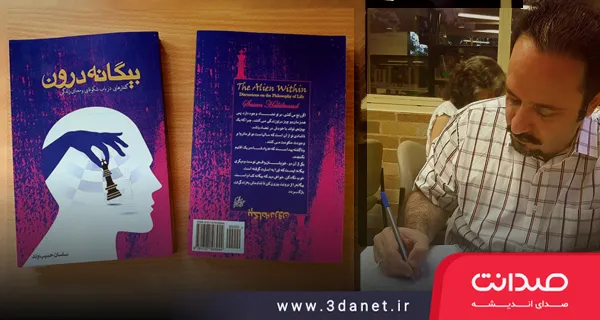
Most of us imagine that what governs our behavior and our lives are our decisions. We think that we freely decide for our day, our week, and our lifetime, and then carry out these decisions. Such a notion exists because we are oblivious to the existence of superior powers called "defaults." A default is a notion lodged in the background of our mind that constantly compels us toward a particular type of behavior. Defaults are masters that live within us, and their command is always a ring in our ears. Yet their presence is so self-evident to us that we rarely pay attention to it.
For example, the default of some of us is that "the world is a place for working," so one must work nonstop from morning till night and take little rest. Another's default is: "I am responsible for solving all the problems of my family members. Whatever issue arises, I am the one who must solve it." Some have the default: "I must be ideal and flawless, and any mistake I make is an unforgivable sin." Still others assume that it is others who must judge the goodness or badness of their behavior, or determine their worth... Defaults are inculcated into our minds in childhood and control us through the tools of fear and blame. In this way, we never doubt our ways and do not imagine that one could behave or live differently. Defaults rule over us silently and anonymously, and until the end of our lives, they confine our world within the narrow straits of particular notions. They are obstacles to change, a source of pressure and suffering, and they turn us into automatic robots.
"The Stranger Within" shines a light into the darkroom of these silent masters and shows us their true face.
After "The Tightrope Walker" and "From Suffering to Liberation", "The Stranger Within" is the third work by Sasan Habibvand, an author in the field of self-knowledge and the philosophy of life, published by "Sayeh Sokhan" publishing. "Sayeh Sokhan" publishing will, with a single phone call, mail the author's works to the address of enthusiasts anywhere in Iran:
021 - 66962456 66495280 66496410
An introduction and excerpts from the book are available on the author's channel.
.
.
The Stranger Within
Discourses on Flourishing and the Meaning of Life
Sasan Habibvand
Subject: Self-actualization, Self-confidence, Meaning of Life
Cover Design: Hoda Yazdani
Publication Details: First Edition, Amazon: 2018 - 1397
Physical Specifications: Number of Pages: 364
ISBN: 13:978-1727503944
Amazon ISBN: 10:1727503945
.
.
THE ALIEN WITHIN
Discussions on the Philosophy of life
Sasan Habibvand
Philosophy of Life, Self-discovery, Self-flourishing
Createspace USA 2018
ISBN-13: 978-1727503944
ISBN-10: 1727503945
Author's Email: sasan.habibvand@yahoo.com
Author's Telegram Channel: t.me/sasanhabibvand
Author's Instagram: www.instagram.com/sasanhabibvand
.
.
"Intelligence"
Do not build a house on another's land
Do your own work, do not do the stranger's work
Who is the stranger? Your earthly body
For it is the source of all your sorrow
(Rumi)
Intelligence is not about getting ahead of others and being number one.
Intelligence is not about acquiring more and more
at the cost of depriving this person or that.
Intelligence is not the capacity for committing vulgar cunning tricks,
all of which,
are foolish forms of unconsciousness.
Intelligence lies in grasping this great and simple truth
that your presence in this world,
is a wondrous, brief, and unrepeatable celebration,
and you must make use of it in the wisest possible way,
and the wisest form of life is to live joyfully and lightheartedly.
.
.
Dedicated to all who are passionate about awareness and flourishing
Dear reader, welcome to the world of self-knowledge!
It is hoped that the following points will be helpful in making the most of these writings:
1. Self-knowledge is not the acquisition of knowledge, but a transformation in perspective. Self-knowledge is a change in how one views oneself and everything else. This means that when encountering discourses on self-knowledge, previous assumptions or expectations may become an obstacle to understanding new material. Therefore, setting aside presuppositions (at least temporarily) and engaging with the dialogues is a prerequisite for experiencing a different feeling and outlook.
2. Experience has shown that a complete understanding of the topics, and even many of the phrases in the books, is usually not achieved with a single reading and requires at least two readings.
2. To complete the picture you gain of self-knowledge, in addition to studying the books, refer to my interviews, films, and lectures available on YouTube, as well as my Telegram channel at the address below.
3. Note that on the path of self-knowledge, the secret to transformation is contemplation and reflection. Rushing to finish the books is a major mistake that renders reading them ineffective. When you reach a sentence or phrase that you feel carries an important meaning, pause, close the book, and think deeply about it so that the message can have its effect on your thinking, then proceed to the next part. I would be grateful and happy to receive your perspectives.
Wishing you joy and flourishing: Sasan Habibvand
.
.
Table of Contents
Title Page
A Word with You ...................................................................... 9
Session One: Who Am I? ....................................................... 11
1. Introduction ......................................................................13
2. Self-Knowledge from the Perspective of the Greats ...................................................... 18
3. Self-Knowledge is Awakening ........ ..............................................22
4. Nurturing the Sapling of the Self ..............................................................28
5. Us and Our "Cookie" .............. ............................................. 34
6. Avoiding "Pruning"....................................................... 43
7. The Link Between Suffering and Identity ............................................................ 51
8. Two "Selves" Within Us .......................................................... 63
9. Questions and Answers ............... ............................................... 70
Session Two: The Window of the Mind ............................................................. 75
1. Introduction...................... ............................................... 77
2. Understanding Two Kinds of Suffering .......................................................... 79
3. Liberation from Imaginary Sufferings........................................................ 83
4. Grieving the Past?............................................................... 90
5. Comparison, a Cause of Suffering ............................................................ 92
6. Others' Opinions About You ....... ................................................ 94
7. Introduction to the "Attitude Triangle"....................................................... 97
8. A World Called the Mind........................................................... 101
9. The Relationship Between Attitude and Presupposition....................................................... 118
10. What is "Appreciation"? ...................................................... 123
11. The Story of the Bakery Line ........................................................ 127
12. Identifying the "Strangers Within" ................................................... 145
13. Avoiding "Adding Insult to Injury"! ..................................................... 152
14. Throw Away the Club of Blame!................................................. 156
15. Where is the Past? .......... ................................................ 169
Session Three: The Meaning of Life........................................................... 191
1. Introduction......................................................................193
2. What is a "Goal"?............................................................ 194
3. The Difference Between a "Point Goal" and a "Linear Goal".......................................... 199
4. Distinguishing "Destination" from "Purpose".................................................. 204
5. "Relative Goal" and "Ultimate Goal"................................................. 207
6. Two Kinds of Meaning and Two Types of Outlook ..................................................... 214
7. Consequences of the Point-Based Outlook ................ ........................................ 217
a. Erosive Living........................................................... 218
b. Losing the Moments.............................................................. 219
c. Product-Orientedness ............................................................ 220
d. Decline in Efficiency .... ............................... ............................. 221
e. Conditional Happiness . ............................................................. 223
8. The Linear Outlook and Its Results........................................................ 225
a. Unconditional Happiness ....................................................... 226
b. Presence in Being ........................................................... 227
9. The Seven Keys to Flourishing ......................................................... 230
Key One: "Purposefulness" ......................................................... 232
"Purpose Of" and "Purpose In" ........................................................ 233
Key Two: "Planning" ........................................................ 240
What is Your "Special Situation"? ........ ............................................ 245
Key Three: "Utility Assessment" ....................................................... 249
Key Four: "Selfishness" ...................................................... 255
Key Five: "Critique and Evaluation".................................................. 261
Key Six: "Living in the Here and Now" ............................................ 263
Key Seven: "Mastery Over the Mind" ...................................................... 266
10. Eliminating Three Internal Brakes........................................................ 266
First Brake: Comparison ............................................................... 267
Second Brake: Competition ............................................................... 269
Third Brake: Blame .............................................................. 270
Session Four: Mastery Over the Mind .............................................................279
1. Introduction .......................................................................... 281
2. What Are the Roots of Our Anxiety? ...................................................... 289
a. Removing the "Thorn in the Heart" .................. .............................................. 290
b. "One Roof and Two Weathers" ................................................................296
c. The Slippery Slope! ..................................................................... 300
3. What Is to Be Done? (Practical Methods)..................................................... 301
a. The Tip of the Iceberg .................................................................... 306
b. The Mind's "Autopilot" Mode .... ........................................................ 312
C. Familiarity with the Language of the Unconscious ............................................................ 320
D. Avoiding "Mental Proliferation" ............................................................ 331
E. The "Attitudinal-Behavioral Theory"............................................................. 337
F. The Practice of "Mindfulness"... ............................................................. 347
6. Let's Eat an Apple Together!........................................................... 353
About the Author....................................................................... 361
Other Works by the Author ....................................................................363
.
.
A Word with You
How exhilarating it is to see that, after a long wait, my words have found their place on the white pages of a book in your kind hands!
The joy of this reunion is not easily described. After the publication of "The Tightrope Walker" and "From Suffering to Liberation," each of which, in its own language, narrates the longing and estrangement of the restless human yearning to flourish, it seemed fitting that this time, the great message of self-knowledge should be offered to enthusiasts of awareness and flourishing in another form. Especially on this path, which for most of us is new and unprecedented, presenting simple and practical answers to the concerns of those interested is of particular importance. Many friends believed that many of the topics presented in classes and lectures were missing from the books. And this is while this type of dialogue is, in fact, full of points that are useful and illuminating for the interested audience. On the other hand, the mode of expression in face-to-face conversations has its own unique appeal. Such a perspective led to the birth of the book you hold in your hands.
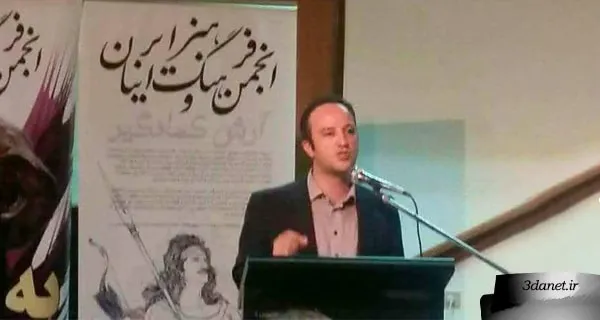
The basis of this book's content is a lecture delivered in December 2017 (Azar 1396) at the "Rebirth" conference, in a gathering of literature and thought enthusiasts in the city of Perth, Australia. Undoubtedly, many revisions, explanations, and commentaries were necessary to transform the lecture text into a well-organized and engaging book, which has been done to the extent possible. Therefore, what you read is a collection of discourses that have been made every effort to be eloquent, well-structured, and practical in every respect.
The kindness and support of many friends played a role in the creation of this work, including: Sheida Shad, Neda Mirab, Arezoo Naderi, Hoda Yazdani (cover designer), Saleh Forouhari, Arshia Gerami, and many others whom the constraints of this space do not allow me to name, yet I am sincerely grateful to all of them.
Receiving the views and questions of you good people will, as always, be inspiring and illuminating in continuing the path I have taken.
Yours affectionately: Sasan Habibvand
.
.
Session One: Who Am I?
1_ Introduction
Greetings and welcome to you, dear friends. I am grateful that you have given us this opportunity to share with you what we are eager to say. As friends mentioned at the beginning of the session, our intention in holding this seminar was to share an important message with you. A message we thought could be illuminating for others as well, and show them things they may have been eager to see and hear. We were filled with great enthusiasm and eagerness to share these words with you. So, friends got to work and arranged this conference. Of course, a large part of this beautiful event is owed to your presence, for accepting our invitation and coming.
What will be presented to you in these four sessions is not self-knowledge in its general sense or in the commonly understood concept. Rather, it is self-knowledge in the sense of self-actualization and finding the meaning of life, in other words, self-knowledge according to the definition I have offered. The story is that over more than twenty years of research, searching, and contemplation, I have increasingly come to the conclusion that the subject of self-knowledge possesses capacities far beyond what is generally imagined. Self-knowledge, in the true sense of the word, is the foundation of a peaceful and wise life, and it is a subject with a depth and dimensions far greater than we often suppose. Naturally, since this perspective took shape in my mind, my effort has been and continues to be to depict this different and transformative view... Of course, regarding what self-knowledge is, we are going to talk for four sessions, but before I begin today's material, I would like to review the content of these four sessions so that friends can have a general overview of the subject and the content of the discussions.
As previously announced, this conference is a two-day seminar comprising four sessions, two of which are held today and the other two tomorrow. The subject and content of the sessions are different, and in each session, we have considered a new and fascinating topic for you.
The title of the first session, which is our current session, is: "Self-Knowledge, a Rebirth." Today, we will introduce the knowledge of self-knowledge and become acquainted with the generalities of this new perspective, and we will review the necessity of knowing oneself in its practical and useful sense together. We will see what importance self-knowledge holds, and what the reason is for all this emphasis on knowing oneself, and in what great truths this towering tree is rooted. Then, we will review together the important and fundamental questions that self-knowledge illuminates the answers to. At the beginning of the discussion, we will go back into our own pasts to find the roots of our psychological, behavioral, and personality problems, especially issues such as anxiety, inner conflicts, weak self-confidence, or the communication problems we have with others. Here, we will address the important question of "Who am I?", and we will examine the connection between our own identity and our feelings and states, and with our intellectual and emotional growth. And we will see that there is a very deep bond between these two. In understanding our own identity, we will address the question of: How many kinds of "I" exist within us? And from how many angles can we look at the phenomenon we call the "I"? And which is the correct angle for seeing oneself, and which is the painful and imposed angle.
The title of the second session is: “Imaginary Sufferings.” In this session, we will address the question of how self-knowledge can free our psyche from the cage of inner sufferings and guide our existence toward liberation from conflict. In answering this question, we will first examine the types of suffering and see which of these sufferings self-knowledge primarily deals with. Then, we will analyze the nature of our problems and concerns in order to gain a useful and effective understanding of our own issues and see what the nature of our problems truly is, and of course, we will see that the conception most of us have of our own mental sufferings is an incorrect and misleading one. We have a discussion in self-knowledge called “Imaginary Sufferings,” and we emphasize that a large part of our sufferings are imaginary sufferings. We will talk about this. Another topic is the subject of “Attitude.” We want to see to what extent the way we look at the world has shaped our feelings and thoughts. How much the conception we have of ourselves, of those around us, and of other things can affect the feeling we have about our lives or the relationships we have with our spouse, our child, our friend, or our neighbor. We will see that our expectations and judgments can be very decisive in our contentment and satisfaction with life. In this discussion, the question we try to answer is what part of the world’s realities is truly the way we see them and what part of the world is not the way we imagine it to be. Here, we will become acquainted with a phenomenon I have named the “Attitude Triangle.” Then we will turn to an incident that has become famous among friends of self-knowledge as the “Bakery Line Incident.” Here, we will recount a story from life’s events for you and then analyze it. In this story, we will see an example of the reality that the attitude we have toward life’s events can be so decisive in creating tension and inner sufferings, and conversely, how much becoming aware of our way of thinking helps us to be freed from anger, suffering, and conflict.
Tomorrow, we will again have two sessions. In the first session tomorrow (that is, the third session of the conference), we will turn to the discussion of “The Meaning of Life” and we will talk about the meaning and purpose of life. Here, we will analyze the “concept of purpose” and see what that which we call purpose is, in its true and precise sense, and what purpose can be in a conscious life, and to what extent having a clear purpose in life can free a person from the suffering of anxiety and agitation and grant them peace and assurance. The major part of the first session tomorrow will be this. At the end of the discussion, we will present you with the “Seven Keys to Flourishing and Peace.”
Our fourth and final session is dedicated to the topic of “Mastery Over the Mind,” meaning the tactics and methods used particularly in psychology and mysticism to free the mind from a state of distraction and to overcome anxiety, stress, and negative thoughts. Tomorrow, we will examine some of the techniques that exist for this. Here, we will take a look at the hidden layers of the mind and have a discussion about a method called “Mindfulness,” which I think will be interesting for most of you. In this section, as a fitting conclusion to this gathering, we will practice together a practical technique called “Eating an Apple” in the manner of “Mindfulness.”
Let me make one final point: the beneficial and effective use of self-knowledge discussions, books, or lectures has a key, and that key is not to get stuck on the examples and be content with them, but rather, from one example, to find dozens or hundreds of instances. In discussions of self-knowledge and the philosophy of life, one, two, or three examples are presented for each topic, but presenting these examples is not our main goal; they are examples to clarify the matter. What is important is that you can find their instances, otherwise your mind will remain stuck on those one or two examples and you won't be able to make much use of the material presented. The reason for this is that self-knowledge topics are primarily philosophical discussions. For instance, the discussion of the "meaning of life," or the subject of culture and the relationship between the individual and society, or the topic of "types of goals" which we will talk about, all of these are philosophical discussions, albeit philosophy in its simple and practical language. And the nature of philosophy is that it uses a few instances and examples to express unlimited concepts.
2_ Self-Knowledge from the Perspective of the Greats
As I mentioned, the title of this session is: "Who Am I?". Well, when you ask yourself, "Who am I?", you have, in fact, posed a self-knowledge question. But what meaning or meanings this question can have is a matter open to discussion. Can the question "Who am I?" have a simple and superficial answer? Does knowing oneself mean that I should know that according to Chinese astrology, my star sign is Leo, Aquarius, or Pisces? Or what kind of spouse is suitable for me? Or even what my talents are or what my genetic characteristics are? Is self-knowledge about these things? Or can knowing oneself have a much broader and deeper meaning? If self-knowledge were limited only to what I just mentioned, then one must ask: why, throughout the history of human thought, have most sages and wise people emphasized the motto "Know thyself" in one form or another? Why have all the wise counseled humanity to "Know thyself"? Why have they all warned that not knowing oneself means you have embarked on a blind and deaf life? Let us first review the words of some of these sages.
Socrates: The father of Greek philosophy, who dedicated his life to teaching people rational thinking and enlightening their minds (and was ultimately martyred in this path—as you know, Socrates is considered the first martyr of philosophy) and is often regarded as one of the seven most influential historical figures, has drawn out two sentences from the totality of his teachings (or they have been drawn out), and these two sentences are considered the essence of Socrates' great message to humanity. One of these two counsels is: "The unexamined life is not worth living," which is a very famous saying from this epoch-making sage. Socrates' second counsel is: "Know thyself." That is, if Socrates wanted to summarize his entire message, the totality of his wisdom, in two sentences, those two sentences would be these, and incidentally, I want to say that even the first counsel, "The unexamined life is not worth living," precisely points to the necessity of self-knowledge, at least in the sense that is our subject of discussion. That is, it can be said that the sage Socrates has only one message for humanity, and that message is: "Know thyself."
Rumi: If we want to summarize Rumi's Masnavi-ye Ma'navi in two or three main and central messages, at least one of those two or three messages is "Know thyself." That is, in Rumi's works, and especially in the Masnavi, (like most works of wisdom and mysticism) the recommendation to know oneself is a flowing and pervasive message, a counsel seen everywhere, including in these few couplets I have selected for you:
He knows a hundred thousand branches of sciences,
That wrongdoer does not know his own soul.
He knows the property of every substance,
In describing his own essence, he is like a donkey.
You know the price of every ware,
Not knowing your own worth is sheer folly.
You have known auspicious and inauspicious days,
yet you do not see whether you are auspicious or unwashed.
The soul of all sciences is this, just this:
that you know who you are on the Day of Judgment.
Rumi considers self-knowledge to be "the soul of all sciences," and deems a person who has acquired a thousand kinds of knowledge but lacks understanding of their own being and does not recognize their own worth to be a foolish and ignorant human being.
Modern philosophers and psychologists have, of course, also spoken extensively about the necessity of self-knowledge, which there is no room to recount here. I will only mention Abraham Maslow, the great American psychologist, who says: "Self-knowledge is the first step for a human being in reaching flourishing and happiness." (Maslow is one of the founders of the "humanistic psychology" school, whose views are considered among the fundamental perspectives of modern philosophy and psychology regarding the human being. Among Maslow's most famous theories is his hierarchy of "human needs," known as "Maslow's pyramid.")
Before analyzing the concept of self-knowledge and the question "Who am I?", the point I want to make is that self-knowledge is a very vast and profound knowledge, and it is "a sea that has no shore." For this reason, we cannot possibly cover all dimensions of self-knowledge within the capacity of one, two, or even forty sessions. Again, in Rumi's words:
If you pour the sea into a jug,
how much will it hold? A single day's portion.
So what we share with you in these few sessions is a single day's portion that we have poured into the jug of our capacity. Now, what kind of diving you will do in this sea and what pearls you will bring forth from its depths depends on your own interest and resolve. What we have done is to arrange the content of the discussions in such a way that in the first session we give a general overview of self-knowledge, and in sessions two, three, and four, we present you with examples of the issues that self-knowledge enters into and the pure and fresh answers it brings forth for us.
3_ Self-knowledge is awakening.
If we want to define or describe self-knowledge, we must say that "self-knowledge is a journey toward a conscious, free, and flourishing life." It should be noted that ...


Discussion0 comments
No comments yet; let yours be the first voice.