Psychology
What Is Self-Knowledge?
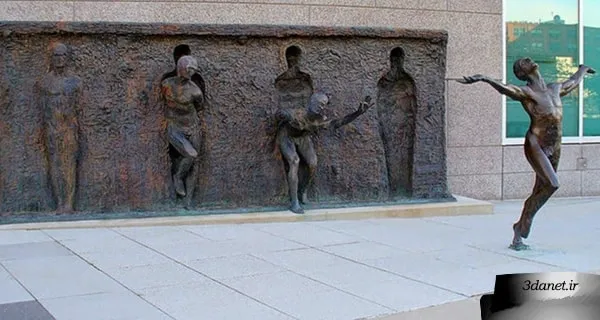
Self-knowledge is a quest for the best way to live and a liberated intellectual framework. This process begins with a critique of inherited and environmental ideas, so that one may break free from indoctrination and consciously shape one's own destiny and attain well-being.
1. Foreword
He knows a hundred thousand branches of learning, yet that wrongdoer does not know his own soul.
He knows the special property of every substance, yet in stating the essence of his own self, he is like an ass.
Saying, “I know what is permitted and what is not,” you do not know if you yourself are permitted or an old hag.
You know this is lawful and that unlawful, but look well: are you lawful or unlawful?
You know the value of every commodity, not knowing your own value is foolishness.
You have learned the fortunate and inauspicious times, yet you do not look to see if you are fortunate or unwashed.
The soul of all sciences is this, this: that you know who you are on the Day of Judgment.
You knew those principles of religion, but look into your own principle, O good man.
Better than your two principles is your own principle, that you may know your own principle, O great man. (Rumi)
Dear friend, greetings to you. I am glad that an opportunity has arisen for us to have a conversation about self-knowledge as the foundation and basis of a free and conscious life. I am grateful for the time you spend accompanying me in this writing.
What is self-knowledge, and why has it been considered tantamount to knowing God? Why, in the view of sages like Rumi, is knowing oneself “the soul of all sciences”? Does self-knowledge mean knowing one's individual and genetic characteristics or innate capabilities? Or is it knowledge of one's own body and brain and its wonders? Perhaps self-knowledge encompasses all of these—in my opinion, it does—but these fall within the domain of medicine, anatomy, and genetics, and what is the soul of all these sciences must be something beyond this, something that guarantees human happiness and enlightenment and bestows upon them individual and social insight and wisdom, an insight without which, Rumi believes, a person, no matter how learned and educated, is blind and foolish.
2. What Is Self-Knowledge?
It is natural that everyone may offer their own definition of self-knowledge, and the thoughtful reader may agree or disagree with what I will say in this essay, but in any case, what you will read in this conversation is my definition of the profound subject of self-knowledge, which I have tried to share with you within the scope of a single discourse. At the same time, I am eager to receive your perspectives.
At the outset of the discussion, let me explain that what I consider “rational self-knowledge” is an endeavor based on the scientific principles of psychology and sociology, as well as rational and philosophical logic. (This approach or theory and its principles and results have been previously elaborated in two books titled “The Tightrope Walker” and “From Suffering to Liberation,” which have also been introduced on this very site, and I invite dear readers to refer to these two works for a detailed explanation.) In this method, we avoid sloganeering and idealism, and our effort is to find simple and tangible answers to the challenges before us as ordinary human beings.
With this explanation, it must be said that self-knowledge means the human effort to find the best way to live and the best path in life; an effort in which a person critiques environmental and inherited thoughts to achieve a clear, free, and coherent intellectual system. Undoubtedly, all human beings seek happiness and perfection, but self-knowledge pursues this quest in a measured and conscious manner.
We have all asked ourselves questions such as: Who am I? Why have I come into this world? And in the not-so-long span of life, what is beneficial for me and what causes my suffering and misery?
It is clear that Rumi was afflicted by this same great concern, as he sings in wonder:
My thought by day and my talk all night is this: why am I heedless of the state of my own heart?
Where have I come from, what was my coming for? Where am I going to, will you not show me my homeland at last?
Until you truly show me my home and the way, I shall not rest a moment, nor draw a single breath...❊
And self-knowledge is the process of seeking a clear and conscious path for life.
It is natural that as long as a person has not clarified the answers to life's grand questions for themselves, they will not be able to take the next step, which is building their own destiny and life. Human happiness depends on clarity of thought and a correct understanding of the world, society, and oneself, and the foundation of a healthy and flourishing life rests upon such knowledge. Therefore, a wise person, above all else, determines the path for themselves and clarifies their position on life's important questions. A self-aware person is a conscious individual who has freed themselves from the shackles of outdated and imposed indoctrinations of their environment and has chosen a conscious path for their life. The result of such awareness is inner freedom and lasting felicity. Undoubtedly, on a social level as well, such a person, with insight and a correct understanding of their own behaviors, makes wise and far-sighted choices, and their existence is a source of peace and goodness for society.
.
.
❊ Some Rumi scholars have doubted the attribution of these verses to Rumi, including Dr. Soroush, whose argument is that concepts like a sense of lostness and "neglect of one's own state" are incompatible with Rumi's general character and outlook. In any case, whoever this poem is from, it echoes one of the greatest human concerns.
But treading any path is not without hardship and risk. And it is natural that on the path called knowing oneself and building one's own destiny, there are also specific challenges and difficulties.
Perhaps Hafez also found himself in the twists and turns of such an adventurous path when he cries out:
The night is dark, the fear of waves, and a whirlpool so dreadful; How can those light of burden on the shores know our state?
In self-knowledge, we, who do not wish to blindly follow the suggestions of this or that person, go to re-examine the teachings of our environment and culture with open eyes and a questioning mind. In this unprecedented adventure, we see and choose everything anew with open eyes. In the process of knowing ourselves, we awaken to what has happened to us involuntarily and unconsciously, and we look at life afresh. In this journey of discovery and illumination, day by day we are freed from the suffering of mental and sensory bondage and live in a secure world whose pillars we have built ourselves.
۳. Beliefs, the Foundation of Our Lives
The importance of self-knowledge, in the sense of building a considered and free outlook, becomes clear when we consider how deeply our behaviors and emotions are tied to our beliefs. All of us, from morning to night, deal with various people, phenomena, and events. In these encounters, we have a specific behavior and feeling towards everyone and everything. We call some people "good people" and like them. Conversely, we consider some others "bad people" and do not have a good feeling about their personality or behavior. The same applies to various life events. We evaluate some events or behaviors as pleasant and become happy about them, and we consider some other events as bad and upsetting and become angry, offended, or sad about them.
If we pay a little attention, one point is clear: behind all these good and bad feelings of ours, a specific judgment or assessment is hidden. For example, the fact that we become upset about our friend lying is because, according to our judgment, lying is a kind of betrayal or untruth—things that are morally condemned behaviors. Or the fact that we are happy about passing the university entrance exam is because passing the exam, apart from its practical benefits, is a sign of our merit and ability, which are admirable and praiseworthy qualities. Likewise, the fact that I decide to choose my other colleague, Hamid, as a friend instead of my colleague Shahram, is because I have a judgment according to which Hamid is a good and respectable person, whereas Shahram is not.
In all these cases, our feeling toward the world and its people is based on a particular attitude and belief, and goes back to our judgment of that thing. The more important point is that we judge not only others but also ourselves based on these values, and we feel pride, satisfaction, and peace toward ourselves, or conversely, shame, sorrow, or blame.
Moreover, it is clear that our emotions play a great role in our mental and psychological health. Sometimes being trapped in the grip of tormenting feelings (such as a guilty conscience or deep grief) can paralyze a person's life or cause them to suffer from physical, nervous, and heart diseases. Of course, the opposite is also true: happiness and vitality are a source of movement, success, and health. Even people with a cheerful spirit generally enjoy greater longevity and better bodily and physical function. On the whole, it can be concluded that a person's way of thinking is the most important volitional factor determining their destiny (of course, accidental or involuntary factors also play a part in everyone's life, but that subject is beyond our discussion because self-knowledge encompasses matters that are within the scope of our free will, and by cultivating them we can improve the health of our individual and social lives.)
4. Why Do I Think This Way?
The pertinent question we must ask ourselves is this: how did these beliefs that shape all my decisions and behaviors find their way into my mind? What has caused me to think and behave this way and not another way? It is certain that you did not bring this way of thinking and these criteria into the world with you at birth, and these views and, consequently, these feelings were introduced into your mind by the environment—that is, the family, society, and culture in which you grew up. The meaning of this statement is also clear. The behaviors and decisions you make according to such an attitude are, to a considerable extent, the result of the indoctrination and training of your environment. It is here that a person falls into doubt: could it be that all my thoughts and feelings are the product of my environment's suggestions? Perhaps the notion that I act of my own accord is nothing more than a mirage? Truly, if I had been born somewhere else, would I insist on the same things I insist on today, or would I hold other beliefs? Could the world not be seen differently, or could one have different goods and bads in life? Have I charted my own life's course, or have I been led down this path by environmental indoctrination? If I look closely, are my thoughts and behaviors a source of joy and comfort for me, or a cause of suffering and erosion?
Of course, someone might say that I have not taken all my criteria and ways of thinking from the environment in which I was raised, but that my own reasoning and logic also play a role in this process. This is certainly not an unreasonable statement, and we do not intend to exaggerate, but the truth is that the matter is not so simple. With a little reflection, we will see that sometimes even what we consider our independent judgments and clear reasoning is influenced by the indoctrinations of the environment. In any case, it is wiser, before making a decisive judgment about the freedom of our own thought and action, to scrutinize this important matter and see properly to what extent we are influenced by society.
5. We and Our Developmental Environment
All of us, whether Iranian, African, or Japanese, whether Eastern or Western, are born and grow up in a particular family and environment, an environment in which a specific set of culture, customs, traditions, beliefs, and values prevails. These beliefs govern and shape the thinking and behavior of the people around us. In this way, each of us, from birth, is immersed in the culture and values of our environment, and we absorb this set, consciously and unconsciously, into our feelings and thoughts. Father, mother, school, media, and so on, all directly or indirectly, every day and every minute, instill a particular culture, beliefs, and dos and don'ts into our thinking. This indoctrination begins from a very young age, from when we are children and toddlers, and it is obvious that we cannot question their correctness. In this way, we too gradually become a part of our environment and take on the color of our society's culture and traditions.
The important point is that in this process we rarely have the opportunity to decide clearly for ourselves about the musts and must-nots, and the good and bad of life. Very often, while we imagine we have made a completely independent decision, if we look carefully we realize that our decision was unconsciously influenced by the suggestions and teachings of the environment, for example our parents or teachers, and the thought that we made a free decision is nothing more than an illusion.
Of course, the issue of culture, upbringing, and environmental suggestions is not limited to any geographical point or specific nationality and country, and wherever a human being grows up, they are inevitably influenced by the set of teachings of that particular environment. This is why self-knowledge is a process that every human being who desires to attain true freedom and happiness must undertake.
It is not out of place to mention a point here, which is that in the social sciences, human cultures are generally divided into two broad groups: "collectivist" and "individualist." The characteristic of collectivist cultures (such as the societies of Iran, China, India, and Japan) is that the individual's conformity to collective norms is more important than personal discernment. In these societies, the main criterion for judging the goodness or badness of a person's behavior is its alignment with tradition and public culture. Nonconformity and breaking with tradition are less tolerated, and individual will is accepted only to the extent that it is in harmony with the intellectual and behavioral system of the whole society. Conversely, in individualist societies (mainly Western countries), each person is responsible for choosing their own life path, and personal freedoms take priority over conformity to the collective. Innovation and nonconformity are permissible as long as they do not interfere with the freedoms of others, and almost every type of mindset has the possibility of emergence and activity in society.
Therefore, on the whole, it can be said that since in traditional cultures more pressure is exerted on the individual to conform and adapt, these types of societies constrict the scope of human freedom and impose conformity and obedience upon their behavior. It is clear, of course, that such pressure can cause various emotional and psychological problems, of which fear, anger, and anxiety are among the most prominent. Especially today, in the age of communication, where talk of individual freedoms, democracy, and the like is heard everywhere, with such pressures, intellectual and emotional conflicts in individuals often become stronger in traditional societies, and the feeling of oppression and injustice intensifies in society. Because the individual, in their thought, assumes rights for themselves that they see themselves deprived of in practice (an instance of: "The grapes are sour"). Of course, with a little reflection, it is clear that Iranian society, as we said, is predominantly governed by a collectivist culture, and I believe at least part of the visible anger and aggression in Iranian society is a result of this very conflict.
6. Pathology of Our Beliefs
In the meantime, there is a point worth pondering, which is that many of the teachings transmitted to our minds from the environment suffer from various defects and shortcomings within themselves, so it is natural that living with such beliefs imposes various pressures on our psyche. Elaborating on the dimensions of these shortcomings and their consequences requires a separate discussion, but here, in a concise manner and with a few familiar examples, we will identify some of these contradictions.
The first flaw in environmental teachings is the ambiguity of values and expectations. For instance, everyone encourages a child to be "shrewd" and "intelligent" and warns them against "ineptitude," but neither the precise meaning of shrewdness is clear, nor its boundary with violating the rights of others. For this reason, many people grow up with the notion that advancing one's own affairs by any means is a sign of shrewdness and competence, and of course, backing down in any situation is a sign of weakness and incapability, which is a social stigma. While we know that both sides of this assumption are questionable and have many ifs and buts.
Another problem with many of society's teachings is their lack of realism. For example, especially in traditional cultures, where the boundary of expectations from people is unclear, there is often an unspoken expectation that the individual should be a flawless and ideal being. The result is that people suffer from anxiety and mental obsession, blaming themselves for every mistake. On the other hand, people also have unrealistic and boundless expectations of one another. They are poor at understanding each other's circumstances and cannot tolerate the slightest fault in another. Such an attitude causes the threshold of forgiveness and tolerance in society to be low, which in turn leads to the emergence of anger, tension, and irritability in society.
Another shortcoming is the contradiction in society's expectations of the individual. As we said, society directly and indirectly encourages the individual to be shrewd and successful. Shrewd people are admired, and winning in life's competitions is a source of pride. On the other hand, retreating, even to respect the rights of others, is often a source of shame and a sign of weakness. Nevertheless, in the course of competition, the successful individual (if they do not violate ethics due to an urgent need to win) is at least subject to the envy and hatred of many of the very same people who admired success and shrewdness and pushed them onto this path!
On the other hand, the common interpretations of many concepts and values are subject to debate and doubt. It is by no means clear that success means victory in competition with others, conquering career and social peaks, or wearing down one's soul and body in an endless marathon. Perhaps the greatest success is the ability to have a simple yet happy and wise life, in which one's behavior is a source of flourishing for oneself and a source of blessing and peace for others...
Another contradiction is the incompatibility between the values promoted by society and individual rights. For example, in traditional cultures, obedience to authorities such as teachers, elders, and those in positions of power is a value, and often, instead of protesting or questioning, one must show modesty and respect. However, many of us remember situations where, for the sake of observing the value of "respect" or "modesty," our rights were violated and we were subjected to injustice. Another familiar example is the value of "saving face," which is a particularly important teaching in traditional cultures. We all see numerous cases where people, to preserve the value of "saving face," impose great oppression and pressure on themselves or their families, and in this process, people's growth and well-being are sacrificed for an undefined and illusory social value. Of course, it is clear that the point is not that a person should be "dishonorable," but rather that adherence to any value must be subject to a conscious understanding of the rightness or wrongness of that value and its precise meaning; otherwise, instead of values serving to preserve human beings, human beings will become victims of preserving values. These are small examples of the internal tensions in the teachings of the environment, and one can imagine what internal and external conflicts the slavish following of so many vague expectations and contradictory judgments imposes on the individual's psyche and life.
Of course, with all that has been said, one should not imagine that the blame for the individual's confusion and psychological and relational conflicts rests entirely on society. The existence of flaws in society's teachings does not negate the individual's responsibility to find a conscious path in life. Belief and conviction are not something one borrows from another. Even in the freest and most ethical society, a person cannot look at the world through the borrowed beliefs of others and live by values that are not clear to them. The human being is a thoughtful and responsible creature and must clarify their position on the important ontological and ethical questions of life in order to have an existence as clear and unknotted as possible and to walk through life consciously and at ease. On the other hand, the passive acceptance of society's commands plants a sense of self-loss before the collective and fear of this and that in the individual's conscience, preparing them for a dependent, anxious, and slavish existence. Self-loss is one of the most key terms in self-knowledge, which we will briefly address.
7. Self-Loss
The result of society's intellectual bombardment of the individual's mind and psyche is major problems that can be gathered under the umbrella of the term "self-loss." As a result of surrendering to the wave of indoctrinations, a person loses trust in their own thought and judgment and considers themselves a captive, following the will of the environment. The onslaught of authorities such as culture, tradition, custom, and consensus causes the individual to be emptied of their own thoughts and filled with society's inculcations. In this process, a person loses their freedom of thought, and their power of critique and judgment fades.
Self-loss has vast dimensions and countless instances, but its definition, in brief, is losing belief in oneself and one's own ability and worth. The term self-loss has two meanings: one is that the person did not choose their beliefs (including belief in their own ability and worth) themselves, but rather borrowed them from the environment and from others. The other is that the individual has lost themselves before authorities and does not trust their own discernment and thinking. The result is that the person needs external factors to feel good and worthy, and therefore, in their view, factors such as collective approval, the behavior of others, and environmental conditions are far more decisive than their own thought and behavior. Consequently, the self-lost individual is, on the one hand, under pressure from the suffering of dependency, hypersensitivity, and constant suspension, and on the other hand, sees their identity and worth as contingent upon collective approval. It is not hard to imagine how much time and energy the dependent individual is forced to spend, and what pressure they endure, to gain society's approval. Yet, it is clear that there is no guarantee of success on this path, because, firstly, wealth, status, and the like are all elusive, uncertain, and anxiety-ridden possessions. Secondly, it often happens that the very others who should approve the individual for acquiring such values may themselves become their enemy, envier, and rival, and thus the project that should be called "securing external self-esteem" may face failure.
Doubt in one's own worth and standing plunges a person into suspension and uprootedness. The self-lost individual is forced to constantly adapt their situation to the value judgments of the environment to ensure that external factors approve of them. This very process creates specific sensitivities in them. The self-lost individual tends to interpret any word or deed as inattention or unkindness and suffers from the pain of worthlessness and inferiority. They are oblivious to the fact that their suffering, more than arising from the behavior of others, stems from their own painful sensitivities and mentalities. When we consider the hidden conflicts in society's values and judgments, it will become clear what contradictions and difficulties the individual grapples with in securing a stable position.
8. The Root of Sufferings
One of the complications of self-loss is clinging to external factors in search of inner satisfaction and peace. The self-lost individual clings to acquiring wealth, fame, status, and the like to fill their voids. In any relationship, whether friendship, marriage, etc., they seek, above all else, to gain approval and emotional refuge from others. However, acquiring more possessions rarely leads to a feeling of security and satisfaction for them. It is as if the further they run, the mirage of peace remains a league farther away. The reason for this is that, contrary to the perception born of their self-ignorance, their problem is not lacking, but rather not seeing what they already possess. In other words, their problem is not a quantitative issue that can be resolved by acquiring and accumulating more, but a qualitative dilemma that can only be remedied by correcting their own erroneous attitude.
Know the path of pleasure to be from within, not from without; / Know it folly to seek palaces and fortresses.
One person is drunk and joyful in the corner of a prison, / Another in a garden is sour and joyless. (Rumi)
In self-knowledge, we realize that many of our sufferings are rooted within ourselves. Having illusory or unrealistic expectations of others, resentment and anger at the world without considering our own painful sensitivities, and doubt in our own worth are among the inner knots that torment us, and if we do not uproot such pains from our mind, reforming the entire world will not be able to erase failure and sorrow from our being.
9. The Necessity of Self-Knowledge
All this, and much more, demonstrates the necessity of self-knowledge as the recognition of our authentic needs, the critique of our environment's teachings, and the search for a conscious meaning in life. If a person does not consciously critique and re-examine their values, they will inevitably live in a world of emotional suspension and intellectual and behavioral ignorance. When the philosophy of a person's life is based on contradictory and imposed beliefs, and when they do not properly know what causes their happiness or unhappiness, suffering from complications such as confusion, doubt, anger, anxiety, and self-erosion is unavoidable. And this is a predicament we see many individuals and societies grappling with.
But as we have said, self-knowledge means taking another look at the teachings with which we were raised. It means that we, who have always thought with certain beliefs, want, for the first time, to evaluate these beliefs themselves. In self-knowledge, for once, instead of thinking "with" our views and beliefs, we think "about" our views and beliefs. Instead of thinking "with" our culture, we think "about" our culture, and instead of criticizing everything with our values, we criticize our values themselves. Our goal in this re-examination is to see to what extent these mentalities we have been brought up with, and these beliefs that have shaped our world, are correct and useful. We want to make sure that the flaw we see in many things does not stem from our own perspective, that the suffering we endure does not arise from within ourselves, and that the sorrow or resentment we bear is not due to a defect in our own judgments. For it is clear that if, as Rumi says, "the world's appearing blue is from the blueness of the glass before our eyes," the matter is quite different. Then, instead of getting angry at this or that or trying to fix the world, we must reconstruct our inner world. Instead of painting the whole universe, we must remove the "blue glass" from before our eyes.
You had a blue glass before your eye, therefore the whole world seemed blue to you
Of course, the point of this statement is not indifference to the surrounding world, but on the contrary, an attempt to see the world correctly. Until we see our world correctly, we cannot build it correctly.
10. Self-Knowledge and Various Sciences
It might be asked what science or knowledge we utilize in self-knowledge. The answer is clear: anything that has built our world. Many of our issues, such as the purpose of life, moral behavior, and the meaning of happiness, are philosophical questions, and naturally, to answer them, one must draw upon philosophy and not only become familiar with the opinions of philosophers but also learn to philosophize and practice philosophical thinking.
Some of our issues, like sorrow, anxiety, depression, and unwanted habits, are psychological matters, and for their proper understanding, we need awareness of the mechanisms of our own psyche, and this gives the science of psychology a special place in self-knowledge and self-improvement. The fascinating subject of "epistemology" (in philosophy and psychology), which acquaints us with the limits of cognition and its errors, plays a great role in intellectual tolerance, liberation from dogmatism, and optimal knowledge of oneself and the world. "Critical thinking" is another skill that significantly aids us in evaluating what we hear and in the clarity of our thought and judgment, and keeps us from falling into the pit of error and deception. Also, familiarity with mysticism, which inspires deep thinking and a holistic view of the human being and the world, plays a very important role in self-knowledge. The mystical perspective elevates a person's view beyond the narrow confines of conventional relations, shatters the low ceiling of their conceptions of themselves and humanity, and sets their thoughts roaming in boundless horizons...
Moreover, studies in fields such as history and sociology, and familiarity with the cultures of other nations, help the individual better understand the temporal and spatial coordinates in which they stand. All of these "internal" journeys, of course, will yield a far greater fruit if combined with an "external" journey. Traveling beyond the borders of one's city, nationality, and culture remedies the limited and self-centered view of a person and grants them a "transcendent" perspective on their own culture and beliefs. These are among the most important realms that illuminate the path of the seeking human on the wondrous journey of self-knowledge. Nevertheless, self-knowledge is not limited to any of these arenas. The human being is not an entity detached from the world, but a part of the universe, and therefore, knowing the world is not separate from knowing oneself, and on this path, anything that helps a person open a way and brighten their view is desirable and useful.
11. Important Characteristics of Self-Knowledge
At the end of the discussion, enumerating several important characteristics of self-knowledge seems necessary. First, as I believe has become clear by now, self-knowledge is not a category limited to a specific society, nationality, or creed. The pervasive influence of society on the individual's outlook and feeling on one hand, and the necessity of illuminating a clear path for one's own life on the other, are important challenges that any intelligent human being, wherever they are in the world, soon finds themselves facing and realizes that for building a conscious life, there is no escape from clarifying one's position on such immense matters.
Second, self-knowledge is not knowledge in the sense of a collection of scientific or philosophical findings and discoveries. Self-knowledge is an activity or a process, a systematic process that is carried out in a clear manner and with a specific goal. The goal of self-knowledge, as we have said, is the refinement of one's outlook and the laying of a foundation for an independent and transparent worldview, and the self-knowing human, on the path to achieving this goal, utilizes whatever aids them.
You have lost a camel, O trusted one, Everyone gives you a sign of the camel (Rumi)
Third, self-knowledge is neither a belief or worldview, nor does it propagate any specific conviction; on the contrary, it adopts an observing and critical approach towards phenomena named belief and outlook, and evaluates them to help us attain measured truths, free from prejudice or deception. In this sense, it must be said that self-knowledge is not a specific belief or outlook (cognition) ❊, but rather a meta-belief or meta-outlook (metacognitive) ❊❊ thinking.
Another point is that self-knowledge is etymology. In self-knowledge, we learn that often, behind people's behavior, an intention or desire is hidden which acts as the kernel, and the individuals' behavior is merely a shell that conceals that kernel. The precise point is that sometimes, that intention or desire is different from, and even contrary to, what is ostensibly expressed or done. With such an understanding, in self-knowledge, instead of being misled by appearances and becoming preoccupied with the surface of people's words and actions, we go to the root and origin and delve into it.
Examples of this are abundant. We have all seen two people or two groups fight and quarrel over beliefs or over supporting a certain person or school of thought, and sometimes proceed in this to the point of enmity and mutual destruction. We usually interpret such tensions as "nationalist wars" or "ideological strife" or "fights over sports teams." But in self-knowledge, with awareness of the fundamental role of people's spiritual and emotional needs, we realize that in such conflicts, nationality, religion, sect, or football team is nothing more than a shell, and what drives the people on both sides of the quarrel to emotional and behavioral eruption is the defense of their own identity and dignity. In self-knowledge, in the discussion of "identification," the point is that people, in order to soothe their sense of weakness and inferiority, tie their identity to great things like nationality, language, religion, and the national team to gain prestige in the shadow of such phenomena. In truth, in such disagreements, both sides have staked their dignity on the greatness and magnificence of that phenomenon, and what they are now fighting over and foaming at the mouth about is their identity and personality, not that religion, race, or sports team.
In general, when understanding people's behavior, one must not neglect spiritual needs and emotional mechanisms; otherwise, one will err and attribute such conflicts to nationality, religion, and the like. The result of such superficiality is that every effort to untie the knots of human wars and enmities will fail, as they often have.
Cognition ❊
Metacognitive ❊
A final point is that self-knowledge, for all its breadth and appeal, is not the end of the road. Knowing oneself lays the groundwork for making fruitful use of the opportunity of life and cultivating one's abilities. In other words, self-knowledge is an essential foundation for self-actualization. Without self-knowledge, a person's efforts are mostly a form of aimless flailing in the dark, yielding nothing but confusion and self-erosion. But by knowing oneself and one's needs and capabilities, one can walk a clear path and have a dynamic and fruitful life. The conscious human is the architect of their own destiny, and this architecture, like any other construction, requires knowledge and planning. In this grand scheme, self-knowledge is the stage of knowledge and planning, and self-actualization is the stage of execution and utilization.
.
.
❊❊❊ In one of his lectures, Dr. Soroush makes a very important and thought-provoking point. He says that the savage war and killing that groups like ISIS have unleashed upon the world, contrary to its appearance, is not a war of religion and belief, but a war of prestige and identity. Through these actions, they want to draw the world's attention to themselves and cover up their inferiority complex and weakness. With these acts, they are, in effect, shouting at the world: 'Hey! Pay attention to us too! We exist, we have a role, and we are important. If you ignore us, we will force you to see us' (paraphrased).
.
.
What Is Self-Knowledge?
Author: Sasan Habibvand
Ways to contact the author:
telegram.me/sasanhabibvand
email: sasan.habibvand@yahoo.com
.
.





Discussion6 comments
هنگامی که انسان با خودش صداقت نداشته باشد وبه خودش دروغ بگوید، به خودشناسی نخواهد رسید. تا آئینه وجودی انسان غباررویی نشود،،خودشناسی واقعی و حقیقی غیرممکن است...
درود بر شما سخنان خوب و شایسته تاملی فرمودید. شوربختانه همیشه در گوش ما خوانده اند که خود رابشناس اما در کردار، همان افراد از شناسایی خود،ناتوان بوده اند و حرفی برای گفتن نداشته اند. سپاس از شما چرا که بهره بردیم از جستار ارزنده تان
با سلام خوب بود متشكرم ميشه لطفا چند كتاب براي نيل به هدف خودشناسي بهم معرفي كنيد سپاس
سلام از نظر من به اناگرام (شخصیتشناسی 9 گانه) در تلگرام @enneagraminstitute_ir یا t.me/enneagraminstitute_ir سری بزنید.
کتابي با عنوان از خود شناسي تا خودآگاهي روشي کاربردي براي بهتر زيستن. نويسنده سيد علي بهشتي شامل فصلهاي مشخص و تکاليف خانگي
با درود خود شناسی در قلمرو عام و همگانی، اگر نگوییم امری ناممکن! بی نهایت دشوار است. تاکیدات نویسنده محترم به درستی آموزنده و تاثیر گذار است که به طور خاص و در جهان فردیت برای معدود انسانهایی که بهر دلیلی مراحلی از رشد را پشت سر گذاشته اند وبه مرحله ی پیش گاهی از خویش رسیده اند کار آمد و راهگشاست. به نظر می رسد دست یابی به خود آگاهی در فرایندی نفس گیر، با پیش نیاز نفی خودِ کلیشه شده ی شرایط، آغاز و با کنار آمدن با تعارضاتِ روندِ آرام گیریِ جوشش عصیانگرانه ی به خود آمدن، زمینه گام برداشتن در مسیرخود آگاهی ادامه می یابد. راهنمایی های ارزنده ی دانشمندِ محترم: ساسان حبیب وند، همچنان که از فحوای سخنان رسولانه ی ایشان به روشنی پیداست؛ راه نجات انسان از اسارت، دست یابی به خود آگاهی است. این کوشش های نوع دوستانه ستودنی و شاسیته ارج نهادن است. امید می رود در راستای این سخت کوشی ها به راههایی برای دست یابی به آگاهی جمعی نیز توجه شود که راه کوتاه تری برای رهایی انسان است. با آرزوی توفیق. بسیار آموختم.