Philosophy
A Reflection on the Bond Between “Being” and “Non-Being” and the “Art of Solitude”
The experience of 'nothingness' and 'loneliness' brings man into 'being' and makes him a lover; for only one who has endured suffering to the end is worthy of redemption. Paradox is the foundation of existence; loneliness is not isolation, but the precondition for authenticity; it is an endless path, and the path itself is the goal.
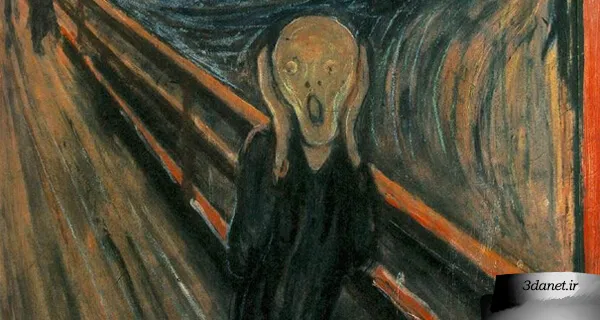
The experience of “non-being” makes a human “be.” The experience of being, without the experience of non-being, is impossible. Only one who has borne suffering to its end and lived eternal sorrow in its extremity is worthy of joy and deserving of salvation. Only one who has wept from the heart’s core has the capacity to laugh with the heart’s full expanse. Only one whom despair and helplessness have brought low, and whose hands no hand in existence has clasped, is able to rise by their own aid and set to a work that brings sorrow to an end. Only one who has bid farewell to every wish is escorted by the angel of desire, who takes them in embrace. Only one who has turned away from every fortune finds the falcon of fortune at their bedside, alighting on their shoulder and carrying them off in flight. Only one who is utterly alone can hear their own voice and see their own waiting eyes. Only one who has reached the end can begin without beginning. Only one who has tasted madness possesses wisdom. And only one who has put death to death has the strength for life.
A longing that is denied is not extinguished; it blazes fiercer. A torch that has found its illumination from and within itself is ever radiant and burning, and every opposing current only increases its overflow and makes its spread more scorching. A heart that grows restless, its pulse does not stop, its beat quickens, and it strikes and plucks its blows and plectrums more pounding and more cutting, so as to feel being alive within you. A breast that becomes brimful of pain sees itself as its own salve; a heart that aches from solitude and has no companion finds itself as its own companion and emerges from mourning. A breath that seeks its exhalation upon the cross becomes Messiah-breathed and moment by moment bestows spirit and becomes the cure for incurable pains.
A sun that burns within itself creates warmth and light for others. A candle that diminishes from its own existence and recedes into absence scatters light to others and summons them to presence. A cry that comes from the depths of silence is not heard, but becomes an ear that hears other moans and wails. The poison that is poured by criminals and ignorant people into the palate of the noble and the wise is the same sweet nectar that kneads the soul with the beloved and makes a gushing, roaring spring flow from it.
A fire that flickers and blazes with doubt and faith turns the desert into a rose-garden. Earth upon which the wine of the beloved is sprinkled makes the dead dance. Water that is filled and blessed by the ablution of the soul turns the inanimate into the animal. Air that is infused and freshened with love makes the imagination saunter. Blood that is mingled with wisdom makes the mind glad and smiling.
The fire of the lover’s soul, if it is extinguished, from its ashes a phoenix is born whose tongue, with two hundred tongues of flame, burns the world in six directions and creates the universe and humanity anew. It is the “eternal fire” that every moment brings the world of non-being into being; just as the experience of “solitude” makes a human a “lover.”
.
.
Footnote (1): For a better and deeper connection with this note, it may be useful to consider its intellectual and literary background, for instance the “paradoxical sayings” we have in Lao Tzu’s “Tao Te Ching” or the “enigmatic” aphorisms that have come down to us in the fragments of Heraclitus, which Nietzsche also took as his model in many of his works.
In this view, contrary to Aristotelian logic, “contradiction” is not an impossibility or something impossible in existence, but rather the foundation and basis of existence. If the truth of existence is not “unity” or “identity,” but contradiction, then the language appropriate to this truth is also “paradoxical speech”; a kind of “disordered order” that seeks to break the habitual confines of mind and language and transcend them.
Footnote (2): “The experience of solitude makes a human a lover.”
Interpretation: The experience of solitude is the precondition for the experience of love. Without solitude, love is not realized, for solitude and love are not fundamentally two things. The relation between solitude and love is of the same kind as the relation between presence and absence. In other words, the experience of solitude is not the experience of the absence of love or of hatred, but rather the experience of love's absence, the experience of love in the form of concealment and non-presence. Just as in religious experience, when one speaks of the mystical experience of occultation, what is meant is not the experience of atheism and godlessness, but the experience of God in the form of hiddenness and non-presence. Just as some consider the absent and concealed experience of a phenomenon to be richer and more powerful than its manifest and direct experience. For this reason, some have found union to be the grave of love and have become seekers of perpetual separation. "The pleasure that exists in separation does not exist in union. For in separation there is the longing for union, and in union there is the fear of separation." Of course, there is a vast difference between this fearful separation after union, which lacks and is devoid of longing, and that longing-filled separation before union, which possesses and carries longing. Thus, the longing for union is more important than union itself; even if the object and witness of union is "Truth," then too "the search for Truth" is superior to Truth itself. Let the witness of Truth remain forever veiled. Indeed, the goal is the path itself; a path that is endless. "The way that can be walked is not the true Way. The name that can be named is not the true Name." (Lao Tzu - Tao Te Ching)
* As is evident, in this text, what is meant by solitude is not its negative meaning, i.e., alienation, abandonment, and forsakenness; rather, the intended meaning is its positive sense, i.e., oneness, individuation, and the pursuit of authenticity. In this sense, love does not negate solitude but preserves it; it is the elevating enhancer of it. In the words of Rilke, the great German poet, "Love is the bowing down of two solitudes. So that two companions may be guardians of each other's solitude." Therefore, solitude, like love, is a capacity; just as isolation and hatred are an incapacity.
** It should be noted that this is one possible interpretation of this phrase, and other interpretive possibilities and horizons can be sought. Fundamentally, this text, rather than seeking to express an idea and provide arguments in its favor, aims to compel the audience to reflect and reason, so that through this process, the reader who engages with it may arrive at an idea of their own, not necessarily the author's idea.
.
.

Discussion3 comments
از همین روست که عشق همواره شهامت طلب میکند و بقایی در کار عشق نیست، زیستن در امنیت عاطفی را نمیتوان زندگی عاشقانه نامید
ریلکه شاعر اهل چک بوده است.
به هر حال آلمانیزبان بوده و جزء میراث زبان آلمانی. حالا متولد بلخ باشد یا قونیه یا تهران