Philosophy
A Reflection on the “True Teacher” and Its Connection to “Instruction” and “Education”
A true teacher does not see himself as the gatekeeper of truth; instead of adding to the student's burden, he lightens it so the student may reach his authentic self. By sowing doubt and questions, he prepares the ground for spiritual birth and liberation from dogmatism, and his difference from the student is merely one of degree.
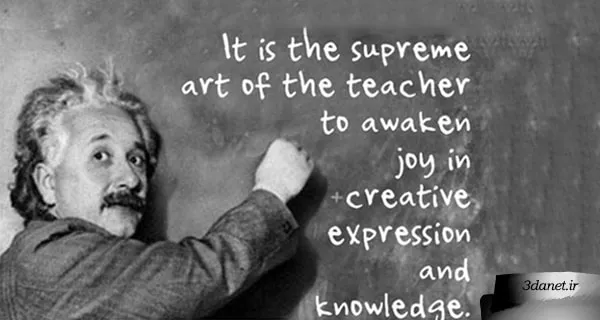
Who is the true teacher? Perhaps the first and most important characteristic of a true teacher is that they do not have a self-righteous spirit and do not consider themselves the keyholder of the treasury of truth. The true teacher is not only not self-centered and self-delighted, but also possesses the capacity for self-criticism and for questioning their own views and methods. The true teacher can also give others the courage to critique and question themselves and what has been fed to them in the name of education. Education is nothing but a rebellion against the claimants of education and false educations.
The true teacher is not under the illusion that they must teach an absolute truth or right they possess to others, and, so to speak, guide and educate them. The true teacher only helps them to extract their buried self from the rubble of those destructive things that, often in the name of education and culture, have made them "nothing" and "alienated from themselves," so that they may become "something" again and live in peace and reconciliation with themselves. In fact, the true teacher does not want to add anything to others and weigh them down, but, on the contrary, subtracts something from them and makes them "light-burdened." Education is nothing but the pruning of superfluous branches and leaves.
A teacher can only be life-giving and life-creating for their students, far from nihilating (nihilistic) traits, when, instead of casting their own being and thoughts as a heavy shadow over their students, they retreat into the shadow themselves so that a ground for the students' emergence may be provided. The true teacher only calls upon us to let go of that "self" which has become a veil for the self; to exit the self we are not and enter the self we ought to be. In other words, the true teacher does not take us from ourselves to draw us toward themselves, but rather liberates us from a "false self" to deliver us to the "true self."
The true teacher, like a midwife, participates in our spiritual birth and assists us so that we can, by transcending our "lesser self," give birth to our "higher self." Educating is nothing but midwifery, and being educated is nothing but rebirth. In Nietzsche's incisive expression: "Your true educators are your liberators, toward yourselves," and in Rumi's beautiful language: "Everyone calls you toward themselves / I call you nowhere but toward yourself"
The true teacher is not someone who knows more than their students, but someone who can learn and be taught more than their students. In other words, the difference between the master (teacher) and the student is not a "qualitative difference" but a "difference of degree": the master is the most student-like of students.
Heidegger teaches us that the master is merely a better and more serious student; a student who is more eager and diligent for learning. In the language of Sepehri, one can consider them merely a better runner in pursuit of the song of truth, and of course, we can also learn from Wittgenstein that in this arena, the better runner is the one who reaches the destination (truth / final answer) later or never!
To be a master means to be "always beginning," "always on the way," "always a student." It is for this reason that Montaigne, the sixteenth-century French philosopher and writer, says, "I would rather be a student at sixty than a master at ten."
The true teacher is someone who does not claim knowledge and, like Socrates, only "knows that they do not know." In a sense, the true teacher is someone who "does not know" more; or, to put it more precisely, someone who knows their ignorances more. The true teacher, in the words of Nicholas of Cusa, the fifteenth-century German philosopher and mathematician, possesses "learned ignorance."
True teachers have no gift for us other than casting doubt and questions, creating mystery and enigma. Of course, those teachers who belong to higher levels of human culture step into a further stage. They, in a way, take all answers from us and turn them into questions, just as they demolish our solutions and create new enigmas from them, and thus deliver us from the plague of dogmatism.
True teachers never invite others to their own thoughts, but rather always express their thoughts with the necessary clarity and lucidity—and certainly not excessively—offer evidence and reasons in their favor, and, of course, simultaneously strive to compel their audience to think, reason, and have ideas of their own. Great teachers artistically endeavor to provide the possibility of different and diverse interpretations, and not a single, final interpretation, of their thoughts, so as to thereby better safeguard human individuality, freedom, and independence.
.
.
A Reflection on the “True Teacher” and Its Connection to “Instruction” and “Education”
Author: Masoud Zanjani
.
.


Discussion0 comments
No comments yet; let yours be the first voice.