Philosophy
A Reflection on the Concept of “Superstition” and the Relation Between “Skepticism” and “Fideism”
Skepticism is not perpetual doubt, but the willingness to subject all beliefs to doubt—an approach compatible with faith, but not with dogmatism. Superstition, likewise, is not false belief, but a conviction that forecloses all questioning and renders itself immune to doubt.
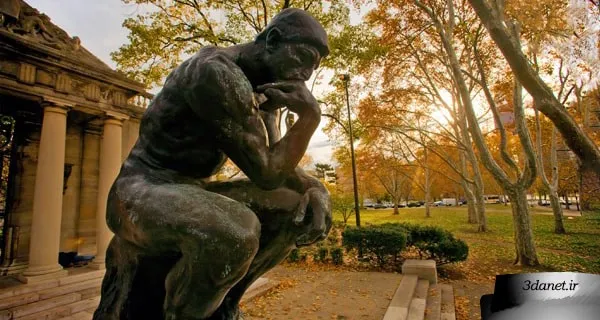
The corollary of skepticism is not necessarily to doubt always and everywhere, but rather to always and everywhere deem doubt permissible. In other words, a skeptic is not someone who adopts a stance of doubt on every subject, but someone who considers the invalidity of all their own stances—whether certain or uncertain—as possible, and in this sense regards all their beliefs as subject to doubt.
The skeptic sometimes mingles with doubt and uncertainty, sometimes clings to decisiveness and certainty, but, in all circumstances, flees from dogmatism and rigidity. A skeptic, for example, may not have an iota of doubt about the proposition that “no event is without a cause,” but this does not mean that for them, this proposition is beyond any question or doubt and is a completely “indubitable” thought. The skeptic permits both themselves and others to doubt even their most certain convictions. In philosophical language, a skeptic is someone who does not pass from their “psychological certainties” to “epistemological dogmatisms.”
The skeptic always finds and knows their current, individual certainties to be provisional. Therefore, if, as a result of new findings, the seeds of doubt sprout in their heart and their current position weakens to the point that their feeling of certainty also slips away, then such an event is neither unexpected nor displeasing for them, and they possess the ability to bid farewell to falsehood. Thus, the skeptic is open to the future and to the other; this is the very necessity of human openness to the truth. Skepticism is compatible with having certainty and with fideism, but it is incompatible with dogmatism and superstition—in the sense that will follow.
Skepticism not only does not negate or contradict having decisiveness and certainty, nor is it an obstacle to a life of faith, but it is, in a sense, a requisite of it. Fideism, without skepticism, leads to unbelief. The believer trembles like a willow over their faith, meaning that the believer, despite their certain beliefs and heartfelt assurances, is not assured that they have bid farewell to the realm of doubt forever. Such assurance, for the believer, is the very essence of unbelief.
The ideal exemplar of the skeptic is one who, fundamentally based on the insight that no human thought is free from limitation and conditionality, sees their responsibility as an “endless self-critique” and therefore, voluntarily, lays a violating hand upon their own thoughts and welcomes their demise. The ideal skeptic enters into no permanent marriage with any opinion, and all their opinions are provisional and tentative. The ideal skeptic is like a mystic who considers every conception they have of the formless God—or, more precisely, the God beyond form and formlessness—as an “idol,” and therefore, continually sacrifices them at the feet of the true God. For the mystic, “sacrifice” is not merely a symbolic ritual, but a mode of being. In the beautiful expression of Rumi:
I am a painter of forms, each moment I fashion an idol, And then all the idols, in Your presence, I melt away.
In any case, for mystics, the only worthy feast is the “Feast of Sacrifice,” just as the only worthy sacrifice is the “self.” But since the true self of anyone is nothing other than their thoughts and beliefs, then what is meant by the sacrifice of the self is nothing other than the sacrifice of one’s thoughts and beliefs. And what is meant by the sacrifice of thoughts and beliefs is nothing other than submitting them to the blade of doubt and critique, so that through this process, the poison of unwarranted generalizations and unjust impositions may be drawn from them.
Fundamentally, no statement is, absolutely and in itself, a superstition. In reality, a statement’s being a superstition relates to the quality of the belief held by the person making that statement. Superstition does not mean believing in “antiquated” or “false” ideas; rather, it means believing in ideas—even very “new” or completely “self-evident” ones—in such a way that we close off every avenue of doubt regarding them and no longer permit ourselves, or any human being, to raise any question or objection about them. In short, a superstition is not a false belief, but a belief that, from our perspective, is unfalsifiable, because it is fundamentally indubitable to us. Any belief towards which we exhibit “rigidity” and “fanaticism,” and which becomes “uncriticizable” and “inflexible” for us, is a superstition.
If I believe in the truth of “coffee-ground reading” or the existence of “flying saucers” based on evidence that I find convincing, and I am, of course, willing to abandon my belief should that evidence lose its validity, and to deny it should any evidence be raised against it, then I am not a superstition-monger. But if I believe in the correctness of “two plus two equals four” with such absolute certainty that I consider the possibility of questioning it entirely ruled out and deem no doubt permissible, then I am a superstition-monger.
.
.
A Reflection on the Concept of “Superstition” and the Relation Between “Skepticism” and “Fideism”
Author: Masoud Zanjani
.
.


Discussion3 comments
سخن آقای صدیق قطبی صحیح به نظر می رسد
سلام عالی بود... خیلی نغز و پرمغز... منتها یک ملاحظه، در باب اینکه از دست رفتن تردیدگرایی عین کفر است استشهاد به مصرعی از مولانا کردهاید: چو بید بر سر ایمان خویش میلرزم... اما به نظر نمیرسد این نگرانیهای ایمانی، متضمن تردیدگرایی معرفتی باشد. برای اغلب متدینان، دچار هوا و هوس و غفلت و اغوای دنیا و شیطان شدن، ایمان را تهدید میکند. یعنی اغلب دینداران نگران از دست رفتن ایمانشان هستند، اما نه از سر تردیدگرایی. چرا که ایمان را بیشتر نوعی تعهد عاطفی و اخلاقی میدانند. به نظر میرسد، نگرانی ایمانی(اهل ایمان همه در خوف دم عاقبتاند) لزوماً متضمن تردیدگرایی نباشد.
تعریفی در خور تأمل از خرافه، سپاس