Philosophy
A Reflection on “Passivity” and “Revolution” and Their Relation to “Individuation” and “Thought”
Enlightenment requires embracing the suffering of thought and individuation; otherwise, revolutionary acts remain mere passive reactions. Absolute opposition is a covert form of imitation; sometimes, the conscious refusal to be complicit in catastrophe is the most revolutionary form of action.
Immanuel Kant, the great German philosopher of the European Enlightenment, considers “enlightenment” to be “man’s emergence from his self-incurred immaturity.” In this sense, “enlightenment” is the ability to attain intellectual and cultural maturity.
If, in the language of the ancient sages, the realization of any matter becomes possible only when both “its impediments are absent” and “its requirements are present,” then one must ask: “What are the impediments and requirements of enlightenment?” Kant explicitly identified two things as impediments to enlightenment: “cowardice” and “laziness.” On the other hand, considering the motto of the Enlightenment, which Kant formulated as the imperative “Have courage to use your own understanding!”, two requirements for enlightenment can be pointed out: “individuation” and “thought.”
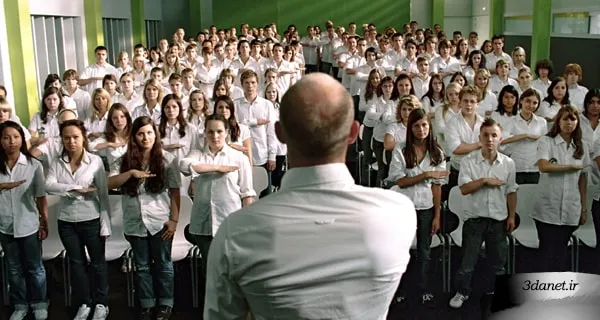
From this perspective, the root of all human miseries and catastrophes is the lazy evasion and cowardly flight from taking responsibility for oneself, which hinges on the pain of “thought”—that is, the ability to doubt, to question, and to employ one’s own intellect—and the pain of “individuation”—that is, the ability not to conform, not to imitate, and to obey oneself.
In fact, human beings are prepared to endure any suffering except the suffering of taking charge of themselves; oblivious to the fact that if they do not endure this necessary suffering, they will endure far greater sufferings. In other words, people prefer to close the file on the most formidable questions of their lives by accepting, wholesale and unquestioningly, the nearest and most readily available answers in their environment; that is, of course, until the day those answers confront them with a host of unanswerable questions and costly, overwhelming challenges, effectively depriving them of even a minimal life.
But, in conditions of agony and desperation, the believers of yesterday will turn to unbelief and passionately engage in absolute, violent antagonism and struggle against those very self-made idols, thus, through a ridiculous and tragic spectacle in the name of freedom, continuing their self-alienation and self-deception in a different, and possibly more serious, manner.
In any case, liberation from any destructive idea or phenomenon is not possible through a passive reaction (emotional and impulsive). Revolutionary efforts and uprisings, if not accompanied by a critical action (creative and reflective), will be nothing but a desperate floundering that both dishonors the revolutionaries and burdens successive generations. “Antagonism” or absolute struggle against anything is a form of “subjection” or hidden obedience to that very thing. In other words, “conflict” with an idea or phenomenon ultimately leads to the contradiction of its own purpose and, instead of overcoming and transcending it, results in contamination and identification with it! As Lichtenberg said: “To be entirely opposed to something is to imitate it.”
Where activities have “goals” but no “meaning,” where being active has, in itself, become a goal and no one reflects on the outcome of deeds and actions or asks about their ultimate end, where everyone whistles and applauds the runner who runs faster, even if he is heading toward a precipice—there it must be said that not only is holding a revolutionary and radical stance not valuable, but precisely the opposite: holding a passive stance and exercising restraint is a virtue; restraint from what is unnecessary, because “that which is unnecessary is, necessarily, harmful.”
In fact, where actions lack reflection, they are not an action but a reaction, and must be recognized as actual passivity, even if those who are acted upon misunderstand themselves and, in their naïve imagination, call themselves agents and revolutionaries.
Francisco Goya, the renowned Spanish painter (1746–1828), tells us in the most eloquent way: “The sleep of reason produces monsters.” Therefore, in conditions where stupidity reigns and rational thought has fallen into a coma, the true revolutionaries are the thinkers and intellectuals who consciously adopt passivity and do not become accomplices to catastrophe, even if the masses call them reactionary and regressive. In fact, reflective and critical passivities must be recognized not only as activity, but as the highest form of activity and the most revolutionary form of action.
Every revolutionary resolve and action aimed at changing the world and humanity, without a prior fundamental and radical transformation in the revolutionaries' image and conception of the world and humanity, will only lead to the consolidation and reinforcement of the status quo, and even its reproduction on a more stable and destructive level. Iron wills clad in armor, in the absence of luminous and illuminating ideas, even if accompanied by a thousand good intentions, will not only fail to bring about any paradise, but will merely pave the roads to hell. Indeed, passions without wisdom will become incendiary and malevolent.
.
.
A Reflection on “Passivity” and “Revolution” and Their Relation to “Individuation” and “Thought”
Author: Masoud Zanjani
.
.

Discussion1 comments
ریشهٔ تمامی مصائب و فجایع آدمی، گریزِ کاهلانه و فرارِ بزدلانهٔ او در به مسؤولیتِ عهده گرفتن خویش است. به نظر می رسد جمله در انتها باید به این شکل نوشته می شد: فرار بزدلانه او در به عهده گرفتن مسئولیت خویش است.