Philosophy
A Reflection on “The Art of Conversation” and the Link Between “Conversation” and “Play”, Masoud Zanjani
Dialogue is not a tool for truth but an end in itself, a kind of play. Drawing on Schiller and Gadamer, Masoud Zanjani sees dialogue as a mode of being in which both sides lower their guard, and truth is the event of the dialogue itself, not its goal.
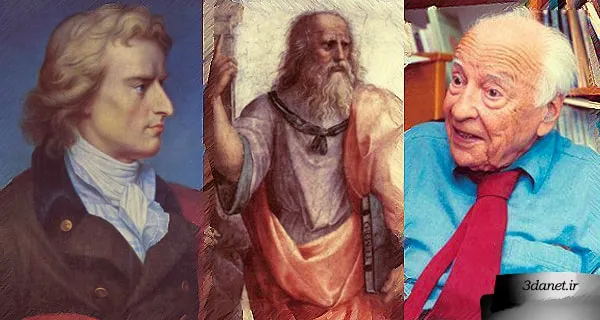
Conversation is not a tool for reaching any goal, not even “truth.” Conversation is an end in itself, and in this sense, the entire purposefulness of conversation lies in its purposelessness (aimlessness). Gadamerian conversation must be interpreted on an ontological horizon—in the Heideggerian sense—for it is, first and foremost, a “mode of being in the world,” unlike Platonic dialogue, which is a “mode of knowing” and belongs to an epistemological level. In Gadamerian conversation, truth is not the outcome of any “method,” including the method of conversation. On this interpretive horizon, truth is the “disclosure” of an “event,” for which the “readiness” and “openness” of the parties to the conversation are the condition of its realization and experience.
.
A Reflection on “The Art of Conversation” and the Link Between “Conversation” and “Play”
(With Emphasis on the Thought of Friedrich Schiller and Hans-Georg Gadamer)
Masoud Zanjani
1- Friedrich Schiller, the eighteenth-century German playwright, poet, and idealist philosopher, says: “Man only plays when he is in the fullest sense of the word a man, and he is only wholly man when he plays.” For Schiller, the most important characteristic of “play” is that in play there is no rift or gap between a person’s “inner inclination” and “outer duty.” In play, our inclinations and duties coincide completely; hence, the individual finds no conflict or antagonism within himself. In play, far from any “duality” or “alienation,” we realize ourselves in the purest and most beautiful mode of our being and become wholly human. For Schiller, play is a solution for transcending the confrontation between “sense and reason,” and a way out of the opposition between “morality and nature.” Play is the aesthetic realization of the human being.
For Schiller, play can also be seen as a reconciliation between the two categories of “freedom and necessity.” Although play is meaningless without the freedom of the players, none of the players is “free to do whatever they wish.” The freedom of all players is conditioned, limited, and bound by the “rules of the game.” In fact, the rules of the game are not an obstacle to freedom but the condition of its realization. Freedom without limitation is, fundamentally, neither possible nor beneficial, just as freedom, in the absence of responsibility, is always endangered and creates danger. The most prominent characteristic of play, in the Kantian phrase—by whom Schiller was also greatly influenced—is its being an “end in itself,” for play is not the instrument of any end outside itself. Autonomy (freedom) and self-sufficiency (independence) are two structural features of play.
2- For Hans-Georg Gadamer, the twentieth-century German philosopher, “conversation is a game,” in its deepest sense. In his theory of understanding (hermeneutics), Gadamer considers every understanding an interpretation, and every interpretation a conversation between the interpreter (reader) and the text, which flows between them like a game. For Gadamer, play is a metaphor that elucidates the fundamental characteristics of conversation. Conversation is the most noble form of play.
One of the features of play that attracts Gadamer’s attention is that the agency of the players cannot be entirely one-sided, domineering, and aggressive. In other words, although the agency of the players is not entirely lost in play, this agency cannot and should not manifest itself in a selfish and monopolistic manner, but rather, as much as possible, should be expressed in a restrained and altruistic way. In play, the domineering agent freely and eagerly relinquishes their authority, and of course, through this, gains a greater authority of a different kind. In play, another, superior kind of mastery is discovered and experienced, which, following the Daoist tradition, we might call “mastery from below” or “feminine mastery.” Play transforms the evasive and aggressive agent into a receptive and hospitable agent. In play, the agent finds their agency not in threatening and asserting themselves over the other, but in limiting and suspending themselves before the other. The important characteristic of play, for Gadamer, is self-flourishing and self-re-creation.
In play, authority, in the first instance, belongs not to the players but to the play itself. In fact, before the players advance the play, it is the play that has already advanced and continues to advance them. Play is not only the art of playing, but, simultaneously, the “art of being played.” Play, above and before all else, requires the “ability to lose.” From this perspective, conversation and play have a structural similarity. The structure of conversation, like the structure of play, is feminine and amorous. Now, if we think together the aforementioned ideas of Schiller and Gadamer, we can say: “Man only converses when he is wholly man, just as man is only wholly man when he converses.”
In conversation, the parties are “mutually” open to having their various beliefs, prejudices, and presuppositions—in the philosophical sense of the word—brought into play; that is, they allow one another to unsettle and shake them, and, if necessary, demolish them. In simple terms, the first condition for stepping into the play is that everyone opens their guard to the play, and in a sense, to one another. In play, the players, by “saying yes” to the play, express in their unspoken language: “Play is no joke to us. We take play seriously, but come what may, we welcome it. If our heads are broken, long live the play!” In conversation, too, what is revealed is not the rightness of one of the parties to the conversation, but the truth of the conversation itself. In this respect, conversation is the capacity to gamble, to take risks, to lose one’s heart, and to lose one’s self. Conversation is an “adventure.”
Gadamer, following Heidegger, criticizes the “truth-centeredness” in Plato’s understanding of conversation in his own theory of conversation. Of course, we know that every criticism is, beforehand, a sign of respect. For Gadamer, engaging with Plato is not a historical interest or inquiry, but a response to an urgent need and necessity for understanding the current and central problems of our culture and then resolving them. If we are attentive and possess the art of listening, then Plato will have much to say to us. For Gadamer, it is neither possible to simply discard and avoid the thoughts of a tradition-building philosopher like Plato, nor is it useful to wholly retrieve and accept those theories with their same historical content. For Gadamer, intellectual and philosophical traditions must be simultaneously appropriated and criticized.
Plato teaches us that Socrates, as the wisest man of the ages (the ideal model of the philosopher), is, in the first instance, aware of his own ignorance, and not of the truth of matters. But according to Plato, the philosopher (the ideal model of the human being) is not meant to remain ignorant forever, but can and must, through reason, that is, the method of dialogue (conversation) and dialectic, emerge from ignorance and arrive at the truth. This is where Gadamer enters into a critical conversation with Plato about the idea of “conversation.” Gadamer, in a critical appropriation of Plato, replaces the Platonic idea of “conversation oriented toward truth” with the idea of “conversation as truth” and overturns that old Platonic relationship between truth and conversation. For Gadamer, “truth is for conversation; not conversation for truth.” In his view, there is no truth beyond and outside of conversation that can be reached with the aid and by the method of conversation. Truth is the way of truth itself. “Truth is conversation itself.”

Conversation is not a tool for reaching any goal, not even “truth.” Conversation is itself the goal, and in this sense, the entire purposiveness of conversation lies in its purposelessness (goal-lessness). Gadamerian conversation must be interpreted in an ontological horizon—in the Heideggerian sense—because it is, in the first instance, a “mode of being in the world.” Unlike Platonic conversation, which is a “mode of knowing” and belongs to an epistemological level. In Gadamerian conversation, truth is not the outcome of any “method,” including the method of conversation. In this interpretive horizon, truth is the “disclosure” of an “event” for which the “readiness” and “openness” of the parties to the conversation is the condition of its realization and experience.
3 — Conversation is the destiny of humankind. It is only in conversation that the human being is realized, and when conversation is blocked, the human being is lost, violence erupts, and culture is poisoned. Nihilism, in its most serious manifestation, is “conversation-forgetting.” It is not unjustified to say that, in this respect, our age, despite having shouted the slogan for conversation louder than all previous ages, is the most nihilistic of them all. This situation is the result of limited and erroneous understandings of conversation, and, in other words, a lack of the appropriate consciousness for conversation.
It can be said that today two groups disrupt the game of conversation:
First, self-righteous individuals who think that right and truth reside with them and who desire conversation as a means to reveal their own rightness and the truth of their beliefs to the other. These individuals confuse categories such as “disputation,” “rhetoric,” “negotiation,” and “debate” with conversation, that is, “dialogue” in the precise sense of the word.
Two thinkers together engage not in “debate,” but in “dialogue” (conversation). Categories like “debate” and “negotiation” are modes of communication suited to extra-cultural domains such as politics and economics, where they also possess their relative validity and possibility. The worrying issue is the application of these, for example debate, in the domain of thought and culture, which can be severely damaging.
The logic of debate is the logic of power-seeking and domination. But the logic of conversation is the logic of peace and love of the other. In debate, each party considers itself right and its viewpoint as the very truth, and therefore seeks to overcome the other. However, the condition of conversation is that each party to the conversation, firstly, believes in the limitation of its own perspective; and secondly, recognizes a measure of truth with the other.
But the second group are those who, unlike the first group, do not see the truth in their own fist, yet have come to converse so that they might leave with a full fist, that is, brimming with truth. This group also holds two mistaken conceptions of conversation. First, they think that conversation has an end, whereas they must be told: “Conversation is an unfinished game.” In the game of conversation, there are only time-outs so that the continuation of the game may become warmer and more serious. Their second mistake is that, in addition to imagining an end for the game of conversation, they expect that at the game’s end, a result will be announced and ultimately a winner and loser determined. In reality, these individuals evaluate a conversation as positive only if it has a definite conclusion and a clear summation. Conversation represents the game in its purest form. Conversation not only shuns “end” in the sense of “goal” and does not wish to be a means to something else, but it is also wary of “end” in the sense of “termination” and only wants “continuation,” that is, the game, to continue; for the “dynamic process” to endure.
Conversation is not a “means” for the realization of right and the expression of truth. Conversation is not a “program” with a beginning and an end based on will. Conversation is not a “project,” but a “process”; a process without beginning or end. Any beginning imagined for conversation is a relative beginning, just as any assumed end for conversation is not an absolute end. Conversation is an “event.”
In this sense, conversation has a goal, and its goal is nothing less than a fundamental inner transformation and a rebirth. Conversation is an intellectual and spiritual renaissance. From this perspective, the goal of conversation is not to reveal the truth to the other, but to reveal the extent of one’s own “un-rightness.” The motivation for conversation, for each of the interlocutors, is primarily not to transform the “other,” but to bring about a radical revolution within the “self.” Neither party to a conversation, after an experience of conversation as an existential event, can remain in their being as they were before, nor can they look upon the “other” and the “world” as they did before. Conversation is a spiritual “world-opening”; not, of course, for everyone, but a reward for those who possess an inner and mental “openness to the world.” In this sense, conversation is the rediscovery of oneself in the other. Conversation is “self-knowledge.”
Adapting Epicurus, one could say that "the real winner in a conversation is the one who loses; for they had something to learn and have transcended themselves." Just as, inspired by a remark of Wittgenstein's in Culture and Value, one could say "in the marathon of conversation, the true winner is the one who arrives later; or the one who never arrives."
In any case, the aim of conversation is "not to reach the goal" and "to be always on the way." Conversation is the art of "not insisting one is right," the art of "losing."
.
.
A Reflection on "The Art of Conversation" and the Link Between "Conversation" and "Play"
Author: Masoud Zanjani
Author's Website
Author's Telegram Channel
.
.



Discussion4 comments
نوشته بسیار ارزشمندی گردآوری کردید با قلمی بسیار شیوا
قلم خوب و منسجمی بود. به نویسنده اش تبریک می گویم.
سلام و احترام مطلب خیلی جالبی بود چطور می شه با نویسنده ارتباط گرفت ممنون از راهنمایتون
مطلب خوبی بود. تشکر از نویسنده محترم و سایت صدانت.