Foreign thinker
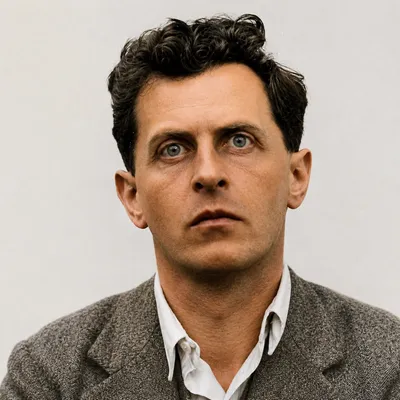
Ludwig Wittgenstein
Ludwig WittgensteinPhilosophy of Language and LogicAustrian-British1889–1951
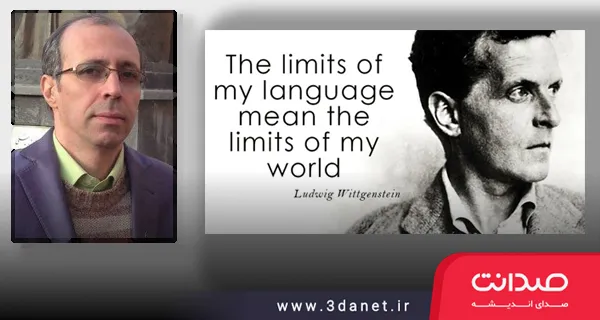
The limits of my language mean the limits of my world.
In their times
Open in the Timeline of ThoughtInfluenced16


Influenced by7


Students1

Teachers1

Same school1

Life and Thought
Ludwig Wittgenstein (1889–1951) was an Austrian philosopher and one of the central figures of twentieth-century analytic philosophy. He made foundational contributions to logic, the philosophy of language, and the philosophy of mind, and his works such as the Tractatus Logico-Philosophicus and Philosophical Investigations are key texts of contemporary philosophy.
Ludwig Wittgenstein (26 April 1889 – 29 April 1951) was an Austrian philosopher and one of the most important figures of twentieth-century philosophy. He made a foundational impact on the philosophy of language, logic, the philosophy of mathematics, and the philosophy of mind, and alongside Gottlob Frege, Bertrand Russell, and G. E. Moore, is considered one of the principal figures in the formation of analytic philosophy.
Wittgenstein was born in Vienna into a very wealthy and cultured family. His family was among the prominent families of Austria, and their home was steeped in music, literature, and art. He was initially interested in engineering and went to Berlin and then Manchester to study the subject. His interest in the foundations of mathematics drew him toward logic and philosophy, and he eventually went to Cambridge to work under Bertrand Russell. Russell quickly recognized his philosophical genius and regarded Wittgenstein as one of the great hopes of philosophy.
Wittgenstein joined the Austrian army during the First World War and served on the front lines. It was during this period that he wrote the notes that later formed the basis of the Tractatus Logico-Philosophicus. This book was the only work published during his lifetime and is considered one of the most influential philosophical books of the twentieth century. In the Tractatus, Wittgenstein attempts to clarify the limits of language, logic, and the world. The book's famous closing sentence, "Whereof one cannot speak, thereof one must be silent," encapsulates his view of the boundaries of language and thought.
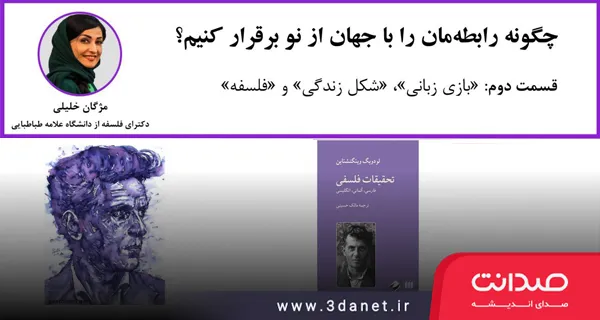
Wittgenstein's philosophy is usually divided into two periods: the early Wittgenstein and the later Wittgenstein. In the first period, in the Tractatus Logico-Philosophicus, he defends the picture theory of language; according to this view, propositions of language are logical pictures of reality, and language has meaning only insofar as it can represent the structure of reality.
After the publication of the Tractatus, Wittgenstein abandoned philosophy for a time. He worked as a schoolteacher in rural Austrian villages, participated for a while in designing his sister's house, and lived a life far removed from the formal academic sphere. But he later returned to Cambridge and gradually distanced himself from his earlier views. In his later period, he no longer sought meaning in the pictorial relationship of language to the world, but rather saw it in the "use" of words in everyday life.
In Philosophical Investigations, published after his death, Wittgenstein speaks of concepts such as "language-games," "forms of life," and "family resemblance." He believed that many philosophical problems arise from a misunderstanding of language; that is, we detach words from their natural use and then become entangled in seemingly profound but misleading questions. Thus, for the later Wittgenstein, philosophy is a kind of therapy: clarifying the knots that language has created in our thought.
Wittgenstein taught at Cambridge from 1929 to 1947, but he was never an academic philosopher in the conventional sense. His life was marked by moral rigor, taciturnity, constant doubt about his own writings, and a desire for intellectual honesty. In the final years of his life, he resigned his university chair and died on 29 April 1951. The last words attributed to him were: "Tell them I've had a wonderful life."