Philosophy
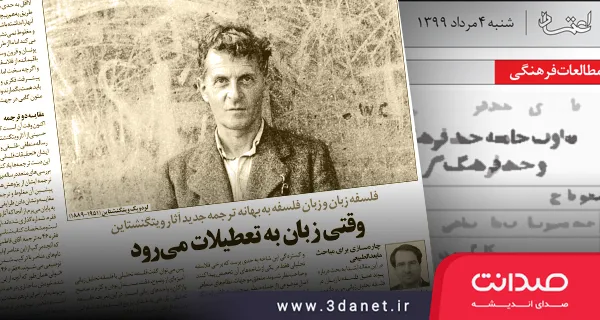
Reza Yaghoubi's essay “Philosophy of Language and the Language of Philosophy”
Analytic philosophy, with its emphasis on linguistic clarity and argumentative rigour, has evolved from Frege's symbolic logic to the Oxford School. The precise translation of its texts into Persian is an undeniable necessity for intellectual development and the prevention of ambiguity.
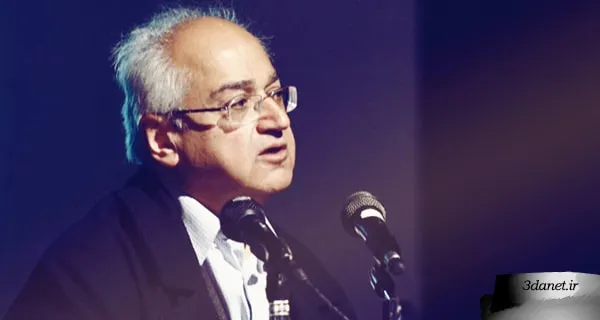
Reza Yaghoubi
AuthorPhilosophy of Language and the Language of Philosophy
Reza Yaghoubi
In this article, we first discuss the deep connection between philosophy and language in linguistic analytic philosophy, and then, given the importance of this matter, we will mention some points about one of the recently published translations of two fundamental works in this branch of philosophy.
Although linguistic analytic philosophy has its roots in finding remedies for the complexities and obscurities of unresolved metaphysical problems, this was not the sole aim of all the processes and currents of analytic philosophy. Moore's approach to conceptual analysis is a clear example of these remedies, but Russell and Frege did something beyond this. They believed that to solve these problems, one must construct a language with a precision as high as that of mathematical language. For this reason, Frege's Begriffsschrift was a sustained and lofty effort that shaped symbolic logic and provided important tools and techniques for analysis. This effort reached its peak and found a more codified form through Russell and Whitehead in Principia Mathematica. The goal of this work was to attain an ideal language whose precision and simplicity would be such that error or meaningless and vague propositions could not find their way into it. Alongside these efforts, Russell enriched this approach with other endeavors such as the theory of descriptions, logical atomism, the discussion of synthetic and analytic propositions; a priori and a posteriori (which was not exclusive to him), the theory of truth, the theory of meaning (which gained immense breadth among later analytic philosophers), and other matters.
Wittgenstein could not commit to the ideal of an ideal language (not to be confused with his opposition to private language) and took another path, which today is called ordinary language analysis philosophy. This approach was pursued in two styles: the Wittgensteinian style and the Oxford style. The Oxford style is known through John Langshaw Austin, but from the time the center of analytic philosophy moved from Cambridge to Oxford, most analytic philosophers were Oxonians (with the exception of Waismann, who was Wittgenstein's first successor at Cambridge); Strawson, Ryle, Anscombe, Geach, Kenny, Hacker, and others.
This current did not end there. The focus on linguistic precision, the clarity of lines of reasoning and their nature, the nature of logic, and highly precise logical subtleties caused many of these demarcations to break down, and the breadth of this branch reached a point where some analytic philosophers specialized and became authorities in only one of its sub-fields. Modal logic, axiomatic logical systems (including modal logic through the efforts of Irving Lewis), analytic philosophy of mind (Ryle), analytic moral philosophy (Foot, Anscombe, Williams, Hare), mathematical logic, analytic pragmatism or neo-pragmatism, and so on, are among these.
In fact, very broadly speaking, analytic philosophers wanted to use the tools of language to employ language itself to solve or dissolve problems. We must be careful not to equate certain positions of the early Wittgenstein—such as the idea that problems are not solved but dissolved through linguistic analysis (because they are the product of language going on holiday), or that all philosophical problems could be solved this way within a short time—with the entire broad current of analytic philosophy. Here, one can point to Strawson's descriptive metaphysics, whose main task is describing the structure of thought, as opposed to revisionary metaphysics, whose aim is to reform the structure of thought and consequently reform metaphysical systems. But as we mentioned in the lines above, the breadth of this discipline is now such that one could justifiably devote an entire lifetime to one of its branches.
The emphasis of linguistic analytic philosophy is not solely on the clarity of language and vocabulary. Early analytic philosophers like Russell sought to simplify and resolve problems by analyzing (decomposing) complex propositions into simple, elementary ones. Here the focus is more on “lines of reasoning.” From what do we conclude what? (For instance, can we conclude from the fact that language is a human convention that God cannot speak in human language?). Frege’s emphasis is on the “precision” of language. For this reason, he undertook the writing of the Begriffsschrift and replaced subject and predicate with function and argument, assigning values to functions so that the precision of predications would reach the highest level. Wittgenstein’s emphasis, however, is on the “use” of words and propositions or linguistic units. For this reason, he judges sentences and propositions as being meaningful or meaningless. The emphasis is not on meaning, because in his view the meaning of a word is its use. If a word is used in a way other than its original linguistic use, it becomes meaningless. So it can be said that analytic philosophy or linguistic analytic philosophy is an amalgam of clarity, precision, being well-reasoned, and the correct use of words and linguistic units. In this definition, analytic philosophy has a history as long as the history of philosophy. All these efforts, from ancient times—from Plato and Aristotle (in whose works examples of such analyses are clearly seen, and the invention of logic and the logical scrutinies of Aristotle and the Stoics, etc., were in this same direction)—to the complex logic of the Middle Ages and the Islamic world, which reached great abundance in the works of the great philosophers of that era, as well as all the efforts always made toward precise argumentation and coherent, valid system-building, have existed.
But the matter of translating modern analytic philosophy texts into Persian is of another order. At the outset, many specialists in analytic philosophy believed and still believe that, due to the very specific subtleties and intricacies of these texts, they must be read in the original language to become aware of their finer points. However, this view is problematic and detrimental from two perspectives. First, if some subtleties cannot be transferred in the translation of these texts, the approaches are transferable, and the introduction of an approach is more important than its instances. In fact, by translating these sources, we primarily benefit from their analytic approach and then from the instances that were the subject of their discussion. Second, insisting on reading in the original language benefits only a select few (not all of the elite), and these approaches and philosophies are not introduced at various levels among thinkers. Since the analytic philosophy approach is an important step toward intellectual growth and flourishing and, in the author’s opinion, one of the important epistemic foundations aligned with development, this leads to intellectual backwardness and leaves room for unhealthy, regressive philosophies that derive the greatest benefit from the lack of clarity, ambiguity, and polysemy of words and terms.
Consequently, the translation of analytic philosophy texts must, of necessity and inevitably, possess very high precision. For example, we often encounter terms in these texts that we always used to render with the same meaning, but here they are distinguished from one another, and much discussion has arisen about their distinction, such as the distinction between sense and meaning. But it is not the case that translating these texts is entirely impossible and inadequate. In analytic philosophy, the clarity of language is supposed to reach the highest level, or at least a level where it is no longer possible to philosophize by twisting words together and exploiting their polysemy. Such a burden does not rest on the shoulders of a confused and erroneous translation, and although it makes the task difficult for the translator, it is through these very translations that we have access to the logical texts of Greece and the Middle Ages, and even the Arabic logical texts remaining from Muslim and Iranian philosophers. Though difficult, it is possible, and experts, if they desire intellectual and epistemic progress and its products, must set their resolve and, through the translation, commentary, and interpretation of these texts, take a step toward the development of this land.
It is now time to mention the translations of Wittgenstein’s works by Mr. Malek Hosseini, especially his recent translation of the Tractatus Logico-Philosophicus and Philosophical Investigations (in his translation, “Philosophical Researches”), as an instance of this kind of translation. Given the numerous translations and numerous examinations of the Tractatus, it is better here to address the merits of his translation of the Philosophical Investigations, whose previous translation was erroneous and a new translation was imperative. I will conclude this piece with a few comparisons and by pointing out some subtleties of the new translation.
Since all of Wittgenstein’s works are numbered by paragraph, citing the paragraph numbers is sufficient, and the bibliographic details are provided at the end of the article.
Paragraph 46 in Mr. Fatemi’s translation: “… but just as what is composed of these primary elements is itself complex, the names of the elements, by combining with one another, become descriptive language.”
Paragraph 46 in Mr. Hosseini’s translation: “… but just as what is composed of these primary elements itself has an interwoven structure, the naming of these interwoven components has also become explanatory speech.”
The glaring error in the late Mr. Fatemi’s translation, which is absent from Mr. Hosseini’s, is the translation of verflochtenes/interwoven as “complex” instead of “interwoven,” whereas even without the original text, it is evident from the surface of the sentence that the word “complex” has no place there. Although it would have been better if both esteemed translators had rendered “zur erklärenden rede geworden” as “become explanatory/explicatory speech.”
Paragraph 207: The late Mr. Fatemi’s translation: “There is not sufficient order for us to call it ‘language’.” Mr. Hosseini’s translation: “There is no regularity in what we call ‘language’.”
In Mr. Fatemi’s translation, rendering regularity/Regelmäßigkeit as “order” is clearly wrong, and what is stranger is that in the next sentence, which is the beginning of paragraph 208, Wittgenstein himself distinguishes between “order/Befehl,” “rule/Regel,” and “regularity/Regelmäßigkeit,” and one can easily understand that the correct translation of Regelmäßigkeit here is “regularity,” not “order.”
Paragraph 308: Mr. Fatemi’s translation: “How does the philosophical problem about mental processes and states and about behaviorism arise? The first step is the one that altogether escapes notice…”
Mr. Hosseini’s translation: “How does the philosophical problem about mental processes and states and about behaviorism even arise?—The first step is the one that draws no attention at all…”
Mr. Hosseini’s translation is closer to what is correct, because unauffällig means something so minute, small, or invisible that it draws no attention to itself, and one could translate “der ganz unauffällig” as “completely escaped notice.” But “escapes notice” is unfamiliar and intangible and does not readily convey the meaning.
It is hoped that with the flourishing of such translations, the translation movement may once again bring prosperity and revival to the cultural current of our history.
.
.
References:
- Philosophical Investigations, Ludwig Wittgenstein, translated by Fereydoun Fatemi, Nashr-e Markaz, first edition, 2001.
- Philosophical Researches, Ludwig Wittgenstein, translated by Malek Hosseini, in collaboration with Nashr-e Kargadan and Nashr-e Hermes, first edition, 2020.
.
.
Reza Yaghoubi’s essay “Philosophy of Language and the Language of Philosophy”
Source: Etemad Newspaper, dated Saturday, July 25, 2020
.
.


Discussion0 comments
No comments yet; let yours be the first voice.