Philosophy
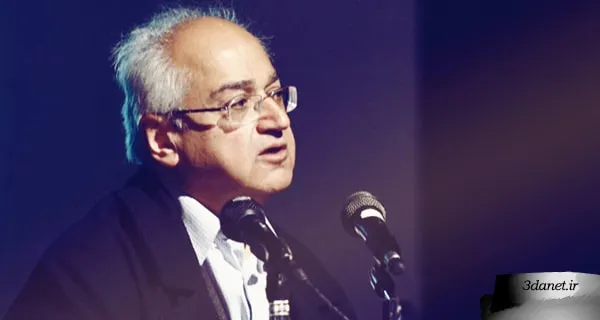
Babak Ahmadi's Lecture on the Philosophy of Language in Continental Europe
A report on a lecture by Babak Ahmadi about continental philosophy of language reveals the link between abstract philosophical debates and social life. Focusing on the thought of Derrida and Heidegger, Ahmadi traces philosophy's linguistic turn from Nietzsche to the twentieth century.
The aged Derrida wrote at the end of his life that the future is a monster. For us, life is always futural, and the conception of the future is monstrous. He speaks of strange monsters that rule over the living, such as vampires, bloodsuckers, or Dracula. Dracula is dead, yet he consumes the living so that they become bloodsuckers and die, and they in turn do the same. This proliferation of the bloodsucker resembles the work of the dead (capital) that consumes living labor, remains alive itself, expands, and reproduces itself as capital. Derrida did not live to see the most terrifying monsters of our time, such as ISIS and the Taliban. He did not see these, but he saw the monsters of the future well, because he sought the trace of what is not yet present in the future. In every oppression, you can see a trace of future oppressions. In every monstrous situation, you can see the emergence of new monsters.
.
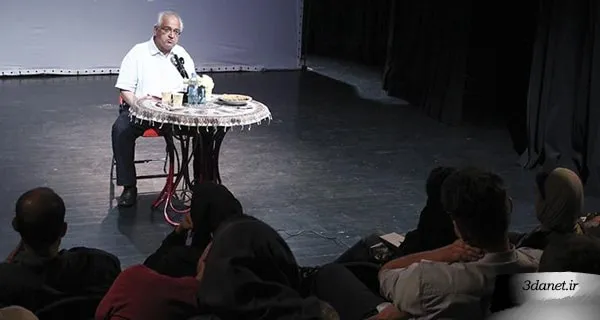
At first glance, a discussion about the philosophy of language in general, and a discourse on Continental philosophy of language in Derrida's thought in particular, seems to have no connection to social and political life and appears to arise from the preoccupations of ivory-tower philosophers with mental games. But in this very discourse, Babak Ahmadi, the well-known writer and translator of philosophical works, shows how such highly abstract discussions are linked to everyday life. The following discourse is a report on Babak Ahmadi's lecture, presented on the afternoon of Wednesday, the 16th of Ordibehesht of this year at the Institute for Humanities and Cultural Studies, in collaboration with the Linguistics Research Institute of the Institute for Humanities and the Linguistics Society of Iran, concerning Continental philosophy of language. At the beginning of the session, Yahya Modarresi, a professor at the Institute for Humanities and Cultural Studies, pointed to the connection between linguistics and philosophy and said: The fields of language and philosophy have long been of interest to linguists and philosophers. Moreover, many linguists have been influenced by philosophers and have benefited from them. A clear example is Noam Chomsky, who has always considered himself among those who follow Descartes' views. Subsequently, Babak Ahmadi gave a lecture, a report of which follows.
Sartre called on thinkers to work more on literary texts. In his autobiography, The Words, in the section "Reading and Writing," he placed the literary text at the center of his understanding, read the world as linguistic, wrote for this world, and lived in language. Strauss believes that we have a great general science called semiology that has not yet been constructed. In this science, the various signs in different cultural domains of life can be explicated. Linguistics is a part of this science.
Babak Ahmadi framed his discussion on the philosophy of language in Continental Europe, and especially the philosophy of language in the thought of Jacques Derrida, and said: My discussion is primarily devoted to Continental philosophy of language and especially the ideas of Jacques Derrida, and therefore I will not enter into the discussions of analytic philosophy. Also, as someone who has works in the field of the philosophy of language, my work is not related to linguistics as a science, but I will inevitably enter into linguistic discussions during the talk.
The Birth of the 'Philosophies of...'
The translator of philosophical works then began his discussion by stating two preliminaries, saying: First, a philosophical transformation occurred within philosophy from the mid-nineteenth century. Until then, philosophy was more or less a unified affair, and the philosophies of… (such as the philosophy of ethics, philosophy of religion, philosophy of art, philosophy of history, etc.) were just beginning to take shape and separate from the body of philosophy in the classical sense of the word, i.e., metaphysics (the philosophical and theoretical search for reality). With the advancement of the human sciences, these philosophies developed independently of that main philosophy. Independent not in the sense that they had no connection to it, but in the sense that they pursued their own evolutionary path more easily with the help of the human sciences. Ahmadi called the story of philosophy and language an old one, saying: The greatest philosopher in the history of philosophy, Aristotle, brought forth the most important discussions about language. Before him, Plato brought forth very precise discussions about language, some of which are accepted and some are subjects of debate, but this linguistic approach to philosophy emerged in the nineteenth century mainly in German philosophy. Perhaps the greatest philosopher of that era in the German domain after Schopenhauer was Nietzsche, who himself had studied philology (historical linguistics or the science of language). In his works, he repeatedly deals with the etymology of words, and his immense knowledge in the field of Greek philosophy results from his studies in historical linguistics. Perhaps Nietzsche was the first person to establish a bridge between philosophy and linguistics at a time when the current discussions of the philosophy of language and linguistics were not yet raised, and the works of figures like Saussure had not yet been published.
Philosophizing in Line with International Relations
The author of Truth and Beauty cited the reason for this widespread philosophical approach to language as the expansion of international relations in the nineteenth century and even the political events of the day, such as the attention the last colonial powers paid to other cultures, saying: Gradually, familiarity with other cultures gained importance. This attention, whatever name it is called, even Orientalism, was positive and opened the way for other cultures, to the point where a kind of relativistic view towards their own culture also emerged within Europe itself. This encounter with other cultures made the issue of language key. Furthermore, philosophical etymology (finding the lineage of words) was raised from Nietzsche onwards and dominated the academic atmosphere of the German language for about 20 years, ultimately having its significant influence on a figure like Heidegger. These matters caused language to be placed at the center of philosophical discussions. To the extent that today it is difficult to say whether some twentieth-century linguists are philosophers or not. For example, Chomsky is certainly a very great philosopher, and this point is also true of some others like Jakobson.
Heidegger and Wittgenstein; Two Giants of German Philosophy
Ahmadi then pointed to two prominent figures or philosophical giants of the twentieth century, namely Heidegger and Wittgenstein, who brought language to the center of their discussion, saying: For Heidegger, especially in the second phase of his intellectual work, language became important. In the first phase, i.e., Being and Time, language did not have a very key and critical role, although he discussed it in sections 31 onwards of Being and Time (regarding the interpretation of texts). But in the second period, language became the basis of the work, and the philosopher knows the world through it and thinks about Being with it. Even the words he coins have a deep inner connection with the Being of the subject he discusses, such as the event of appropriation, or the famous phrase "language is the house of Being," or the world is fundamentally known to us linguistically, or the human being is formed in language. This discussion of Heidegger is more or less similar to the later Wittgenstein in the Philosophical Investigations.
Wittgenstein
He revolutionized twentieth-century philosophy twice; first in the Tractatus Logico-Philosophicus, where he considers language to be the expression of the fact, and second in the Philosophical Investigations, where he considered our understanding of the fact to be linguistic. These two views are different and even contradictory, and the second enriched the Anglo-Saxon (analytic) philosophy of language, and the Oxford school advanced it.
Analytic Philosophy versus Hegel
Ahmadi described the second introductory point of the discussion as emphasizing the restriction of the discussion to continental Europe, and said: The main reason is that my studies are in this field. But the reality is that analytic philosophers have done brilliant work in the philosophy of language. At the same time, serious debates have occurred between these two currents, such as the debate between Derrida and John Searle, which is very important and cannot be understood without attention to Searle's works and, from there, Austin and other great figures of Anglo-Saxon (analytic) philosophy of language. In recent years, analytic philosophy has fortunately been of great interest. We see the dawn of this, that more important works will be done in the coming years, and I am confident that the future space of discussion in the field of philosophy of language will not be free from this discussion about analytic philosophy. Analytic philosophy, which from the beginning started in England as a harsh and critical reaction to Hegel and continued with Russell and Whitehead and Principia Mathematica (the book by these two), led to the emergence of logical positivism and later continued with the works of Moore and Wittgenstein, to the point where it was in the 1970s that analytic philosophy of language flourished, and the influence of Austin, John Searle, and Davidson enriched it. Tremendous works were also done on the works of these individuals. Therefore, the importance of the discussion of analytic philosophy of language is undeniable. Thus, the reason for addressing continental philosophy of language is, on the one hand, a lack of expertise in the Anglo-Saxon domain and, on the other, a detailed familiarity this term with continental philosophy of language. At the same time, while discussions related to analytic philosophy of language exist in Iran, the discussion about continental philosophy of language, especially in the late twentieth century, has not been much raised in our country. Of course, in recent years, works have been written and translated that are not necessarily accurate or good translations. This point is also important: understanding the discussions of continental philosophy of language is in many cases incomprehensible without familiarity with the discussions of analytic philosophy of language. For example, Austin's distinction between constative or descriptive statements and statements in which an action is performed is very important for understanding Derrida. This discussion by Austin, published in the book "How to Do Things with Words," opened the way for many discussions. Therefore, one should by no means imagine that I, because of my interest in and inclination toward continental philosophy, am oblivious to the importance of analytic philosophy. Ahmadi emphasized: In analytic philosophy, the relationship between the statement and action was raised from the 1980s onward. Davidson particularly raised this topic, and from here they arrived at context, and this created a path for dialogue between continental philosophy (German, French) and analytic philosophy (Anglo-Saxon, meaning England and America). Another point that was largely absent in analytic philosophy until the 1970s, receiving little attention, and about which more has been discussed since then, is the issue of the figurative aspect of expression and metaphors. But in continental philosophy, because of its starting point and especially Nietzsche, the issue of metaphors was very important. For example, in continental philosophy, we have Paul Ricoeur's important book The Rule of Metaphor, which highlights figurative expression from the Nietzschean tradition onward, but in the analytic domain, we did not have such an influential and important work in the past, but in the last one or two decades, discussions have occurred in the analytic philosophy environment that are paving the way for more important events to occur in this domain as well.
Language and Death
The author of Doubt then turned his main discussion to the philosophy of language after the philosophical developments of the first half of the twentieth century and said: It is necessary to refer to the way continental philosophers encountered language; first is the branch of phenomenology that led to Heideggerian ontology, second is the philosophy of mind in Merleau-Ponty's final works, who sought, from the perspective and method of phenomenology with slight changes to Husserl's method, to find a connection between philosophy and what was being raised in psychology, such as the Gestalt psychology of that time, with language. The third origin of language in continental philosophy, thanks to phenomenology—though he did not do major work in this area apart from a few of his early works because he very soon entered ontological discussions under Heidegger's influence—is Jean-Paul Sartre, who drew the attention of phenomenological thinkers to the importance of the literary text. Sartre asked thinkers to work more on literary texts. Although he did not hold an extreme view in highlighting language, because he himself was a great literary figure of his time and emphasized the literary text, in his autobiography The Words (whose name reminds us of language), in the section "Reading and Writing," he placed the literary text at the center of his own understanding, called the world linguistic, wrote for this world, and lived in language. In this tendency of being, language was raised as a spiritual relationship with the other and a spiritual relationship with death. Two prominent and renowned thinkers worked in this field: first, Emmanuel Levinas, whose main discussion is about the relationship between language and death, and second, Giorgio Agamben, who is much younger than Levinas and one of whose important works, Language and Death, has been well translated into Persian.
Language and Anthropology: Lévi-Strauss
Ahmadi identified another important branch of continental philosophy concerning language, one close to sociology, as the Frankfurt School and said: They had Marxist and leftist roots, were protesters against the status quo and Weimar Germany, and later dispersed and worked all over the world. Language was very important to them. One of their greatest proponents, Walter Benjamin, wrote important works on language whose significance has been better understood recently. Another branch in continental Europe that paid attention to language is the French structuralists. They were influenced by the Russian Formalists (above all Roman Jakobson) and, to some extent, Anglo-Saxon literary criticism. One of their greatest figures, Claude Lévi-Strauss, has an important book called Structural Anthropology, in the first part of which, titled "Language and Kinship," there are four important essays on language. These essays form the main foundation of the topic of language and structure, and they can be called the manifesto of structuralism. In these essays, the inseparable relationship between linguistics and anthropology is discussed. Ahmadi then addressed Lévi-Strauss's fundamental argument, which resembles Saussure's initial proposition, and said: Lévi-Strauss believes that we have a grand, general science called semiology that has not yet been constructed. In this science, the various signs in different cultural domains of life can be explained. Linguistics is a part of this science, and all signs are beyond linguistic signs. This view is rejected by one of Lévi-Strauss's students who worked in the field of literary criticism, namely Roland Barthes. In Elements of Semiology, Barthes tells his teacher that, on the contrary, the larger whole is linguistics, and it is through linguistics that the rules of semiology can be understood. This was a grand claim. This means that structuralism is the use of linguistic methods. This point is raised in Lévi-Strauss's own works, such as his analysis of the poem "Cats" with Jakobson. In this text, they claim to have revealed meaning as a hidden treasure within this text using linguistic methods, and that there is no other way for this revelation.
Derrida Enters
The author of Structure and Interpretation of the Text entered Derrida's discussion from this very last point and said: Derrida began his philosophical work with a critique of Lévi-Strauss. Of course, he had other works before that, but what brought him to prominence was a protest lecture he delivered at a session in 1966, where he was with Strauss, criticizing him; a year later, he published his three major books. In one of these works, namely Writing and Difference, that lecture was published. Derrida's main critique of Strauss is that his discussion proceeds as if meaning is embedded in the syntax of phrases, and if we perform the syntax correctly, meaning will take shape. That is, in Strauss's discussion, meaning is a present thing within the phrase that becomes present when it is spoken, and is absent when it is not spoken. In Strauss's view, the presence of meaning is undeniable. Derrida advances in his critique of Strauss and turns to his teacher, saying that Saussurean theology of the sign is a classic example of logocentrism, which considers meaning in the accompaniment of sound as signifier and idea or image as signified.
Against Phonocentrism
The author of Modernity and Critical Thought, in explaining the meaning of logocentrism, said: The Greek word logos has multiple meanings, the most important of which are reason and another is speech (not language that also includes writing). In the original Greek translation of the Gospel of John, it is also said that in the beginning was the Logos. This theological interpretation helps to better clarify the term Saussurean theology. Against Strauss and this logocentric interpretation in general, Derrida asks: how is it known in the first place that the text has meaning, and how do we know that this existing meaning (based on the metaphysics of presence) is one, and why must it arrive at a transcendental signified? Derrida's more important critique of Saussure and Strauss is phonocentrism. He says their understanding of language is based on the definitive superiority of voice and sound or spoken word over writing. In an article published in 1972, he shows that Western philosophy, from its very beginnings, such as Plato's famous dialogue, the Phaedrus, onward, has always believed in the superiority of spoken word over writing. In a treatise on Husserl, Derrida shows that Husserl's understanding of language is fundamentally phonetic and cannot attach importance to various forms of writing and cannot discover its laws.
Discovering the History of Writing
The author of The Enigma of Modernity stated: In fact, it is not Husserl's fault, because it is only from the mid-twentieth century that the history of writing, in the sense that Derrida understands grammatology, is raised. Grammatology as diverse systems of writing and the impact of writing on the mind, civilization, and subsequent dialogues becomes important from this period. Derrida says somewhere, my mission is to discover the history of writing. He does not privilege writing over speech but says that speech is not superior to writing. He says binary oppositions (reason versus sense, good versus evil, nature versus culture, being versus nothingness, mind versus matter, presence versus absence, man versus woman, speech versus writing) have become the fundamental basis of Western metaphysics, which is always to the advantage of one. He does not argue in a Nietzschean way to say which social power constructed this superiority and why, but it seems one of the two is stronger. Therefore, Derrida's argument is not that the writing system offers more possibility for discovering truth, but rather that the speech system does not do such a thing either.
The Law of Différance
The author continued, from pictorial signs to the text: Fortunately, these well-known and familiar discussions of Derrida are recognized in Iran. At the same time, Derrida has also been subject to criticism. In particular, these discussions in the context of postmodernity have consequences that go beyond Derrida's own discourse. Derrida's discussions are generally innovative and fresh. For example, Derrida's discussion of writing in indigenous societies is serious and noteworthy. He says the grammar of these tribes differs from Western grammar, and writing is, in another sense, something else. Lévi-Strauss accepted this expansion of the concept of writing by Derrida. Another important point from Derrida concerns Saussure's discussion. Saussure taught us that there is no natural, essential, or even rational connection between the signifier and the signified, and this connection is merely conventional and arbitrary. Saussure also says that every word is constructed and acquires meaning based on its difference from other words. Derrida says that if every sign gains its value from the intensity of its difference from other words, then other signs will inevitably leave their mark on that sign, because they, in their own right, determine that fundamental difference which constitutes the sign's identity; every sign bears a trace of other signs, those it is not, upon its face. Derrida says there is nothing in the world that does not bear the trace of what it is not; consequently, every trace is a trace of another trace and has no origin or source. The law of différance operates here. Ordinary difference is Saussurean difference, but Derridean différance is not only different, but meaning is also deferred. This term arises from the two meanings of difference and deferral. Every sign bears the trace of all other signs. Every use of a sign is an event, an event that is repeatable, like a signature, which is both singular and repeatable. A signature, insofar as it is unique, is repeatable, and vice versa.
Margins Against the Text
The author of Memoirs of Darkness considered the discussion of the margin and its relation to the text as another innovative point in Derrida's thought and said: From Derrida's perspective, the margins of a text are not unimportant. He believes that margins are always inside the text, and there is a constant passage between text and margin. The margin is always in transit with the text, just like the passage between writing and speech. This laying of tracks to the text and the transit of margin and text means that the secondary and the primary do not remain fixed. In fact, the footnote is not an appendage to the text; it is part of the text, it is the text itself, it is text; the text cannot be established without the footnote, and we are in transit between text and margin. In Specters of Marx, one of his last works, Derrida speaks in praise of Marx about the supplement of social production. He says surplus value is within the text of the capitalist system. What is added is part of the commodity itself. In social life, too, supplements are found.
Those Monsters That Rule the Living
The author of Scattered Writings said: The old Derrida (who, in my opinion, never grew old) wrote at the end of his life that the future is a monster. For us, the life of future generations and the conception of the future is always monstrous. He speaks of strange monsters that rule the living, like vampires, bloodsuckers, or Dracula. Dracula is dead, but he consumes the living so they become bloodsuckers and die, and they, in turn, do the same. This proliferation of the bloodsucker resembles the work of dead labor (capital) that consumes living labor, remains alive itself, expands, and reproduces capital. Derrida did not live to see the most terrifying monsters of our time, like ISIS and the Taliban. He did not see these, but he saw the monsters of the future well, because he searched for the trace of what is not now in the future. In every oppression and cruelty, you can see a trace of future cruelties. In every monstrous situation, you can see the emergence of new monsters. Babak Ahmadi concluded: These were only a part of the highlights of Derrida's views. These discussions gradually became a foundation for understanding the ontological situation of contemporary humanity. The philosophy of language has not remained confined to a branch of an ontic science like linguistics. Rather, beyond that, it is something that can help humanity fight against the monsters of the era and the trace of future monsters. This is that radical aspect of Derrida's thought which, I believe, has kept him alive.
.
.
Download audio of Babak Ahmadi's lecture titled Philosophy of Language in Continental Europe
Video of Babak Ahmadi's lecture titled Philosophy of Language in Continental Europe
.
.
Lecture text edited by Mohsen Azmoudeh
.
.
Linguistics Research Institute, Institute for Humanities and Cultural Studies
Philosophy of Language in Twentieth-Century Continental Europe, with Dr. Babak Ahmadi | 6 May 2015
At Hekmat Hall, located on Kurdistan Expressway, Iranshenasi (64) Street, Institute for Humanities and Cultural Studies
.
.



Discussion7 comments
عمیق، ولی پیچیده بود.. ممنون از صدانت.......
فیلم قابل دانلود نبود
اصلاح شد
دوستان اگر وقت کردید، نگاهی هم به این نوشته بیندازید. نگاهی به کتاب تردید بابک احمدی نویسنده: شاهرخ حقیقی . نقدی بر کتاب تردید بابک احمدی پیوستی ازکتاب گذار از مدرنیته؟ نیچه، فوکو، لیوتار، دریدا ،شاهرخ حقیقی، استاد فلسفه دانشگاه کالیفرنیا. شاهرخ حقیقی در دیباچۀ چاپِ اول کتابش می گوید: آخرین بخش کتاب، «ملاحظاتی در بارۀ کتاب تردید» در بهار سال 99 نگاشته شد . غرض من در ابتدا فقط اشاره به این نکته در پانویس بود که کتاب تردید کوششی است ناموفق در دفاع از نسبیت باوری به زبان فارسی. در عمل اما حتی توضیح محتصر چند نکتل کلی در بارۀ این کتاب در حد یک پانویس ناممکن بود و سرانجام به مقاله ای بلند تبدیل شد که زیر عنوان «پیوست» در پایان کتاب آمده است. چه بسا کتاب تردید بهترین کار نویسندۀ آن، بابک احمدی، نباشد. اما حقیقت آن است که این کتاب بیانگر و رواج دهندۀ بعضی از عادت های فکری است که به گمان من منفی و مضر است و باید موضوع بخث انتقادی قرار گیرد. از جمله عادت های فکری که با آثاری نظیر کتاب تردید تشدید و تأیید می شود این هاست: یکی دانستن مبهم گویی با ژرف اندیشی؛ استناد به نام های مشهور و دهن پرکن به جای استدلال؛ تکرار احکام به شکل های گوناگون و به ویژه با زبان استعاره برای جاانداختن آن احکام به جای ارائۀ دلیل با بیان روشن و مستقیم در دفاع از آن ها؛ درهم کردن دلبخواهانۀ وجه نظری و وجه اخلاقی و وجه سیاسی عقاید و پریدن از وجهی به وجهی دیگر، بدون در نظر گرفتن میانجی های این وجوه یا حوزه های به گوهر متفاوت. (شاهرخ حقیقی در دیباچۀ کتاب می افزاید: یکی از هدف های اصلی کتاب حاضر، افزون بر معرفی اندیشۀ پست- مدرن و طرح نکاتی انتقادی در بارۀ آن، تأکید بر وجهی از اندیشه و نگارش فلسفی است که در فرهنگ ما حتی برای بسیاری از دست اندرکاران نیز بیگانه یا بی اهمیت است- یعنی همان روشن اندیشیدن و تعهد بر وجه استدلالی در اندیشۀ فلسفی. http://www.mediafire.com/download/pwo7y877nd98s8y/negahi+be+ketabe+tardid.pdf
سلام صوتی ها را سریع دانلود و در پخش اعلام خطا می کند. لطفا راهنمایی کنید. با تشکر از شما
سلام و درود بدون فیلترشکن امتحان کنید
عالی بود کاش جنبه نقادی داشت به باور هابرماس و کالینیکوس دریدا تمام فلسفه رو چیزی جز یه متن نمیدونه(چیزی بیرون متن وجود ندارد il n'y a pas d'hors texte)که باید مثل ادبیات باهاش برخورد کرد این نگاه نهایتا منجر به انفعال آدم و پذیرش وضعیت موجود میشه نه طغیان علیه اون ممنون از زحمات دوستان صدانتی