Philosophy
Transcript of Babak Ahmadi's Lecture on the State of the Philosophy of Art in Iran
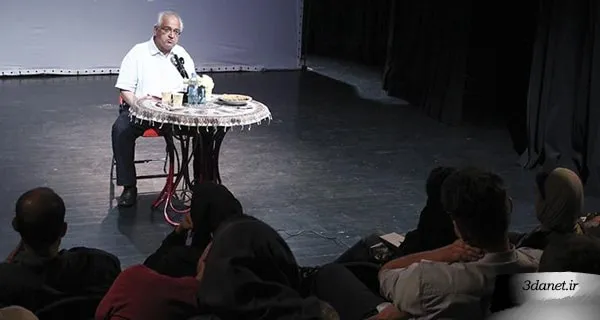
Babak Ahmadi enumerates the fundamental questions of the philosophy of art, arguing that genuine inquiry requires academic freedom and a democratic spirit. These conditions, he contends, are absent in Iran, where practitioners largely remain translators and commentators on the ideas of others.
My discussion concerns the current state of the philosophy of art in Iran, and for that reason I thought I would briefly discuss the issues raised in the philosophy of art, because if the questions that the philosophy of art poses are clarified, perhaps we can better understand the state of the philosophy of art. The main questions facing the philosophy of art are fundamental questions about art. That is, with the various artistic discourses and theories and the diverse issues raised about art in any society, these issues are also raised. Philosophy's primary claim is that it poses precise and fundamental questions, and its second claim is that it can at least offer clear and debatable answers to these questions that are considered correct until further notice. Philosophy has always been like this.
Five Categories of Questions in the Philosophy of Art
The main questions raised in the philosophy of art can be divided into five categories: The first category is semantic questions (semantics), such as asking what art means and what reality means? No one expects the artist to say what reality means. Of course, artworks often deal with reality, but they do not provide a philosophical answer to this matter, meaning they do not provide an answer that is the subject of philosophical debates. The artwork, within itself and its own world—that is, the world of the text or the world of the work—offers an answer it deems correct to this question; the philosopher asks whether this answer is philosophically correct and compares it with other works that have emerged throughout the history of art. Another question is: What is art? Artists usually begin their work assuming they know the answer. Philosophers offer various theories about this and debate with one another. Now, in the early twenty-first century, in response to the question of what art is, we have dozens of philosophical theories; which ones are correct and which are more precise is a matter of debate, and the philosopher's task is to fuel such a discussion. The second category of questions that the philosophy of art raises is logical questions, such as asking what the conditions for the validity of an artistic argument are, and whether something called an artistic argument fundamentally exists or not? This is a very key point that has been raised in the discussions of the last decade in the philosophy of art, especially in the branch of analytic philosophy of art. The third category is ontological questions, for example, do the characters presented within an artwork exist or not? Again, in analytic philosophy in the last decade, very fascinating and readable discussions have been raised about fictional characters. The fourth category is epistemological questions. Fundamentally, does something called artistic knowledge exist or not? Is artistic knowledge possible or not? If the answer is negative, this part of the philosophy of art is of no use, but the answer is usually positive, stating that artistic knowledge is possible. Can an artwork be considered a criterion of truth and, at the very least, can a series of theories about reality be drawn from it?
Artistic knowledge, in my opinion, can go beyond the realm of art and, with its help, bring forth novel points. Like the speaker who spoke before me, he presented a literary example from one of the greatest novels in the Persian language (The Blind Owl) and drew a series of philosophical questions from it. This reciprocal relationship that forms between philosophy and art is because the philosophy of art has previously raised this series of cognitive questions and wanted to know whether artistic knowledge is possible or not.
Finally, the last questions, which are considered an appendix to those four previous categories, we call differentiating or distinguishing questions. Questions that differentiate between art and science, or art and religion. In this category, it is discussed to what extent what is raised in art relates to other domains (such as science, philosophy, religion, etc.). In this category of questions, it is discussed how the discourse of art in each branch of the arts intertwines with the rest of human knowledge.
Questioning Requires Freedom
Addressing these questions is the task of the philosopher of art, and from the time of Plato until now, philosophers have performed this task in the best possible way. This claim does not mean that every theory they proposed was correct—if that were the case, philosophy would come to a halt. What it means is that a great philosophical tradition was built in this field so that these questions could be raised: fundamental questions in the realm of art.
Questioning requires space, freedom of thought, and academic freedom so that someone can answer these questions. Questioning demands a democratic spirit, a readiness to listen to opposing views and engage in dialogue with them. Especially because these are fundamental questions, they require everyone's presence more than other questions do. Unfortunately, these conditions are not present in Iran, and as a result, philosophical work does not take place. At best, those working in these fields in Iran are translators and commentators, conveying the ideas of others to those who read in Persian. Since we have not created the primary context and the basic precondition for philosophizing that has taken shape in the West in recent centuries, we have never raised these questions.
In the 1960s, We Had Art, Not the Philosophy of Art
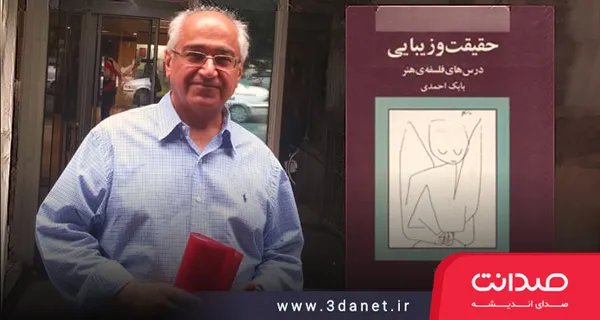
In my youth, that is, the late 1960s and early 1970s, the philosophy of art had no meaning whatsoever in Iran. In the Faculty of Literature, there was a philosophy department, and among the courses in the philosophy department, there was one course on art, and that course was taught by the late Mrs. Simin Daneshvar, whose task was to translate Arnold Hauser's book chapter by chapter and present it in simpler language. For several years, this book was the main source in this field. In the 1960s, which was the decade of artistic flourishing in Iran and when we witness the emergence of modernism in Iranian art, we did not even have a single valuable book in the field of the philosophy of art. In Truth and Beauty, I have actually introduced and, in fact, critiqued several earlier books. I wanted to show how far behind the discussion was. Without wishing to find fault with the efforts others endured in such backward conditions. But in any case, the discussions were very far behind. The books were not well chosen and were full of errors, both artistic errors and philosophical errors.
Some works that were somewhat usable approached the philosophy of art mainly from a leftist perspective. For example, the book The Necessity of Art: A Marxist Approach by Ernst Fischer, which was translated by the late Firouz Sheevanlou. Fischer was a Marxist, but an educated Marxist who emerged from the European critical tradition. The book was good, but understanding it was difficult and required supplementary discussions. But in any case, it was a credible book and had also received attention in the West in its time. Arnold Hauser's book, which Mrs. Daneshvar taught, also came from the leftist tradition, meaning Hauser was close to the Frankfurt School. Apart from these works, there was no other book on this subject in Persian; that is, just two or three books and a professor in one faculty. Of course, the professor was knowledgeable, had studied in America, was a prominent novelist, and was an intellectual and a thoughtful person, but the atmosphere was not at all favorable. Meanwhile, art was doing its own work. The most prominent Iranian artists of the twentieth century were working precisely at that time. Ahmad Shamlou was writing poetry; Bahram Beyzai had entered the Iranian theater scene with Arash at the beginning of the 1960s. In many branches of art, such as photography, painting, etc., innovation had emerged. The 1960s was also strange in that the government had provided facilities, such as television and the Theatre Workshop, etc.
In that decade, which we call Iran's golden cultural decade, there was no sign of the philosophy of art. In fact, there was no sign of philosophy. If you look at a list of works published in the field of philosophy, you will see that there was no significant work. There was also no sign of the great figures in the history of philosophy. The late Mohammad Hassan Lotfi was gradually translating the complete works of Plato; there was almost no work by Aristotle, and no work by Hegel existed in Persian. When the book Hegel's Philosophy by W. T. Stace was published in Persian, translated by the late Hamid Enayat, no work by Hegel himself was available in Persian. There was also no work by Kant. The late Manouchehr Bozorgmehr had translated a short article. As a result, we had no access to any philosophical source in the Persian language. The best philosophy students were those who knew a European language (English, French, etc.), and their number was not large. This is the sorrowful account of the history of the philosophy of art in Iran. But at that same time, art was at its peak.
We Had No Philosophers
The reality is that when we speak of the philosophy of art, we must consider the two components of this concept (philosophy of art), meaning the philosophy of art is connected to philosophy on one hand and to art on the other. The philosophy of art is, in a way, a bridge between philosophy and art, by raising the aforementioned questions. The state of philosophy in Iran at that time was deplorable, and it is no better now. In thought, with the late Fardid, we witnessed the dominance of a kind of medieval feudal thought; he was the main representative of philosophy, the only one who created something in his words, because he wrote nothing. If we look at the matter through Gilles Deleuze, we can say he was the only one who constructed a concept, and that concept was Westoxification, in the sense he had learned from Heidegger or, in my opinion, had not quite learned. I think this critical view of the past, which is always present in my words, is necessary. One must not stand on ceremony, and the privileges of an old society must be set aside. Philosophy in its essence is critical thought; philosophers find fault with one another. The greatest philosopher in the history of philosophy, at least in my opinion, Aristotle, says of his teacher Plato: I love him, but I love the truth more. If we invert this expression, it becomes: I dislike him, but I dislike falsehood more. Philosophy is the only branch of human knowledge whose name contains the word love; philosophy literally means the love of wisdom. Thus, we are faced with a combination of love for wisdom and hatred of falsehood.
We had nothing in philosophy. The fact that a few people were doing philosophical work is not surprising; after all, everywhere there are individuals who do something, and these individuals are subjected to enough taunts, ridicule, pressure, and humiliation. If we want to speak of philosophy and its connection to art, it means that philosophy must have educational institutions. Philosophy requires academic freedom so that it can be criticized. With the master-disciple relationships and the mystical gaze that has permeated all of contemporary Iranian philosophy, critical thought does not take shape, and philosophy does not grow without critical thought. The soil in which philosophy flourishes is critical thought.
Our Philosophical Publishing Has Improved
Philosophical publishing in our time has undoubtedly improved greatly and is not comparable to the era of my youth. A multitude of young people are translating philosophical works. The number of titles is high, and print runs are low. This indicates that everyone makes their own choices. Many of the translations are not precise; that is fine, they will become precise later. Translation criticism has not yet taken off. It is gradually taking shape, and this is good. Provided, of course, that it is not accompanied by rudeness and insolent speech, that it contains a love of truth, and that envy and rivalry are not its cause—that is, that old sickness of competitiveness, meaning 'what I say is right and what you say is wrong!' A student who is now in the final stages of studying philosophy in England said that analytic philosophy is entirely rubbish. This statement is tragic. For a student at the doctoral level in philosophy to speak in this way about one of the two main branches of twentieth-century philosophy means they have learned nothing from philosophy. Whereas, for two or three decades now, a dialogue has opened up between continental philosophy and analytic philosophy. They have common subjects, and tremendous work has been done in this area. An example is the discussions that have been raised about speech act theory; dozens of examples can be cited from great figures like Gadamer, Deleuze, and Foucault. As a result, I must say that in the field of the philosophy of art, publishing is improving; it is good, but it is very little. It is a machine that has been set in motion, but it is a dilapidated machine. It needs to be attended to. To attend to it, we need academic educational institutions. Philosophy has always been accompanied by educational institutions, by Plato's Academy and Aristotle's Lyceum. Philosophy has needed a community to discuss with one another. For philosophical discussion, we need freedom, and in its absence, those who engage in philosophy are, at best, commentators who transfer the thoughts of others into their own intellectual sphere.
We Do Not Respect Philosophy
We hold our own intellectual tradition in high esteem, but those who are supposed to esteem it better than us do not know it at all, and as a result, we gain nothing from it. In closing, I will point to the identity of philosophy in society. In the film shown at the beginning of the session, a female student said that someone who comes to study philosophy does not know what they are doing, that those with high IQs (IQ) do not choose it, its degree is useless, and someone who even gets a PhD in philosophy must either teach it, or translate, or find a personal job outside of philosophical work, in the press or... In general, philosophy has no respect in our society. A society that does not respect philosophy is not a respectable society. Because philosophy is the piety and asceticism of thought. Philosophy is the most respectable work a human being can do; philosophy is the most fundamental discipline that has been built over the 2,500-year history of its own culture and civilization, and in Iran, it is unimportant, and philosophers have no standing. That is, if we have used the word philosopher correctly.
Art Is Not Flourishing
But what does the philosophy of art have to do with art? The institutions for producing works in art must be flourishing. In Iran, they are not. The heavy claw of power has coiled around all of them. They are controlled both financially and in terms of content. As a result, Iranian works of art are produced under the worst conditions. Theater directors, filmmakers, writers, etc., are under pressure. This cultural pressure prevents Iranian art from growing. It is as if the love of philosophy also exists in art. Those who do artistic work are in love with their work, and as a result, they have worked even under the most difficult conditions. But it is tragic that among the greatest Iranian filmmakers, the films of one have not been shown in Iran for 20 years, another is housebound, and another has found no recourse but to emigrate. It is tragic that novels are subjected to censorship, and from an 80-page book, 40 pages fall victim to censorship. Under such conditions, art is in eclipse, and essentially, there is no art; what exists is the sacrifice of an artist and taking risks, which ultimately leads to emigration, or loneliness, or poverty and hunger. As a result, art is under pressure both from power and from institutions and capital.
But what does the philosophy of art have to say about Iranian art? The French philosopher Jean-Luc Nancy wrote a lengthy book on the cinema of Abbas Kiarostami. But Kiarostami cannot make films in his own country, and Iranians have largely reacted to Kiarostami's cinema out of jealousy, subjecting it to all kinds of slander and contempt, accusing it of being festival cinema. Even writers who claim to be leftists, even writers who were brought up on the Frankfurt School. They write the most insulting book about Kiarostami. There is not a single word of logic in this book. The authors of this book offer no reasons and only heap slander and insults upon him. They claim that Kiarostami only makes films for Parisians. But Parisians believe that Kiarostami shows our Iran. I must emphasize that I am not a great admirer of Kiarostami and his films. But I respect him as an artist. The filmmaker I am very fond of is Bahram Beyzai, who has not been in Iran for years. He once said he would not leave so that many would not be happy. He finally left, and many were happy.
But what is the state of art education institutions? You know the state of the universities, and I have nothing to add to that. That leaves the state of more private institutions. They are also under pressure. Nevertheless, many discussions that cannot be raised in universities have been transferred to these institutions. But these institutions have high costs. This is shameful. There was a time when Plato criticized the Sophists for taking money for education. Now this situation has occurred. Many of my students no longer enroll because they cannot afford it, and this government, with this volume of wealth, is obligated to teach these students for free. This is while the humanities are under pressure.
The Future Depends on the Youth
Under these circumstances, I conclude that we are not in a favorable situation. Neither the philosopher's situation is good, nor that of the philosopher of art. We have created neither a philosophy of art nor philosophical thought. Until we change these conditions, we will not have a better world. All that remains is the effort, endeavor, resolve, and sacrifice of a group of people who forgo a comfortable life and strive to teach others something and learn something from life themselves. After these bitter words I have spoken, I return to that machine that has just started moving. The duty lies with you, the students. We are gone, whatever we were, we have lived our lives, we are guests in this world for a decade at most. But it is the duty of you, the young generation, not to accept these conditions, to strive to change and improve them, to demand your rights, to live differently and think differently, and to create a different art and a new philosophy. This is the responsibility of the youth; our time has passed, we made our effort, we knew no better, we are ashamed before history!
.
Discussion0 comments
No comments yet; let yours be the first voice.