Philosophy
Lectures on Theism and Atheism, Science and Religion in Wittgenstein's Philosophy by Zohair Bagheri Noaparast
Zohair Bagheri Typeparast examines Wittgenstein's distinctive perspective on God, religion, and science across eleven sessions; language games, grammar, and fideism are explored in these lectures based on an English-language book.
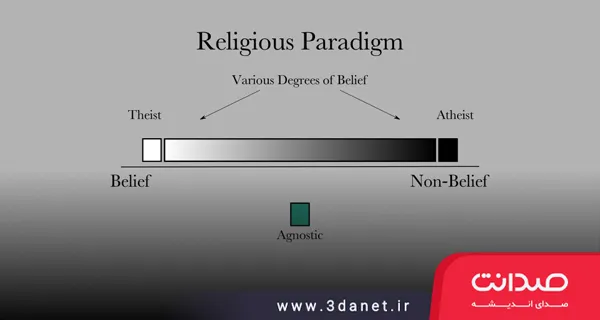
Zohair Bagheri Noaparast: Wittgenstein's attitude toward theism and atheism differs from that of most philosophers, and the place he assigns to science and religion in human life also has fundamental differences from common views on these two phenomena. Therefore, if you wish to look at God, religion, and science in a completely new and different way, these lectures are recommended to you. In these sessions, we will address the place of religion, God, and science in Wittgenstein's philosophy. These lectures are based on a book I have written in English, which is in press. These lectures are in English and have Persian subtitles.
1- First Session: Religion and Science
In these sessions, we are going to address Wittgenstein's attitude toward religion, theism, and science and naturalism. In this video, which is the first video of this series, I will examine the possibility of providing a definition of religion, and then, by examining the texts left by Wittgenstein, we will point to some common elements among religions and examine them. In this session, I will also address the Tractatus Logico-Philosophicus and Lectures on Religious Belief.
2- Second Session: Magic and Rituals
In the previous session, we addressed the place of religion in Wittgenstein's Tractatus Logico-Philosophicus and Lectures on Religious Belief. In this session, we turn to "Remarks on Frazer's Golden Bough." These remarks include criticisms that Wittgenstein levels against James Frazer and his conceptions of magic, rituals, and religion. By examining this text, the distinction between science and religion in the later Wittgenstein's philosophy becomes clearer.
3- Third Session: Language-Game
In this video, I will first address the concept of language in the early Wittgenstein's philosophy. Then we will examine why and how Wittgenstein developed the concept of language-game. We will refer to parts of the Brown Book and Philosophical Investigations to examine the concept of language-game in more detail. By addressing the wood-sellers thought experiment in Wittgenstein's philosophy, we will examine two interpretations of language-game: behaviorist and normative.
4- Fourth Session: Grammar
In this session, we will first examine the concept of grammar in the later Wittgenstein's philosophy. "Grammar" is used in different parts of Wittgenstein's works and plays an important role in his philosophy. It is necessary to first examine this concept so that we can understand the grammar of the language-game of religion. Therefore, after examining grammar, we will address the grammar of the language-game of religion and the concept of God in Wittgenstein's philosophy. The concept of grammar in Wittgenstein's philosophy has similarities to the concept of grammar in Nietzsche's philosophy, and we will also point to this similarity.
5- Fifth Session: Fideism
In this session, we will examine whether Wittgenstein's position constitutes a form of fideism. Kai Nielsen, in his 1967 article titled In this session, we will elaborate on Wittgensteinian naturalism. Some commentators have called Wittgenstein's naturalism liberal naturalism. By examining Wittgensteinian naturalism, scientism, and theism, we will explore the characteristics of Wittgenstein's view, and the following topics will also be discussed: Wittgenstein's critique of psychology and the Freudian idea of the unconscious The methodology of philosophy and the humanities as envisioned by Wittgenstein The concept of family resemblance In this session, we will address another aspect of the language game of science. The idea of progress, which is usually associated with scientism, will be examined. Wittgenstein was opposed to the idea of progress, and in this session, we will examine his reasons and the reasons that can be developed based on his view. Then we will point to the role of myths in human languages in general and in scientific language, and finally, we will examine the role and place of faith and trust in the language game of science. In this session, we will first examine the later Wittgenstein's conception of philosophy and whether, from his perspective, it differs fundamentally from other types of philosophy. Then we will introduce the philosophy of religion from Wittgenstein's perspective, and afterward, the relationship between science and religion will be the subject of discussion (we will draw on Ian Barbour's book and examine the four models of conflict, independence, integration, and dialogue). The relationship of Wittgenstein's view to each of these four approaches will be discussed. At the end, questions for further exploration will be posed.10- Tenth Session: Progress, Myths, and Faith
11- Eleventh Session: Wittgensteinian Philosophy of Religion





Discussion3 comments
جلسهٔ اول: دین و علم https://www.youtube.com/watch?v=L9VQS9kolNI جلسهٔ دوم: جادو و مناسک https://www.youtube.com/watch?v=4DvKC39ssK4 جلسهٔ سوم: بازی زبانی https://www.youtube.com/watch?v=UfvccIzl1pk&t=828s جلسهٔ چهارم: گرامر https://www.youtube.com/watch?v=BQ12kGylR4k&t=174s جلسه پنجم: ایمان گرایی https://www.youtube.com/watch?v=D1kcYnXjx7Y&t=2035s جلسهٔ ششم: خداوند https://www.youtube.com/watch?v=xz3QBAEXFno&t=107s جلسهٔ هفتم: نسبیگرایی https://www.youtube.com/watch?v=bwukuzMCCGA&t=52s
کجا میشه گوش داد این درسگفتارها رو؟
روی هرکدام از تیتر ها کلیک کنید میآید. در یوتیوب منتشر شده است.