Philosophy
Zohair Bagheri Typeparast's essay 'A Liberal Approach to Global Injustice and Poverty'
Liberal philosopher Thomas Pogge sees global poverty as the gravest human-rights violation, rooted in the unjust distribution of wealth. He argues that seven percent of the world's wealth could eradicate poverty, provided supranational institutions do not themselves violate human rights.
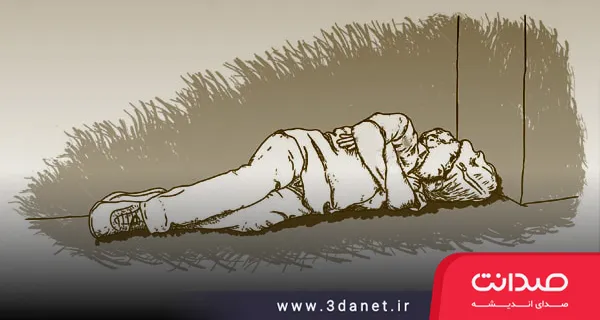
Thomas Pogge is a German-American philosopher and a student of John Rawls who researches social justice, global poverty, and human rights. His approach aligns with the intellectual tradition of liberalism and adopts a human-rights perspective on these issues. Poverty and discrimination are among the human problems that every person, regardless of their intellectual and political leanings, must pay attention to. Below, read a selection of Pogge's remarks on poverty and injustice. The aim of "social justice" is to review and establish social institutions in such a way that all individuals enjoy human rights. Although the concept of "human rights" is one that emerged in the West, general ideas such as that every human being should have enough food to eat, the necessary freedom to choose a religion, and a place to sleep, are ideas that have independently emerged in various forms in different civilizations, and the concept of human rights is also derived from these ideas in the Western tradition. Since we live in a global society where corporations, with transnational regulations, play a prominent role in different countries and communities, the concept of social justice must be defined in such a way that regulations in transnational institutions are structured so as not to violate human rights.
When we think of human rights violations, we often consider a person in prison, awaiting execution, or other situations in which an individual is depicted. Yet, due to the poverty we have, the human rights of billions of people are being violated. Poverty is the greatest factor in the violation of human rights in the world. This is the first clause of Article 25 of the Universal Declaration of Human Rights: "Everyone has the right to a standard of living adequate for the health and well-being of himself and of his family, including food, clothing, housing and medical care and necessary social services, and the right to security in the event of unemployment, sickness, disability, widowhood, old age or other lack of livelihood in circumstances beyond his control."
In 2012, 868 million people were chronically malnourished, two billion people lacked access to essential medicines, 783 million people were deprived of clean drinking water, in 2005 one billion six hundred million people lacked adequate shelter, the same number of people lack access to electricity, 2.5 billion people lack access to adequate sanitation, 796 million adults are illiterate, and 218 million children between the ages of 5 and 12 are working outside their homes in conditions of slavery. About one-third of deaths are related to poverty, meaning 18 million out of the 57 million people who die each year. These statistics only reflect deaths from diseases that do not exist in developed countries, such as deaths from malnutrition, tuberculosis, meningitis, and malaria. But if we consider diseases that are common worldwide (such as heart disease, diabetes, etc.), then in the last 22 years we have had 400 million deaths due to poverty. This number is twice the deaths caused by state violence in the twentieth century. That is, more than wars, Nazi forced labor camps, Gulags, and so on. All of these cases resulted in about 220 million deaths. Yet poverty alone has led to about 400 million deaths in just the last 20 years.
The distribution of wealth is extremely unjust. 5% of the world's population holds approximately 46% of the world's wealth, and roughly the same amount of wealth is distributed among 20% of the remaining population, meaning that just 25% of the world's population controls about 90% of the world's wealth. The remaining 10% of wealth is distributed among 75% of the world's people. (According to the 2014 Human Development Report by the UNDP, about 1% of the world's high-income population accounted for 48% of global wealth, a figure predicted to reach 50% in 2016.) This level of inequality has been particularly influenced by the globalization of the last twenty years, a period during which income inequality has increased at both the international and national levels everywhere in the world. In the United States, from 1978 to 2007, the income of the poorer half of the population fell from 26% to about 13%, while the income of the wealthiest 1% rose from about 9% to about 24%, and the income of the wealthiest 0.01% of American society increased from 2.65% to 12.28% (i.e., roughly a fivefold increase), and the income of the wealthiest 0.001% of the US population increased sevenfold, rising from 0.86% to 6.04%. The 0.001% of the US population, meaning 30,000 people in America, have an income equivalent to that of the other 280 million Americans. The existence of inequality is entirely serious and palpable. This issue exists throughout the world. Between 1998 and 2005, the wealthiest 5% of the population experienced the greatest increase in wealth, while the wealth of the majority of people fell to one-third of what it had been. In the period between 1998 and 2005, the ratio of the average income of the wealthiest 5% to the poorest rose from "185 to 1" to "297 to 1."
To eliminate the severe poverty that exists, only 7% of the world's wealth is needed, and if this amount were deducted from the assets of the wealthy, 93% of their wealth would still remain. If the wealthy were to forgo this portion of their wealth, poverty would become a thing of the past. Therefore, from an economic perspective, poverty is a small problem; only 7% of the world's total wealth is at stake. However, in terms of human cost, there is a terrible cost; we are currently witnessing the systematic and widespread violation of human rights due to poverty.
We live in a world where competition exists everywhere: in the market, university, sports, and so on. Competition is generally a desirable phenomenon because it allows us to focus on activities that are beneficial to society and try to do that work in the best possible way. However, competition is desirable only on the condition that individuals who perform genuinely desirable work for society are encouraged. But the problem with systems founded on competition is that one can participate in and win a competition in two ways: first, by competing according to the rules of the competition and winning through better performance based on those rules; second, by trying to change the rules and regulations in a way that creates the conditions for one's own victory. The second solution is called "corruption," because it involves trying to secure a victory we do not deserve by influencing those who make the laws or those who enforce them. Therefore, the Achilles' heel of competitive systems is that participants expend part of their energy on entrenching and reinforcing corruption. This issue progresses to the point where, instead of competition being based on rules and laws, the competition becomes over the rules and laws themselves, because everyone wants to formulate the rules and regulations in a way that benefits them the most. In this state, the efficiency of institutions decreases in two ways. First, instead of investing money in what is beneficial for society, they spend it on regulatory capture. As long as these efforts are successful, rules and laws can no longer determine what is beneficial for society, and one cannot estimate social benefit based on them. In this way, the wealthy can use money to adjust rules and regulations to bring them the greatest benefit; their success in this process increases their ability and motivation to continue this work. This is precisely what is happening at the international level.
International trade is vast in scale; if someone can alter these rules and regulations to their own advantage, they stand to reap enormous profits. Consequently, there is intense competition to influence these rules and regulations. Moreover, the process by which these rules and regulations are formed is not democratic. Negotiations for establishing international laws and regulations often take place behind closed doors, where no one will ever know who defended which law, or whose opinion—which individual or company—was ultimately codified as law. Thus, there is no transparency, and no one is held accountable for the enacted laws and rules.
The existing globalized economic structure negatively impacts the lives of the poor in underdeveloped countries, both directly and indirectly. For instance, developed nations, in their trade with underdeveloped countries, reserve the right to protect their own markets against goods from developing countries. One of the most significant examples of this is the subsidies that developed governments provide for their domestic goods, making imports from underdeveloped or developing countries more difficult or impossible. Or, for example, international labor laws, which define the rights and duties of employees, workers, unions, and governments, are structured in a way that serves the interests of wealthy countries and their factories and companies. Developed countries, and the United States in particular, play a role in the distribution and entrenchment of poverty in underdeveloped or developing countries through these methods. Many, pointing to examples like China, which by joining the global market managed to alter the extent and nature of poverty within its borders, argue that the existence of poverty in some countries shows that international rules are not to blame, but rather the national laws of certain countries, local institutions, or other local factors are the cause of poverty. This argument is flawed, and its fallacy can be tangibly demonstrated with an example. In some universities, within a single class, some students master the material well and acquire the necessary perspective to analyze problems in their field of expertise, while others do not. Can one conclude that the students' level of knowledge is unrelated to the professor? They all have the same professor. If they had a better professor, the average knowledge and literacy of the students could be raised. Likewise, if the professor taught using a different method, they could improve the performance of the students who are already doing better. It is also possible that the professor, for some reason, encouraged certain students more than others. For example, if a professor is sexist, they will automatically demotivate many female students. This lack of success has nothing to do with the mental ability and intelligence of the female students. In the same way, international laws and institutions are implicated in the emergence and manifestation of greater poverty in some countries.
We are not responsible for human rights that were violated, say, hundreds of years ago, and we cannot do anything about a hundred years ago or hundreds of years ago. But in the current world and at the present time, we can, through our decisions and actions, make changes to protect the human rights of living people. We usually view human rights as a relationship between human beings (whether individually or collectively). For example, we point to the violation of human rights by governments, police, or warring armies. To determine whether human rights have been violated, we have criteria. For instance, we must be able to see the trace of human actions in the violation of human rights; humans must have played a role in this violation based on their decisions and actions; and the person performing an action must be aware that their action leads to a human rights violation. In the same way, we can speak of institutions, rules, and practices that lead to human rights violations. When human rights are violated and the cause is specific social rules or the existing arrangement and order within institutions, and there are individuals who establish and enforce these social rules, who can become aware that human rights are being violated, and where alternative plans could prevent the violation of human rights, we have a situation in which the violation of human rights is both comprehensible and preventable.
International rules and institutions can violate human rights. At the international level, too, institutions must be reformed and changed so that we can prevent human rights violations. Thus, human rights constitute a minimal condition for securing social justice at both the national and international levels. International laws and institutions suffer from a kind of contradiction. While human rights are well articulated in the Universal Declaration of Human Rights, some institutions, such as the World Trade Organization, are administered in ways that violate the rights set forth in the Declaration. Therefore, international laws are founded on the principle that the rights of all human beings should be realized, yet international institutions are structured in such a way that they systematically obstruct the realization of human rights.
Programs such as the "Millennium Development Goals" were among the initiatives intended to bring about a series of changes over a specific period, including combating poverty. The first goal of this program was to eradicate extreme poverty and hunger. It was planned that within 25 years (from 1990 to 2015), two-thirds of extreme poverty would be eliminated and 45% of hunger would also be eradicated. The problem with such approaches is that, instead of making human rights the central focus, they are defined in a goal-oriented manner. For instance, a goal is set to eliminate hunger and malnutrition over the next few decades. Yet these are violations of human rights. And it is quite absurd to say we will eliminate poverty and hunger in fifty years, especially since the cost required to eradicate these problems does not require fifty years. The cost of the Iraq War would have been sufficient to eradicate hunger and poverty worldwide. Therefore, from an economic standpoint, this is a small problem. But from a human standpoint, it is a very great problem, as nearly half of humanity is entangled in these issues.
Moreover, organizations that are themselves engaged in activities should not also set the criteria. The criteria for combating poverty and hunger and the standards for fighting them should be determined by specialists and university professors. Consider the FAO, for example. When the FAO announced that there were one billion hungry people, it came under intense pressure. Developed governments, which had previously attributed the reduction of hunger to globalization programs, were suddenly shocked by this news. Instead of governments addressing the problem of hunger and poverty by making changes, the definition of poverty and hunger was changed. As a result, we witnessed, for the first time in history, more than one billion people in the world suffering from malnutrition and hunger, while on the other hand, it was claimed that poverty was decreasing. Logically, these two are inconsistent. How is it possible for poverty to decrease proportionally while hunger increases? Poverty had not decreased, but it was calculated by the World Bank in a way that made it appear to have decreased. In the conflict that arose between the World Bank's report of decreasing poverty and the FAO's report of increasing hunger and malnutrition, it was the FAO that changed its calculation method. In such a way that, according to their new statistics, they increased the hunger rate for 1990 and decreased it for 2012, and thus the World Bank's poverty statistics and the FAO's hunger and malnutrition statistics became consistent. The method of calculating malnutrition is generally problematic. For example, one of the criteria they consider for malnutrition is the amount of food available for consumption. Whereas, among poor people in developing and underdeveloped countries, it is not merely a matter of food. The prevalence of parasites, intestinal diseases, and so on is such that providing the necessary food alone cannot guarantee the absence of malnutrition. Secondly, the FAO emphasizes the amount of energy consumed, whereas a person might drink Coca-Cola to meet their energy needs, but this does not prevent malnutrition. Iron, vitamin, and iodine deficiencies, and other types of malnutrition are common in developing and underdeveloped countries, which cannot be assessed by calculating energy and calorie intake. Furthermore, the FAO has stated that 800 calories is sufficient to overcome malnutrition, whereas this amount of energy is not enough for people who perform heavy and strenuous physical labor. Consider women who must go to the river with a large bucket to fetch tap water and carry that bucket full of water on their heads. Or men who do heavy physical work and must expend a great deal of energy. In addition, the FAO has declared that the conditions which, in the FAO's view, constitute malnutrition must persist for one year to qualify as a state of malnutrition, and if this period is less than a year, the FAO does not consider it as malnutrition. The FAO's claim is that the persistence of these conditions for a period of less than a year is stressful but does not pose a serious health risk. This is not the case, however, and if individuals do not receive enough energy, they may die. Therefore, the FAO's definition overlooks many people, individuals who are suffering from malnutrition or are considered hungry. The FAO is an intergovernmental organization; its leaders are chosen by governments, and its budget is also funded by governments.
We must practice putting pressure on national and international institutions. By pressuring institutions, we can also combat systematic discrimination and take steps toward ensuring the health, well-being, and rights of all human beings. One solution for eliminating poverty on an individual or small scale is participation in non-governmental organizations, going to villages for volunteer work, and doing things of this nature. In fact, if we think we lack the ability to pressure international institutions, this does not mean we can do nothing in this regard and have no responsibility. We can pursue the implementation of sustainable programs to combat poverty. Programs that go beyond donating food and clothing.
.
. Sources and for further reading:
Pogge, T. (2004). The first United Nations millennium development goal: A cause for celebration?. Journal of Human Development, ۵(۳), ۳۷۷-۳۹۷.
Pogge, T. W. (2008). World poverty and human rights. Polity.
Pogge, T. (2012) Ending Poverty.
Pogge, T. (2015) Human Right to be Free From Poverty
.
.
A Liberal Approach to Global Injustice and Poverty
Zohair Bagheri Typeparast
.
.



Discussion0 comments
No comments yet; let yours be the first voice.