Philosophy
Khosrow Bagheri Noaparast's article “A Review and Critique of the Book From Secular Science to Religious Science”
“From Secular Science to Religious Science” views the link between science and metaphysics as additive and a posteriori, and acknowledges the neutrality of science. Khosrow Bagheri Noaparast argues that religious science depends on an organic relationship between science and metaphysics, not the addition of a metaphysical framework.
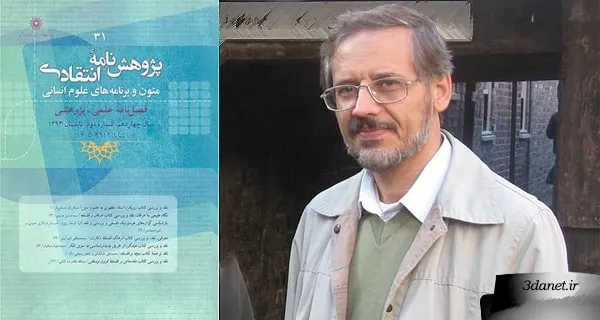
The book From Secular Science to Religious Science (Golshani, 1998/2013) is the result of an effort to critique the secular approach to science and to call for a religious approach to science. The author takes two fundamental steps in critiquing the secular approach. First, he argues that science requires direction; a direction that derives from the scientist's worldview. In the course of this argument, the author critiques the positivist view and attempts to show that science has metaphysical presuppositions. Second, science, in the application of its findings, needs ethics, without which it leads to destruction. In the present article, using the method of internal and external critique, it is argued that despite the author's attention to the relationship between science and metaphysics, he has not succeeded in explaining this relationship because he has, on the one hand, related it to the realm of application and ethics, and on the other hand, limited it to the a posteriori addition of a metaphysical framework to science.

This same additive and a posteriori approach has forced the author to acknowledge the neutral nature of science, which itself indicates his incomplete liberation from positivism. The suggestion of the present article is that the appropriate concept of religious science depends on attention to the organic relationship between science and metaphysics. This relationship, despite the conception of Reichenbach and, following him, Stenmark, does not subject science to a reprehensible relativism; although it does entail an appropriate degree of relativism.
.
.
References:
Bagheri, Khosrow (1995). The Identity of Religious Science. Hawzah va Daneshgah Quarterly.
Bagheri, Khosrow (2003). The Identity of Religious Science: An Epistemological Look at the Relation of Religion to the Human Sciences. Tehran: Ministry of Islamic Culture and Guidance.
Javadi Amoli, Abdollah (1993). Sharia in the Mirror of Knowledge. Qom: Raja Cultural Publishing Center.
Golshani, Mehdi (2013). From Secular Science to Religious Science. Tehran: Institute for Humanities and Cultural Studies.
Al-Attas, S.M.N. (1979). Aims and objectives of Islamic education. London: Hodder & Stoughton.
Al-Faruqi, I.R. (1988). Islamization of knowledge: Problems, principles and prospective. In Islam: Source and purpose of knowledge. Herndon, Virginial: International Institute of Islamic Thought.
Brooke, J.H. (1996). Religious belief and the natural sciences: mapping the historical landscape. In: Van der Meer, J.M. (Ed.), Facets of faith and science. Volume 1. Lanham, Md.: University press of America, pp. 1-26.
Clouser, R.A. (2005). The myth of religious neutrality: an essay on the hidden role of religious belief in theories. Revised edition. Notre Dame, In.: University of Notre Dame Press.
Dooyeweerd, H. (1979). Roots of Western culture: pagan, secular and Christian options. Toronto: Wedge Publ. Foundation.
Harrison, P. (2007). The fall of man and the foundations of science. Cambridge: Cambridge University Press.
Lakatos, A. (1970). Falsification and the methodology of scientific research programmes, in I. Lakatos, and A. Musgrave (Eds.), Criticism and the growth of knowledge. Cambridge University Press.
MacKay, D.M. (1974). Complimentarity in scientific and theological thinking. Zygon, Journal of Religion and Science 9 (3).
Watkins, J. (1958). Influential and confirmable metaphysics. Mind, 67.
.
.
PDF file of this article
.
.
A Review and Critique of the Book From Secular Science to Religious Science by Mehdi Golshani
Author of the article: Khosrow Bagheri Noaparast (Professor at the University of Tehran, Faculty of Psychology and Education, Department of Philosophical and Social Foundations)
.
.



Discussion0 comments
No comments yet; let yours be the first voice.