Philosophy
Why We Must Change How We Approach Philosophical Problems
The Wittgenstein of the Tractatus Logico-Philosophicus seeks a change in how we approach language and philosophical problems—a change not of building a system, but of uprooting foundations and throwing away the ladder of propositions so that we may see the world.

Why We Must Change How We Approach Philosophical Problems
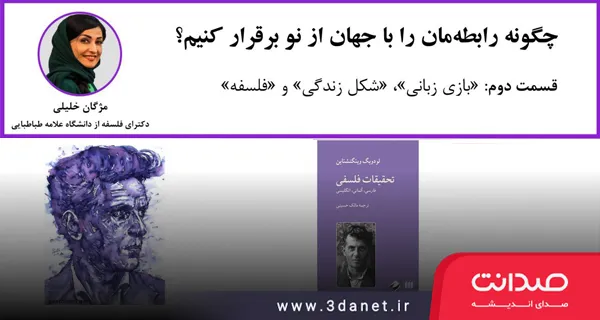
On the occasion of the trilingual publication of two major philosophical works of the twentieth century: Tractatus Logico-Philosophicus and Philosophical Investigations by Ludwig Wittgenstein, translated by Dr. Malek Hosseini
1- An Introduction to Two Great Works of the Twentieth Century: Tractatus Logico-Philosophicus and Philosophical Investigations
In letters written from a prisoner-of-war camp to Russell in 1919, Wittgenstein says that although he himself believes his book Tractatus Logico-Philosophicus[1] is clear in every respect and very lucid, no one will understand it, and this thought torments him.[2] And in the very first line of the Tractatus preface, he writes that perhaps this book will be understood only by someone who has already thought the thoughts expressed in it—or similar ones—themselves. But who could have previously thought like a philosopher whose address is to a human being from a different orbit?
Those scholars who, despite all the difficulty, read the text of Wittgenstein's Tractatus will be caught off guard from the very first steps; for sometimes, no matter which way they try to enter, the path is blocked and leads to a dead end. And from personal experience, I think the effort they make to continue reading and understanding it has more to do with their character than with their power of thought or capacity for comprehension. Perhaps one could say that only those for whom the matter becomes even more important when every path is closed to them, and who continue reading, will finally grasp the message of the Tractatus in a transformed way. Scholars of Wittgenstein's philosophy often advise against approaching the book alone, without a commentary or interpretation in hand, but in my opinion, reading accounts of encounters with the text of the Tractatus is more useful for an independent scholar than these commentaries. Because, on the one hand, these experiences are so diverse and yet so similar that they intensify wonder and sharpen its fire, rather than pointing to a specific path—and this very thing is "enthusiasm-generating," something essential for reading Wittgenstein—and on the other hand, perhaps having a pre-understanding through commentary prevents us from seeing the original text correctly.
Perhaps many of us Persian speakers share a similar experience of reading the Tractatus for the first time, and now, from that initial encounter with the text, we may remember nothing but a feeling of estrangement from the world of the text. Yet the impact of this strange feeling and the wonder it provoked was so powerful that we returned to it. And we endured the hardships of wandering among various English editions, existing Persian translations, and colorful commentaries. As well as the time spent searching for an edition that is the latest revision, and this time, too, the wandering between our own understanding and what each translation and commentary says. And perhaps some of us again share this common experience: we were compelled, with great expenditure of time and sometimes enduring wearing days, to constantly return to the beginning of the Tractatus. And various English editions of the text, Persian translations and commentaries, and English interpretations remained open on our desks for months; we would advance a little and then go back, repeat what we had read, and be forced to "read between the lines" as if it were a masterful work of non-fiction, searching for the main message in the white lines between sentences and words. The result was that we did not get past the propositions in the middle of the book. Because with the discovery of each new point, we had no choice but to return to the beginning to read the entire text again in the light of the new finding, until gradually this experience of encountering the text itself showed us the way, and we were content to read it steadily and calmly, like a mountaineer who has no choice but to ascend the steep slope of the ridge below the summit, which seems as if it will never end, slowly and steadily.
اما در این کشمکش میان کمآوردن نفس و اصرار بر استقامت هم، فقط لحظاتی است که میتوانیم از عادت جدا شویم و در جایگاه انسانی از مداری متفاوت بنشینیم و به عمق آنچه ویتگنشتاین میگوید راه پیدا کنیم، راهی که در خطوط درهمِ روزمرهگیهای فردای آن، گم میشود و وقتی دوباره میخواهیم از آن جاکه کتاب را بسته بودیم ادامه بدهیم باز باید برای برگشتن به مسیرهای ناآشنایی که پیدا نشده رخ میپوشانند، از اول تلاش کنیم. به نظرم تجربهی دریافت پیام رازآلودِ چنین کتابی که جز یک پانوشت، هیچ منبعی ندارد و وحیگونه مرزهای بیانِ اندیشهها را در زبان نشان میدهد، ناگهانی و شوکآورست. به یک باره خوانندهی سمج درمییابد فیلسوفی که کتاب را روایت میکند، بر بلندایی دور ازدسترس ایستاده و راهی کاملا دگرگون و متمایز با مسیرهای آشنا، برای اندیشیدن نشان میدهد و در روش ِآزاد خود، یگانه و یکهتاز است و دقیقا به همین خاطر هم نقدناپذیر. تاثیر تجربهی چنین دریافتی مقهورکننده و حتی شاید اولین بار، ناامیدکننده باشد. بیدلیل نیست یکی از شاگردان ویتگنشتاین، او را در حد پیامبری دست نیافتنی وصف میکند[3] گویی گاه از فرط هراسی که با طرز اندیشیدناش، به دل شاگردانش میانداخته، آنها را نسبت به خودشان ناامید و در پیدا کردن راه، دچار تردید میکرده است.
مخاطبِ «رساله»، برای فهم آنچه ویتگنشتاین میگوید نیاز دارد شیوهی رایجِ برخوردش را با جهان و مسائل فلسفی تغییر دهد، اما رقم خوردنِ چنین تغییری در عمل، یعنی متحول شدن طرز نگاهش به «زبان» که جوهر ملموس وجود انسانی اوست، و بنا به سرشتاش امکانات و مرزهایی دارد. و نکته قابل تامل اینجاست که نتیجهی این تغییر و تحول هم ساخته و پرداخته کردن یک شیوهی نوی فلسفی برای جایگزینیِ شیوههای رایج نیست. او از مخاطباش میخواهد بنیانها و بخش اساسیِ آنچه را که تا امروز دانستههای او را ساخته و مجموعهی پذیرفتههای موجه اوست، از ریشه بکَنَد و دور بریزد، و اگر موفق به چنین کاری بشود همانطوری که در فقرهی ماقبل آخر «رساله» میخوانیم، موفق میشود فلسفهورزی را در مداری دیگرآغاز کند و «نردبان» را دور بیندازد:
« گزارههای من به این طریق روشنکنندهاند که آنکس که مرا میفهمد آنها را در پایان مهمل مییابد، وقتی از طریق آنها- پله پله برآنها_ بالا رفته و از آنها گذشته است. ( او باید، به تعبیری، نردبان را دور اندازد وقتی به بالا رسید.) او باید از این گزارهها فرا برود و برآنها غلبه کند؛ آنوقت جهان را درست میبیند.»[4]
تعبیر «دورانداختن نردبان» میتواند همان عزم جزمکردن برای ایجاد انقلابی عظیم در طرز دیدن و روش برخورد با جهان باشدکه به جای ساخته و پرداخته کردنِ اندیشههایی جدید و نظامی حاضری، و قبلا اندیشیدهآرمان شده، انقلابی عظیم در خودِ ما ایجاد میکند تا بالا برویم، تغییرِ مدار و جایگاه بدهیم و به انسانی دیگر تبدیل بشویم و بالاخره بتوانیم از پسِ این دگرگونی که ما را به فرازی رها از بندِ عادت رسانده، جهان را درست ببینیم.
تفسیرهای زیادی از «رساله» شده، و به نظر میرسد در میان آنها، هدف ویتگنشتاین بیش از هر چیز به رای مفسرانی مثل «استنلی کاول»[5] و «جیمزکونانت»[6] نزدیک باشد که میگویند غایت نهایی ویتگنشتاین در «رساله» نمایندهی دورهی اول تاملات فلسفی اوست، تغییردادنِ نگاه ما به «کارِ فلسفه» است.
اما کتاب «تحقیقات فلسفی» نیز که نماینده اصلی دوره دوم تفکر فلسفی ویتگنشتاین است، تفاوتهایی اساسی با «رساله» دارد و از همین روست که به باور بسیاری، ویتگنشتاین موفق شده در اتفاقی نادر در تاریخ فلسفه، دو فلسفهی بزرگ به نام خودش ثبت کند. با اینحال همانطورکه گرِیلینگ،[7] توضیح میدهد «بدفهمیِ منطق زبان» (و رابطهی آن با کار فلسفهورزی) موضوع اصلیِ فلسفهی ویتگنشتاین و عامل پیوستگی فلسفه دوم و اول اوست، و نیزآنچهکه این دو مرحله را کاملا متفاوت میکند، رویکردِ دگرگون ویتگنشتاین در «تحقیقات فلسفی» به «منطق زبان» است تا جایی که انکار و ردِ بعضی از اصلیترین اصول فلسفهی اول، اساس کارِ فلسفهی دوم است.[8]
Grayling says Wittgenstein’s aim has two aspects: one is to “solve the problems of philosophy,”[9] and the second is to show that this is made possible by “showing how language works.”[10] According to Wittgenstein, we cannot take the problems of philosophy to a laboratory and solve them like problems concerning empirical phenomena, because they are conceptual and logical problems and must be examined and resolved, in accordance with their nature, by logical and conceptual methods. Problems concerning “existence, knowledge, truth, and value” have incurred vast and enormous costs over the long, millennia-spanning history of philosophical thought from classical antiquity to the present day, from the dedication of thinkers’ genius to answering these questions to the exorbitant time and expense other thinkers have spent analyzing and critiquing their answers. This is while Wittgenstein, contrary to this current of philosophical thought, believes these problems are not the subject matter of philosophy and are merely illusions arising from a failure to understand the logic of language, which have manifested as linguistic misunderstandings. Hence, the task of philosophy is to demonstrate the spuriousness of traditional philosophical problems by representing the nature of language and human thought, and to eliminate them. Why “understanding language”[11] solves the problems of philosophy is precisely what constitutes the essence of Wittgenstein’s philosophical work in both the Tractatus and the Philosophical Investigations, but in the first period of his thought, in the Tractatus, the fundamental idea was that understanding the underlying logical structure of language shows the limits of what can be expressed clearly and meaningfully—that is, we can say what we can think—and there was an assumption that language possesses a single, unique essence, and the logical structure underlying this essence could be discovered and explicated by analyzing the structures of language and the world and describing their relationship.[12]
But this very thought that language has a single essence and can be expressed in the form of a formula—a formula whose recognition in a single moment answers all philosophical problems concerning thought, the world, the value of religion, right and wrong, etc.—is precisely what Wittgenstein rejects in the Philosophical Investigations, considering it a vague idea and an oversimplification of problems that has fallen into the error of simplistic thinking by ignoring the immense diversity of language.[13]
The Tractatus is a small book consisting of seven austere propositions, each with sub-clauses numbered with decimal figures; but the Philosophical Investigations is more extensive and was previously divided into two main parts, and now, in its latest edition, is published under the same title Philosophical Investigations, composed of 693 separate, numbered remarks, followed by “Philosophy of Psychology” as an unfinished work in 14 fragments, appended and numbered in 372 sections.[14] The fragments of the remarks are not uniform throughout the book and vary from a single line to several paragraphs.
For the reader who, in the Tractatus, encounters a philosopher standing on a remote, inaccessible height and cannot clearly receive the message that is tinged with estrangement and bewilderment before their eyes, and who is seized with dread at every moment by the philosopher’s method of philosophizing, which sometimes distances itself from them by leagues, yet stands firm, perseveres, and does not abandon reading—the experience of reading the Philosophical Investigations becomes different. This time the philosopher is seated before them and is gentler, and in many places enters into a two-way dialogue with their audience, teaching them how to sit in the position of a questioner and philosophize.
The text of the Philosophical Investigations is multi-dimensional, replete with the technique of wordplay, punctuation styles, the arrangement of sentence sequences and paragraph fragments, and ultimately, elegant passages meticulously chosen and placed together to give the book a novel appearance and to provide the philosophy enthusiast, upon first encounter, with a dizzying and euphoric sensation, like listening to enchanting music or reading poetry or a story with a distinctive style and novel dialogues in a polyphonic narrative. These intertwined and combined features give the text various dimensions and directions, making it both difficult to understand and philosophical, and also not. For if we approach it without the defamiliarization provided by the Tractatus Logico-Philosophicus, with the common styles and the expectation of a coherent and clear understanding that we have of philosophical work, it will be not only difficult but perhaps incomprehensible. And if we wish to understand each fragment separately, like a few couplets of a ghazal, or a piece of beautiful prose and the ecstatic utterances of a sage-mystic, we must change our perspective each time and see it from another direction, much like the strange feeling we get each time we open the Divan of Shams or read a paragraph of the homiletic prose of our own Ayn al-Quzat Hamadani or Kharaqani. With this manner of approaching the text of the Philosophical Investigations as well, we will most likely fail to grasp a unified understanding of its overall aim and philosophical style. Because in the text of the book, a problem, with reference to specific examples, is constantly repeated from diverse perspectives so that its audience, with the help of this, can correctly understand the issues. An audience whose concerns, it seems, are never meant to be completely resolved. The structure of the work is formed like a continuous dialogue with its specific, hypothetical audience, and with a transformed form, it bears no resemblance to the common texts of philosophy written in a deductive argumentative form leading to specific theories as conclusions.
Wittgenstein begins the preface to the Philosophical Investigations as follows:
"In what follows I publish the thoughts, the precipitate of philosophical investigations which have occupied me for the last sixteen years. They concern many subjects: the concepts of meaning, of understanding, of a proposition or sentence, and so on. I have written down all these thoughts as remarks, short paragraphs; sometimes in longer chains about the same subject, sometimes jumping from one domain to another in a sudden change. — My initial intention was to gather all this together in a book, a book whose form I imagined differently at different times. But it seemed to me essential that in the book the thoughts should proceed from one subject to another in a natural and smooth sequence.
After several unsuccessful attempts to weld my results together into such a whole, I realized that I would never succeed in this; the best I could write would never be more than philosophical remarks; and my thoughts would soon grow feeble and lame if I tried to force them, against their natural inclination, in a single direction. — And this was, of course, connected with the very nature of the investigation itself. For it compels us to travel over a wide field of thought, criss-cross in every direction. — The philosophical remarks in this book are, as it were, a number of sketches of landscapes which were made in the course of these long and involved journeyings."[15]
2- Changing the Way We Approach Philosophical Problems: The Necessity of Understanding Today's World
Reading Wittgenstein and researching his philosophy is important, and doubly so, in this respect: his work teaches the skill of thinking appropriate to our life today and has reconstructed the authentic method of Socratic philosophizing. A Socrates who took his subjects from the everyday streets and marketplace, whose work was to walk on foot through the streets, gathering ordinary people around him in the Agora, or the main city square, to challenge the meanings, beliefs, and common rationality of the day's public sphere through debate, dialogue, and questioning. Wittgenstein's philosophy is, in fact, a revival of the authenticity of the act of philosophizing and a reminder of its original nature; he summons philosophizing from its source and origin of emergence and reconstructs it in a new form that fits the stature of the language and form of life of our era.
Therefore, Wittgenstein's audience can be confident that they have chosen a path intended to acquaint them, in its course, with the depth of thinking appropriate to the "form of life"[16]. We, the people of the age of networks and information explosion, have distanced ourselves by leagues from the unadorned "common sense" and mental readiness of ancient times, and have fallen into a vortex formed from all manner of entangled meanings and the ambiguities arising from their conflation, a vortex with no way out. Yet, mirage-like, it opens paths in every direction into foggy, bewildering corridors and labyrinths of snarled and knotted concepts and meanings, and only the final, hard-and-fast dead ends can disabuse the one who has traveled the whole way of the illusion of a path having been opened.
For this very reason, a change in how we view philosophy and a transformation in the method of dealing with philosophical problems is an urgent and pressing need for contemporary humanity. And perhaps it can be said that only authentic philosophizing can free us from the captivity of previously dictated thoughts and intellectual traditions that have lost their utility, so that we may freshly prepare to learn how to confront the mass of information and knowledge that has become tangled in blind knots. And after passing through these two stages, we might hope to arrive at a particular understanding of ourselves and our place in today's world. The experience Wittgenstein's audience gains is the acquisition of the skill of philosophizing appropriate to such a given, living "form of life," and it can be considered one of the necessities for understanding oneself and life in the present age.
Wittgenstein begins teaching this skill in the Tractatus and brings it to its peak in the Philosophical Investigations with the expression "language-game"[17]. Through deep philosophizing, he shows, regarding the fluid relationship between human language, thought, and life, that the path of philosophy has gone astray. And with his profound philosophical investigation, he unveils a significant deviation that has occurred in the long history of rational philosophical system-building, and shows how "contemporary man," due to a mistaken conception of the "work of philosophy" and "language," has fallen out of the orbit of his "form of life." And with his characteristic scrutiny, he shows why, if we consider the nature of philosophy to be "knowing" and its work to be arriving at a knowledge that answers all our questions and explains the system of existence completely and comprehensively, we fall into an abstract path detached from life, under whose conditions the verbosity of language flourishes, sickening and bewitching our consciousness and reason, yielding nothing but the "illusion of knowledge." The illusion of knowledge means "the correct meaning is with me," and this false assumption separates our "thought and reason" from what flows in the reality of living "life," creating for us the very philosophical problems and concerns we have today.
Wittgenstein does not seek to answer our questions, for he knows well that if he shows the way to discover the path that has caused us to fall into these deep questions and problems of life, they will vanish one after another and will no longer be problems demanding answers. A path that confronts us with deep-rooted pre-understandings and the entire sturdy edifice of assumption that has hitherto been considered the foundation of our language and philosophical understanding in its traditional form, and which, of course, does not easily tremble or collapse. Wittgenstein aims to make us self-aware of the hollow certainty that is like the narrow bottle that has trapped traditional philosophers like a fly inside it.[18] He wants to show us that the hard, rigid beliefs we have made the basis of our cognition are of the stuff of illusion and have no identity other than a corridor in a labyrinth of empowered words outside their "form of life."[19]
Fogelin[20] says: the work of philosophy—in fact its entire task—is to compel us to abandon our previous incorrect views. To show their incorrectness and how we can become captive to false assumptions through this inappropriate orientation, Wittgenstein uses many similes and metaphors. He points to paragraph 103 of the Philosophical Investigations as an example, where Wittgenstein likens these assumptions and justified beliefs to a pair of spectacles through which we look at the world, and his recommendation is not that we exchange our spectacles for a better pair, but that we must simply be able to take them off our eyes so that we become conscious of the incorrect and incorrigible method we had made the starting point for viewing the world.[21]
“The ideal is firmly and unshakably lodged in our minds. You cannot step outside it. You must always turn back. There is no outside at all; outside there is no air to live in.—Where does this come from? This idea is like a pair of glasses on our nose, and we see whatever we see through them. It never even occurs to us to take them off.”[22]

But a question is always raised about this creative and adventurous philosopher of the twentieth century: why is a thinker who, with a meticulous eye in the Tractatus, undertakes the precise engineering and clean demarcation of the boundaries of language and the world, and in the Philosophical Investigations shows us the various angles of our deep philosophical problems and describes concrete examples of the instances of thought, language, and life, always susceptible to misunderstanding and to different and contradictory interpretations?
Perhaps one answer to this question is: because we have gone astray and erred in our conception of what philosophical work is and, consequently, in understanding the role of “language.”
Wittgenstein shows us why our confusions and deep problems are linguistic and conceptual, arising through the key role that language plays in our way of thinking, and how authentic philosophizing is the only way to overcome the perplexities of modern humanity, and also through what method, understanding the nature of the work of “philosophy” makes understanding the role of “language” in the contemporary world possible. Therefore, to understand the essence of philosophical work, we urgently need to change our view of philosophizing, and such a change of view is achieved through a transformation in our selves and by working on ourselves, and is linked to our “form of life” and lived experience. This entire set of changes and transformations, that is, breaking away from common habit, is a very difficult task. “You must tear down the edifice of your pride. And that is terribly hard work.”[23]
We can consider Wittgenstein’s famous notion of the “language-game” as referring to this very entanglement of conceptual-linguistic problems with our “form of life” and lived experience within it, which is tied to our deep ethical and existential problems. Philosophizing upon a given form of life makes us aware of the diverse rules and the multiple, fluid logics of the language-games within it. And it is only after such self-awareness that we can understand our own position and narrate and describe our own personal story from what lies before us.
This narrative is important in two respects: on the one hand, it gives us an overall view and a secure picture of our world, within which we can become aware of our own place, and on the other hand, it reminds us that our particular form of life, with its set of language-games and multiple meanings, is only one among thousands of forms of life and diverse ways of seeing the world, and only one of the possible ways of understanding a multifaceted truth. It is from such a perspective that we can emerge from the illusion of knowledge and realize that “meaning is use”—a use dependent on various living, everyday relations; which is “fluid” and “changing” and, in each use, possesses a unique logic. And if, at Wittgenstein’s invitation, we undertake a Socratic philosophical investigation into our living “form of life,” we can arrive at a clear, overall view of these relations and our current situation within them. Attaining an integrated view and picture of the network of linguistic and intellectual interactions with all of given life helps us succeed in grasping the diverse perspectives of others on our problems, and this itself can broaden our horizon, because we understand that each of us, due to the nature of our linguistic and intellectual possibilities, habitually sees, depending on our situation, one aspect of a single truth—a truth for which there are always other angles of vision, and which we cannot, alone, see from all angles at once and in a single moment.
Therefore, if traditional philosophers see the work of philosophy as the knowledge and explanation of the world, and hold the notion that they can, alone and behind closed doors, apart from intellectual and linguistic relations and interaction, access a single, determinate, independent meaning out there, they not only fall into the trap of an illusory private and abstract meaning severed from the form of life, but also, with a claim that is fundamentally about the meaning of “knowing” and the pursuit of definitive answers, become captive within the trap and labyrinth of entangled linguistic concepts.
Wittgenstein’s distinctive work is to show a way of philosophizing for re-examining this accumulated knowledge in the mind, which has built up for us, in today’s world, a mass of epistemic propositions and justified, entangled assumptions. In doing so, he makes us understand that our beliefs, meanings, and knowledge emerge from the depths of a given “form of life” and are rooted in our unreflective practice within it[24], and are obtained from the heart of a network of linguistic and intellectual interactions within it; and that, due to the limits and nature of our “language,” we constantly get caught up in the diverse, complex, and knotted relations and relationships arising from the confusion and ambiguity of meanings, and we always need to reorder and rearrange, from the beginning and anew, “all that we claim to know.” Hence, the work of philosophy is not to bring us to knowledge, but rather, by examining what we know, and by refining, correcting, and pruning it, to give it a new order and integrate it. So that, in this way, we may prune and discard many of the deep problems of our life that have become intellectual illnesses for us due to the confusion of linguistic concepts and meanings. These conceptual confusions are always with us, are thoroughly bound up with our way of life, identity, and culture, and are inseparable from our search for living well and moral perfection; consequently, we always need this philosophizing that accompanies our life.
It is through this very path that the Wittgensteinian mode of philosophizing turns into a skill and an experience in practice and in the midst of life, which can grant us insight and the vision of how to live. Wittgenstein, through his works, is a perfect example of a modern philosopher-guide who seeks, instead of transmitting propositional knowledge, to teach the skill of attaining such insight. Therefore, if we can shift our stance with him, our view of the nature of philosophical work will be transformed. We will then come to see the essence of philosophy as questioning and working on what we know, whose aim is to achieve an insight that gives us the ability to live well. In another interpretation, we can call this insight and wisdom the “wisdom of not-knowing,” another form of “I know that I do not know” that constantly makes us self-aware of the relationship of our language and thought with the world, warns us why and how it has an internal connection with our behavior and culture, and links our philosophizing to working on ourselves.[25] For this wisdom and insight of not-knowing, as Malek Hosseini recounts, is for Wittgenstein something learnable, and working on philosophy is in fact more about working on oneself, on how we see things and what we want from them. Philosophy for such a person is life itself and is inseparably tied to his person, since the problems of life, in Wittgenstein’s view, are unsolvable on the surface and we can only solve them in depth. Therefore, wisdom for Wittgenstein is an act and a kind of behavior, and we cannot understand whether someone is wise even by asking many or difficult questions; even if he answers all questions correctly, wisdom must show itself in his action and behavior.[26]
3- The Necessity of Specialized Translation of Wittgenstein’s Works
Wittgenstein is one of the greatest philosophers in history and one of the two preeminent and great philosophers of the twentieth century. The vast literature that has formed around each of the topics raised in his philosophy, and the astonishing number of references to his works, is one way to judge this claim, and another testimony can be the immense and widespread influence of his philosophy in other areas of the humanities such as psychology, sociology, political science, art, linguistics, literature, and literary criticism, etc. Some scholars consider Wittgenstein’s book “Philosophical Investigations” to be among the twenty or thirty most important books in the entire history of philosophy, and in the opinion of some others, it is the most important philosophical book after Kant’s Critique of Pure Reason.
James C. Klagge writes in the introduction to the book “Wittgenstein in Exile”:
“The widely circulated magazine “Time” published a special issue dated March 29, 1999, titled “The Century’s Greatest Minds,” which was part of a five-part series about one hundred influential figures of the century. If we pass over the names of Kurt Gödel and Alan Turing, both of whom were logician-mathematicians, Wittgenstein was the only philosopher whose name appeared among the dozens of scientists and thinkers on this list.”[27]
In addition to these two famous books, Wittgenstein has other notable works, all linked together by serious concerns and deep threads of thought, whose totality, in the purest possible form, creates a revolution in philosophical thought and are among the most powerful resources for understanding philosophizing as it is practiced today. That being the case, it goes without saying how important it is to have access to this novel treasury, which comprises valuable and outstanding resources for practicing and experiencing the skill of philosophizing.
This style of philosophical skill can even be considered a prerequisite and necessity for entering any kind of knowledge and education in the present world, whose educational methods suffer from fundamental flaws and, instead of teaching how to think, teach the thoughts of bygone history. In the given modern world, due to our engagement with diverse existential and epistemic issues and a host of concerns and life problems intertwined with them, we have an urgent and pressing need for this type of philosophizing to review, refine, and amend what we know.
That said, translating the works of this great philosopher by a specialized and professional translator who is proficient in the original language of the text and bases their work on the latest editions is doubly necessary and effective for many reasons, not merely because it is better for these sources, given their greatness and importance, to be rendered from the original text. Rather, for more significant reasons, some of which can be summarized as follows:
1) As explained, Wittgenstein is difficult to understand because of his novel method of philosophizing; therefore, the slightest mistake in choosing equivalent words doubles this difficulty.
2) One of the main concerns of this great philosopher was the correct use of words, and it is evident from the prefaces to his books how much time and energy he spent choosing words, arranging them in sentences, and ordering the passages. Therefore, perhaps only a specialist translator can possess the necessary linguistic precision in rendering these words and sentences. And the best choice of equivalents may only be achievable by someone who, through spending many years on Wittgenstein's texts, has gained deep experience and has the necessary intimacy with the depth of his speech.
3) Wittgenstein's main task in his works is to change his audience's perspective; therefore, to encounter his words, we need a translator who, in rendering the text, has prioritized the original text and does not sacrifice it for the sake of writing fluent Persian sentences and conveying their own understanding.
4) A professional specialist in Wittgenstein's philosophy knows to what extent attention to punctuation marks and observing all the philosopher's meticulousness in using signs and notations plays a role in conveying the Wittgensteinian perspective. Thus, they pay the necessary attention to observing them precisely.
5) The semantic weight that Wittgenstein conveys to the audience with his words is important and sometimes key to a correct understanding of a subject; therefore, there is an essential need, for reasons of the deep internal continuity that all of Wittgenstein's works share, for consistent equivalent selection to be observed and for the necessary uniformity to be established across his entire oeuvre, so that obtaining the necessary overall view of his philosophy and the training he provides for practicing the skill of philosophizing becomes possible.
6) Wittgenstein's writings are composed as aphorisms in numbered paragraphs and appear disjointed. There is continuity and internal connection between these paragraphs, but order and sequence are not observed everywhere. The message and intent of the Tractatus have become difficult to grasp because of the polished, beautiful language that sits in this form, and in the Philosophical Investigations, the dialogue between the author and an imaginary interlocutor, and sometimes Wittgenstein's dialogue with himself, may confuse the reader. Although quotation marks and dashes indicate a change of speaker, this is not the case in some places, and the reader does not notice the change of speaker and considers two opposing and contradictory views as the statement of one person; therefore, rendering the text in a way that conveys Wittgenstein's specific tone is essential.
7) Wittgenstein's works are not written in the conventional language of philosophical texts, and because of their specific literary style and unique linguistic tone, they have a certain rhythm and cadence that are only conveyed if the tone is transferred, intertwined with it.
It must be said that this year, with the simultaneous publication of the specialized translation of two great works of the twentieth century by Dr. Malek Hosseini, a major event has occurred in our field of philosophy and thought. Not only have all the points above been observed in these translations, and these works possess the characteristics enumerated—and there are certainly other points I have omitted—but in addition to the precision of the translation and visual elegance, they sit well in a fluent and beautiful Persian form, displaying the same uniform and coherent prose that other works by Wittgenstein translated by this translator possess. And perhaps one of the most valuable achievements gained through these translations, besides the consistent choice of equivalents across the entire oeuvre, is the conveyance of Wittgenstein's specific tone to the Persian-speaking audience, which again holds multiplied importance in the case of the Tractatus, which is somewhat distinguished from Wittgenstein's other works by its special tone.
These translations have been published in three languages—German, English, and Persian—and in the translation of the Tractatus, alongside the German text and the Persian translation, two English translations are provided. All of these features have been combined to create a valuable treasury; both for the independent and serious researcher who has tasted the flavor of wandering among different texts and spending time searching for the latest edited version, and who has perhaps fallen into misunderstandings, and can now rely on these works to correct his own misconceptions and revise them, and for researchers who intend to conduct serious research on Wittgenstein's works, and can now, without lengthy delays, strive at a reasonable pace to gain a view close to the way of thinking of this influential philosopher and arrive at their own independent understanding.
Although there have sometimes been incorrect teachings and recommendations about Wittgenstein's philosophy—for example, his two philosophies have been introduced as contradictory, or misunderstandings completely contrary to the original text have been propagated—fortunately, the extent and scale of these misinterpretations of Wittgenstein's philosophy in Iran have not been so vast and fundamental as to subject it to the fate of Heidegger's philosophy and lose researchers in a tumult of marginalia. It must be said with great satisfaction that Wittgenstein's philosophy, far from marginalia, now awaits independent researchers who are seeking to find their own path, with uniform, precise, and accessible translations.
The Tractatus is the gateway to Wittgenstein's philosophy, and reading it is essential for taking the first step. For it is the ground in whose light one can understand the Philosophical Investigations, and what appears half-finished in the Philosophical Investigations concerning the possibility of knowledge and certainty is pursued and completed in the book On Certainty. Reading the Blue Book is necessary for understanding Wittgenstein's way of thinking in the Philosophical Investigations, and Zettel, which is a collection of notes selected by Wittgenstein himself, with its particular characteristics, shows us, with a strange mastery and command, the most misleading ways of our speaking. With the book Remarks on Colour, one can understand more deeply what Wittgenstein meant by the logic of concepts, and Ethics and Religion is a different source for learning from Wittgenstein about the nature of religious belief, and it grants a new perspective on "religious belief" to the researcher who has previously read On Certainty and understood the concept and logic of "belief."
This collection of works comprises the unrivaled translations by Dr. Malek Hosseini, based on the latest editions of Wittgenstein's works. Among these, Remarks on Colour is in the process of publication, and along with the latest edition of On Certainty[28] and Zettel, will soon be available on the market. And Ethics and Religion is a compilation and translation in collaboration with Dr. Babak Abbasi, the fifth edition of which has recently been released to bookstores by Hermes Publishing. Malek Hosseini is the only main and specialist translator of Wittgenstein's works who has professionally dedicated his philosophical life to translating and writing about this great philosopher of history, and wrote his doctoral dissertation in Germany on his philosophy. Previously, translations of some of Wittgenstein's works were also done, which, in their own time and in the absence of a specialized translation, played their part.[29] But they were done by translators who also translate and write in other fields, and some have even worked in many broad areas. Therefore, it is natural that they do not meet the necessity required for the translation of Wittgenstein's works to be specialized and professional.
And the presentation of Wittgenstein’s famous books in English and German alongside the Persian translation is another distinctive feature that deserves much discussion and praise. With the care taken in arranging the passages side by side, the researcher can carry out comparative work with peace of mind. In my view, this unique feature provides an essential infrastructure for understanding and comprehending Wittgenstein, for persevering in reading and not fleeing! Some researchers, owing to common linguistic usages, grasp the meaning of a word in the English term more quickly and have difficulty rendering it into Persian; in these books, the necessary opportunity for a reverse understanding of words is readily available. And the fact that the books correspond to the latest editions of Wittgenstein’s works also brings double peace of mind. One must not overlook the meticulously and elegantly designed page layout and the pleasing font either. And in this regard, “Hermes” and “Kargadan” publishing houses have played an effective part in helping the country’s philosophizing scene flourish. “Hermes Publications” is a familiar name among philosophy researchers, and “Kargadan Publications,” with a purposeful program and a thought-provoking thematic classification for publishing its books, is taking effective steps toward the spread of thinking.
Dr. Malek Hosseini has also translated Wilhelm Vossenkuhl’s book “Sayables—Unsayables,” which contains three essays on Wittgenstein’s philosophy, into Persian, a work that holds valuable guidance for understanding Wittgenstein. And the noteworthy point is that having access to the translation of this collection of works, with the fewest possible intermediaries and the observance of outstanding features in their translation, is only the beginning of a researcher’s journey. Understanding the language of Wittgenstein, that peerless philosopher-guide, requires a “guide” who can assist the researcher in times of bewilderment; having Malek Hosseini’s “Wittgenstein and Wisdom”[30] at hand, in addition to providing this assistance, makes it possible to understand how the mold of Wittgensteinian philosophy can be linked to the spirit of Iranian wisdom.[31] This inspiring book, which was selected for the Philosophy Book of the Season award, with one of the best possible narratives, enables us to better feel and understand the depth of Wittgenstein’s words.
With this in mind, having all these works on “Wittgenstein” at our disposal must be considered a favorable stroke of great fortune that has prepared a necessary infrastructure for us, on the threshold of entering a new era, to engage in a novel form of authentic philosophizing. Our life, with the history it has undergone and in its current state, suffers from many problems due to the absence of philosophy; to bring about transformation and reconstruct it, we have an urgent and vital need to change our outlook and for a kind of transformative thinking that links thought with the living text of our life, so that through it we can look at the world in a new way. Wittgenstein, as a free-thinking philosopher who rarely returns to the past of philosophy and initiates living philosophical problems himself, is an effective and capable mentor for us on this path. He leads his audience along with him in such a way that they suddenly realize they are looking at the world in a new way, thinking and seeing differently, and have bid farewell to the worn-out ideas of the past.
Dr. Minoo Hojjat, at the unveiling ceremony for the books “Tractatus” and “Philosophical Investigations” held at Shahr-e Ketab in Mehr of this year, rightly pointed to this important point: regardless of the numerous readings of Wittgenstein’s philosophy, what matters is what approach we take to Wittgenstein’s philosophy and with what perspective we enter his philosophy, which puts forward a different type of philosophizing and does not do this in the usual manner; so that ultimately, for us as Wittgenstein’s audience, an important event occurs, the result of which is paying attention to a problem and having our eyes opened to a deep understanding of a point; our rationality can be fruitful in such a context.[32]
The experiences of serious researchers in encountering Wittgenstein's philosophy are identical in this very opening of the eyes and, ultimately, the hope for a broadening of horizons. Any audience that accompanies him can find a way to construct their own story of life in this world. The stubborn investigation of each problem, in isolation and from different perspectives, finally illuminates and displays before our eyes the specific conditions that arise from our "form of life" and have made our problems human and meaningful for us. Wittgenstein's work is about showing, not concluding and explaining. He leaves the conclusion to the audience, so that in this way, he transmits the transformation in the manner of approaching philosophical problems to his reader, and the audience strives to see as he does.
The empty space of specialized translations of Wittgenstein's collected works on our shelves, while being filled in the latter half of the year 1399, comes at a time when we need to prepare ourselves for living in a new era, and one of our most fundamental current needs is to acquire the skill of using philosophizing to find a creative narrative of existing life. A narrative that grants us the experience of overcoming current difficulties and with which we can exit the crisis. Wittgenstein's philosophy is an open and smooth path for accessing such an effective route, and for researchers, a great step forward for solving the deep problems of the currently given life through philosophizing. For this reason, I believe these works alone can double our average hope in a new connection with a new world and the flourishing of philosophizing in the space of life.
Mozhgan Khalili
26 Azar 1399
.
.
References:
Hosseini, Malek. (1389). Wittgenstein and Wisdom. Tehran: Hermes
Klagge, James. (1394). Wittgenstein in Exile. Translated by Ehsan Sanaei Ardakani. Tehran: Phoenix
Wittgenstein, Ludwig. (1399). Tractatus Logico-Philosophicus. Translated by Malek Hosseini. Tehran: Hermes and Kargadan
Wittgenstein, Ludwig. (1399). Philosophical Investigations. Translated by Malek Hosseini. Tehran: Hermes and Kargadan
Bouwsma, O.K. (1989). Wittgenstein: conversations 1949-1951- Indianapolis: Hachett Publishing: xv-xvi
Fogelin, Robert J. (1996). Wittgenstein's critique of philosophy. In The Cambridge Companion to Wittgenstein. Stern, David G. & Sluga, Hans D.(eds.). Cambridge University Press
Grayling, A. C. (1988). Wittgenstein: A Very Short Introduction. Oxford University Press
Wittgenstein, Ludwig. (1995). Cambridge letters: correspondence with Russell, Keynes, Moore, Ramsey and Sraffa. Ed. B. McGuinness and G. H. Von Wright. Oxford: Blackwell
[1] Hereafter I will refer to it as the "Tractatus" for short.
[2] Cambridge Letters, 1995, 111 & 116
[3] Bouwsma, O.K. (1989): xv-xvi
[4] Tractatus. (1399): 6.54
[5] Stanley Cavell: (1926 – 2018)
[6] James Conant
[7] Anthony Clifford Grayling (1949)
[8]Grayling, 1988: 16-17 : A fluent Persian translation of this book by Mr. Abolfazl Haghiri is available; in some places I have compared my own translation with his: Grayling, A. C. (2015). Wittgenstein. Translated by Abolfazl Haghiri. Tehran: Basirat
[9] "to solve the problems of philosophy"
[10] "showing how language works"
[11] "an understanding of language"
[12] Grayling, 1988:17-18 & 59-60
[13] Ibid
[14] This part was previously called the second part.
[15] Philosophical Investigations. (2020): p. 3
[16] Form of life
[17] Language game
[18] "What is your aim in philosophy?—To show the fly the way out of the fly-bottle." :Philosophical Investigations. (2020):309
[19] I owe a significant part of my understanding on this matter to Stanley Cavell's book and James Conant's article:
Cavell.Stanley. (1979).The Claim of Reason: Wittgenstein, Skepticism, Morality &Tragedy. Oxford University Press
Conant, James. (2005). Stanley Cavell’s Wittgenstein. The Harvard Review of Philosophy. vol. XIII. No.1
[20] Robert John Fogelin ) 1932- 2016)
[21] Fogelin. 1996: 34
[22] Philosophical Investigations. (2020):309
[23] Malek Hosseini. (2010): 221
[24] One of the good studies on Wittgenstein's reflections concerning the possibility of knowledge and certainty, presented in the book "On Certainty," is this source: Hojjat, Minoo. (2012). Groundless Belief. Tehran: Hermes Publications
[25] I owe these insights to the book "Wittgenstein and Wisdom," a valuable work by Dr. Malek Hosseini, a first-rate specialist and translator of Wittgenstein's works. This rich and weighty book makes available the essence of thought and reflection on Wittgenstein's works concerning the subject of wisdom, and in the final year of research for my doctoral dissertation, it became my guide and effective pathfinder for finding a direction and understanding the key axes of what I was pursuing to reconnect with philosophizing. Perhaps if it had not appeared somewhere in the wanderings midway, my philosophical work on the doctoral dissertation project would have remained forever unfinished without the salvations of this book. I owe learning how to gain an overall view of Wittgenstein's philosophy to this book, and now, behind the scenes of writing about philosophizing and Wittgenstein, it has become a permanent reference and source for me.
[26] Malek Hosseini. (2010): 56, 60, and 66
[27] Klagge, James. (2015): 48
[28] This work was honored at the Philosophy Book of the Year award.
[29] The book "Philosophical Investigations" had been translated by previous translators under the title "Philosophical Researches." Dr. Malek Hosseini, at the book launch ceremony held on the 22nd of Mehr last year at the Book City, explained the reasons for choosing the title "Philosophical Investigations," which, in my opinion, given the sensitivity and precision he applies in selecting equivalent terms, necessitates a reconsideration of the previous title. You can watch and listen to Malek Hosseini's speech on the Kargadan Publishing Instagram page here.
Read more about the launch ceremony on the Kargadan Publishing Telegram channel.
[30] Malek Hosseini completed his bachelor's and master's degrees at the University of Tehran and received his doctorate from the University of Maximilian Munich, one of Germany's best universities. This book is the Persian translation of his doctoral dissertation, which was also published in Germany. He has been collaborating with the Encyclopaedia of the World of Islam since 1996 and is currently a professor of philosophy and a faculty member at the Islamic Azad University, Science and Research Branch.
[31] Other works by Malek Hosseini: Wisdom: Several Approaches to a Concept, Publisher: Hermes, 2009; Friendship: Several Approaches to a Concept: Hermes, 2012; Love: Several Approaches to a Concept, Publisher: Hermes, 2019; On Religious Experience, Saint Teresa, William James, William Alston, Wayne Proudfoot, Michael Martin, selected by Michael Peterson and others, translated by Malek Hosseini, Publisher: Hermes, 2010; On Religion, Eleonore Stump and others, translated by Malek Hosseini and others, Publisher: Hermes, 2004
[32] Watch and listen to Dr. Minoo Hojjat's speech on the occasion of the book launch on the Kargadan Publishing Instagram page here.
Also, watch and listen to Dr. Ahmadi Aframjani's speech on the occasion of the book launch here.
Read more about the launch ceremony on the Kargadan Publishing Telegram channel.
.
.


Discussion4 comments
مخصر نگرشی بر زبان از یک زوایه ای دید دیگر: از آنجاییکه زنده گی نمیتواند بدون فهم فلسفی خودش معنا و معنی خودش را باز یابد، باید گاهی هم از منطق و شیوه های درست اندیشی در باره چگونگی شکلگیری پدیده های طبیعت استفاده کرد. و یکی از عوامل پیدایش دستور زبان نیز همین مسأله بوده است که در زبان انگلیسی به آن Philasophical grammar و یا هم گرامر فلسفی یاد نموده اند. درست آن چیزی که ما را به ریشه های اصلی پیدایش و ایجاد زبان برای نخستین بار در جهان بشریت نزدیک میگرداند. و به چهار فریکانس زبانی تقسیم شده است که قرار ذیل می باشد: 1 - الفبای زبان رومی - یونانی که اساس آنرا سه حرف در قالب سه شماره یعنی : IVX )1510) ساخته می باشد. 2 - الفبای زبان هندی «دواناگری» که با حرف الف (سانسکریتی) و با الفبای دیگر زبانهای دنیا همنوا شده است. 3 - الفبای زبان لاتینی (هندواروپایی) Aa 4 - الفبای زبان پارسی دری (آا - الف) الی حرف آخر آن (ی) . و از اینجا به بعد آیین کابالا در سرزمین های اسراییل امروزی با آیین جین جلیپا که در سالهای 500 - 750 ق م برای نخستین بار در سرزمین هند کبیر شکل گرفته است.
متاسفانه ما در این رویکرد فقط «عوض شو» و «عوض بکن» را میشنویم. جدای از این شعار، هیچ مطلبی گفته نشده است که ما چگونه این کار را انجام بدهیم و برای خواننده ی بدبخت، مشتی شعار باقی میماند. خود مرحوم ویتگنشتاین هم چنین ادعایی نداشت که برویم و دنیا را نجات دهیم و همانطور که در مقدمه ی کتاب اش میگوید کارش پژوهشی گرامری برای منحل کردن مسائل فلسفی است. این مسائل چیزی جز انحرافات فیلسوف نیست و این انحرافات مسائلی نظری هستند مثل ذهن-زبان، چگونگی ضرورت در منطق و ریاضیات، بسایط، دلالت، بازنمایی، تعریف اشاری و ... حال آنکه ایشان، مطالبی را به ویتگنشتاین نسبت میدهند که خود این مرحوم هم چنین نظری نداشت. وقتی ویتگنشتاین از بازی زبانی و فرم زندگی سخن میگوید مرادش نشان دادن حقایقی نیست که کسی بخواهد آنها را به مثابه ی شعارهایی درنظر بگیرد که با آنها بتوانیم جهان را تغییر دهیم! ویتگنشتاین را با آنچه نیست، اشتباه نگیرید.
2.این سطح از ملاحضه و دقت شامل تمام آثار کلاسیک شامل میشود و به آثار ویتگنشتاین اختصاص ندارد. در بزرگی و اهمیت این دو اثر بحثی نیست اما در تاریخ فلسفه متون دشوارتر از «رسالۀ منطقی-فلسفی» و «پژوهشهای فلسفی» فراوانند، بلکه حتی در قیاس با آنها، این دو کتاب (دست کم تا آنجا که به ترجمه مربوط میشود)اصلاً دشوار نیستند!دشواری متن ویتگنشتاین تماماً ناشی از بکار بستن علائم سجاوندی (!) و نقطه و ویرگول و... یا حتی انتخاب لغات نیست که اکنون در آن به کمک ترجمه (آن برای مرتبۀ چهارم) گشایش عظیمی حاصل شود. اگر چنین بود هر آلمانی زبانی با حداقل سواد، با خواندن یکبارۀ «رساله» آن را میفهمید و نیازی به شارح و مفسر نبود. 3.اگر صرفاً مسئله بر سر دقت باشد که جناب ادیب سلطانی شایستگی بیشتری برای لفظ بیرقیب دارند و از این حیث ترجمه های یاد شده هیچ فضیلتی بر آن ندارند. 4.به لطف اینترنت دیگر دسترسی به ترجمه های انگلیسی یا اصل آلمانی اصلاً دشوار نیست و خوشبختانه تمام پاره های هر دو کتاب شماره گذاری شده اند و بنابراین تطابق شان در متون مختلف نیز بسیار آسان است و جمع این متون در یک کتاب حرکتی انقلابی به شمار نمیاید (ای بسیا پیشتر هم صورت گرفته است). 5. اما الحاق متن آلمانی و انگلیسی به ترجمۀ فارسی موجب افزایش حجم کتاب و درنتیجه افزایش قیمت شده و تهیۀ آن را برای منِ دانشجو بسیار دشوار ساخته. پس این کتاب برای چه کسی ترجمه شده؟
بارها شده است که در حین خواندن کتاب های ویتگنشتاین در کنار جمله ای، از فرط ذوق و اینکه چیزی برایم " روشن تر " شده است، عبارت هایی چون عالی، زیبا، بدیع و ... را نوشته ام و لذت تجربه خواندن ویتگنشتاین را حس کرده ام و این به گمانم ناشی از همان هدف ویتگنشتاین در فلسفه ورزی اش باشد که فلسفه بایستی در کار "گشایش" و "وضوح " باشد. بعد از خواندن ویتگنشتاین، به کاربردن کلمات به واقع سخت می شود و این چه دستاورد بزرگی است برای ما که ریشه تمام کژفهمی هایمان در همین کاربرد ولنگارانه کلمات است. ارائه ترجمه دقیق از آثار ویتگنشتاین، طبیعتا مستلزم آن است که مترجم متن را از دو گذرگاه مهم به سلامت عبور دهد :زبان آلمانی و زبان فلسفه ویتگنشتاین. ترجمه های جناب دکتر مالک حسینی، غنیمت بزرگی است برای من که تازه شیفته ی بداعت شیوه ی فلسفه ورزی ویتگنشتاین شده ام.