Philosophy
Manouchehr Zaker, “An Inquiry into Non-Lexical Semantic Attachments of Words and Their Effect on Individuals’ Insight and Value Judgments”
Words carry non-linguistic attachments rooted in emotions and affective experiences; understanding another's speech depends on grasping its emotional and semantic depth, and these attachments significantly influence value judgments and personal beliefs.
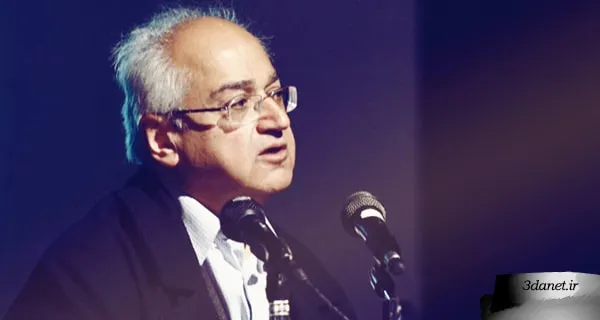
Manouchehr Zaker
AuthorAn Inquiry into Non-Lexical Semantic Attachments of Words and Their Effect on Individuals’ Insight and Value Judgments
Manouchehr Zaker Full Professor Graduate of Sharif University of Technology mzaker@iasbs.ac.ir
Keywords: Philosophy of Language, Semantics, Semantic Knowledge, Neurological Network, Feelings and Emotions, Episodic Memory, Freedom, Farrokhi Yazdi, Wittgenstein
Abstract
The question of the meaning of words, how they are created, and what role they play in personal beliefs and convictions is of great importance. The manner of analyzing this issue has direct results in resolving many disputes in theoretical explanations and value judgments in the domains of culture, ethics, and ideology. The task of semantics is to explain all the lexical implications that humans intend through the use of language. In this article, we explain that in addition to the complexities that the meaning of words have due to implicit implications and lexical associations, words possess a specific type of implication that is attached to them through certain non-lexical attachments originating from emotions and sensory experiences. The relationship between emotional-affective states and the realm of meaning is the general subject of this article. By utilizing the characteristics of episodic memory and the concept of "memory report," we argue that the meaning of (some) words is attached to the emotions and feelings corresponding to those words, and each individual constructs their own world of meanings, associations between words, and consequently their knowledge and expression of the world by resorting to the interaction of semantic and emotional networks, through their experiences and memories, over the span of their life. The concept of personal meaning, due to the influence of personal emotional memories within it, is broader than what has been imagined so far. Consequently, understanding the motivation and speech of the speaker, the interpretation of texts and utterances, all depend on a combined effort to recognize the semantic fabric and the emotional-affective depth within the other's semantic domain and liberation from the cage of mere abstract thinking. This issue has a significant impact on the formation and difference of individuals' beliefs, as well as their manner of judgment on value-laden subjects such as ethics and ideology. Within this framework, we examine several examples from contemporary poets and famous judgments in the contemporary history of Iran.
Required Preliminaries and Opening of the Discussion
Theories of semantics, from essentialism[1] and nominalism to the picture theory[2], speech act[3], language games, and semantic neural networks[4] of meaning, have traversed a path full of ups and downs and twists and turns. Although some of these theories, such as essentialism, have become obsolete, the rest reveal a truth about how meaning is obtained. These theories, therefore, are not rivals but complements to one another, and each illuminates the problem of meaning within a specific domain. The reason for this is that what enables humans to achieve a uniform understanding of one another's intentions, purposes, desires, feelings, and states through verbal conversation and the use of words has different cognitive domains[5], even though the final output mistakenly appears as if a single source and process is involved in the production of meaning. Meaning, in other words, is a mapping that "maps" concepts onto words, and the task of semantics is the inverse examination and recognition of this mapping; that is, it begins with words and denotations and provides a conceptual model for them based on the psychological-biological-social nature of humans. Since the analysis of the present article on the problem of meaning is carried out with the assistance of memory theory and neural networks, we will review some related concepts—without using technical language. The field of meaning has its own pathology. From hasty judgments about the meaning of words, many abuses are committed with the aim of seducing and persuading the audience—mainly in ideological and political rhetoric. In philosophical dialogues, too, it is commonly asked: what is the meaning of such and such a word? For example, what is the meaning of life or freedom? And the answer is expected to reveal the hidden meaning of the word and new lexical connections between that word and other concepts, so that its meaning and concept become complete. However, in addition to the complexities that the meanings of words possess due to implicit connotations and lexical associations, words carry a special type of signification that is attached to them through certain non-lexical attachments originating from emotions and sensory experiences.
The most commonly used approach to meaning is referring to a dictionary and finding the lexical[6] meaning of words. Dictionary meaning is suitable and ideal for quick references and at the level of semantic associations. The main shortcoming of dictionary meaning is its circularity, such that the meaning of many words is left in a state of suspension. Now, using the simple word "thank you," let us test the above semantic theories. Although everyone knows when and in what situation to thank the addressee, no specific meaning of this word can be deduced from the dictionary. That is, the meaning of "thank you" is referred to gratitude, gratitude to appreciation, and appreciation to "thank you." In fact, assuming that a meaning and concept is definite for one of these words, the dictionary merely recommends that we can use these words interchangeably. Now the question is: what does thanking mean? The picture theory cannot answer, because the nature of thanking is not revealed by a combination of states of affairs possessing external appearance. Although thanking is accompanied by a state of behavior and bodily movement, the speech act theory also cannot clarify its precise meaning, because in the act of thanking, there is a spiritual and intra-mental state that bodily gesture and behavior cannot reflect. The meaning of the said word is not established through language games either, because it is beyond a specific behavioral rule in social interactions. Thanking becomes necessary when someone bestows a kindness or a valuable gift upon you, and a feeling of delight and being valued is created in your soul and psyche. The linguistic description of this feeling is very difficult, but most people have experienced this feeling uniformly and consequently know what is being talked about. Our inference is that children learn the act of thanking through the corresponding social game, by observing the social interactions of those around them. In fact, they imitate this act so that it becomes a conditioned linguistic response.
The parrot in the cage saying "congratulations" The mirror of the heart's witness knows it is naught but imitation
Children, through this very expected response, cobble together a description for the meaning of thanking, until, through repeated emotional experiences over a lifetime, they master all its implications and consequently grasp its true meaning. The above discussion also shows that the correct time and conditions for the act of thanking cannot be properly explained through translation to an individual with a different language – similar to John Searle's Chinese Room scenario[7]. Our inference is that the antiquity of the meaning of thanking and its action-like form, giving thanks, is rooted in specific feelings that have befallen humankind during religious and ritual ceremonies and still hold true for some. Ancient humans, due to receiving life's blessings, felt a particular joy and dependence toward the forces of nature, the gods, and ultimately the one God who had bestowed these blessings upon them. These feelings lead to the spiritual veneration and praise of their benefactors by humans. Examples of such instances include the birth of a child, heavenly precipitation, the fertilization of the earth, the production of agricultural crops, and also tamed fire (Prometheus's gift to humankind). The birth of a child has always been considered a gift from the gods, and thanksgiving ceremonies were performed.[8] This specific feeling toward the gods has been expressed with words such as thanksgiving and gratitude, which have led to the worship, praise, and glorification of the Creator or the gods. Therefore, within the meaning of thanksgiving, that spiritual and psychological feeling and relationship to God and the gods is concealed, and in fact, this spiritual feeling is inseparable from the meaning of the word. The exact same situation holds true for the act of thanking in interpersonal relationships. Although in the present era, thanking is frequently used in colloquial languages, this linguistic act more closely resembles a statue from which life and feeling have been extracted. Before leaving the discussion of thanking, it is important to note that here we described an existing emotional experience with words, meaning the arrow pointed from an emotional state and experience toward verbal language. This type of arrow is discussed in a broader framework in the section "Words Related to Religious Experiences." Naturally, many words have been constructed and developed for the lexical description of feelings, excitements, and emotions. Since these mental states differ from one another, we will explain brief points for their clarity and distinction.
What is meant by an excitement[9] is a state that occurs in a person due to an external or intra-mental stimulus during a short-term encounter. Fear caused by a terrifying thunderbolt and anger or surprise at an unexpected event are examples of excitements. Excitements manifest on the human face, such that based on facial expression, the primary excitements[10] can be distinguished. The emergence of excitement is dependent on the presence of a stimulus outside the mind or the recollection of such a stimulus. What is meant by an emotional experience is a spiritual state in a person that persists for a long duration. Emotional experiences are more complex than excitements because they are not dependent on an external stimulus and do not necessarily manifest on the face. States of elation, hopefulness, enthusiasm, and trust are examples of emotional experiences. Emotional states are usually either caused by the nature and disposition of the mind or by long-term conditioned-emotional learnings, such as anxiety, anger, and long-term vitality throughout life. Poetic and religious states are among the complex emotional experiences that emerge in humans as feelings but are not easily expressible in words. What is meant by emotions[11] are inclinations such as sympathy, affection, love, hatred, disgust, etc., that drive a person toward or repel them from another human or the object of emotion. The connection between memory and excitement has been extensively studied in cognitive psychology.[12][13] It has been found that events and occurrences accompanied by excitements are remembered more easily and for a longer duration.[14] In this writing, we also introduce another arrow whose direction is from words and terms toward the feelings and emotions that are intermingled with and, in fact, attached to those words.
Now it is necessary to speak briefly about sentences and semantic knowledge.[15] By semantic knowledge is meant the set of common vocabulary, their meanings and denotations, and finally, meaningful semantic propositions. We call these propositions semantic because they provide a general knowledge about the meanings of words and sentences that is accessible and usable to everyone and is independent of the personal experiences and memories of the individual speaker. Naturally, there is a neuronal neurological network[16] in the brain that is the substrate of semantic knowledge. Semantic knowledge is naturally related to long-term memory, because much of the transient and short-term information processed in the brain is transformed into long-term memories through conversion into organized knowledge. Various neuronal models have been introduced for semantic knowledge, and this topic is one of the hottest research areas in the cognitive sciences.[17] Personal propositions and statements – which we will classify as episodic memory in the following lines – can, under certain conditions, have a semantic aspect. Consider the following two couplets.
O dawn bird, learn love from the moth, For that burnt one lost its life and made no sound
You came, my life be sacrificed for you, but why now? O unfaithful one, now that I have fallen from my feet, why?
The poet of the first couplet has likened amorous experiences in general to the burning of a moth, which could stem from personal experience or a literary report of this emotional experience in people at large. The second couplet is entirely personal and is a report of the poet's own experience. Although these verses are a personal report about one's own or others' feelings and emotions, both of the above couplets are now considered semantic propositions because, independent of the poet and his specific memories and environment, they are accessible and usable to everyone (including individuals devoid of feeling) as an established literary simile. We will continue the discussion of meaning.
Dictionary meaning is suitable for the names of objects and proper nouns. For example, we refer to the meaning of the two words hazār and vārastegi and realize they are equivalent to nightingale and freedom, respectively. In the case of the first word, the problem is solved, but the issue regarding the second is deferred to the meaning of the word freedom. The result is generally satisfactory because an unfamiliar word (here, vārastegi) is linked to a network of familiar words related to the word freedom. Now that, from a lexicological standpoint, the words freedom and vārastegi are equivalent, if, for example, we read the poems of Mohammad Farrokhi Yazdi by substituting the word vārastegi for freedom, does the meaning intended by the poet come to mind? In particular, is the same feeling and emotion conveyed? The answer is negative, because the poet's long-term, real experiences of pain, bondage, lament, and prison have permeated and are latent in his intended meaning of the word freedom. A word that, along with these experiences, constantly whispered and shouted in his ear.
That time when I laid my head at the foot of freedom I washed my hands of my own life for the sake of freedom...
If you stain the skirt of affection with blood You can be called the leader of freedom
Farrokhi, from soul and heart, strives in this gathering Heart offered to independence, life sacrificed for freedom[18]
Let us pose the above question and challenge in another way. Consider hypothetical person A, for whom all the meaning and semantic references they hold and conceive in their mind for the word freedom, though extensive, are confined to the dictionary and propositional realm—in other words, purely semantic. When A and Farrokhi Yazdi speak of freedom, do they employ the same kind and level of significations? A may possess vast knowledge about freedom yet experience no passion or emotional arousal whatsoever. Whereas a freedom-seeker, including a poet, becomes stirred because their emotional memories of demanding freedom spring to mind. For a freedom-seeker, the word freedom is accompanied by two experiences and life conditions that also involve the secretion of certain emotions. First, the suffering and anguish of oneself or a segment of society due to oppression and the absence of freedom; and second, the painful demand, effort, and endurance of pressure to attain freedom—the nature and details of which depend on local and environmental conditions. Both experiences are accompanied by tangible life experiences and, consequently, the memories resulting from them. Thus, the word freedom recalls and revives the memory of certain emotional states. This interaction with the emotional domain—or, more precisely, the lexical description of those emotional states—leads to new lexical associations between the freedom envisioned by the freedom-seeker and certain other words, associations that did not exist in prior semantic knowledge and cannot be obtained through mere lexical associations. For this reason, we witness a semantic richness regarding freedom in the work of freedom-seekers like Farrokhi Yazdi. These new associations are the product of the interaction between prior semantic knowledge and the emotional experiences of such individuals throughout their lives. We term this phenomenon in the domain of semantics the "interaction of semantic and emotional networks." Therefore, the answer to the question "When A and Farrokhi Yazdi speak of freedom, do they employ the same kind and level of significations?" is negative, but how do we explain and elaborate the cause?
We said that suffering from the absence of freedom, and the effort and endurance of pain and pressure to attain freedom, are accompanied by tangible life experiences and, consequently, the memories resulting from them. These memories include, on the one hand, the expression of the demand for freedom through the lament and cry of the word freedom, or through the recitation of poetry and slogans of words related to freedom. On the other hand, certain excitements and emotional states related to the demand for freedom, such as elation, fervor, and exaltation, exist within these memories. Such memories, which are amalgamated from various types of information, are known and studied under the term "episodic memory[19]" in memory theory; after two sections, we will introduce its properties by elaborating on several examples. We conclude that there is a neurological connection between the acoustic[20] contents of the word freedom stored in the brain and certain emotional-affective states of the mind, particularly arousal, exaltation, and resoluteness, in the brain of such an individual. To put it better, the activation of these acoustic contents through recitation leads to the recall and activation of the emotions that the person experienced under conditions of the absence or demand for freedom across numerous memories. The arrow we previously promised appears right here: that is, from the lexical meaning of the word, we have discerned emotions in the background that are attached to the word's meaning. The next section is dedicated to a further examination of the word freedom within the framework of this same type of arrow. The experience of love and the words of love and separation also fall within the scope of our discussion, similar to the word freedom. It is not without merit to offer another example. Martin Luther King[21] lived in constant demand for equal rights and the elimination of racial discrimination, and was ultimately murdered in this very endeavor and mission. Luther King's words about struggle, rights, and racial equality are imbued with a particular fervor, mission, and hope not found in ordinary individuals. The emotional attachments present in Luther King's words have led to an expansion of semantic associations, which is clearly evident in his immensely empowering speeches and aphorisms. In other words, the emotional and affective attachments of meanings can also expand lexical connections and associations (in the semantic domain).
The Meaning of Freedom and Its Environs
We begin with a famous statement by the German philosopher Hegel, which he expressed in the philosophy of mind[22]:
«When the abstract conception of full-fledged freedom enters the minds of individuals and nations, nothing can match its irrepressible power, for it becomes the basis of the mind and its actuality.»
Upon a first reading, the reader encounters no difficulty with the meaning of this philosophical text, for they assume that the meaning of the “abstract conception of freedom” is clear and tangible to them. Yet the above text contains a major flaw. The irrepressible power of the concept of freedom is dependent upon and arises from the excitements and emotional states associated with the demand for freedom, such as arousal, fervor, and exaltation. These spiritual states are dependent upon sensory stimuli, emotional motivations, or the strongest associations of such stimuli. A philosopher or theologian may be aware of confronting a powerful word, but as long as they have not themselves undergone experiences aimed at demanding freedom, their use of this word will lack powerful emotional associations and implications, and cannot provide the necessary driving force for the actuality of the mind and will. The degree of power and irrepressibility of the conception of freedom depends on the degree of arousal and emotional force that the declamation of and reflection upon the word “freedom” creates in a person. The more the concept of freedom is immersed in an emotional context, the more concrete and non-abstract it becomes. Such interpretations of the concept of freedom and other similar concepts must be sought in the critical, emotional, and tormented artist who rises from among an oppressed nation, and the result of the search will be nothing else. Such instances can be found in the historical and despotic periods of many countries around the world. It is not without interest to point out a few cases from Iran itself. Farrokhi Yazdi is a prime example of a poet in whose poems emotions are blended with social and political criticism. The result of blending a delicate spirit with a fiery and cutting tongue is a deepening of the meaning of words:
How can the bird of my heart grow joyful in the prison of its cage? Except on the day it is freed from this bond of sorrow
The throbbings of hearts turned into a lament, slowly, slowly Should these laments grow more resonant, they become a cry
I became like the wandering firmament, for how long will the crooked-turning wheel Turn to the desire of this oppressor, with all its tyranny
From the tears and sighs of the people, a scent of blood arises, for if you give Water and fire to iron, it becomes a steel dagger
Has the poet in these verses merely expanded upon metaphors, similes, and other literary devices? For an imaginative poet could also accomplish this. The reality is that the semantic significations in Farrokhi Yazdi’s poems are entirely real, tangible, and concrete. His emotional experiences are inseparable from the words he uses. In the piece “The Style of the Ghazal,” what lies behind his poems is revealed to some extent.
If you do not believe our telling of the heart’s sorrow, See, from the trace of tears, our sleeping in blood
A hundred times spring came, and not once did they see, The calamity-stricken birds, our blossoming
In life, because our heavy-spiritedness saw so much, Death was not ready to accept us
He left my side, though I swept his path with my eyelashes, Behold his way of going, and our way of sweeping
None but Farrokhi, from a gem-scattering nature, possesses Our style of composing ghazals and stringing pearls
Farrokhi Yazdi is neither a political theorist nor an abstract-thinking, imaginative individual. Tangible themes such as despotism, coercion, and injustice toward the poor, workers, and peasants were among the primary drivers of his thought, poems, and protest. He was a poet of pain, lament, and outcry. He composed the following couplet in a ghazal titled “Feast Day in Prison” on Nowruz of 1939 in Qasr Prison:
I keep my head under my wing because, in this time, That song-composing bird that used to lament is no longer with me
Farrokhi published many articles and poems in the Tufan newspaper, of which he was the editor.
As long as my life depends on the peasant’s bread, and that alone, My soul, from head to toe, is a sacrifice for the peasant, and that alone
He who trembles like a half-slaughtered bird[23] morning and evening In winter is the naked body of the peasant, and that alone
The letter of Tufan that Farrokhi writes in blood
is in truth the letter of Tufan the peasant, and nothing more.
Farrokhi Yazdi was murdered in Mehr 1318 (October 1939) by agents of Reza Khan through the injection of an air ampoule. In addition to Farrokhi Yazdi, we can name Mirzadeh Eshghi and the revolutionary leftist militant Alireza Nabdel. We can certainly point to other cases from Iran and other countries, such as Latin American nations, like César Vallejo, Víctor Jara, and Pablo Neruda. In all these instances, emotions such as sympathy for the pain and suffering of the people and members of society, love for the presence of human values, and hatred and revulsion towards their abolition and trampling are, on one hand, mingled with social and political critique and protest, and sometimes rebellion and insurrection. This mingling has a paradoxical nature and, in the author's opinion, represents the most complete aspect of the tragic dimension of human life, because throughout the history of human life, the fate of the "emotional sensibilities of the critic and protester[24]" is intensely perilous, since the instinct for power cannot tolerate it and will suppress it at every turn. On the other hand, the emotional critic, whether poet or artist, possesses the greatest impetus to critique the state of "humanity" in society and cannot but make its defense the guiding principle of their mission and struggle. Recall the following two couplets.
The throbbing of hearts became a lament, slowly, slowly
Should these laments grow more resonant, they become a cry
From the tears and sighs of the people, the scent of blood arises, for if you give iron
Water and fire, it becomes a steel dagger
Only in the emotional type of the critic and protester do tears, sighs, and laments transform into an arsenal of cries and steel daggers. On the one hand, despots and autocrats have little trouble with personality types such as comfort-seekers, opportunists, the ambitious, fatalists, dogmatists, and the purely logical and soulless. The thoughts and behavior of personalities we have called the emotional critic are enigmatic and problematic for some contemporary writers. Whereas the above analysis of this type of individual, which will be further developed in the next section, considers their behavior natural and their judgment calculable. In recent years, a few writers have analyzed personalities such as Mirzadeh Eshghi and certain leftist militants of the second Pahlavi era, labeling them revolutionary romantics.[25] Given the lexical background of Romanticism in European art, with its content of imaginative idealism, this label is not suitable for the aforementioned individuals.
Now, our answer to the problem of the semantics of the word freedom is this. As long as we have not acquired an objective experience mingled with deep feelings and emotions under the painful conditions of the absence of freedom or the struggle to attain freedom, and have not cried it out from within, even if we read many texts about freedom, our understanding of it will be merely lexical and semantic and will lack depth. That is, our mind may expand a vast network of associations arising from the word freedom, but we will be unable to understand the meaning intended by a revolutionary and freedom-loving poet from this word. Learning and understanding their intended meaning consists of the learner experiencing the spiritual and emotional attachments adhered to that word. The nature of this attachment will become clearer in the next section. Of course, studying about freedom can increase our sympathy with the intention of the poet and militant who painfully seeks freedom.
From Episodic Memory to the Emotional Personality Type
Episodes are events that humans experience throughout their lives, commit to memory, and report when necessary. When an event is stored in human memory, all the information contained in that event—from information processable by the five senses, such as auditory, verbal, visual, spatial, and olfactory information, to information related to positive emotions and feelings (joyful, hopeful, and pleasant) and negative emotions and feelings (unpleasant, such as feelings of fear and disgust) that exist in the said event—are stored together, in an integrated and amalgamated manner.[26] What is meant by an episode is, in fact, an event that is recorded in the human mind and brain. Note that this diverse information is stored and retrieved individually, in different ways, and also in different locations within the human mind and brain. For example, imagine meeting a friend dressed in beautiful clothes and fragrant with a delightful scent in a lush green park under a blue sky, and exchanging memorable words. For this event, which has an episodic character, to be fully recorded in the mind and become an integrated memory, another cognitive component in the mind must amalgamate and integrate all the information contained in the event in a coherent manner within a single re-representation, so that the unity of that event is preserved in the mind. Otherwise, one cannot speak of the concept of an event or episode, because the information contained in it will be recorded in a disjointed manner in the brain. Episodic memory is a cognitive component in the brain that performs all these tasks and the integration of diverse information optimally.[27] In fact, episodic memory links information in an integrated and interdependent manner in a part of the brain called the hippocampus. The astonishing feature of this cognitive component is that whenever human memory recalls and reviews a cue or a part of that same event, all the information of that event is retrieved from the hippocampus in an amalgamated and integrated form and comes to mind. In fact, the association of a part of the information latent in that event brings to mind the other information of that event as well. Episodes can also include emotional experience. In recent research, it has been proven that if an episode includes an emotional experience, the strength of the memory increases and the said memory will be more enduring.[28] Imagine you are in a forest in stormy, cold, and dark weather, and a wild animal attacks you. Depending on the intensity of the negative emotion of that event and the degree of amalgamation of the various information contained in that event in the brain, it is possible that whenever you find yourself in such an environment—of course, without the presence of any fear-inducing factor—you will recall the feeling of fear from the previous experience and involuntarily experience a feeling of fear in the second experience as well, even though no fear-inducing factor is present. Numerous examples of experiences accompanied by pleasant emotions such as love and beauty can also be cited. It is concluded that episodic memories, in addition to information from the five senses, also contain information encompassing feelings and emotions. Because, as we observed in the example of the terrifying forest environment, recalling some unpleasant memories can reactivate the same feelings and emotions without the presence of the initial stimulus. This important issue is reflected in another way in the category of "memory reporting." At the beginning of this section, we mentioned that humans also report their episodic experiences and memories. These reports include both purely personal experiences and a collective emotional-feeling event or situation of a society. Everyone has experienced that when recounting an unpleasant personal memory (such as an emotional failure) or a heartbreaking social scene like poverty and cruelty to an audience, they experience a repetition of the same unpleasant feelings and, consequently, a lump in the throat and anxiety. This issue stems from the same characteristic of information amalgamation in episodic memories. The memory of singing collective, emotional, and revolutionary anthems like the anthem "Sixteenth of Azar" or "I am a Schoolyard Friend," which are intertwined with other poignant memories of those same days, are among the most prominent examples of episodic memories in which semantic information (time, place, names, etc.) is blended and integrated with feelings such as fervor, enthusiasm, and hope. Now, years have passed since those days and that fervor, enthusiasm, goals, and ideals, yet when we hum the anthem under our breath, the same fervor and feelings become activa
d.Sometimes in episodic memories, certain words play a central role and are, in a sense, the center of gravity of those memories. In fact, it is the acoustic aspect and the echo of words in the inner ear that play this central role, because the starting point of the associative pathways for other information is precisely this murmuring and speech of words within the mind. This causes intense, impulse-like emotional arousal to form around such words. We take an example of this phenomenon from psychoanalysis. In Jung’s[30] word association test[29], it is observed that some individuals, upon hearing a word, experience specific emotional or nervous states and become agitated. For instance, one person shows no feeling upon hearing the word “stepfather,” while another becomes agitated and anxious. The reason is that the individual’s episodic memory of that word evokes and recalls emotional and affective experiences (in this case, painful ones such as a sense of fear and suppressed anger). The meaning of “stepfather” for someone who has not experienced it is merely lexical and semantic. But for someone who has had long-term, painful, and aversive memories with a stepfather, the mere occurrence of this word or the name of this figure leads to the rapid and strong association of the aforementioned mental states and possibly certain other words. This holds true not only for the example of “stepfather” but also for similar cases.
As we have said, in analyzing the problem of meaning from the perspective of cognitive sciences, the semantic network has been used, in which semantic pathways in the brain link concepts together. It seems that the realm of meanings and semantic implications is far broader than these models have assumed. The primary neuroscientific substrate of meaning and semantic implications is situated in semantic knowledge. However, another type of semantic implication, which we have termed emotional and affective attachments, also extends to regions of the mind and brain that store episodic memories containing individuals’ emotional and affective experiences. In such a situation, we say that these feelings and emotions are attached to the words in question. Of course, the creation of this phenomenon—that is, the association between a word or a set of words and the feelings attached to them—requires the repeated experience of the emotional event corresponding to the phenomenon and the consolidation of the related episodic memory. Since the most important function of meaning is to express all the implications of words and concepts, the feelings and emotions attached to words are part of their meaning; in other words, the meaning of words is attached to emotions. Consider the word “freedom” once more. If we remove the emotional and affective implications attached to the word “freedom,” the spirit and soul of the word are lost, and we will be unable to understand the speaker’s speech. We now present all the points made in the form of a five-stage diagram. The diagram below is intended for the case of the word “freedom,” but the design of the diagram is entirely identical for other words with similar conditions.
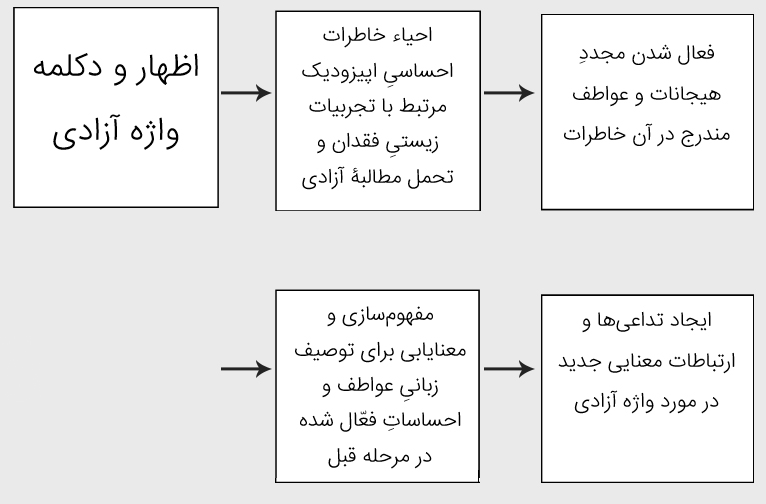
There are five sequential stages in the diagram. The second stage consists of situations such as suffocation, loss, and the demand for freedom that occur for the subject or a part of society, and which the speaking subject observes and experiences. We have called the path from the first to the third stage the emotional-affective implication of the word’s meaning, which is inseparable from the lexical meaning of the word and is the result of the interaction between the semantic and emotional networks in the person. In the fourth stage, the goal is the linguistic report of the feelings and emotions that the subject experienced in their encounters. This interaction ultimately leads to the fifth stage, which is the creation of semantic associations and new propositions related to the initial word that can be used by the general public.
It should be noted that the formation and consolidation of episodic memory do not have the same degree and quality in all humans, and there are individual differences in this regard. Of course, in the brains of all humans with a healthy brain, there exist neurocognitive structures and functions capable of combining or blending auditory/verbal and visual/spatial information in an episodic manner. However, the degree to which emotional information is blended with other simultaneous and co-located information in an episodic manner is not the same in all brains. Even arousal and reaction to positive and negative stimuli and emotions are not uniform among human individuals. Now consider the sum of two factors: (a) sensitivity to emotional and affective themes in events and the surrounding environment, and the degree of the mind's emotional arousal toward these themes, and (b) the intensity and quality of the formation and consolidation of episodic emotional memory. According to our definition, if the sum of these two factors is greater (compared to a social average), the individual's mind possesses a high functioning of the emotional faculty. Such a person has an emotional and memory-making personality type. The more memory-making a person's mind is, the more the words they use possess extensive, rich, and consequently energetic and highly affective emotional-semantic attachments. Hence, emotional individuals have a broader world of meanings and associations compared to others, because the interaction of the semantic network with feeling and emotion in their minds is far-reaching and impactful. This approach also leads to a classification of poets. On one end of the spectrum, there are poets who merely compose rhythmically and metrically, and their success relies on the use of literary devices. In their poetry, emotional themes arising from personal spiritual-emotional experiences are less visible, and we mostly witness a logical chain of words within established literary forms and themes. On the other end, there are poets who report and reflect the deepest feelings and emotional aspects of life, society, and existence, which they themselves have experienced and learned, in a literary genre.
The discussion of emotional and affective semantic attachments leads to a critique of the views of the later Wittgenstein. In Philosophical Investigations[31], Wittgenstein explicitly stated that we do not have a private language because the use of language requires engaging in its corresponding social game. However, this point only includes words and sentences whose meaning is formed within a language game. For example, in which specific game is the meaning of the word "freedom" determined and established? The point is that if we remove the emotional and affective attachments adhering to the word "freedom" from this word, the spirit and soul of the word are lost, and we will be unable to perceive and understand the speaker's speech. The discussion of emotional and affective attachments demonstrates the personal aspect of the meaning of words, and on this basis, sentences and language itself also possess a personal aspect. It is important to note that this personal aspect is not individualistic and solipsistic, because it arises from experiences that everyone (at least individuals with an emotional and memory-making personality type) can equally experience, and this is usually the case. Consequently, emotional-affective experiences play a role similar to language games in Wittgenstein's theory, yet go beyond it because the said experiences have both individual and social aspects. This discussion also transforms the learning process. Learning consists of the direct experiencing of the spiritual and emotional attachments corresponding to that word by the learner. To understand the intent and concept of the speaker's speech, it is necessary to perceive and understand the emotional connotations embedded in the words and sentences.
A Brief Reflection on the Picture Theory and Words Related to Religious Experiences
The picture theory of meaning in language adopts the position that sentences express and depict states of affairs in the world of actual events and possible worlds. Moreover, if a sentence does not express a state of affairs in a possible or actual world, it is meaningless.[32] Note that although the concept of states of affairs can include mental-psychological and emotional states within the mind as well as in relation to the surrounding environment, this concept in the picture theory of meaning merely expresses external manifestation and appearance and perceptible sensibles for external observers. Thus, the concept of states of affairs does not penetrate into the interior of emotional and affective states and experiences. According to this theory, sentences merely express what is depictable, and where something is undepictable, one must remain silent. There are scientific reasons for this limitation of the picture theory. Pay attention: the salient feature of semantic language, which expresses facts and states of affairs, is its intersubjective transferability and general communicative character, despite the fact that in communication through semantic language, misunderstanding and failure to grasp another's meaning is highly probable. At least until the cognitive science revolution, the prevailing belief has always been that human mental states, particularly those related to religious experience, are inexpressible in language and indescribable. Certainly, belief in Cartesian dualism has had a great influence on adopting this view. In fact, until now, it has been assumed that the two faculties of expression through language and emotional-mental perceptions have different sources, and consequently, a severe disconnection has arisen between the products of these two sources. Among the consequences of this disconnection, besides misunderstanding among humans, one can point to the traditional oppositions between knowledge and religion, as well as logic and art. Of course, many common words have been created and developed in colloquial languages to "describe" human mental and emotional states. But this collection comes into being after transforming mental states into cold statues and, so to speak, desiccating their purely psychological attributes. Just like a botanist or lepidopterist who, after drying plant species and butterflies, that is, after taking their "life," classifies them with specialized names. If we are bound by the framework of the picture theory, which displays occurred or realizable states of affairs, the category of the inexpressibility of human mental and emotional states and experiences is correct, but why should we exclude the psychological states that generate such experiences from the scope of the concept of states of affairs? The expression of mental states and experiences, and in a sense the convergence of language and psyche, entails a complex network of semantic and emotional-affective associations that occur in the human brain. Therefore, for analyzing poetic and artistic states, as well as unraveling the complexities of the nature of religious experiences, we need a deeper analysis based on cognitive sciences of the emotional activities of the mind, and in fact, an anatomy of human mental-spiritual moods. It is not the case that sacred and artistic experiences are as incomprehensible and indescribable as claimed, and that the opposition between science and religious and artistic experience remains insoluble. An appropriate cognitive analysis of this subject can resolve such issues, which have been both long-standing and costly.
Earlier, in describing the emotional experience of gratitude, we explained that the relevant words were created for the verbal description of this sense of joy and attachment. In addition to art and poetics, emotional states of mind also play a fundamental role in the subject of religious experiences. The most prominent scholars of religion have defined the basis of religion as emotional-religious—numinous—experiences. William James in “The Varieties of Religious Experience[33]” and Rudolf Otto in “The Idea of the Holy[34]” express such a view. Karen Armstrong, in her profound analysis of theology[35], also emphasizes their ideas and criticizes the propagation and inculcation of religion based on formal definitions and argumentative sentences, considering them ineffective. According to James, religious experience—also called mystical feeling—possesses the following characteristics. A person who has not undergone a religious emotional experience is not religious, just as philosophizing requires the mental state of “reflection.” James stresses that the “content” of religious experience cannot be reported through verbal expression and must only be experienced directly. Moreover, religious experiences are not falsifiable. Regarding the question of what religious feelings are directed toward, James does not provide much of an answer; in contrast, Rudolf Otto offers more explanation. Among the most significant religious experiences is the feeling of “creatureliness.” Otto explains that the feeling of creatureliness is itself a subjective necessity and an effect of another feeling and element that points directly and primarily to an entity external to the self. In his view, for the “feeling of creatureliness” and the feeling of dependence to arise in the soul, something must be felt as numinous that is simultaneously apprehended by the mind. Otto believes that the numinous, felt in this manner, is an objective entity external to the tablet of the human self. Rudolf Otto likens the numinous to an x, an unknown and incomprehensible mystery, and says, “this x is not exactly identical with what we experience, nor can it be taught to another; rather, it must be awakened in every person and stirred within their soul, just like other things that are inspirational, springing from within the person, seizing their soul, and overwhelming it.”
We must note that “feeling” in the discussion of religious experience involves more complex mental processing compared to ordinary feelings and emotions. This makes the cognitive-scientific analysis of religious emotional experiences difficult, but analyses with this aim are still in their early stages. The belief in Cartesian dualism, which dominated all human knowledge until the cognitive science revolution, together with a lack of understanding of the nature of emotional experiences, led to religious emotional experiences being interpreted as “reception from outside the soul.” We will add a point to this discussion. In the cognitive processing involved in these emotional experiences, mental operations participate that are different from mere feeling, yet remain unknown to individuals. For example, what kind of feeling is hopefulness? Is it emitted or instilled from a source outside the mind? Hope is the result of the mind’s estimation of the degree of success or the occurrence of a situation or condition of great importance to the person. That is, the mind is capable of estimating probabilistic causal relations and then inferring the occurrence of the said event. The human mind, without resorting to mathematical calculation and probability, possesses the capacity for statistical inference. Imagine you ask your mathematics professor for a retake exam, and your future life depends on passing this course. The professor says he will randomly draw a ball from a box containing eight blue balls and three red balls. If the ball is blue, he will give a retake exam. The human mind, even from early childhood, is capable of correctly inferring this statistical experiment. As a result, a state of hopefulness for holding the retake exam is created in your spirit and psyche. In situations where a mental statistical inference is made unconsciously, the resulting hope is felt in the mind as a “feeling.” In more complex interactions as well, the mind estimates causal probabilities and consequently achieves the mental state of hope or despair. The mental estimation of probabilistic causal relations is also involved in the religious version of hope, namely tawakkul (trust in God). But in tawakkul, there is another component: in some cases where there is a lack of knowledge about the outcome, the person entrusts the result to the divine will and gives themselves morale. Thus, we observe that in experiences such as hopefulness and tawakkul, in addition to mere feeling, statistical inferences and probabilistic causal estimations also take place in the mind. The question of whether tawakkul is a justified belief and how successful it is, is a different question and relies on justification based on question-begging interpretations. This matter is beyond the aims of the article; we will only suffice to say that this type of justification also exists in the discussion of “qismat” (fate).[36]
The Consequence of Modern Semantics in the Formation of Individual Beliefs and Judgments
In the preceding sections, we defined and discussed the affective personality type of the critic and protester. In general, the intertwining of semantic and emotional networks in individuals’ minds leads to a different judgment—compared to ordinary people—of surrounding and historical events. At higher levels, this difference manifests itself in moral and value judgments in the domains of ethics and politics. For example, in ethics it has been demonstrated[37] that some people judge moral issues based on the values of the ethics of care[38] and others based on the ethics of justice.[39] The reason for this can be sought in the existence and quality of individuals’ affective and sympathetic capacities. Let us turn to a few examples from the contemporary political history of Iran. We know that differing judgments have been made by historical critics regarding the governance style of the first Pahlavi. Some take anti-religious policies such as the Unveiling Decree as their criterion, while others focus on administrative transformations, physical development, and modernist steps. On the other side, some individuals (possessing the affective type) opposed it because of the violation of human and legal values in that era and the non-realization of the ideals of the Constitutional Revolution. Mirzadeh Eshghi, Farrokhi Yazdi, Abolqasem Lahouti, and Mohammad-Taqi Bahar are among those who, by inhaling the cultural and legal atmosphere, expressed their protest through the literary genre. It is well known that when one of Reza Khan’s government officials asked writers to express “their own ideal for the creation of a powerful central government by Sardar Sepah” in the newspaper Shafaq-e Sorkh, Mirzadeh Eshghi’s response was the publication of “The Ideal of the Old Peasant[40]” with themes of the trampling of women, the emergence of opportunistic timeservers, and the bitter end of the Constitutional Revolution.
Wonder not if a poet has madness In his heart he ever demands the feast of blood How can I describe my ideal better than this
Eshghi’s intense loathing of tyranny and the moral corruption of society, especially deceit and betrayal, drove him to the extremist view of the “feast of blood.”[41] In this writer’s opinion, a political manifesto or doctrine should not be extracted from Eshghi’s ideas. These ideas speak of the abnormality of society and the sickness within the ruling system of the time. A similar question can be posed regarding the revolutionaries and the actions of the youth of the second Pahlavi era. Several years ago, the author attended a conference in Tehran alongside a renowned Iranian computer science specialist residing abroad. In the evenings at the residence, we discussed various topics, including the conditions in Iran before the 1979 revolution. He was not a political or ideological person, yet he questioned the protests of the people, especially the youth and students, in those years when he himself was going through his student period. Why did you rise up and make a revolution? What was your pain? What did you lack? From the perspective of that Iranian professor, a citizen of Western countries, the system of the time in the country functioned properly and, in other words, the efficient system was working, and this was enough for him. But from the perspective of many individuals of the same age and professional background as him, the state of society in those days was like a cage and life within it was humiliating. In sum, one side assessed the country’s situation as acceptable and logical, while the other side found it so oppressive that they were willing to endure the harshest hardships and even commit suicide to overthrow it.
Undoubtedly, individuals’ ideological beliefs have played a major role in creating this profound disagreement, but the discussion of emotional personality types and the emotional critic offers a non-ideological answer to this disagreement. As we have explained, within the semantic domain of emotional personalities and, consequently, in their beliefs and convictions, emotions such as sympathy for the pain and suffering of the people and members of society, love for the presence of human values, and hatred and disgust toward their abolition and violation become intertwined with social and political criticism and protest. On the opposite side, we encounter personalities whose semantic circle is limited to semantic knowledge and has minimal interaction with the emotional-affective realm. Such individuals evaluate and judge legal and political issues based on the cycle of the governmental system, material and formal values, or ideologies molded in their minds. The unveiling, the Goharshad Mosque incident, and all the physical and administrative transformations of the first and second Pahlavi eras have remained in history and are verifiable. But inhaling the cultural-political atmosphere of society has a short-term memory. It is not transferable except through artistic genre and personal biographies. Consequently, after the passage of years and changes in circumstances, the reason for the revolutionaries’ protest against the moral and legal conditions of their era becomes less and less understood, and this applies to individuals like the specialist friend from the preceding paragraph who question the protests and actions of the youth of the Pahlavi era. Historical experiences and theoretical reasons teach us that sensitive, emotional criticism of moral virtues and human rights is necessary for society, and its presence in any country is among the criteria for the health of the nation’s foundation. Unfortunately, at present, abnormal conditions such as the culture of speculation and increasing opportunism in society, disregard for individual, civic, and guild rights, and the eruption of lies, hypocrisy, and economic plunder have been neglected under the grandiose propaganda of satellite launches, long-range missiles, and nuclear equipment, under the banner of unsupported slogans of global management, national dignity, and grandeur.
Conclusion
Explaining and elucidating the connotations that words and sentences carry is among the tasks of semantics. In this article, we have shown that words are attached to connotations that arise from the speaker’s feelings and emotions during life experiences and are crystallized through episodic memories. Moreover, the lexical description of the aforementioned emotional states leads to new lexical associations between these words and other words and concepts that did not exist in prior semantic knowledge and are not obtainable through mere lexical associations. We have called this phenomenon the interaction of the semantic and emotional networks. Subsequently, by utilizing the characteristics of episodic memory and also by resorting to the concept of memory reporting, we have explained how emotional-affective connotations are formed. Each individual’s way of reading and expressing the lifeworld depends on the interaction of the semantic and emotional networks in their mind and psyche. This issue plays a significant role in how individuals judge in value domains. In conclusion, we have explained the reason for the difference in judgment among some poets and critics regarding the contemporary history of Iran within this framework.
.
.
[1] Essentialism
[2] Picture Theory
[3] Speech Act Theory
[4] Neurological Semantic Networks
[5] Cognitive Domain
[6] Lexical Meaning
[7] In Searle's Chinese room experiment, a person is placed in a closed room. Every sentence—in Chinese—that is spoken into the room from outside is translated into English using a dictionary, and the appropriate response is translated back into Chinese and uttered outside the room. In this way, a natural conversation in Chinese takes place between the person inside the booth and the individual outside, even though the person inside has no knowledge of the Chinese language.
[8] The names of many children, both boys and girls, in colloquial languages mean a gift bestowed by God or a gift from one of the gods. For example, one can point to Khodadad, Mehrdad, Mah-Afarin (in Persian); Allahverdi, Tariverdi, Aydoghmush (in Turkish); Ataollah in Arabic; and Theodore, Feodor, Isidore, Dorothy in Greek and Latin.
[9] Emotion
[10] The six basic emotions of fear, anger, disgust, surprise, sadness, and happiness have identical facial characteristics across all cultures.
[11] Affection
[12] Cognitive Psychology
[13] The eighth chapter of the following book is dedicated to this topic and presents a two-dimensional model for the spectrum of human emotions:
E.E. Smith, S.M. Kosslyn, Cognitive Psychology, Prentice-Hall, New Delhi 2008
[14] Refer to the eighth chapter of the following book:
E.E. Smith, S.M. Kosslyn, Cognitive Psychology, Prentice-Hall, New Delhi 2008
[15] Semantic Knowledge
[16] In neuroscience, nerve cells are called neurons, and the biochemical connection between them is called a synapse. Neurons are the smallest units of information in the brain.
[17] The eighth chapter of the following book is dedicated to the organization and modeling of knowledge:
R. J. Sternberg, K. Sternberg, Cognitive Psychology, Wadsworth, 2012.
[18] All selected poems by Farrokhi Yazdi in this article are quoted from the following source: Dar Havā-ye Āzādi (Selected Poems of Mohammad Farrokhi Yazdi), researched and selected by: Sā'ed Bāqeri and Soheil Mahmoudi, Tehran: Amirkabir, 1389 [2010].
[19] Episodic Memory, in cognitive science, is actually used to mean episodic memory.
[20] The reference is to the sounds that exist in the word āzādi (freedom).
[21] Martin Luther King (1929-1968)
[22] Georg Wilhelm Hegel, Encyclopedia of the Philosophical Sciences (Philosophy of Mind) (translated by Ziba Jebeli) Publisher: Shafiei, 1392 [2013].
[23] In its original meaning, nīm-besmel refers to an animal that has just been slaughtered and is in its death throes.
[24] Individuals with such a temperament and personality trait constitute a very small minority among personality types.
[25] As examples, one can refer to the following books: Mohammad Qaed, Mirzadeh Eshghi, The Noble Face of an Anarchist, Tehran: Tarh-e No, 1391. Anoush Salehi, Mostafa Sho‘aiyan and Revolutionary Romanticism, Qatreh Publications, 1397. Ali Moradi Maraghe‘i, Enchanted Souls (A Critique of the History of the Guerrilla Movement Before the Revolution, with Emphasis on the Guerrillas of Azerbaijan), Andisheh-e Ehsan Publications, 1398.
[26] Binding
[27] Episodic memory is among the topics taught in cognitive science. See:
E.E. Smith, S.M. Kosslyn, Cognitive Psychology, Prentice-Hall, New Delhi 2008
[28] P. A. Allen, K. P. Kaut, R. R. Lord, Emotion and episodic memory, in: Handbook of Behavioral Neuroscience, vol. 18 (2008) 115-132.
[29] Word Association
[30] Carl Gustav Jung, Swiss psychoanalyst
[31] Ludwig Wittgenstein, Philosophical Investigations, Blackwell, 1958 .
[32] Howard Mounce, An Introduction to Wittgenstein’s Tractatus (translated by Sohrab Alavinia) Publisher: Tarh-e No, 1379 .
[33] William James, The Varieties of Religious Experience (translated by Hossein Kiani) Publisher: Hekmat, 1397 .
[34] Rudolf Otto, The Idea of the Holy (translated by Homayoun Hemmati) Publisher: Naqsh-e Jahan, 1380 .
[35] Karen Armstrong, A History of God: From Abraham to the Present (translated by Mohsen Sepehr), Tehran: Markaz Publishing, 1383 .
[36] To become acquainted with methods of justification in various types of thought, refer to the following source: Manouchehr Zaker, The Logic of Thoughts and a Commentary on Secularism in the Realm of Thought, Farhang-e Emrooz
[37] Jane Mansbridge, Susan Moller Okin, Will Kymlicka, Two Essays on the Political Philosophy of Feminism (translated by Niloufar Mahdian) Ney Publishing, 1387 .
[38] Care Ethics
[39] Justice Ethics
[40] Ali Akbar Moshir Salimi, The Illustrated Collected Works of Eshghi, Tehran 1342 .
[41] In the second article of “The Ideal of the Old Peasant,” Eshghi writes: The idea of bloodshed must be promoted in such a way that women often demand the shedding of a vile and treacherous blood from their husbands instead of a dowry.
.
.
Discussion0 comments
No comments yet; let yours be the first voice.